1944 Steel Penny Value: How Much Is a 1944 Steel Penny Worth? (Up to $408,000+)
Error coins · 9 min read · Updated October 22, 2026
A genuine 1944 steel penny is one of the most valuable Lincoln cents ever made — worth $25,000+ in any condition and up to $408,000+ in top mint state. It is a transitional mint error: in 1944 the U.S. Mint had switched cents back to copper, but a few leftover 1943 steel planchets slipped into the presses and were struck with 1944 dies. Fewer than 40 are known across all three mints. Here is the full story — what it is, mint-mark values, auction records, the five tests that prove yours is real, and the fakes to watch out for.
What Is a 1944 Steel Penny?
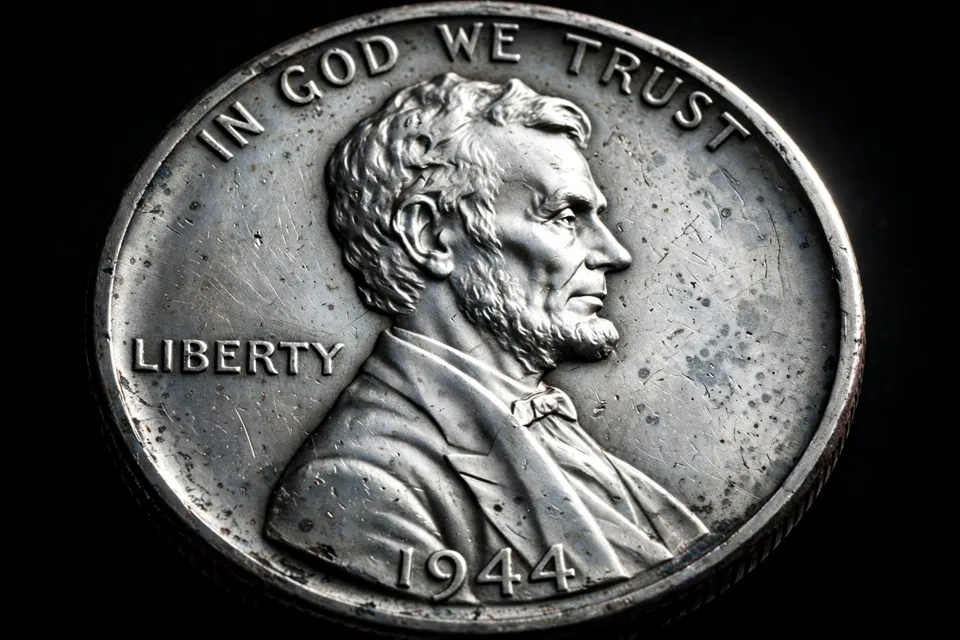
The 1944 steel penny is a Lincoln wheat cent dated 1944 but struck on a zinc-coated steel planchet instead of copper. It looks silver-gray instead of copper-red, it sticks to a magnet, and it weighs about 2.70 grams instead of the normal 3.11 grams.
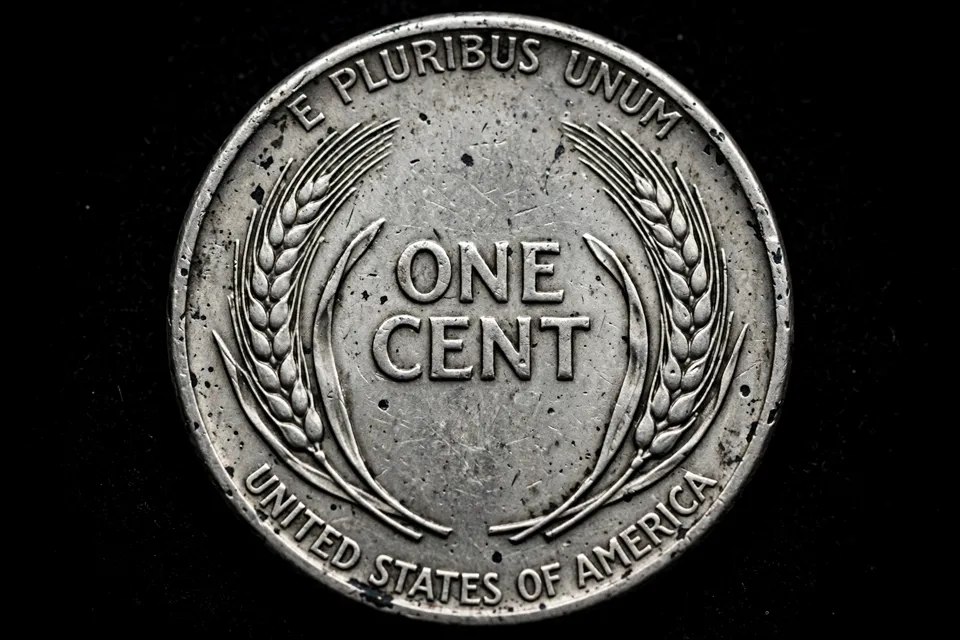
The backstory is pure wartime logistics. In 1943, copper was reserved for the war effort, so the Mint struck cents on zinc-coated steel. When supplies stabilized, cents returned to a copper alloy in 1944 — a 95% copper, 5% zinc blend made partly from recycled artillery shell casings. But the changeover was enormous — more than 2.1 billion 1944 cents were struck — and a few 1943 steel blanks were still sitting in planchet hoppers. Those leftovers got fed into the presses and struck with 1944 dies: a coin that was never supposed to exist, struck at Philadelphia, Denver, and San Francisco.
How Many 1944 Steel Pennies Exist?
Roughly 35 to 40 coins total:
- 1944 (Philadelphia, no mint mark): about 25–30 known
- 1944-D (Denver): about 7 known
- 1944-S (San Francisco): 2 confirmed
The San Francisco pieces are the crown jewels of the issue — only two reached the West Coast presses with 1944 dies, and their prices reflect it.
One footnote: researchers have suggested some of these blanks may actually have been planchets intended for a Belgian 2-franc coin the Mint was striking for an Allied government in 1944, since they are nearly identical to the 1943 steel blanks. Either way, their presence in 1944-dated cents was an accident.
1944 Steel Penny Value by Mint Mark
Value depends almost entirely on two things: the mint mark and the grade. Because every surviving example is a major rarity, even a worn 1944 steel penny is a five-figure coin. Here is what collectors typically pay:
| Mint | Mint mark | Known examples | Circulated value | Uncirculated value |
|---|---|---|---|---|
| Philadelphia | None (below date is blank) | ~25–30 | $25,000+ | $85,000+ |
| Denver | Small "D" below date | ~7 | $30,000+ | $100,000+ |
| San Francisco | Small "S" below date | 2 confirmed | $50,000+ | $200,000+ |
A few practical notes. "Circulated" covers everything from heavily worn to lightly worn — the population is so small that auction data for low grades is thin, but no genuine example has ever sold for less than five figures. Steel cents are notoriously hard to find in high grade because the zinc coating spots and corrodes easily, which is why mint-state examples command such premiums.
The mint mark sits directly below the date on the obverse (the Lincoln side). Philadelphia cents of this era carry no mint mark — the area under the date is simply blank, and the Mint did not put a "P" on cents until 2017. A missing mint mark is normal, not an error.
Auction Records: What 1944 Steel Pennies Actually Sold For
Realized auction prices tell the story better than any price guide:
- $408,000 — 1944-S steel cent, graded MS66, Heritage Auctions, August 2021. This is the all-time record for the issue, and it shattered the coin's own previous record of $373,750 set in 2008. One of only two known.
- $180,000 — 1944 (Philadelphia) steel cent, graded MS64, Heritage Auctions, June 2021. The finest Philadelphia example to change hands publicly in recent years.
- $158,625 — 1944 (Philadelphia) steel cent, graded MS64, Stack's Bowers, 2013 (Simpson Collection).
- $115,000 — 1944-D steel cent, graded MS63, Stack's Bowers, August 2007. The Denver benchmark.
- $49,200 — 1944-S steel cent, graded XF40, Stack's Bowers, 2018. Even a circulated San Francisco example — one of two — brought nearly $50,000.
San Francisco examples lead by a wide margin, Denver sits in the middle, and Philadelphia — the most "available" of the three — still commands six figures in mint state. Private asking prices have occasionally floated seven-figure numbers, but the realized public record stands at $408,000.
How to Tell If Your 1944 Penny Is Steel: 5 Tests
Run these five checks before you get excited. They take under a minute and eliminate nearly every false alarm.
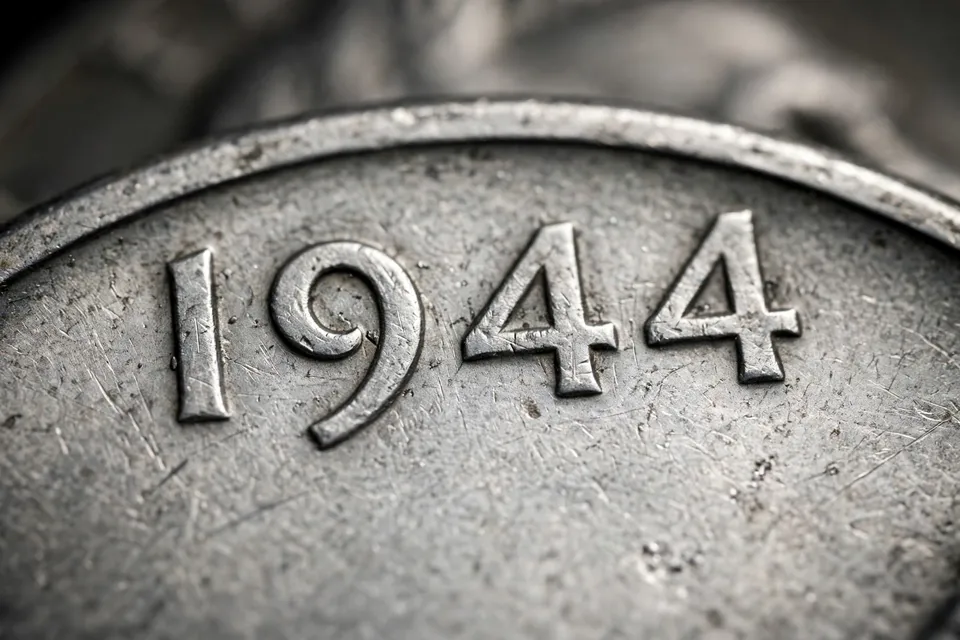
1. The magnet test. The single most decisive home test. A genuine 1944 steel penny sticks firmly to a magnet; a normal copper 1944 penny never will. If your coin does not stick, it is copper — full stop. This one test rules out 99% of hopeful candidates.
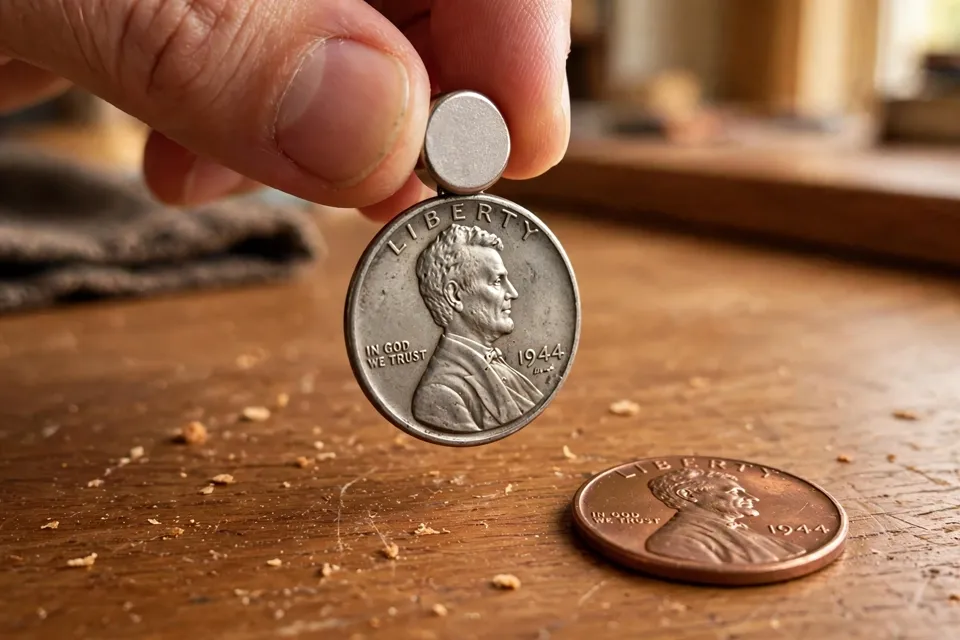
2. The weight test. Weigh the coin on a digital scale that reads to 0.01 grams. A steel cent weighs about 2.70 grams; a normal copper 1944 cent weighs 3.11 grams. A plated copper cent (a common fake) still weighs close to 3.11 grams even though it sticks to a magnet — so the magnet and weight tests must agree.
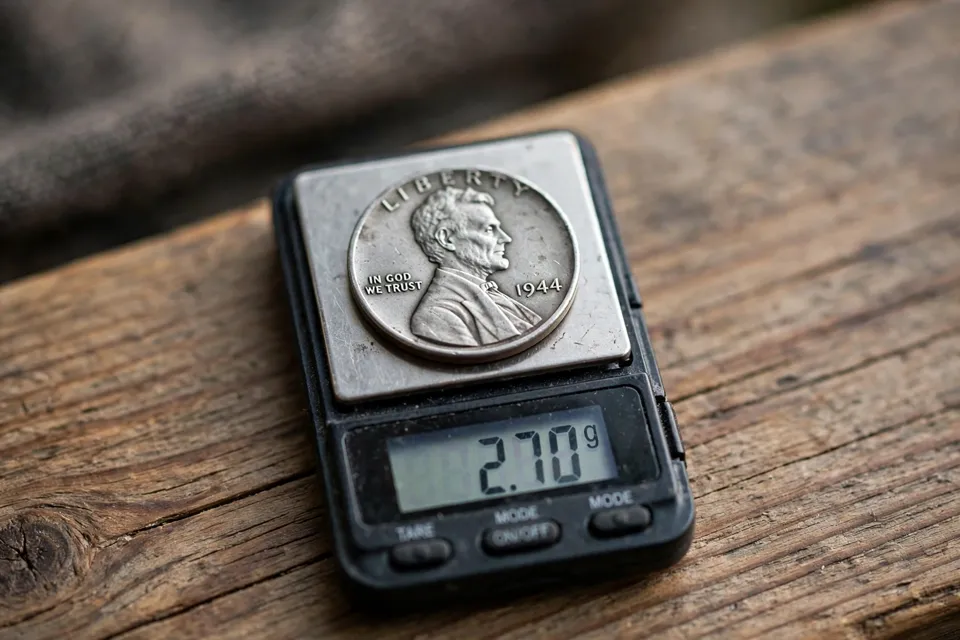
3. The color test. Genuine steel cents were zinc-coated and look silver-gray, not copper-red. Many have darkened or developed spots with age, but they never show the reddish-brown of copper. Be aware that a copper cent can be plated with zinc or nickel to look silver — that is why color alone is never enough.
4. The date test. Examine the date under 10x magnification. The most common fakes are 1943 steel cents with the "3" re-engraved into a "4," or 1948 cents altered to read 1944. Look for tooling marks or disturbed surfaces around the final digit — on a genuine coin, all four digits are crisp and uniform.
5. The authentication test. If your coin passes the first four, stop handling it and send it to PCGS or NGC for authentication and grading. Certification is what buyers and auction houses require — and on this coin, the fee pays for itself thousands of times over. Never clean the coin: cleaning destroys value on a rarity like this.
What Is Your Regular Copper 1944 Penny Worth?
Almost every 1944 penny you will ever see is the normal copper version — and that is fine. With mintages of 1,435,400,000 (Philadelphia), 430,578,000 (Denver), and 282,760,000 (San Francisco), they are among the most common wheat cents ever made. A circulated copper 1944 penny is typically worth $0.05 to $0.30, while choice uncirculated red examples bring $1 to $15+.
Two copper varieties are worth a second look:
- 1944-D/S overmintmark. On some Denver dies, an "S" mint mark from San Francisco was repunched with a "D," leaving traces of the underlying "S" under magnification. Circulated examples bring $35+, and top mint-state red examples have reached $57,500+.
- 1944 doubled dies and die cracks. Minor doubled-die varieties and dramatic "spiked head" die cracks add modest premiums — typically $10 to $100+ depending on boldness.
Note that no proof or mint-set coins were struck in 1944 — wartime production was entirely business strikes, which makes high-grade survivors genuinely scarce.
Fakes and Altered Dates: What to Watch For
Because a real 1944 steel penny is worth a fortune, the fakes are plentiful and sometimes convincing. The most common: a genuine 1943 steel penny (worth a few dollars) with the "3" tooled into a "4" — the date test catches these. Less common are altered 1948 cents and electroplated copper 1944 cents, which look silver and stick to a magnet but weigh 3.11 grams, not 2.70. Any 1944-dated "steel" cent with a mirror-bright, freshly plated surface deserves extreme skepticism.
The rule is simple: magnet, weight, color, date magnification — and professional authentication before you buy, sell, or insure anything that passes.
Should You Get a 1944 Steel Penny Graded?
If your coin sticks to a magnet, weighs 2.70 grams, and the date is unaltered — yes, without hesitation. Professional grading authenticates the coin, assigns a grade the market trusts, and encapsulates it against damage. On a five- or six-figure coin, the grading fee is negligible. Run it through our Grade-or-Not tool first, then submit to PCGS or NGC.
Think you found one? Run the magnet and weight tests, then check it with our Error Identifier and Coin Value Checker. If it passes, our Grade-or-Not tool tells you whether professional certification is worth it.
Open the Error Identifier · Open the Coin Value Checker · Try Grade-or-Not
Related Reading
- 1943 Copper Penny Value: How to Tell If Your 1943 Penny Is the $1.7 Million Rarity — the mirror-image error: a 1943 cent struck on copper instead of steel
- How Much Is a 1982 Penny Worth? The 7-Variety Copper-to-Zinc Guide — another transition year where weight separates the common from the priceless
- How Much Is a Wheat Penny Worth? From 3 Cents to $1.7 Million+ — the full wheat cent value guide, from common dates to the great rarities
Frequently Asked Questions
How much is a 1944 steel penny worth?
A genuine 1944 steel penny is worth $25,000+ in any condition. Uncirculated examples start around $85,000+, and the auction record is $408,000 for a 1944-S in MS66 (Heritage, 2021). Value depends on the mint mark and the grade.
How many 1944 steel pennies are known to exist?
Roughly 35 to 40 total: about 25–30 from Philadelphia (no mint mark), about 7 from Denver, and just 2 confirmed from San Francisco. New discoveries remain theoretically possible, which is why collectors keep checking.
How can I tell if my 1944 penny is steel or copper?
Use a magnet first — steel sticks, copper never does. Then weigh it: steel is about 2.70 grams, copper is 3.11 grams. Genuine steel cents are silver-gray; copper is reddish-brown. If your coin passes all three, have it authenticated by PCGS or NGC.
Which 1944 steel penny is the rarest?
The 1944-S, with only 2 confirmed examples. It holds the issue's auction record at $408,000. The 1944-D (about 7 known) is next, followed by the Philadelphia issue (about 25–30 known).
Why does a 1944 steel penny exist at all?
It was an accident. When the Mint switched cent production from steel (1943) back to copper in 1944, a few leftover 1943 steel planchets remained in the hoppers and were struck with 1944 dies. This kind of mistake is called a transitional error. They were struck at all three mints.
Is my regular copper 1944 penny worth anything?
A circulated copper 1944 penny is worth about $0.05 to $0.30. Uncirculated red examples bring $1 to $15+. The exceptions are the 1944-D/S overmintmark variety ($35+ circulated, up to $57,500+ in top mint state) and bold doubled dies or die cracks ($10 to $100+).