How Many Dimes in a Roll? The Complete Dime Roll Guide — Values, Silver Finds & Roll-Hunting Tips
Dimes · 9 min read · Published October 23, 2026
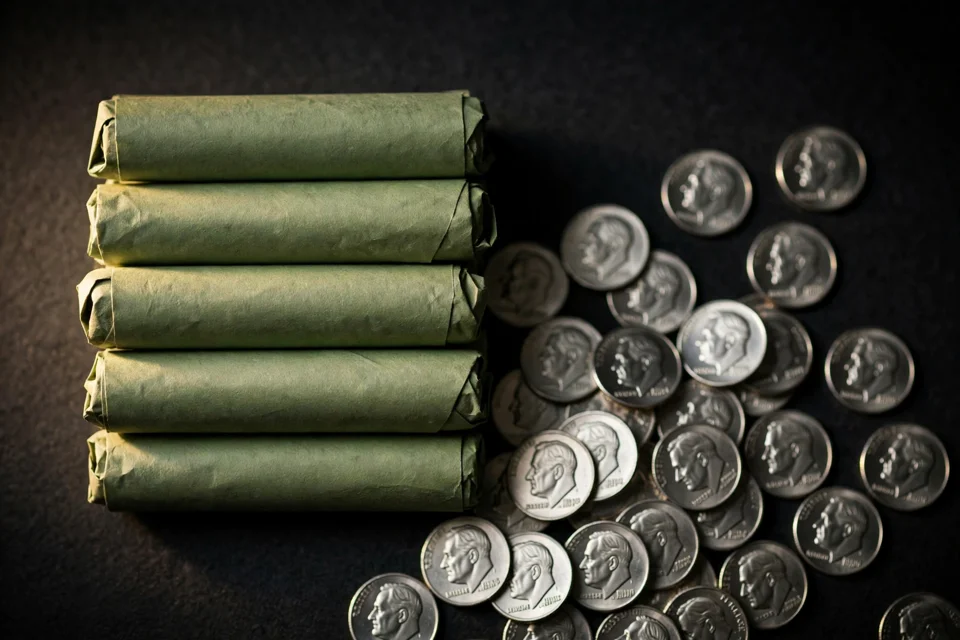
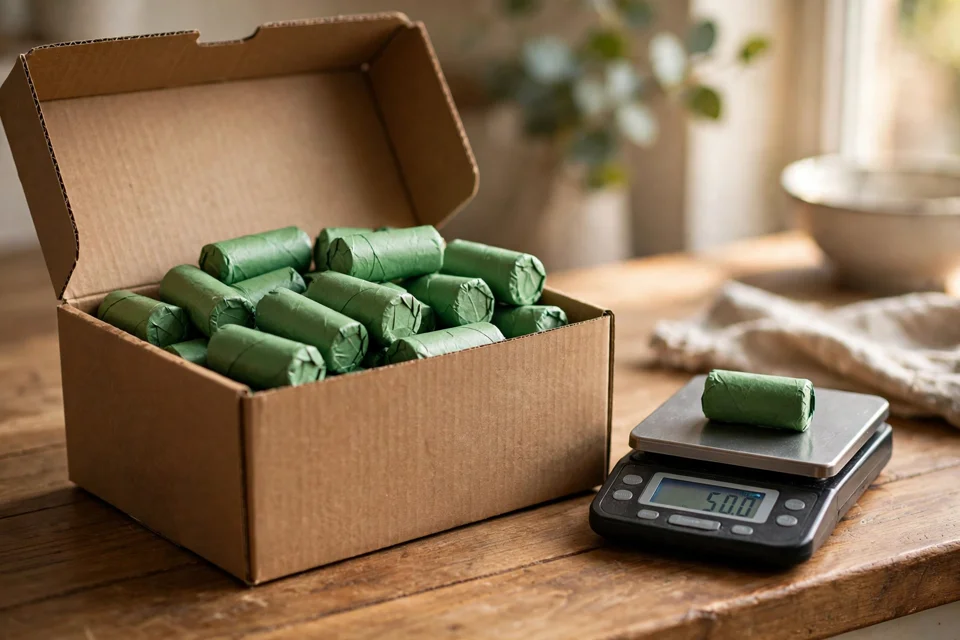
A standard U.S. roll of dimes contains 50 dimes with a total face value of $5.00, wrapped in a green paper wrapper. That count comes from the American Bankers Association (ABA) standard used by banks across the country, and it has not changed in decades. Whether you are cashing in a jar of dimes, ordering a box from the bank, or hunting rolls for silver, this guide covers everything: exact counts, weights, wrapper colors, what a roll is worth, and the key dates and errors worth pulling.
How Many Dimes Are in a Roll? The Short Answer
Every standard dime roll holds 50 dimes worth $5.00. Banks, credit unions, and coin dealers all follow the same ABA specification, so a roll you get in Florida contains exactly the same number as one in Oregon. Some banks also carry half rolls of 25 dimes ($2.50), but the 50-coin $5 roll is the universal standard — and the only one roll hunters and dealers quote prices against.
Dime Roll Specifications at a Glance
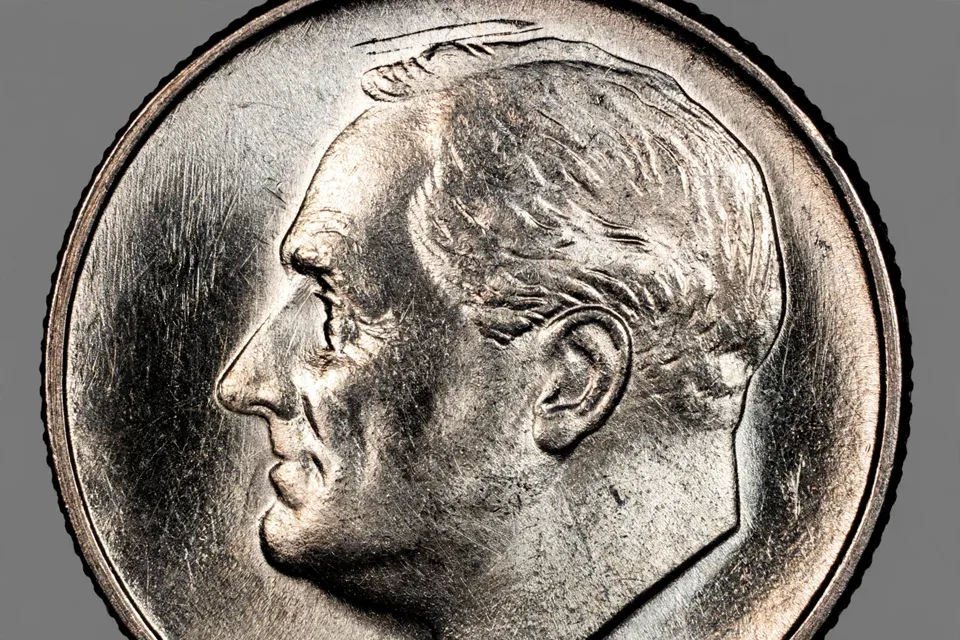
A modern clad dime weighs 2.268 grams, measures 17.91 millimeters across and 1.35 millimeters thick, with 118 reeds around the edge. Multiply that out and a full roll of 50 modern dimes weighs about 113.4 grams — almost exactly 4 ounces — before the paper wrapper.
| Specification | Detail |
|---|---|
| Dimes per roll | 50 |
| Face value | $5.00 |
| Wrapper color | Green |
| Roll weight (clad dimes) | ~113.4 g (4 oz) |
| Roll weight (90% silver dimes) | ~125 g (4.4 oz) |
| Coin weight | 2.268 g (clad) / 2.5 g (silver) |
| Coin diameter | 17.91 mm |
The heavier silver-era figure matters: if a roll feels noticeably heavier than 4 ounces, or tips a scale past 120 grams, you may be holding 90% silver dimes from 1964 or earlier — the find every roll hunter dreams about.
How Many Dimes in a Bank Box?
A standard bank box of dimes contains 50 rolls — 2,500 dimes — with a face value of $250. A full box weighs about 5,670 grams, roughly 12.5 pounds, so it has real heft on the counter. You can order a box through most banks and credit unions, often with a day or two of notice, and tellers will hand it over in exchange for $250 from your account. Serious roll hunters work through entire boxes at a time because a sealed box is the closest thing to an untouched stream of circulating coinage — every silver dime or key date inside is still waiting to be found.
How Much Is a Roll of Dimes Worth?
Most rolls are worth exactly their $5 face value — but far from all of them. Here is what different kinds of dime rolls actually bring:
| Roll type | Value |
|---|---|
| Circulated modern Roosevelt dimes | $5+ (face value) |
| Uncirculated recent-date rolls | $7+ – $12+ |
| Original bank-wrapped BU rolls, older dates | $15+ |
| Roll of 90% silver dimes (1964 & earlier) | ~$190+ melt value |
| Circulated Mercury dime roll (90% silver) | $200+ |
| Roll containing a key date or major error | One coin can exceed the whole roll |
The silver math is straightforward: each 90% silver dime holds 0.0715 troy ounces of pure silver, so a roll of 50 holds about 3.575 troy ounces. With silver trading near $54 an ounce in October 2026, that is roughly $190+ in melt value alone — before any collector premium. Because spot prices move daily, check the live metals prices on our Price Guide before valuing a silver roll.
Silver Dime Rolls: What Roll Hunters Hope to Find
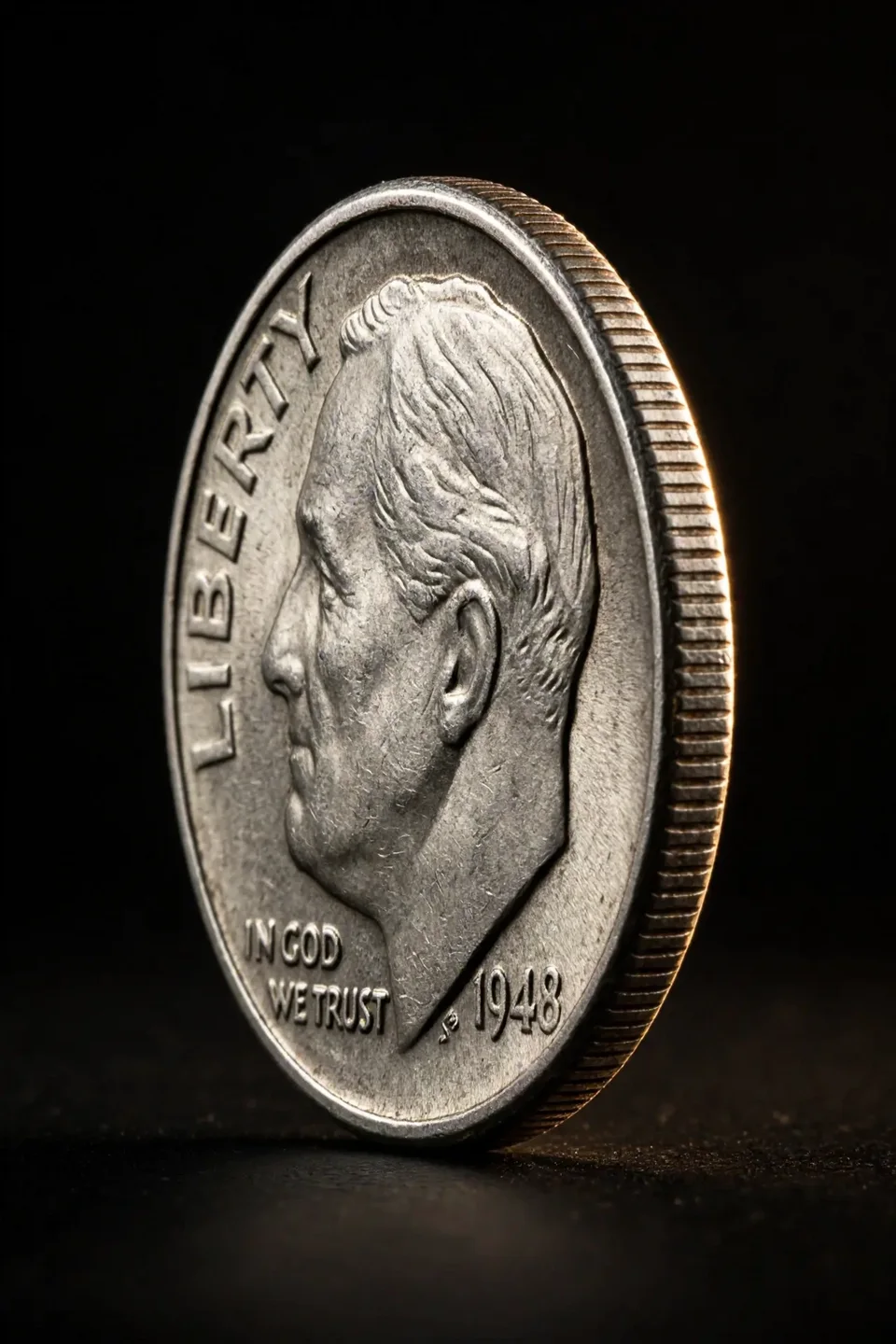
Every U.S. dime dated 1964 or earlier is 90% silver — Roosevelt dimes from 1946 to 1964, Mercury dimes from 1916 to 1945, and Barber dimes from 1892 to 1916. Starting in 1965 the Mint switched dimes to the copper-nickel clad composition still used today, which is why 1964 is the magic cutoff date burned into every roll hunter's memory.
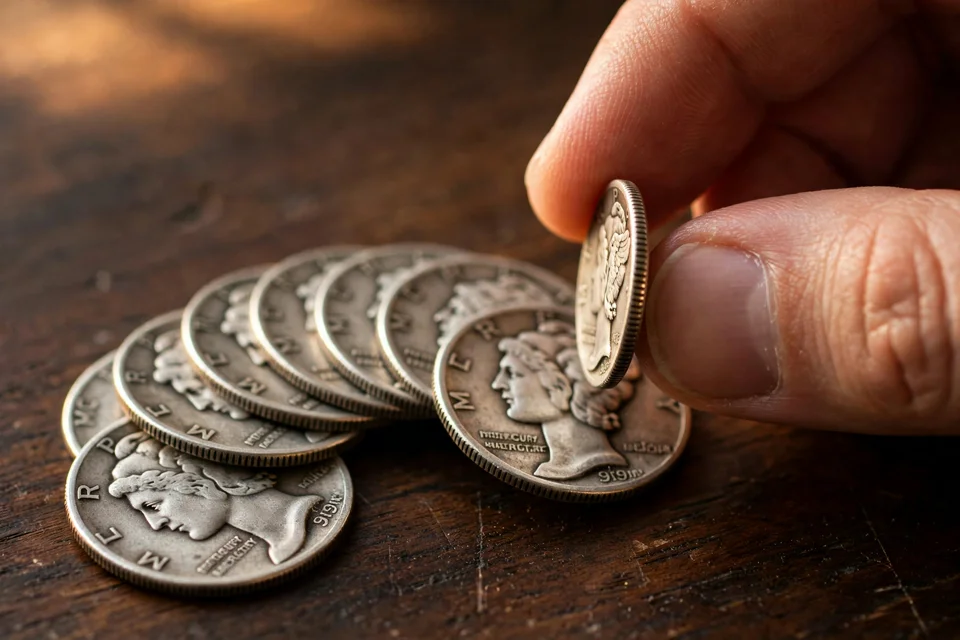
Three quick tests separate silver from clad:
- Check the date. 1964 or earlier means 90% silver — no exceptions for regular circulation strikes.
- Check the edge. A clad dime shows a distinct copper-brown stripe sandwiched between silver-colored outer layers. A silver dime's reeded edge is solid silver-gray all the way around.
- Weigh it. A silver dime weighs 2.5 grams; a clad dime weighs 2.268 grams. On a roll scale, that quarter-gram difference across 50 coins adds up to nearly 12 grams.
One legendary exception exists: a tiny number of 1965 dimes were accidentally struck on leftover 90% silver planchets during the changeover. Authenticated examples are worth $5,000+ — so if your 1965 dime weighs 2.5 grams and shows a solid silver edge, have it professionally authenticated before spending it.
Key Dates and Errors Worth Pulling From Dime Rolls
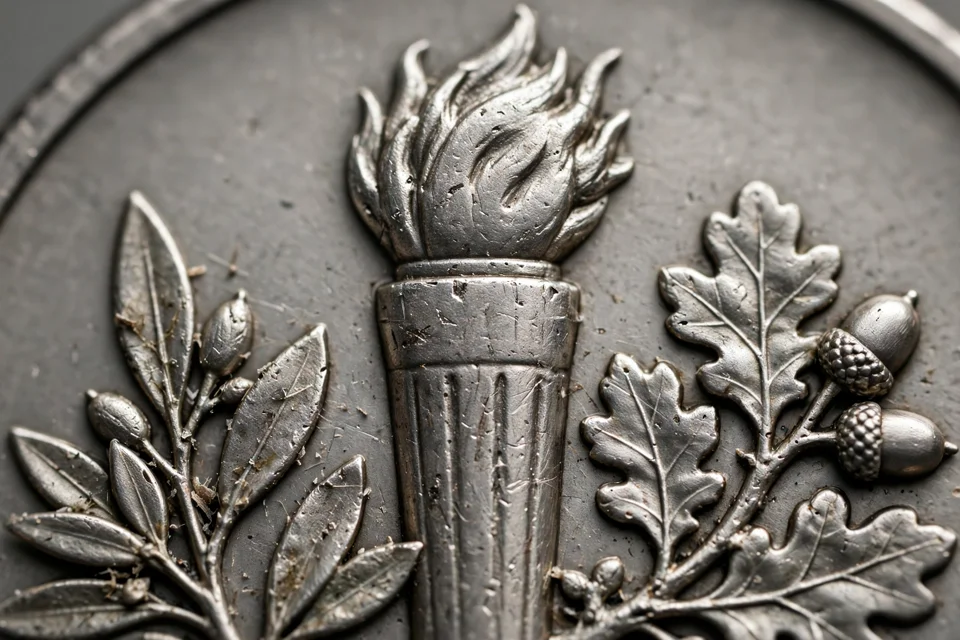
Silver is the most common score, but the real prizes are key dates and mint errors hiding in ordinary rolls:
- 1916-D Mercury dime — the king of dime roll finds. Only 264,000 were struck at Denver, and even heavily worn examples are worth $1,000+.
- 1921 and 1921-D Mercury dimes — low-mintage issues worth $50+ in circulated grades.
- 1942/1 and 1942/1-D overdate Mercury dimes — a 1 punched over a 2 in the date, worth $300+ with clear doubling.
- 1945-S Micro S Mercury dime — a tiny mint mark variety worth $15+ that most searchers overlook.
- 1982 No-P Roosevelt dime — Philadelphia accidentally omitted the P mint mark (the first P ever used on dimes). Strong examples bring $75+.
- 1996-W Roosevelt dime — struck at West Point and issued only in 1996 mint sets (1,457,000 minted). Worth $10+ if one ever escaped into circulation.
- Off-center strikes and broadstrikes — dramatic mint errors worth $20+, with wilder examples climbing far higher.
When you spot a candidate, run it through our free Key Date Checker to confirm the variety before anything else.
Coin Roll Wrapper Colors: The Full Chart
The ABA assigns every denomination its own wrapper color so tellers — and collectors — can identify rolls at a glance:
| Denomination | Coins per roll | Face value | Wrapper color |
|---|---|---|---|
| Penny (1¢) | 50 | $0.50 | Red |
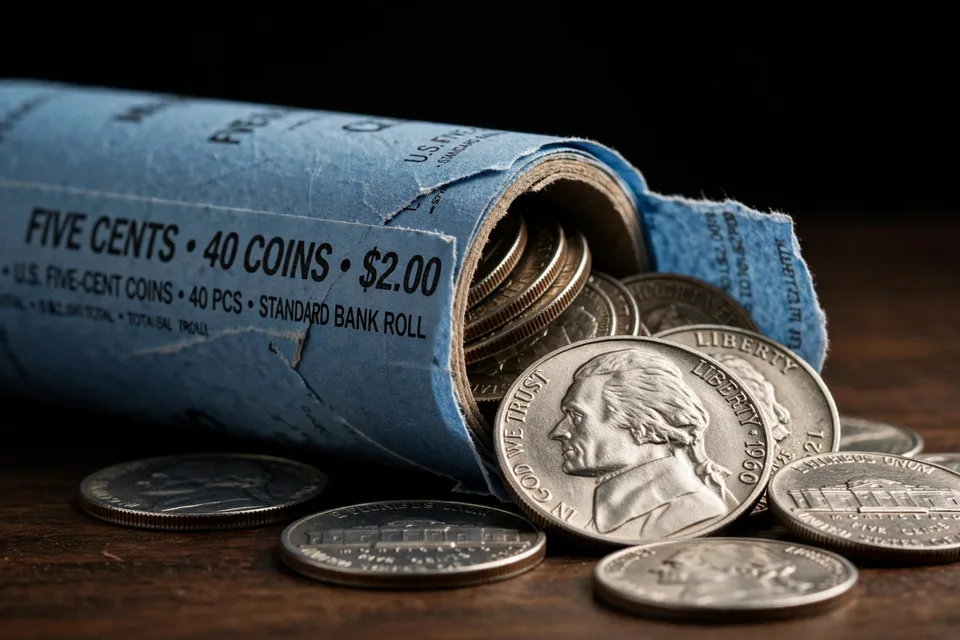
| Nickel (5¢) | 40 | $2.00 | Blue |
| Dime (10¢) | 50 | $5.00 | Green |
| Quarter (25¢) | 40 | $10.00 | Orange |
| Half dollar (50¢) | 20 | $10.00 | Tan |
| Dollar ($1) | 25 | $25.00 | Black |
Dime wrappers are green — if someone hands you a roll of dimes in any other color, count it before accepting it.
Where to Get Rolls of Dimes
Your bank or credit union is the best source. Ask the teller for customer-wrapped rolls — hand-rolled by other customers, with crimped or folded ends — rather than machine-wrapped rolls, because hand-rolled coins have passed through fewer sorting machines that would already have skimmed the silver. For volume, order a sealed $250 box. Two points of etiquette keep the hobby sustainable: never dump your searched coins at the same bank you buy from (use a second bank for returns), and always re-roll what you return. Avoid coin-counting kiosks for cashing in — fees around 12.9% turn $250 in dimes into roughly $218, while a bank deposit of rolled coins costs nothing.
How to Roll Dimes Yourself
Rolling is simple: stack 50 dimes, slide them into a green dime wrapper (free at most banks, or cheap at dollar stores), and fold or crimp both ends tightly. Count in stacks of ten to avoid errors — five stacks make a roll — and count twice before sealing. Banks accept hand-rolled coins without question, and neatly rolled coins are far easier to deposit, spend, or hand to the next roll hunter than a loose jar.
Curious what your own coins might be worth? Run them through the Coin Value Checker for an instant estimate, verify key dates with the Key Date Checker, or browse collector listings on the Marketplace.
Frequently Asked Questions
How many dimes are in a roll?
A standard U.S. roll of dimes contains 50 dimes with a face value of $5.00, following the American Bankers Association standard used by every bank. The wrapper is green, and a full roll of modern clad dimes weighs about 113.4 grams.
How much is a roll of dimes worth?
A roll of circulated modern dimes is worth its $5 face value. Uncirculated rolls bring $7+–$12+, original bank-wrapped older rolls $15+, and a roll of 90% silver dimes (1964 and earlier) carries roughly $190+ in melt value at current silver prices.
What color is the wrapper on a roll of dimes?
Green. The American Bankers Association assigns green wrappers to dime rolls, blue to nickels, red to pennies, orange to quarters, tan to half dollars, and black to dollar coins.
How many dimes come in a bank box?
A standard bank box holds 50 rolls — 2,500 dimes — with a total face value of $250 and a weight of about 12.5 pounds. Most banks will order one for you with a day or two of notice.
Are old dimes worth more than 10 cents?
Yes — every dime dated 1964 or earlier is 90% silver and worth many times its face value, and key dates like the 1916-D Mercury dime are worth $1,000+ even worn. Always check dates before spending old dimes.
How can I tell if a dime is silver?
Check the date first: 1964 or earlier means 90% silver. Then look at the edge — silver dimes show a solid silver-gray reeded edge with no copper stripe — and weigh it: 2.5 grams for silver versus 2.268 grams for clad. Suspected 1965 silver transitional errors should be professionally authenticated.
Related Reading
- How Much Is a Dime Worth? From Pocket Change to $200,000+ — the dime's full value story: silver dates, key dates, and errors
- How Many Nickels in a Roll? From $2 Rolls to $500,000+ Hidden Finds — the companion roll-hunting guide for five-cent coins
- How Much Is a Quarter Worth? From Pocket Change to $195,500+ — roll counts and values for the quarter
Roll hunting remains one of the cheapest ways into the hobby — a $250 box of dimes is fully refundable at face value, and every box carries the chance of silver, key dates, and errors. Count carefully, check every date, and never spend an old dime before you know what it is.