How Much Is a Nickel Worth? From 5 Cents to $4,560,000+
Nickels · 9 min read · Published October 23, 2026
Most nickels are worth exactly 5 cents — face value, nothing more. But a handful of nickels are worth serious money. Silver war nickels from 1942–1945 start around $3+ for their metal alone, key dates like the 1885 "V" nickel and the 1950-D Jefferson start at $500+ and $5+ even heavily worn, and the legendary 1913 Liberty Head nickel sold for $4,560,000 at auction. Whether your nickel is pocket change or a genuine treasure comes down to three things: its date, its mint mark, and its condition.
The Short Answer: What Makes a Nickel Worth More Than 5 Cents
The nickel is the only U.S. coin named after its metal, and it has passed through four major designs since 1866. Five factors decide whether one is worth face value or a fortune:
- Key dates — years with tiny mintages that are scarce in every grade (1885, 1912-S, 1926-S, 1939-D, 1950-D).
- Silver content — the 1942–1945 "war nickels" were struck in 35% silver and carry real melt value.
- Mint errors — overdates, doubled dies, missing mint marks, and the famous 3-legged Buffalo.
- Grade and condition — a sharply struck, lustrous uncirculated coin can be worth 100 times a worn one.
- Full Steps — Jefferson nickels with fully separated steps at the base of Monticello earn big premiums.
If your nickel is none of these things — a common date, well-worn, from 1946 onward — it is worth 5 cents.
Nickel Values by Type: A Quick Map
Shield nickels (1866–1883) — America's first five-cent pieces — start at $16+ even worn, with rare dates reaching five figures.
Liberty Head "V" nickels (1883–1913) are the classic Victorian-era design. Common dates in worn condition start around $3+, but the key 1885 (mintage 1,476,490) starts at $500+ in Good-4 and the 1912-S (mintage 238,000) at $400+. And the 1913 — struck unofficially after the series ended — is the most famous nickel on earth.
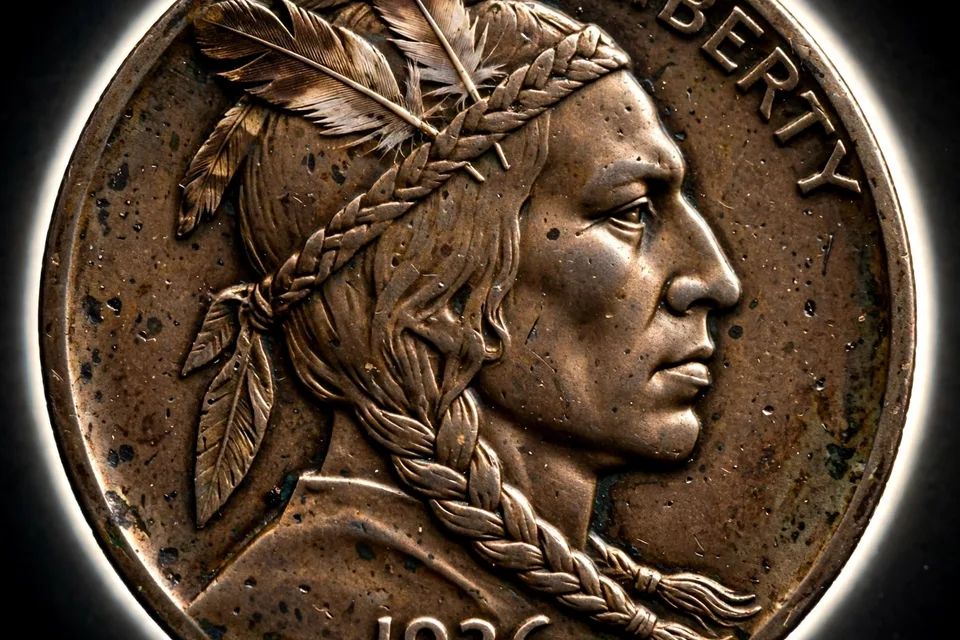
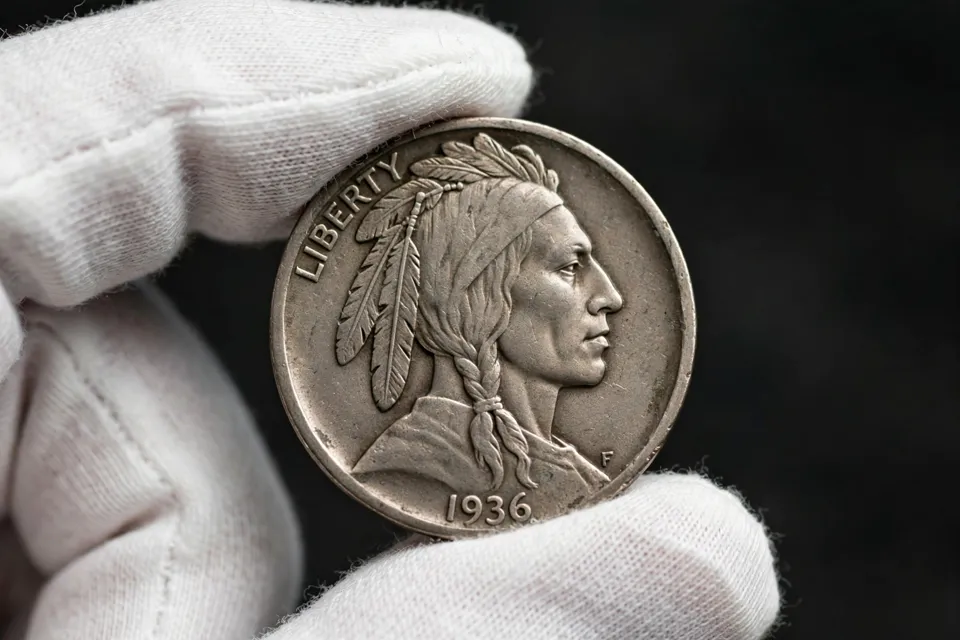
Buffalo nickels (1913–1938) carry James Earle Fraser's iconic Native American portrait and bison. Most circulated examples are worth $1–$5, but this series holds some of the most dramatic errors in U.S. coinage, and its key dates are five-figure coins.
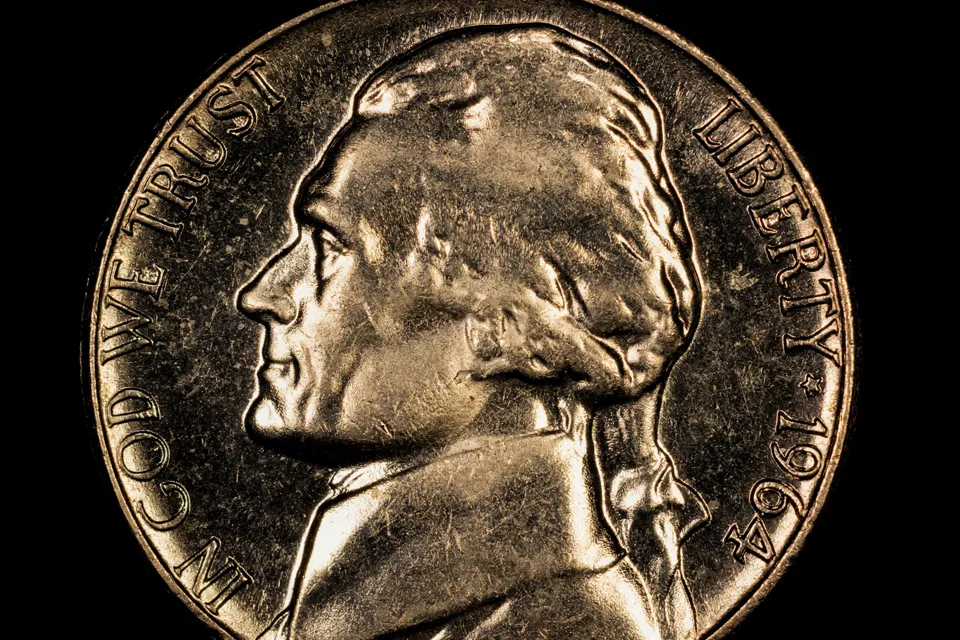
Jefferson nickels (1938–present) are the coins in your pocket today. Most are worth 5 cents — but the series hides silver issues, famous errors, and one of the lowest-mintage key dates in modern coinage.
The Most Valuable Nickels Ever Sold
These are the nickels collectors pay serious money for, across all four designs:
| Coin | Why it is valuable | Auction record |
|---|---|---|
| 1913 Liberty Head | Only 5 known; struck after the series ended | $4,560,000 (Stack's Bowers, 2018, PR66) |
| 1918/7-D Buffalo overdate | 7 punched over 8; ~7,000 survive | $511,875 (GreatCollections, 2024, MS65+) |
| 1926-S Buffalo | Mintage 970,000; finest known gems | $322,000 (2008, MS66) |
| 1916/16 Buffalo doubled die | Doubled 1916 date; bold variety | $281,750 (2004, MS64) |
| 1937-D 3-Legged Buffalo | Polished-off leg error | $99,875 (2021, MS66+) |
| 1885 Liberty Head | Key date; mintage 1,476,490 | $15,000+ (MS63+) |
| 1971 No-S Jefferson proof | Proof struck without S mint mark; 1,655 made | $8,100 (Heritage, 2023, PR69DCAM) |
| 1950-D Jefferson | Lowest regular-issue mintage: 2,630,030 | $17,250 (Heritage, 2006, MS67 Full Steps) |
| 1964 SMS Jefferson | Special Mint Set issue; only dozens known | $30,000+ (SP68) |
| 1939 Doubled MONTICELLO | Doubled die reverse variety | $23,000+ (MS67 Full Steps) |
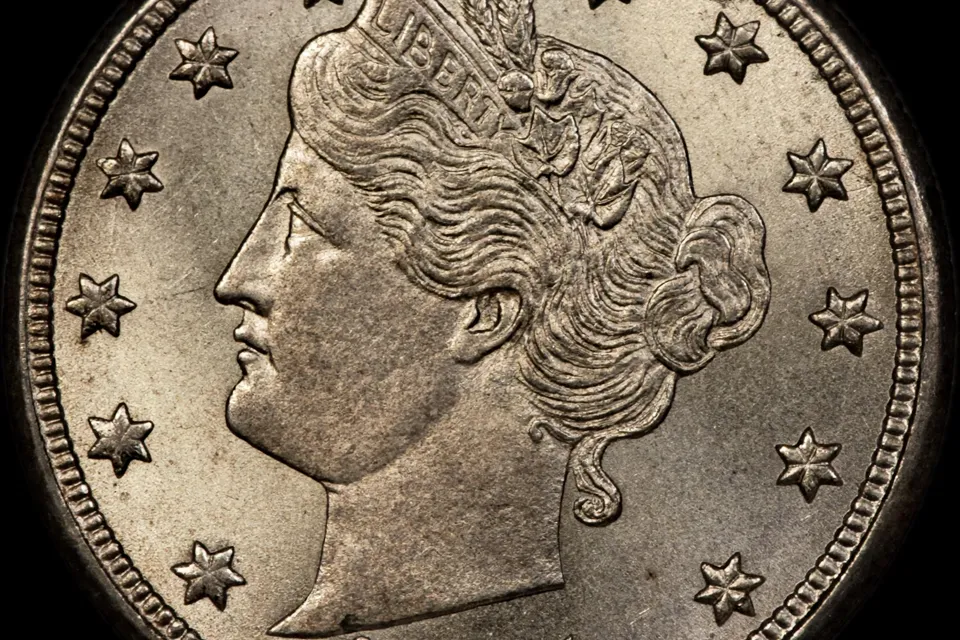
The finest-known 1913 Liberty Head nickel — the Eliasberg specimen, graded PR66 — sold for $4,560,000 in August 2018, making it the most valuable non-precious-metal coin ever sold at auction.
How Much Is a Jefferson Nickel Worth? Your Pocket-Change Guide
Since Jefferson nickels are what most people actually find, here is the honest breakdown:
- 1946–1964, circulated, common dates: 5 cents. These were made by the hundreds of millions and survive in enormous numbers. No silver, no premium.
- 1942–1945 war nickels: $3+ each for the silver content alone, more in uncirculated condition. Identified by the large P, D, or S mint mark above Monticello's dome.
- 1938–1939 D and S mints: The 1939-D (3,514,000 struck) is a key date at $5+ even worn; the 1938-D and 1938-S start at $1–$4.
- 1950-D: The lowest regular-issue mintage in the series at 2,630,030. Circulated examples start at $5–$15; MS65 examples run $30–$40.
- Notable errors: the 1942/1 and 1943/2-P overdates ($50+ circulated, $200–$1,000+ uncirculated), the 1955 doubled die obverse ($10–$30 circulated), and the 1939 doubled MONTICELLO reverse ($15–$50 circulated).
- 1971 No-S proof: Found only in 1971 proof sets — $800+ even in lower proof grades. If your 1971 proof-set nickel has no S mint mark, have it authenticated immediately.
- Full Steps examples: Five or six fully separated steps at Monticello's base can turn a 5-cent common date into a $20–$100+ coin — and a $5 tough date into four figures.
Are War Nickels (1942–1945) Worth Money?
Yes — every 1942–1945 nickel with a large mint mark above Monticello contains 35% silver, struck that way because nickel metal was needed for the war effort. Each holds about 1.75 grams of pure silver, giving roughly $3+ in melt value at late-2026 silver prices, with dealers typically paying $1.50–$2.50 for circulated examples.
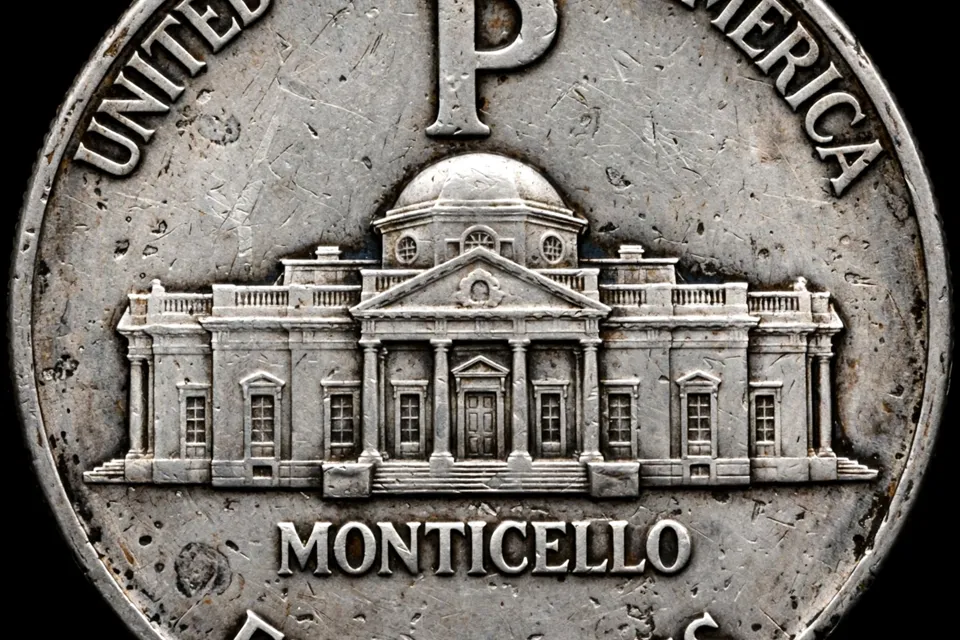
Spotting one takes two seconds: flip the coin over. If a large P, D, or S sits above the Monticello dome, it is silver — the oversized wartime mint mark is unmistakable. Uncirculated examples and the 1943/2-P and 1942/1 overdates carry much larger premiums.
Grade-by-Grade Value Table: Key-Date Nickels
| Coin | Good-4 | VF-20 | MS-63 | Auction record |
|---|---|---|---|---|
| 1885 Liberty Head | $500+ | $2,000+ | $15,000+ | $40,000+ |
| 1912-S Liberty Head | $400+ | $1,200+ | $10,000+ | $30,000+ |
| 1926-S Buffalo | $20+ | $100+ | $8,000+ | $322,000 (MS66, 2008) |
| 1918/7-D Buffalo | $700+ | $2,500+ | $40,000+ | $511,875 (MS65+, 2024) |
| 1937-D 3-Legged Buffalo | $500+ | $1,500+ | $9,000+ | $99,875 (MS66+, 2021) |
| 1939-D Jefferson | $5+ | $20+ | $100+ | $10,000+ (Full Steps gem) |
| 1950-D Jefferson | $5+ | $15+ | $30+ | $17,250 (MS67FS, 2006) |
| 1971 No-S Proof Jefferson | $800+ | $1,000+ | $1,500+ | $8,100 (PR69DCAM, 2023) |
Typical retail ranges for problem-free coins — strike quality and eye appeal move prices within a grade.
5 Checks to Tell If Your Nickel Is Valuable
1. Read the date and mint mark. Find the mint mark to the right of Monticello (Jefferson, 1938–1964) or below the date on the obverse (1968–present); on Buffalo nickels it sits below FIVE CENTS on the reverse.
2. Do the silver check. Large P, D, or S above Monticello's dome means 1942–1945 silver — an instant $3+ coin.
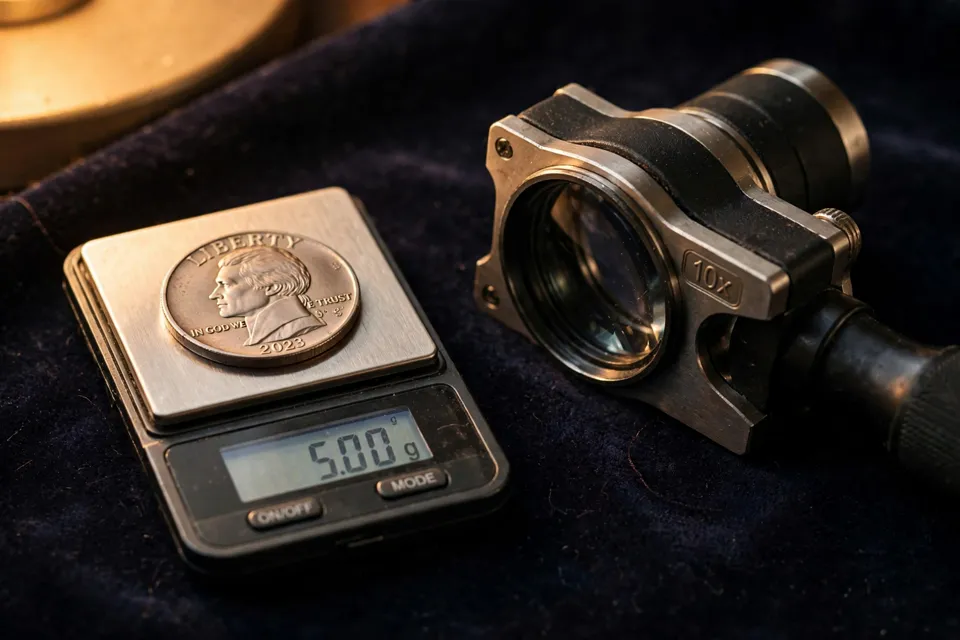
3. Hunt for errors. Under a loupe, look for doubled lettering or dates, an overdate, a Buffalo missing its front leg, or a proof nickel with no mint mark. Errors are where ordinary-looking nickels become valuable.
4. Check the steps. Flip to the reverse and count the step lines at the base of Monticello. Five or six fully separated, unbroken lines earn the Full Steps designation — and a serious premium.
5. Never clean it. Cleaning destroys collector value instantly. A cleaned key-date nickel can lose most of its premium. Handle coins by the edges and leave surfaces alone.
Collector Tips: What to Do With Old Nickels
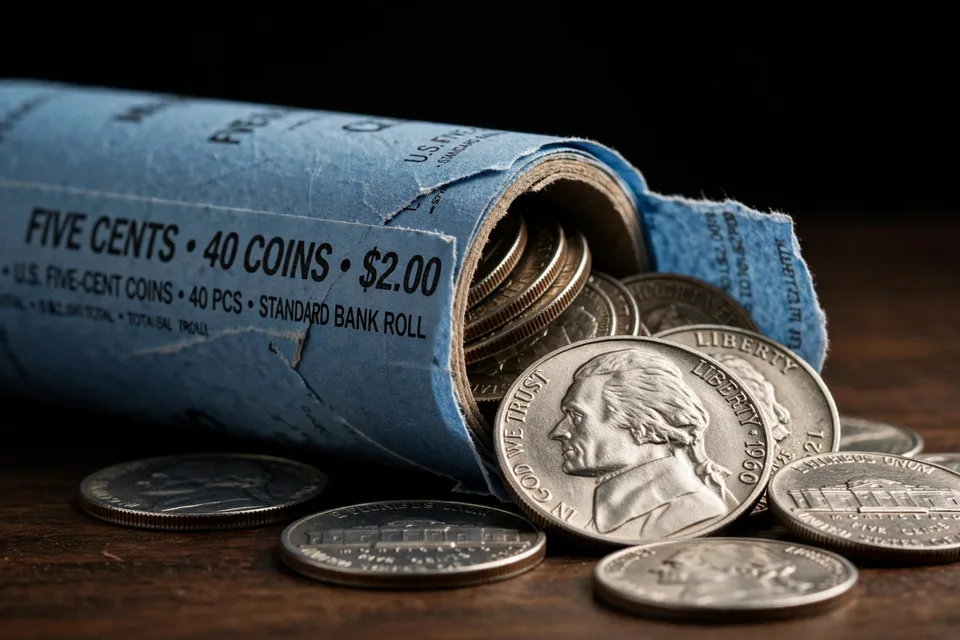
Save every nickel dated before 1960 — even common ones cost nothing to keep. Ask your bank for rolls of nickels; roll hunting still turns up war nickels and the occasional key date for face value. Keep 1971 proof sets sealed until you have checked the nickel for a missing S. For any coin that might be a key date or valuable error, professional grading by PCGS or NGC authenticates it and maximizes its market value.
Curious what your own coins might be worth? Run them through the Coin Value Checker for an instant estimate, verify key dates with the Key Date Checker, or scan for mint mistakes with the Error Identifier.
Frequently Asked Questions
How much is a Buffalo nickel worth?
Most circulated Buffalo nickels are worth $1–$5, with common dates in average condition selling for $1–$3. Better grades reach $5–$30. Key dates jump: the 1918/7-D overdate starts around $700+ even worn (series record $511,875), while the 1937-D 3-legged starts around $500+. Dateless, heavily worn examples are typically worth 25–50 cents each.
What nickels are worth money?
The nickels worth real money fall into four groups: key dates (1885 and 1912-S Liberty Head, 1926-S Buffalo, 1939-D and 1950-D Jefferson), silver war nickels (1942–1945, $3+ each), famous errors (1918/7-D overdate, 1937-D 3-legged, 1916/16 doubled die, 1971 No-S proof, 1943/2-P overdate), and Full Steps gems of tough Jefferson dates. Everything else common and worn is face value.
How much is a 1943 nickel worth?
A 1943 nickel is a silver war nickel worth about $3+ for its 35% silver content, with dealers typically paying $1.50–$2.50 for circulated examples. Identify it by the large P, D, or S mint mark above Monticello on the reverse. The rare 1943/2-P overdate variety — showing traces of a 2 under the 3 — is worth $50–$200 in circulated grades and $200–$1,000+ uncirculated.
How do I know if my nickel is valuable?
Check three things: the date (key dates listed above), the mint mark (large wartime mint marks mean silver), and the coin's surfaces (doubling, overdates, missing mint marks, or Full Steps). Most Jefferson nickels from 1946–1964 in worn condition are worth 5 cents. When in doubt, compare your coin against a current value guide and never clean it.
Are nickels from 1946 to 1964 worth anything?
In circulated condition, common-date Jefferson nickels from 1946–1964 are worth face value — 5 cents. Exceptions are uncirculated examples ($3–$10), Full Steps specimens ($20–$100+), and recognized errors like the 1955 doubled die. The silver war nickels ended in 1945, so nothing in this range contains silver.
Is a 1950-D nickel rare?
Yes — the 1950-D is one of two recognized key dates in the Jefferson series, with just 2,630,030 struck, the lowest regular-issue mintage of the entire series. Circulated examples start at $5–$15, MS65 examples run $30–$40, and a Full Steps MS67 sold for $17,250 at Heritage in 2006. You cannot complete a Jefferson set without one.
Related Reading
- How Much Is a Buffalo Nickel Worth? From 50 Cents to $511,875+ — the full value story of the beloved 1913–1938 series, its key dates, and its famous errors
- How Many Nickels in a Roll? From $2 Rolls to $500,000+ Hidden Finds — the companion roll-hunting guide for five-cent coins
- Key Date Guide — how to identify the scarce dates that drive coin values across every series