How Much Is a Quarter Worth? From Pocket Change to $207,400+
Quarters · 8 min read · Updated October 20, 2026
A quarter in your pocket is usually worth exactly 25 cents. But some quarters are worth hundreds, thousands, or even hundreds of thousands of dollars. A 1932-D Washington quarter sold for $143,750 at auction. A 1916 Standing Liberty quarter reached $207,400. And every quarter minted from 1932 through 1964 contains enough silver to be worth $10+ on its metal content alone. So how much is a quarter worth? It depends on three things: the date, the mint mark, and the condition. Here is how to tell whether your quarter is ordinary pocket change or a collector treasure.
The Quick Answer: Which Quarters Are Actually Valuable?
The vast majority of quarters in circulation — every clad quarter dated 1965 or later — are worth exactly face value: 25 cents. But a quarter is worth more than face value when it falls into one of four groups:
- Silver quarters (1932–1964): 90% silver, worth $10+ on melt value alone.
- Key-date quarters: first-year 1932-D and 1932-S issues, worth $100+ even in worn condition.
- Historic rarities: the 1916 Standing Liberty quarter, worth $3,250+ in any condition.
- Valuable errors: the 2004-D Wisconsin Extra Leaf and the rare 1965 silver-planchet quarter.
If your quarter is dated 1964 or earlier, stop and look closer — that one date range is the fastest way to find value.
Are Quarters Silver? How Much Silver Is in a Quarter?
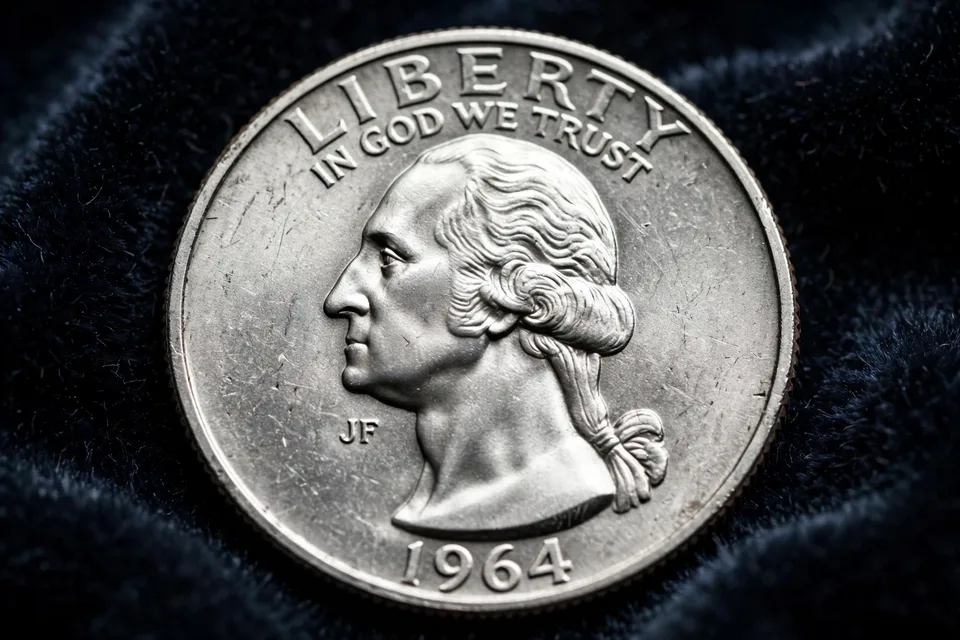
Yes — quarters struck from 1932 through 1964 are 90% silver and 10% copper, weighing 6.25 grams and containing 0.1808 troy ounces of pure silver. At current silver prices around $57 per ounce (October 2026), that is roughly $10+ in silver value for every single one — even heavily worn examples.
Starting in 1965, the U.S. Mint switched quarters to a copper-nickel "clad" composition: pure copper sandwiched between copper-nickel layers. These clad quarters weigh 5.67 grams and carry no silver at all. That is why the date is everything. A worn 1964 quarter is worth $10+; a worn 1965 quarter is worth 25 cents.
How to tell if your quarter is silver:
- Check the date. 1964 or earlier means silver. 1965 or later means clad.
- Check the edge. A silver quarter has a solid silvery-white edge. A clad quarter shows a visible copper-brown stripe between the outer layers.
- Weigh it. Silver quarters weigh 6.25 grams; clad quarters weigh 5.67 grams. A digital jewelry scale settles it in seconds.
One important note: proof and special collector quarters — including 40% silver Bicentennial quarters sold in collector sets and silver proof state quarters — carry the S mint mark and are worth more than face value too.
The 1932-D and 1932-S: The Keys to the Washington Quarter Series
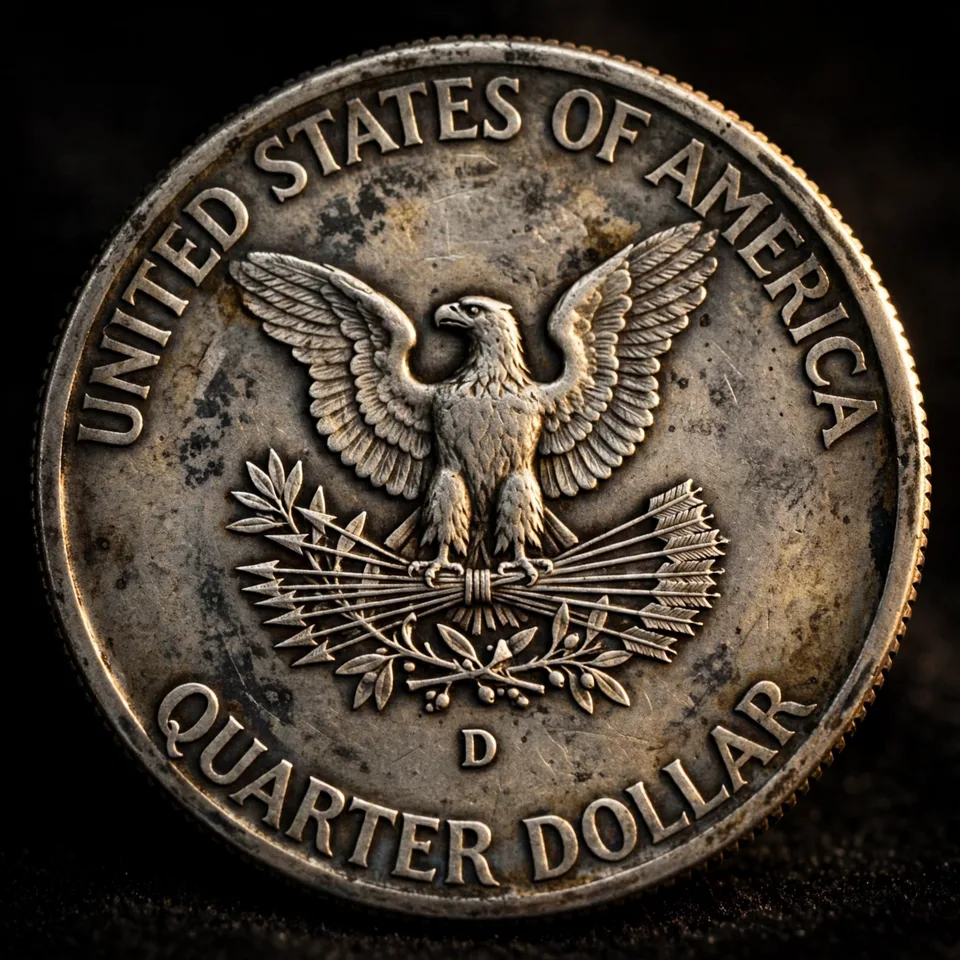
1932 was the first year of the Washington quarter, and the Denver and San Francisco issues from that year remain the undisputed keys of the entire series. Out of the first-year production, Philadelphia struck 5,404,000 quarters, Denver struck just 436,800, and San Francisco struck only 408,000 — the two lowest mintages of any Washington quarter ever produced.
The result is a dramatic value gap that has held for decades:
- 1932-D: worth $100+ even in worn Good-4 condition. The auction record stands at $143,750 for a PCGS MS66 example sold in 2008.
- 1932-S: worth $40+ in worn condition, with finer examples climbing steeply. The record is $45,500 for a PCGS MS66 specimen sold in 2020.
- 1932 (no mint mark, Philadelphia): the most obtainable of the three, but still a premium coin — gem MS65 examples bring $400+.
The mint mark on 1932 quarters sits on the reverse, below the eagle. Because these two key dates are so heavily counterfeited and altered (added mint marks), professional authentication is strongly recommended for any high-value example.
The 1916 Standing Liberty Quarter: The $207,400 First-Year Rarity
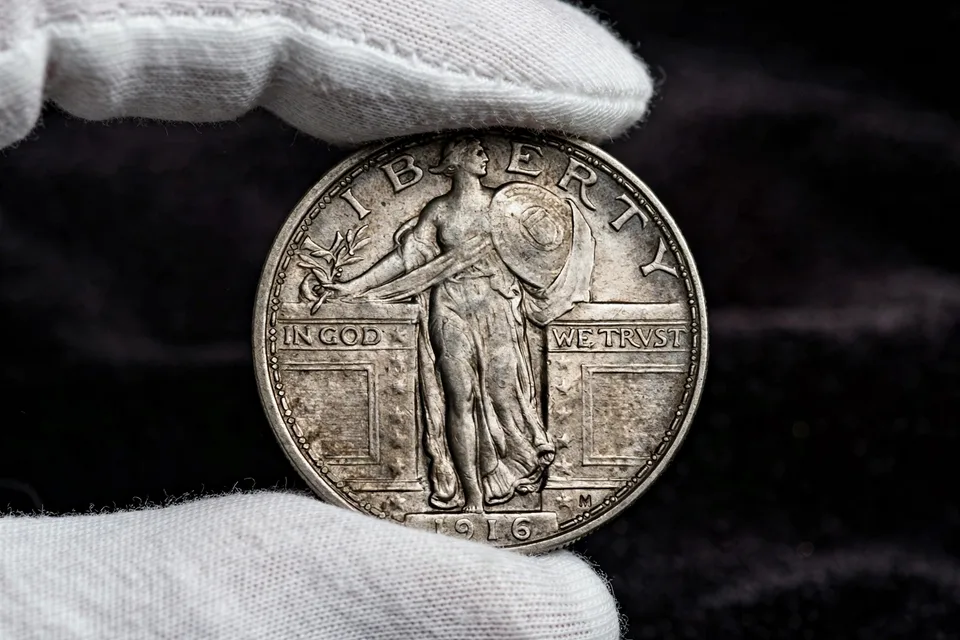
Before the Washington quarter, there was the Standing Liberty quarter — and its very first issue, the 1916, is one of the great rarities of 20th-century American coinage. Only 52,000 were struck, all at Philadelphia (no mint mark), during the final two weeks of December 1916. Nobody announced the new design to the public, so nearly every coin went straight into circulation.
How to recognize one: the 1916 is the "Type 1" design — Liberty's figure is exposed above the waist, and on the reverse the flying eagle has NO stars beneath it (stars were added in 1917). Even worn examples with readable dates are worth $3,250+. The finest known example, graded PCGS MS67FH, sold for $207,400 at Heritage Auctions in May 2026.
Modern Quarters Worth Real Money
Rare quarters are not limited to the old silver years. Several modern issues are worth serious collector premiums:
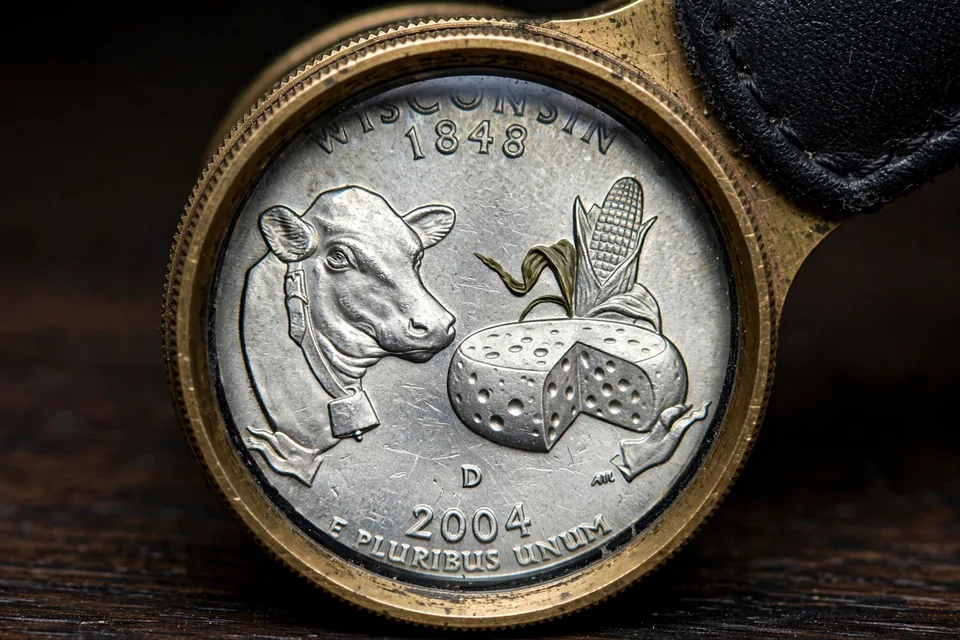
2004-D Wisconsin Extra Leaf quarter. The most famous error of the 50 State Quarters program (1999–2008). On some Denver-struck Wisconsin quarters, an extra leaf appears on the ear of corn on the reverse — either curving upward (Extra Leaf High) or drooping downward (Extra Leaf Low). This error exists ONLY on coins with the D mint mark. Circulated examples bring $50–$130+. The auction records stand at $2,530 for an Extra Leaf High (MS66, 2006) and $6,000 for an Extra Leaf Low (PCGS MS67, 2020). The extra leaf must be raised from the coin's surface — scratches and post-mint damage do not count.
1982-P and 1983-P quarters. These are "condition rarities." The U.S. Mint produced no official uncirculated mint sets in 1982 or 1983, and the severe recession meant almost nothing was saved from circulation. Worn examples are face value, but pristine MS65 examples bring $28–$45+, and the record stands at $10,200 for a PCGS MS68 1982-P sold in 2019.
1965 silver-planchet error quarter. A handful of 1965 quarters were mistakenly struck on leftover 90% silver planchets from 1964. These carry no mint mark (no U.S. coins did in 1965–1967) and weigh 6.25 grams like a silver quarter. One verified example brought about $7,000 at auction. Weigh your 1965 quarters — it takes seconds.
What Are 50 State Quarters and Bicentennial Quarters Worth?
The 50 State Quarters (1999–2008) are the coins most Americans grew up with, so this question comes up constantly. The honest answer: ordinary circulated state quarters from Philadelphia and Denver are worth 25 cents. The program produced them by the billions.
The exceptions are the collector versions: silver proof state quarters (S mint mark, 90% silver) are worth $10+, and high-grade certified examples of certain designs have set standout records in MS69: the 2004-D Iowa record is $1,840 (PCGS example, Heritage 2007 — only 10 graded MS69 by PCGS), and the 2004-P Texas record is $3,055 (NGC example).
Bicentennial quarters dated 1776–1976 work the same way: the clad versions in your change jar are worth face value, but the 40% silver collector versions (sold in special Mint sets) are worth $10+ on silver content alone.
How to Check If Your Quarter Is Valuable: 5 Quick Steps
- Read the date and mint mark. 1964 or earlier = silver. 1932 with D or S = key date. On 1932–1964 quarters the mint mark is on the reverse below the eagle; from 1968 on, it sits on the obverse to the right of Washington's ponytail.
- Look at the edge. A solid silver edge means a silver quarter; a copper stripe means clad.
- Weigh it. 6.25 grams means silver composition; 5.67 grams means clad. This catches the 1965 silver-planchet error.
- Check for the Wisconsin extra leaf. On a 2004-D Wisconsin quarter, examine the ear of corn on the reverse under magnification for a raised extra leaf.
- Never clean it. Cleaning destroys collector value. Original surfaces — even with honest wear — are always worth more than a polished coin.
FAQ: How Much Is a Quarter Worth?
How much is a silver quarter worth?
Silver quarters dated 1932–1964 are worth $10+ each just for their 90% silver content at current prices, with better dates and conditions bringing far more.
What is the most valuable quarter ever?
The 1916 Standing Liberty quarter holds one of the top records at $207,400 (PCGS MS67FH, Heritage May 2026). Among Washington quarters, the 1932-D record stands at $143,750 (MS66, 2008).
Are Bicentennial (1776–1976) quarters worth anything?
Clad Bicentennial quarters in circulation are worth 25 cents. The 40% silver collector versions from Mint sets are worth $10+.
How do I know if my quarter is silver?
Three checks: the date is 1964 or earlier, the edge is solid silvery-white with no copper stripe, and the weight is 6.25 grams (not 5.67 grams).
Is a 1965 quarter valuable?
Normal 1965 quarters are worth face value — but a tiny number were struck on leftover silver planchets, and one verified example brought about $7,000. Weigh yours: 6.25 grams means silver.
Find Out What Your Quarter Is Worth
Run our free Coin Value Checker tool to compare your quarter against current market ranges for its exact date and mint mark, or use the Key Date Checker to find out in seconds whether your coin is one of the rare issues collectors compete for — from the 1932-D key date to the 2004-D Wisconsin Extra Leaf.