How Much Is a Wheat Penny Worth? From 3 Cents to $1.7 Million+
Pennies · 8 min read · Updated October 21, 2026
How much is a wheat penny worth? Most wheat pennies — the Lincoln cents with two wheat stalks on the reverse, minted from 1909 through 1958 — are worth 3 to 10 cents in worn condition. Uncirculated examples bring $1 to $10+, and the great key dates climb far higher: a worn 1909-S VDB starts around $800+, a 1914-D brings $200+, and the rarest wheat penny errors have sold for more than $1.7 million. So while the wheat penny in your change jar is probably worth a few cents, the date and mint mark on yours decide whether it is pocket change or a serious collector coin.
What Is a Wheat Penny?
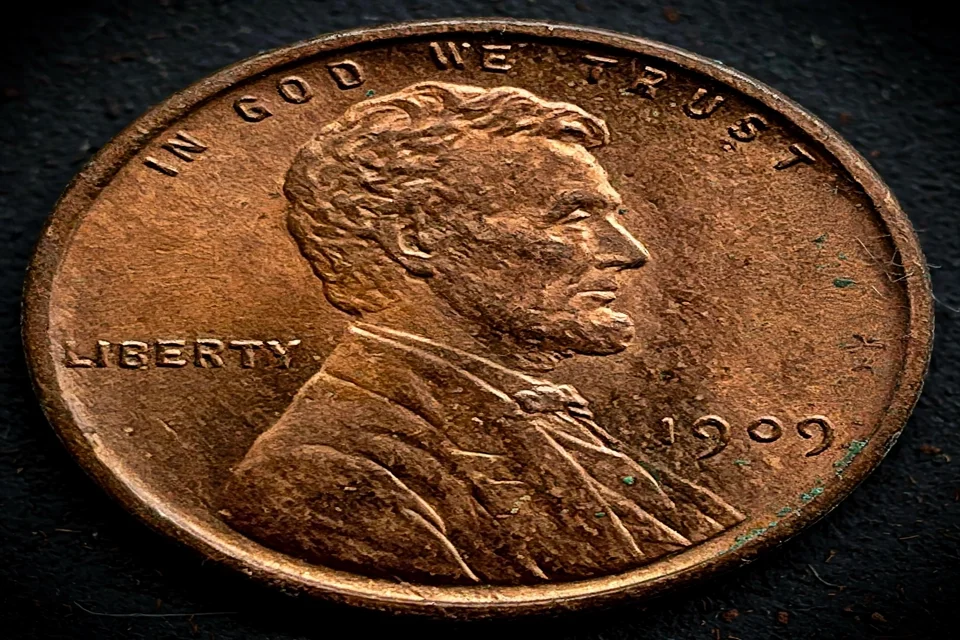
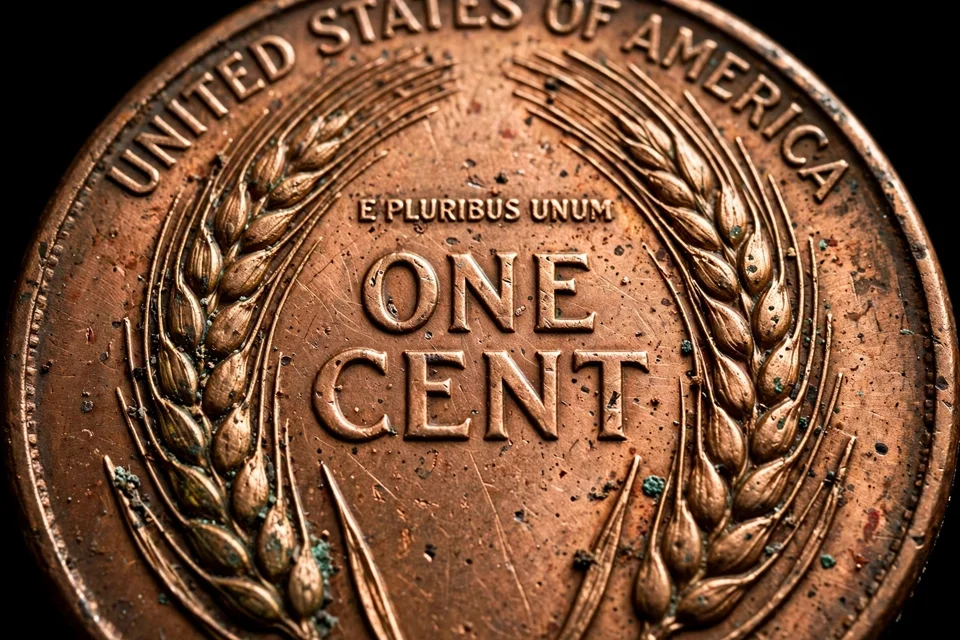
The wheat penny is the Lincoln one-cent coin struck from 1909 through 1958, named for the two stalks of durum wheat on its reverse flanking the words ONE CENT. It was designed by sculptor Victor David Brenner and issued in 1909 for the 100th anniversary of Abraham Lincoln’s birth — the first United States coin ever to carry a president’s portrait, replacing the Indian Head cent that had circulated since 1859.
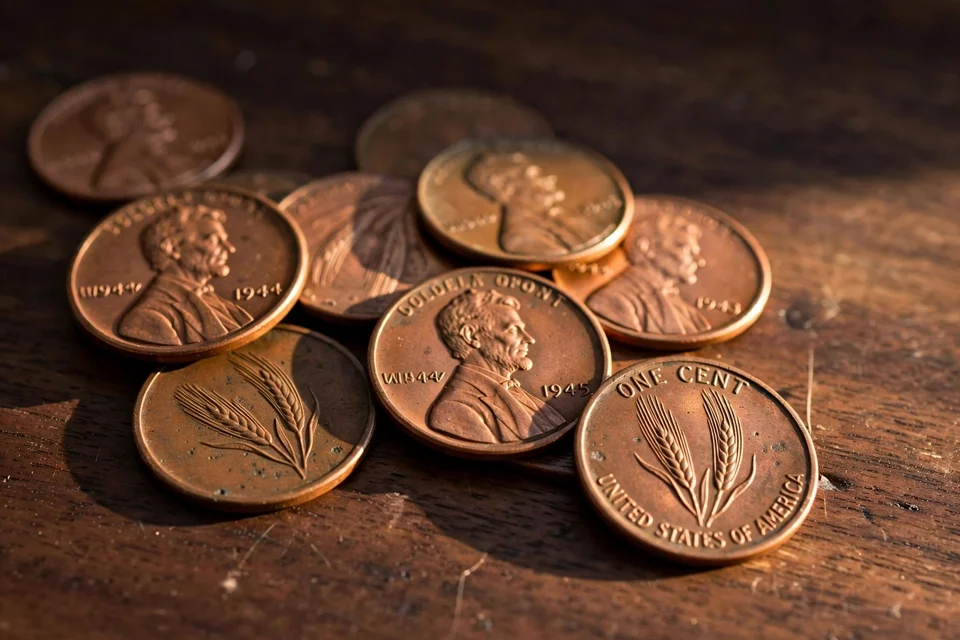
Nearly fifty years of wheat cents came out of three mints — Philadelphia (no mint mark), Denver (D), and San Francisco (S) — before the reverse changed to the Lincoln Memorial design in 1959. The standard composition was 95% copper, which is why well-preserved wheat pennies glow with that warm red color collectors prize. Two famous exceptions exist: the zinc-coated steel cents of 1943, and the 1944–1946 cents struck from recycled wartime shell casings. Because billions were made, most wheat pennies are common — but a short list of dates and errors is anything but.
Wheat Penny Value by Grade: What a Common One Is Worth
For ordinary, common-date wheat pennies, condition is everything. Here is what typical examples bring:
| Grade | What it looks like | Typical wheat penny value |
|---|---|---|
| Good-4 | Heavy wear, date and legends readable | 3–10 cents |
| Fine-12 | Moderate wear, most details visible | 10–25 cents |
| Extremely Fine-40 | Light wear on the high points | 25–75 cents |
| MS-60 (uncirculated, brown) | No wear, original surfaces toned brown | $1–$5 |
| MS-65 Red | Gem uncirculated, full original red luster | $15–$30+ |
Copper oxidizes, so grading services describe wheat cents as Red (RD), Red-Brown (RB), or Brown (BN). A Red coin in the same technical grade can be worth many times what a Brown one brings — color is the single biggest value driver on common dates. This is also why you should never clean a wheat penny: cleaning strips the original surface and its color, and a cleaned coin is worth a fraction of an original one.
The 5 Wheat Penny Key Dates Worth Real Money
Five dates stand above everything else in the wheat series. If your wheat penny matches one of these, you are holding a genuinely valuable coin:
| Date | Mintage | Worn (G-4) value | Mint state value |
|---|---|---|---|
| 1909-S VDB | 484,000 | $800+ | $2,000+; record $144,000+ |
| 1914-D | 1,193,000 | $200+ | $10,000+ in top grades |
| 1922 “Plain” (no D) | — | $600+ | $30,000+ finest known |
| 1931-S | 866,000 | $100+ | $1,200+ |
| 1909-S (no VDB) | 1,825,000 | $100+ | $800+ |
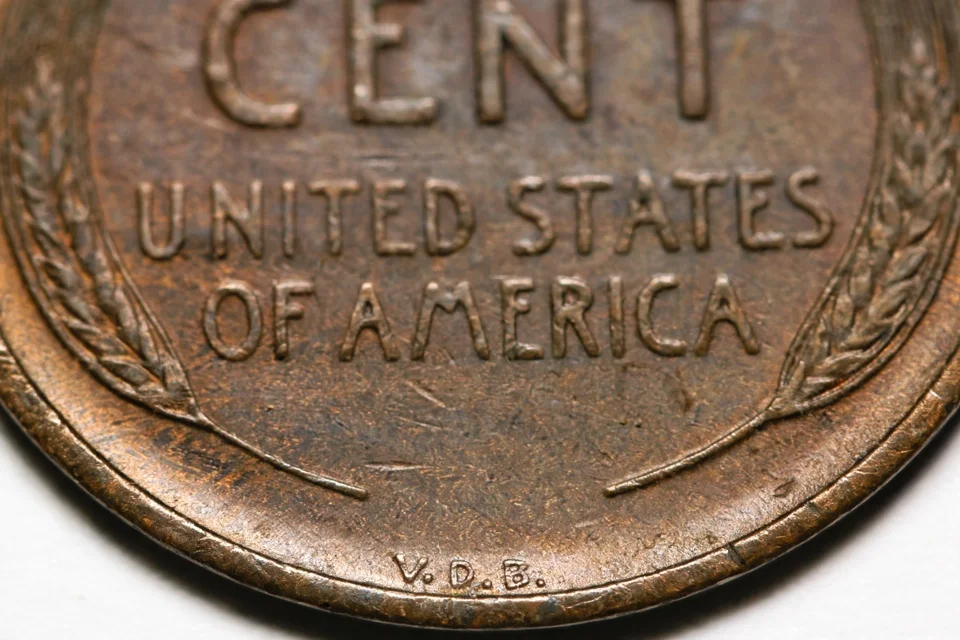
1909-S VDB — the king of the series. The very first Lincoln cent, struck in San Francisco with Brenner’s V.D.B. initials on the reverse. Only 484,000 were made before public complaints about the oversized initials got them removed. Even heavily worn examples start around $800+, and a gem red MS67 brought $144,000+ at auction in 2022. Check for the S below the date on the obverse and the V.D.B. at the bottom of the reverse — both must be present.
1914-D. With a mintage of 1,193,000, this is the lowest-mintage regular Denver wheat cent. Worn examples bring $200+, and the finest red specimens reach five figures. It is one of the most counterfeited wheat pennies (added mint marks), so authentication matters on any expensive example.
1922 “Plain” (no D). In 1922, only the Denver Mint produced cents — Philadelphia and San Francisco made none. On one badly worn die pair, the D mint mark vanished entirely, creating the famous “Plain” variety. Genuine examples (the “strong reverse” die pair) start around $600+ even worn and reach $30,000+ in mint state. Beware: countless 1922-D cents have had their D removed by hand — a real one needs expert authentication.
1931-S. At 866,000 struck, this Depression-era issue is the second-lowest mintage of the entire wheat series. Worn examples bring $100+, with mint-state reds at $1,200+.
1909-S (no VDB). The first-year San Francisco cent without the initials — 1,825,000 minted — brings $100+ worn and climbs steeply in red mint state.
Wheat Penny Errors Worth Serious Money
Beyond the key dates, a handful of wheat penny errors are worth life-changing money:
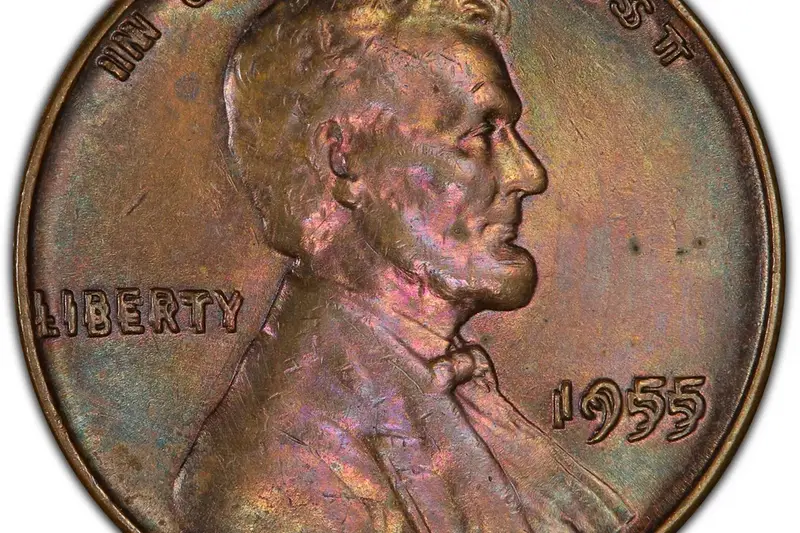
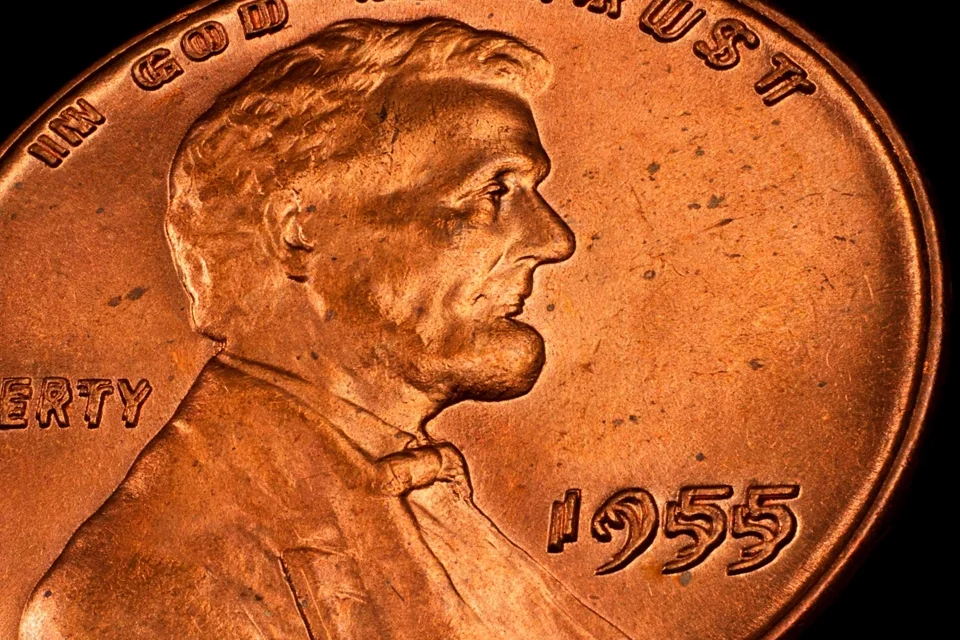
1955 Doubled Die. The most famous doubled die in American coinage — dramatic doubling on the date and lettering, visible without magnification. Even worn examples bring $1,000+. We cover it in full detail in our 1955 Doubled Die Penny Value guide.
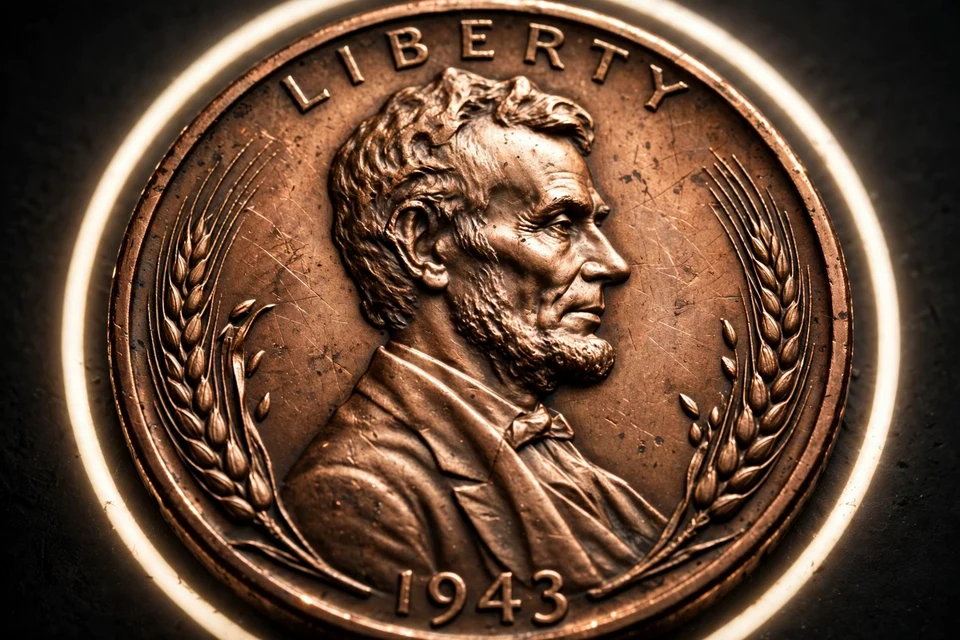
1943 bronze cent. The legendary wrong-planchet error: a few 1943 cents were struck on leftover bronze planchets instead of steel. Fewer than 30 are known across all three mints, and the finest — a 1943-D — sold for $1.7 million. Our 1943 Copper Penny Value guide shows exactly how to test yours with a magnet and a scale.
1944 steel cent. The mirror-image error of the 1943 bronze: a few 1944 cents were struck on leftover zinc-coated steel planchets from 1943. Genuine examples bring $75,000+, and the 1944-S record stands at $408,000 (PCGS MS66, 2021). If your 1944 penny sticks to a magnet, stop and get it authenticated.
1958 Doubled Die. The last year of the wheat reverse produced one of the rarest doubled dies of all — only a few are known, and one brought $336,000 at auction.
1917 Doubled Die. Strong doubling on the date and lettering; mint-state examples bring $3,000–$6,000+.
If your wheat penny shows anything unusual — doubling, a missing mint mark, the wrong color or weight — run it through our free Error Coin Identifier before assuming it is ordinary.
Where Is the Mint Mark on a Wheat Penny?
The mint mark on a wheat penny sits on the obverse, directly below the date. An S means San Francisco, a D means Denver, and no mint mark means Philadelphia. On key dates like the 1914-D and 1922 Plain, the mint mark — or its absence — is what separates a 10-cent coin from a $600+ one, so check it with a magnifier in good light.
One extra check for 1909 cents: Brenner’s V.D.B. initials appear at the very bottom of the reverse on the first 1909 issues. After public complaints that the initials were too prominent, the Mint removed them — then restored them in 1918, much smaller, on the obverse below Lincoln’s shoulder. A 1909 with the S mint mark but no V.D.B. is the still-valuable 1909-S; with both, it is the legendary 1909-S VDB.
Should You Clean Wheat Pennies?
No — never clean a wheat penny. Cleaning leaves hairline scratches and strips the original mint surface and color, and collectors pay for originality. A cleaned 1909-S VDB can lose most of its premium. The right care is simple: handle coins by the edges, store better dates in 2x2 holders or albums (never PVC flips, which damage copper over time), and keep them somewhere cool and dry. If a coin might be valuable, leave it exactly as found and let a professional assess it.
How to Check Your Wheat Pennies: 5 Steps
- Read the date and mint mark. Compare against the five key dates above — date plus mint mark is the fastest value screen there is.
- Check 1909s for the V.D.B. Look at the bottom of the reverse for the designer’s initials; S mint mark plus V.D.B. means the $800+ key date.
- Test 1943 and 1944 cents. A magnet and a scale settle the great wrong-planchet errors: steel sticks to a magnet and weighs 2.70 grams; bronze does not stick and weighs 3.11 grams.
- Look for doubling. Check the date, LIBERTY, and IN GOD WE TRUST with a 10x loupe for the split, separated letters of a true doubled die — especially on 1955, 1917, and 1958 cents.
- Judge the color, then stop. Bright original red commands the biggest premiums on common dates. Do not clean anything — if a coin looks valuable, use the Key Date Checker and consider professional authentication.
FAQ: How Much Is a Wheat Penny Worth?
How much is a wheat penny worth?
Most wheat pennies in worn condition are worth 3 to 10 cents. Uncirculated examples bring $1 to $30+, key dates like the 1909-S VDB start at $800+, and the rarest errors have sold for up to $1.7 million.
Which wheat pennies are the most valuable?
The 1909-S VDB ($800+ worn, record $144,000+), the 1914-D ($200+ worn), the 1922 “Plain” no-D ($600+ worn), the 1931-S ($100+ worn), the 1955 Doubled Die ($1,000+), and the wrong-planchet rarities — the 1943 bronze ($1.7 million record) and 1944 steel ($408,000 record).
Is my 1943 steel penny rare?
No — 1943 steel cents are common and worth about 10 cents to $1 in worn condition. The rare coin is a 1943 struck on bronze by mistake: it will not stick to a magnet and weighs 3.11 grams. See our 1943 Copper Penny Value guide for the full test.
Where is the mint mark on a wheat penny?
On the obverse, directly below the date. S stands for San Francisco, D for Denver, and no letter means Philadelphia.
Should I clean my old wheat pennies?
No. Cleaning scratches the surface and removes original color and luster, destroying collector value — especially on key dates. Store them in 2x2 holders and handle by the edges.
Are wheat pennies still in circulation?
Very rarely. Most were pulled from circulation decades ago by collectors, but they still turn up in old jars, inherited collections, and occasionally in bank rolls — which is why checking every wheat penny’s date and mint mark is worth the minute it takes.
Find Out What Your Wheat Penny Is Worth
Run our free Coin Value Checker to compare your wheat penny against current market ranges for its exact date and mint mark, or use the Key Date Checker to find out in seconds whether your coin is one of the five key dates collectors compete for — from the 1909-S VDB to the 1931-S.