1955 Doubled Die Penny Value: Why America's Most Famous Error Coin Is Worth $2,000+
Error coins · 6 min read · Updated October 17, 2026
One penny can be worth a down payment on a car. If you know the 1955 doubled die penny value, a single glance at pocket change can reveal one of the most dramatic mint errors in American history — bold doubling so strong you can see it without a magnifier. This is the coin that turned ordinary collectors into error hunters.
How a Misaligned Hub Created a Legend
The 1955 doubled die Lincoln cent was struck at the Philadelphia Mint (no mint mark) from a single working die that received a second, misaligned hub impression during the die-making process. Instead of the two impressions lining up exactly, the second landed slightly offset — and every coin struck from that die carried ghostly doubled lettering.
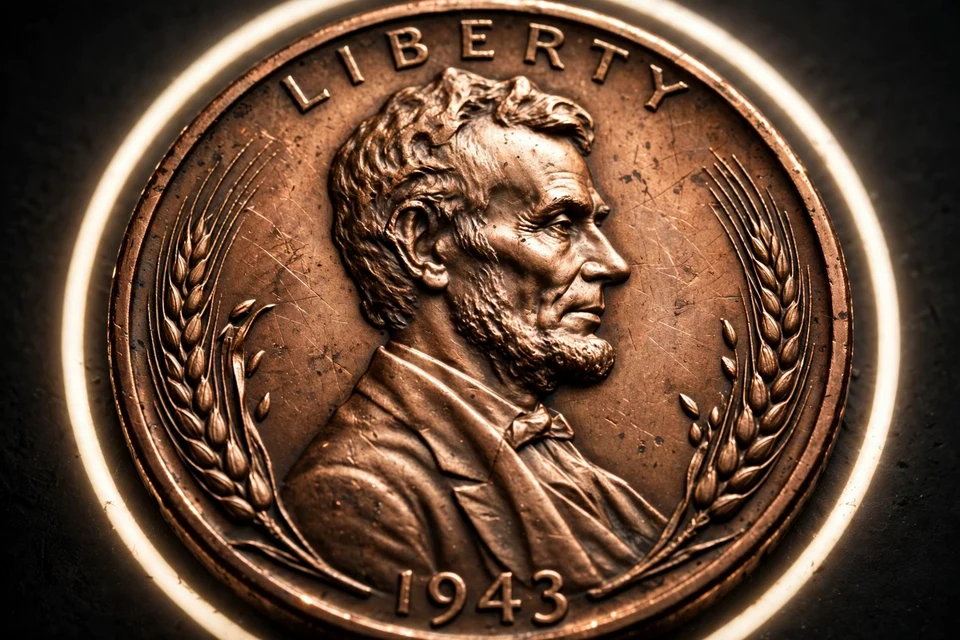
The result is unmistakable. On a genuine example, the date “1955,” the word LIBERTY, and the motto IN GOD WE TRUST each show thick, rounded doubling. The effect is boldest on the date and LIBERTY, where the doubled images are nearly as strong as the primary ones. This was no subtle die variety. It was visible in pocket change — and collectors noticed almost immediately.
Mint employees reportedly spotted the problem, but by then the error coins were already mixed with millions of normal 1955 cents. Rounding them all up was deemed impractical, so the coins went out into circulation. Many turned up in vending-machine change, and dealers began offering instant cash for examples, turning the 1955 doubled die into an overnight sensation — a fame it has held for 70 years.
How to Identify a Genuine 1955 Doubled Die Penny
The genuine 1955 doubled die shows classic hub doubling: the doubled elements match the original design in height and thickness, with rounded, split serifs. Look for:
- Bold doubling on the date 1955, especially the 1 and 5s
- Doubling on LIBERTY to the left of Lincoln's portrait
- Doubling on IN GOD WE TRUST across the top
- A Philadelphia strike with no mint mark
The key distinction is between true doubled dies and common machine doubling. Machine doubling — often marketed misleadingly as the “poor man's doubled die” — shows flat, shelf-like doubling with a reduced, stepped appearance, and it carries little to no premium over a regular 1955 cent. A true 1955 doubled die (FS-101, PCGS #2826) shows strong, rounded doubling that matches the original lettering in height and contour.
Weight and size also check out: 3.11 grams, 19 mm diameter, solid copper composition, designed by Victor David Brenner. Any example that looks right but weighs wrong is suspect.
1955 Doubled Die Penny Value by Grade
The 1955 doubled die penny value climbs steeply with condition and original mint-red color. Recent auction results show the market clearly:
- Circulated (Good to Extremely Fine): $1,500+
- About Uncirculated (AU50–AU58): $2,000+
- Mint State, Brown (MS60–MS64BN): $3,500+
- Mint State, Red-Brown (MS63RB–MS64RB): $6,000+
- Mint State, Red (MS64RD–MS65RD): $40,000+
At the top end, values are staggering. A PCGS MS65+RD example with a CAC green sticker from the Stewart Blay Red Copper collection sold for $320,625 at GreatCollections in February 2025 — the current auction record. The previous record, $114,000, was set in 2018 at a Stack's Bowers auction for a PCGS MS65+RD specimen. Even modest circulated examples command $1,500+, a remarkable multiple of face value.
Color designations matter enormously on copper. “Red” (RD) examples retain nearly all their original mint luster, “Red-Brown” (RB) show partial fading, and “Brown” (BN) have fully toned. On this issue, the jump from Brown to Red can multiply value many times over.
How Many 1955 Doubled Die Pennies Exist?
No exact mintage exists for the variety itself. The parent 1955 Philadelphia cent had a mintage of 330,958,200, and estimates for the doubled die range from about 20,000 to 24,000 coins released into circulation, with some accounts suggesting as many as 40,000 were struck during a single evening shift. Perhaps 10,000 to 15,000 survive today across all grades.
High-grade survivors are genuinely scarce. Only a couple hundred are believed to exist in MS65 or better in any color, and red examples are the rarest of all. That scarcity, combined with the variety's fame, is what keeps demand — and prices — climbing.
What to Do If You Find One
If you think you have a 1955 doubled die penny, follow these steps:
- Do not clean it. Cleaning destroys original surfaces and slashes value. A cleaned example can lose most of its premium.
- Handle it by the edges only, and place it in a protective holder.
- Compare it against verified photos of genuine examples, checking the date, LIBERTY, and IN GOD WE TRUST for true hub doubling.
- Submit it to a major grading service such as PCGS or NGC for authentication and grading. Counterfeits and altered coins exist, and professional authentication protects both the coin's value and your sale.
Authenticated examples with CAC stickers command the strongest prices at major auctions, where specialist error collectors compete for them.
Why Collectors Still Chase This Coin
Seventy years after it left the Philadelphia Mint, the 1955 doubled die penny remains the benchmark against which every mint error is measured. It is famous enough to be recognizable, dramatic enough to spot without equipment, and scarce enough in top grades to keep auction records falling. The next $320,625 example is probably already sitting in someone's collection — or waiting in a roll of old cents.
Check your change. The most famous penny error in American numismatics might be closer than you think.