How Many Pennies in a Roll? The Complete Penny Roll Guide — Values, Copper Finds & Roll-Hunting Tips
Pennies · 9 min read · Published October 26, 2026
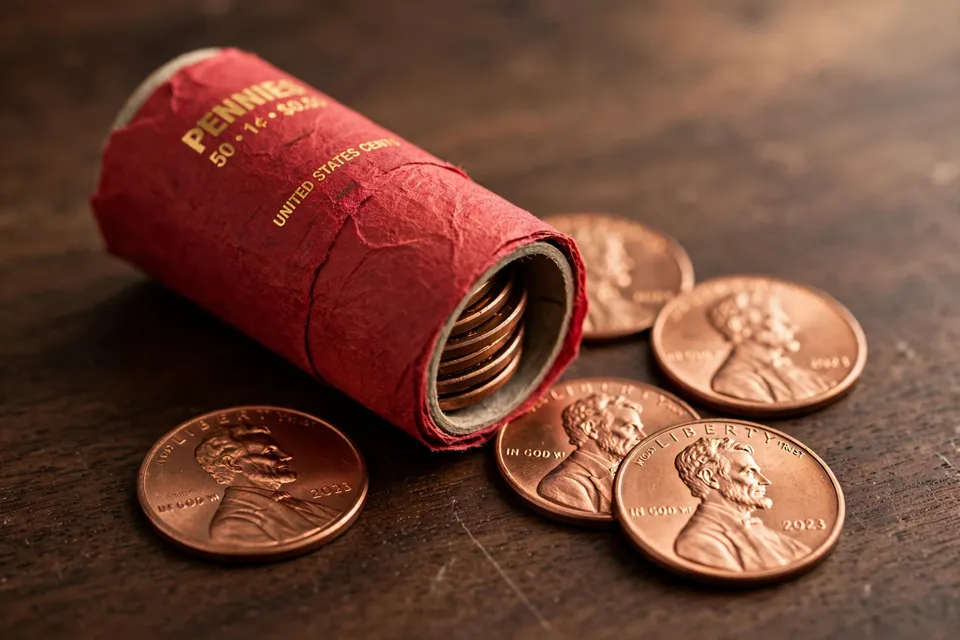
How many pennies in a roll? A standard roll holds 50 pennies worth $0.50, wrapped in a red paper wrapper. That is the answer for every modern penny roll in the United States — the same count, face value, and red wrapper whether the roll came from a bank or a dealer. What changes is what is inside: a roll of bright zinc cents is worth its fifty cents, while a roll hiding a 1909-S VDB, a 1943 copper cent, or a 1992 Close AM can be worth thousands.
How Many Pennies Are in a Roll?
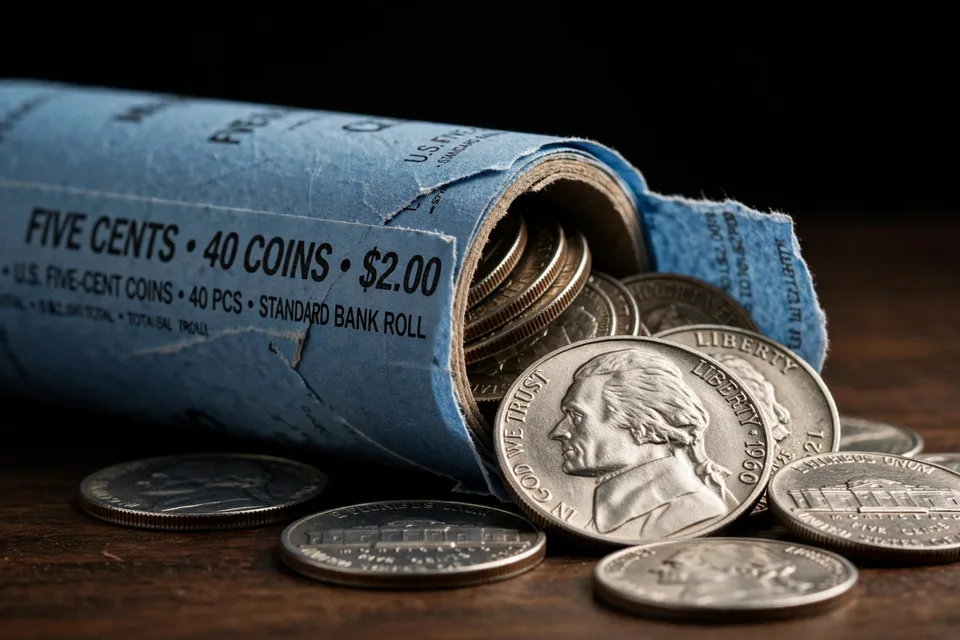
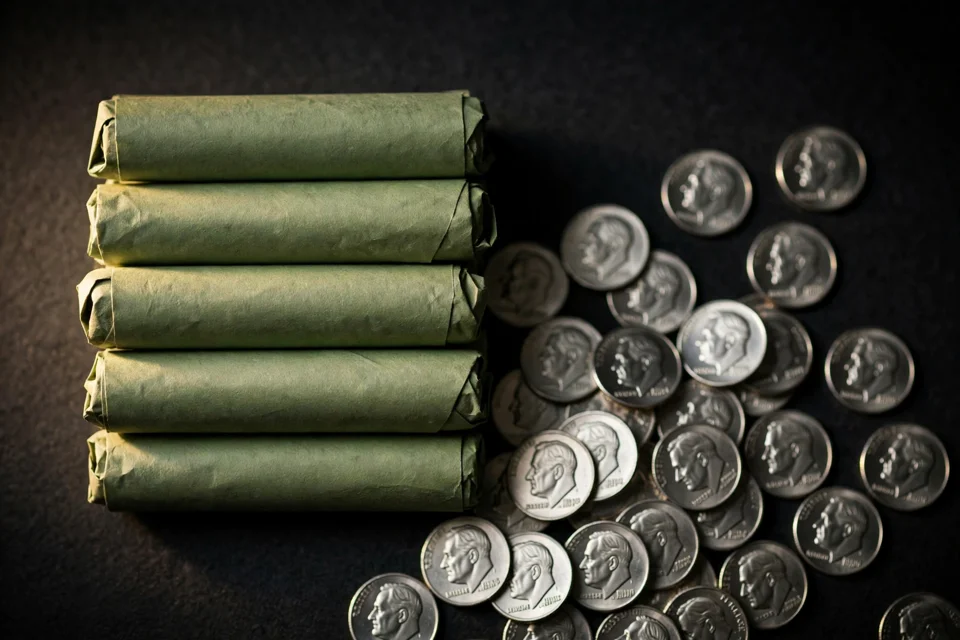
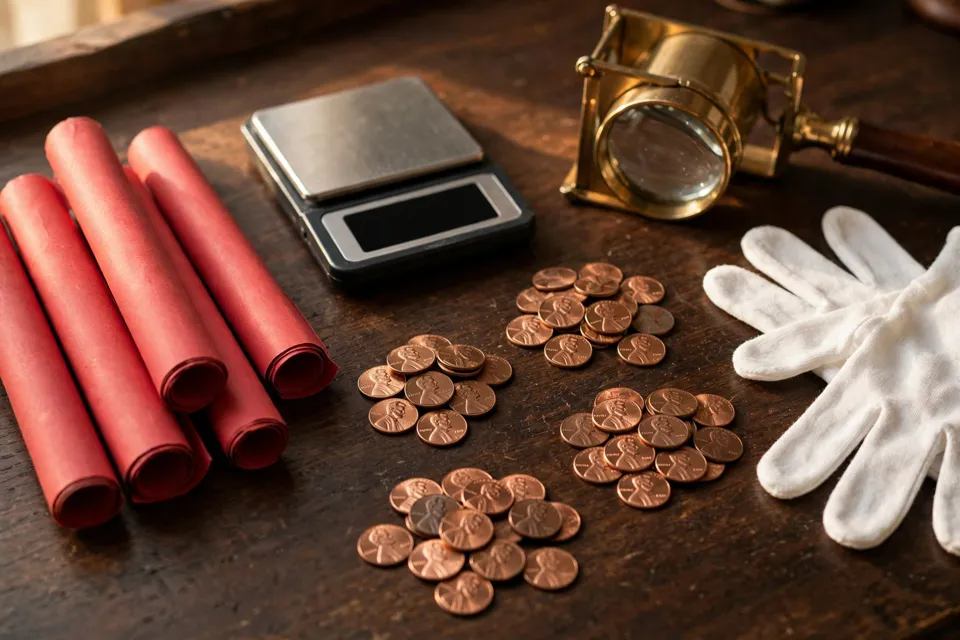
A penny roll contains 50 coins. The standard was set by the American Bankers Association, which gave each denomination its own wrapper color: red for pennies, blue for nickels, green for dimes, orange for quarters, tan for half dollars, and black for dollars. A penny measures 19.05 millimeters across and 1.52 millimeters thick with a smooth, plain edge, so a full 50-coin roll runs about 3 inches long.
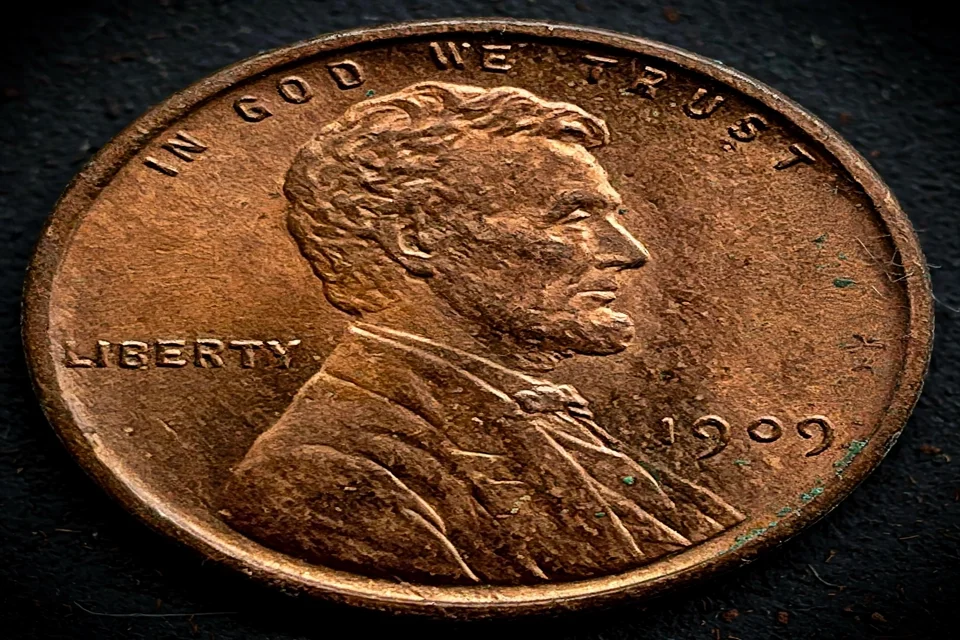
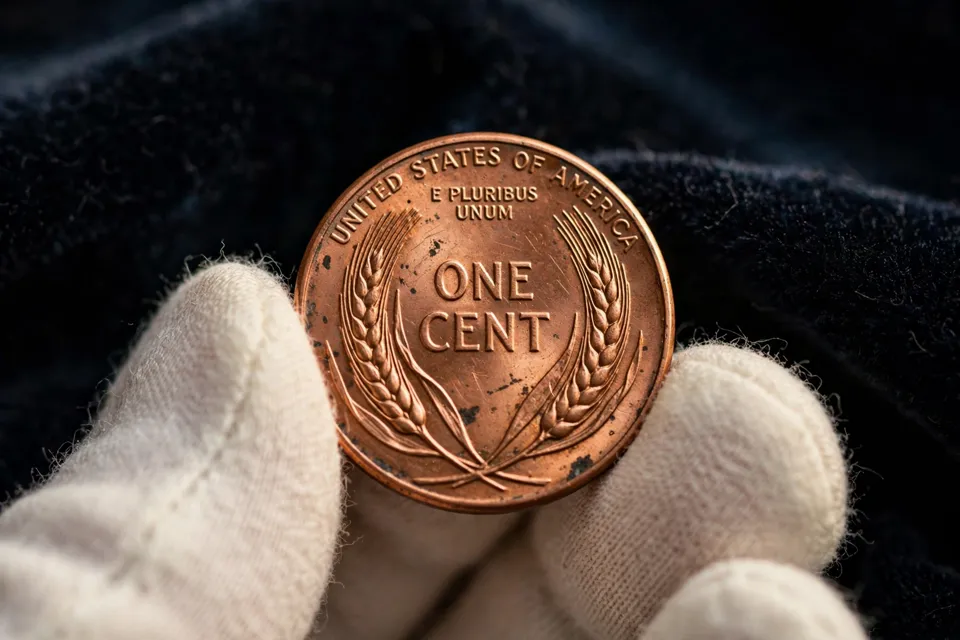
The count has never changed, even as the penny itself changed. Lincoln cents have kept the same diameter since 1909, through the wheat reverse (1909–1958), the Memorial reverse (1959–2008), and the Union Shield reverse (2010–present) — a roll of wheat, Memorial, or Shield cents each holds exactly 50 coins.
| Coin | Coins per roll | Face value | Wrapper color | Roll weight (modern) |
|---|---|---|---|---|
| Pennies | 50 | $0.50 | Red | 125 g |
| Nickels | 40 | $2.00 | Blue | 200 g |
| Dimes | 50 | $5.00 | Green | 113.4 g |
| Quarters | 40 | $10.00 | Orange | 226.8 g |
| Half dollars | 20 | $10.00 | Tan | 226.8 g |
| Small dollar coins | 25 | $25.00 | Black | 202.5 g |
Copper Pennies vs. Zinc Pennies: How Much Does a Roll Weigh?
The fastest way to tell what kind of penny roll you are holding is to weigh it. Pre-1982 cents are 95 percent copper at 3.11 grams each, so a full copper roll weighs 155.5 grams. Post-1982 cents are copper-plated zinc at 2.5 grams each, so a modern zinc roll weighs 125 grams — a 30.5-gram gap unmistakable on a pocket scale.
The 1982 transition year is the exception: 1982 cents exist in both compositions, in large date and small date varieties, from both Philadelphia and Denver — seven business-strike varieties in total — so a 1982 roll can weigh 125 grams, 155.5 grams, or anything in between. The wartime steel cent is a third weight: a 1943 steel cent weighs 2.70 grams, so a full steel roll weighs 135 grams, and a magnet picks steel cents straight out of a pile.
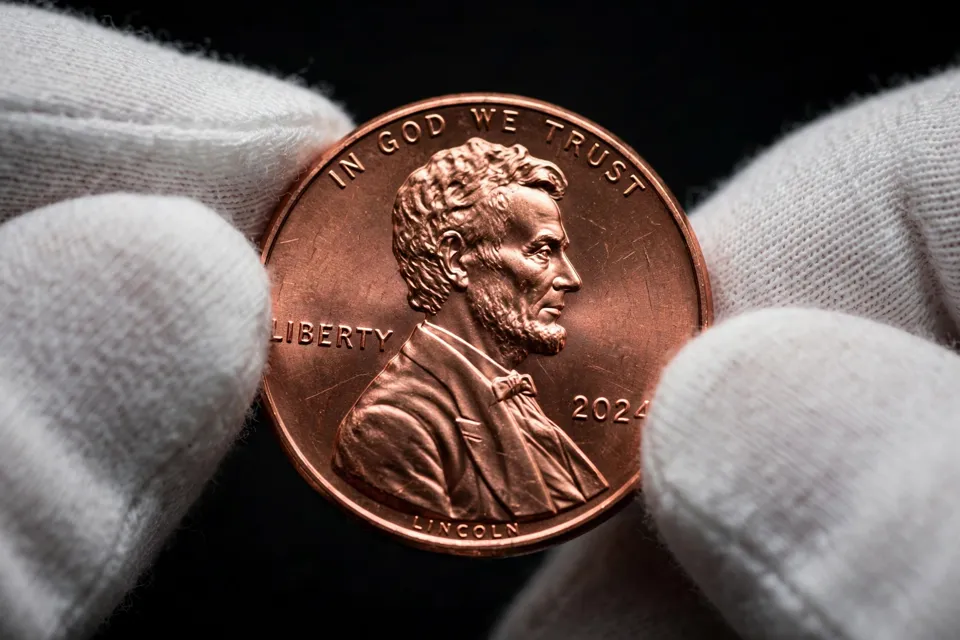
Pre-1982 copper rolls carry a small premium over face value with dealers and collectors, because the copper content is worth more than a cent per coin. That premium is a collector-market price, not a melt value: melting cents for their metal is prohibited. Uncirculated rolls of a single date and mint mark carry their own premium too, but a circulated mixed-date roll is generally worth its fifty cents plus the copper premium on its pre-1982 coins.
How Many Penny Rolls Are in a Box?
A standard bank box holds 50 rolls of a single denomination. For pennies that means 50 rolls × 50 coins = 2,500 pennies worth $25. A box of modern zinc rolls weighs about 6.25 kilograms (13.8 pounds); a box of solid copper rolls weighs about 7.78 kilograms (17.1 pounds). Penny boxes are the cheapest a roll hunter can buy — one reason penny roll hunting is the most popular entry point in the hobby. One more reason to start now: the Mint struck its final circulating penny on November 12, 2025, so the roughly 300 billion pennies in circulation are a fixed supply that will never grow again.
Rare Finds to Check For in Penny Rolls
Penny rolls are the richest hunting ground in coin collecting, because the rarest varieties are separated from common coins by details a loupe can catch.
| Find | What to look for | Value |
|---|---|---|
| 1909-S VDB wheat penny | S mint mark; V.D.B. initials | Worn $800+ |
| 1914-D wheat penny | D mint mark; 1,193,000 struck | Worn $200+ |
| 1922 “Plain” wheat penny (no D) | No mint mark; only Denver struck cents in 1922 | Worn $600+ |
| 1931-S wheat penny | S mint mark; 866,000 struck | Worn $100+ |
| 1955 doubled die penny | Strong doubling on date, LIBERTY, motto | $2,000+ |
| 1943 copper penny | Copper-brown, NOT magnetic, 3.11 grams | $100,000+ |
| 1944 steel penny | Silver-gray, IS magnetic, 2.70 grams | Up to $408,000+ |
| 1982-D Small Date copper penny | Small date, curved-base 2, 3.11 grams | $18,800 |
| 1992 Close AM penny | A and M in AMERICA nearly touching | $500+ |
| 1999 Wide AM penny | Clear A–M gap on a circulation strike | $20+ |
| 1972 doubled die penny | Strong doubling on LIBERTY, motto | $200+ |
| 1995 doubled die penny | Clear doubling on LIBERTY, motto | $25+ |
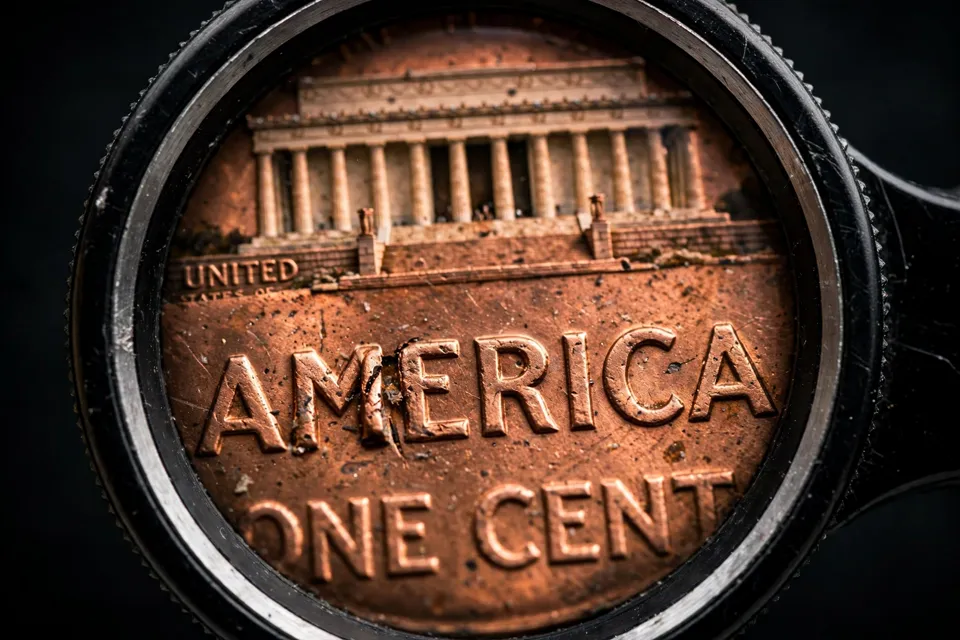
The Close AM and Wide AM varieties are the most realistic big finds still turning up in rolls. Normal 1992 cents show a clear gap between the A and M in AMERICA; the rare 1992 Close AM shows the two letters nearly touching, starting at $500+ circulated and reaching $25,850 in Mint State. The pattern reverses for 1998–2000: normal cents from those years show the letters nearly touching, while the rare Wide AM shows a clear gap — the 1999 Wide AM is the scarcest of the three, starting at $20+ circulated and reaching $9,775 in top grade. Check the designer initials too: on a genuine Close AM, the FG initials sit farther from the Memorial building than on a Wide AM.
Doubled die pennies are the other roll-hunting classic. True doubled die doubling is raised and rounded, with a clear split between the two images — the 1955 doubled die is so strong it can be spotted without magnification. Flat, shelf-like doubling is machine doubling, and it carries no premium. Learning that one distinction — raised versus flat — is worth more than any other skill in penny roll hunting.
How to Roll-Hunt Pennies
Ask your bank for penny rolls by name, and buy a box if you plan to search seriously. Open one roll at a time over a tray and sort by date first: pull every wheat cent, every 1943 steel cent, every 1982 cent, and every 1992 and 1998–2000 cent for a closer look. Run a magnet over the pile to pull out steel cents, then weigh any unusual 1982 or 1943 coin — 3.11 grams versus 2.5 grams separates copper from zinc, and 2.70 grams confirms steel.
Loupe the reverses of your 1992 and 1998–2000 cents for the AM spacing, and loupe the obverses of your 1955, 1972, and 1995 cents for raised doubling. Keep finds in 2×2 holders, return searched coins to a different bank, and never clean a coin you suspect is valuable — cleaning strips the original surface and can cut a $500+ variety down to a fraction of its worth.
Common Penny Roll Traps
Not every promising penny is a find. Machine doubling is the most common disappointment: it looks doubled, but the doubling is flat and shelf-like, and it is worth face value. Altered dates are the most expensive trap — a 1948 cent with its 8 filed into a 3 can pass as a 1943 copper cent until the magnet test (a genuine 1943 copper cent is not magnetic) and the weight test (3.11 grams, not 2.70) expose it. Copper-plated steel cents also fail the weight test.
Be skeptical of “unsearched” rolls sold online at a premium: many have already been searched and re-wrapped, with the valuable dates removed. Buy rolls from banks for searching, and buy certified coins — not promises — when you want a specific rarity.
Final Thoughts
How many pennies in a roll comes down to one simple standard: 50 pennies, fifty cents, a red wrapper — and a weight gap that tells you whether the roll is copper or zinc before you open it. The roll itself is the cheapest ticket in coin collecting, and it is the only one that can hide a $1.7 million copper cent, a $408,000+ steel cent, or a $25,850 Close AM variety. Open them carefully — the next coin in the tube could be the one that pays for the whole box.
Frequently Asked Questions
How many pennies in a roll?
A standard roll of pennies contains 50 coins worth $0.50 in a red wrapper, under the American Bankers Association standard used by banks across the United States.
How much is a roll of pennies worth?
A standard roll of pennies is worth its $0.50 face value in most cases. Solid pre-1982 copper rolls carry a small premium, original bank-wrapped wheat rolls trade above face depending on era and condition, and a roll hiding a rare variety can be worth hundreds or thousands.
How much does a roll of pennies weigh?
A roll of modern zinc pennies weighs 125 grams, a roll of pre-1982 copper pennies weighs 155.5 grams, and a roll of 1943 steel cents weighs 135 grams. Mixed rolls fall between those figures, which is why weighing a roll is a quick first test.
What color wrapper is used for penny rolls?
Penny rolls use a red wrapper. The full color system runs red for pennies, blue for nickels, green for dimes, orange for quarters, tan for half dollars, and black for dollars.
How many penny rolls are in a bank box?
A standard bank box holds 50 rolls, so a box of penny rolls contains 2,500 pennies worth $25 — about 6.25 kilograms for zinc rolls or 7.78 kilograms for copper rolls.
Can you still get penny rolls from the bank?
Yes. The Mint stopped producing circulating pennies in November 2025, but the roughly 300 billion pennies already in circulation remain legal tender, and banks still stock penny rolls — ask the head teller and order ahead.
A penny roll costs fifty cents, and the difference between a fifty-cent roll and a $25,850 roll is one mint mark, one letter spacing, and one doubled date. Before you spend any penny you are unsure about, run it through The Diggin Dave's free Coin Value Checker to confirm its date, mint mark, and value range, and use the Key Date Checker to see whether your date is a key issue. If a coin shows doubled lettering, the Error Identifier walks through the diagnostics.
Related Reading
- How Many Nickels in a Roll? From $2 Rolls to $500,000+ Hidden Finds — 40 nickels worth $2, war-nickel silver rolls, and key dates to check for
- How Many Dimes in a Roll? The Complete Dime Roll Guide — Values, Silver Finds & Roll-Hunting Tips — 50 dimes worth $5, silver-roll melt math, and key dates to check for
- How Much Is a Wheat Penny Worth? From 3 Cents to $1.7 Million+ — the key dates and errors that make wheat pennies worth checking twice