How Many Quarters in a Roll? The Complete Quarter Roll Guide — Values, Silver Finds & Roll-Hunting Tips
Quarters · 9 min read · Published October 24, 2026
A standard roll of quarters holds 40 quarters worth $10 in face value. Every bank-wrapped quarter roll in the United States follows the same standard: 40 coins, an orange paper wrapper, and a $10 total. But that $10 is only the floor. A roll of pre-1965 silver quarters holds 7.232 ounces of pure silver worth $390+ in melt alone at October 2026 silver prices, and a single key-date quarter inside — a 1932-D or 1932-S — can be worth $100+ even worn. This guide covers the roll standard, the weights, the silver math, and exactly which quarters to hunt for.
How Many Quarters Are in a Roll?
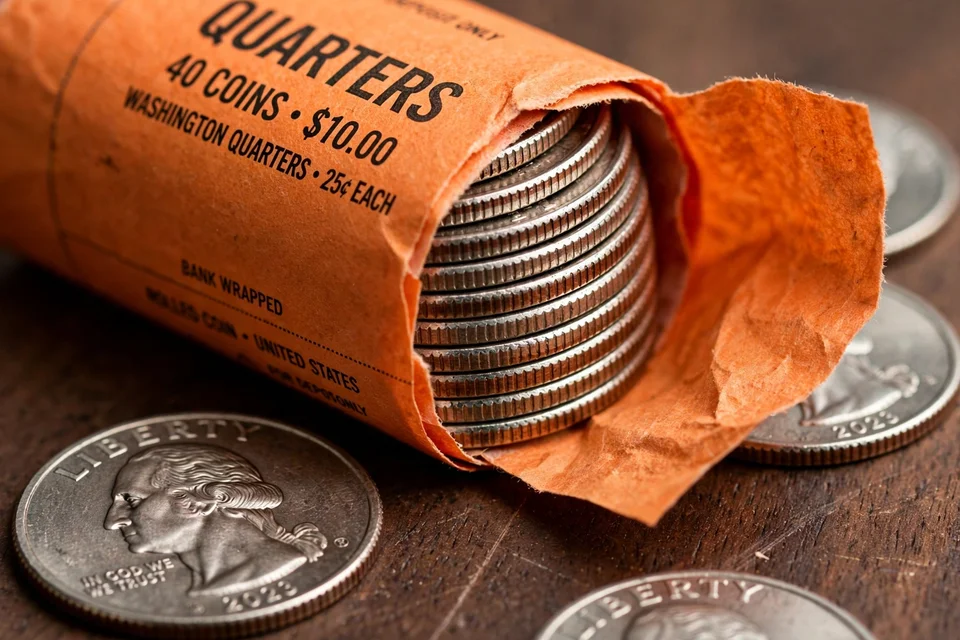
The answer is 40. The American Bankers Association standard, used by banks and the Federal Reserve for decades, fixes every denomination's roll count, and quarters sit at 40 coins per roll. The orange wrapper is part of the standard too: each denomination gets its own wrapper color so tellers and counting machines can identify a roll at a glance.
Here is the full U.S. coin roll standard for comparison:
| Denomination | Coins per Roll | Face Value | Wrapper Color |
|---|---|---|---|
| Pennies | 50 | $0.50 | Red |
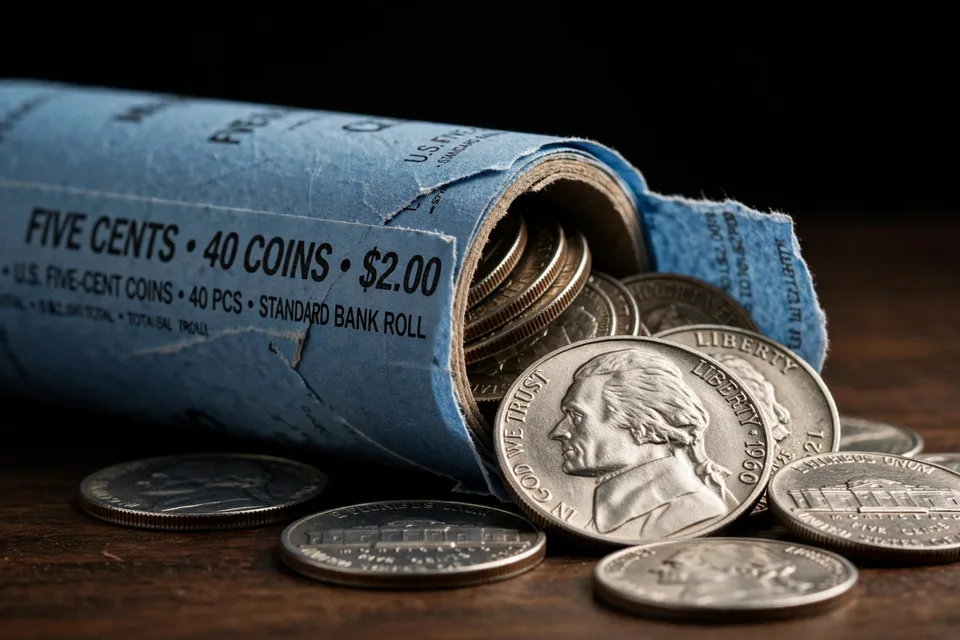
| Nickels | 40 | $2 | Blue |
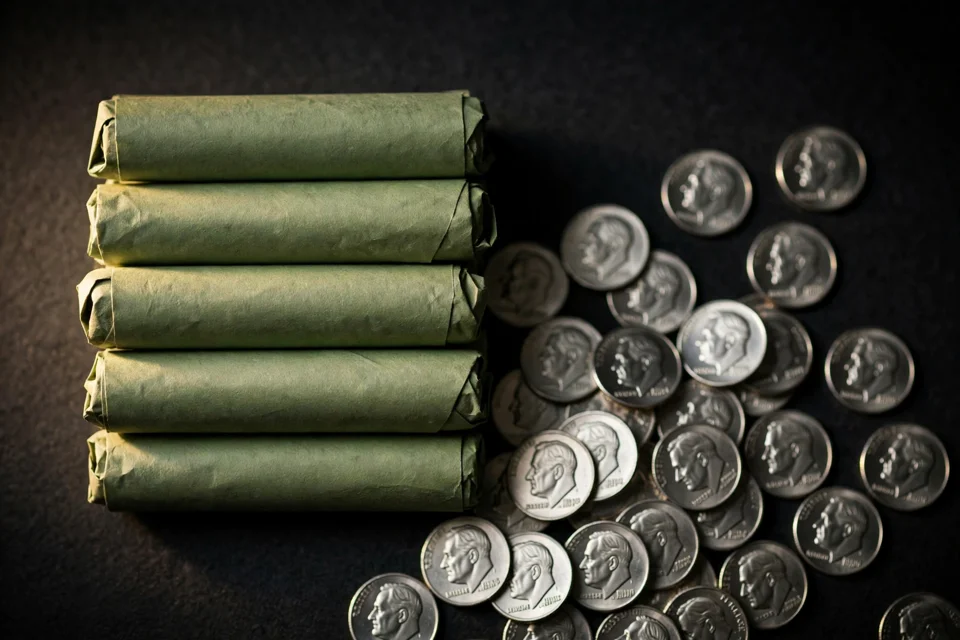
| Dimes | 50 | $5 | Green |
| Quarters | 40 | $10 | Orange |
| Half dollars | 20 | $10 | Tan |
| Dollar coins | 25 | $25 | Black |
Note that quarters and nickels share the 40-coin count but differ in value, and that the standard counts coins, not weight — a roll of worn quarters and a roll of mint-fresh quarters both hold 40 coins.
Quarter Roll Weights and Bank Box Math
A roll of modern clad quarters weighs 226.8 grams — exactly 8 ounces — because each clad quarter weighs 5.67 grams. A roll of pre-1965 silver quarters weighs 250 grams, because each silver quarter weighs 6.25 grams. That 23.2-gram difference is a quick, scale-free tell: a silver roll feels noticeably heavier in the hand, and on a kitchen scale the difference is unmistakable.
Banks also sell quarter rolls by the box: 50 rolls, 2,000 quarters, $500 face value. A box of clad quarters weighs about 11.34 kilograms (roughly 25 pounds); a box of silver quarters would weigh 12.5 kilograms, with silver alone worth $19,500+ at October 2026 melt values. Nobody finds a full silver box anymore, but a single box can hide several silver quarters among the clad.
| Unit | Coins | Face Value | Weight | Silver Melt |
|---|---|---|---|---|
| One clad roll | 40 | $10 | 226.8 g | — |
| One silver roll | 40 | $10 | 250 g | $390+ |
| One bank box (clad) | 2,000 | $500 | 11.34 kg | — |
| One bank box (silver, hypothetical) | 2,000 | $500 | 12.5 kg | $19,500+ |
How Much Is a Roll of Quarters Worth?
At face value, every roll is $10. What a roll is actually worth depends entirely on what is inside it.
A roll of ordinary modern quarters — clad quarters struck from 1965 onward — is worth $10, no more and no less.
A roll of pre-1965 silver quarters is a different asset. Each holds 0.1808 troy ounces of pure silver, so a full roll holds 7.232 ounces — $390+ in melt at the October 24, 2026 value of $9.75+ per silver quarter, nearly forty times face.
Then there is the collector premium: a single key date or error inside a roll can be worth far more than its silver. A worn 1932-D or 1932-S quarter alone is worth $100+, and a 2004-D Wisconsin Extra Leaf quarter can bring hundreds in circulated grades.
How to Spot Silver Quarters in a Roll
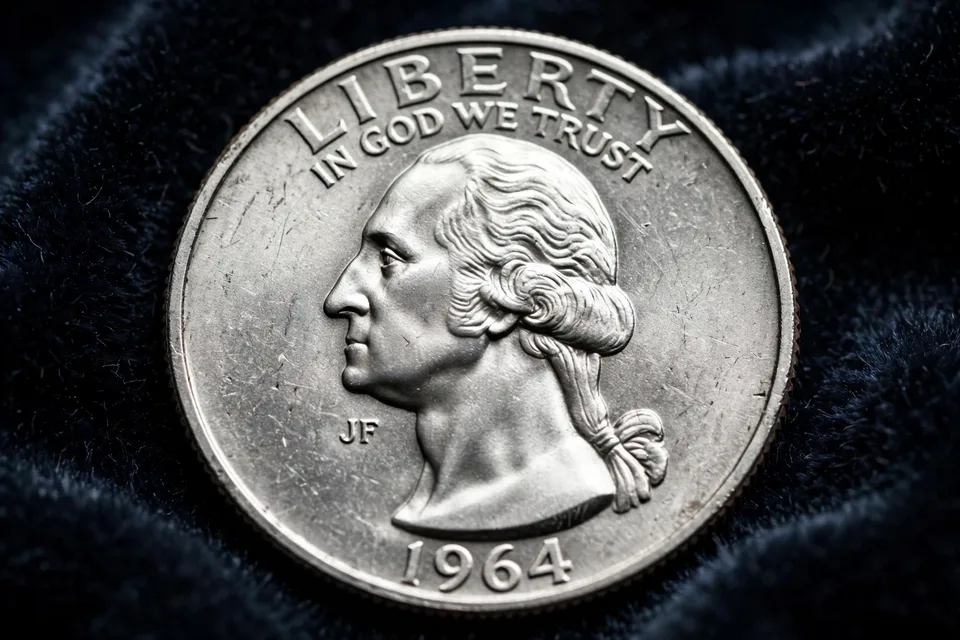
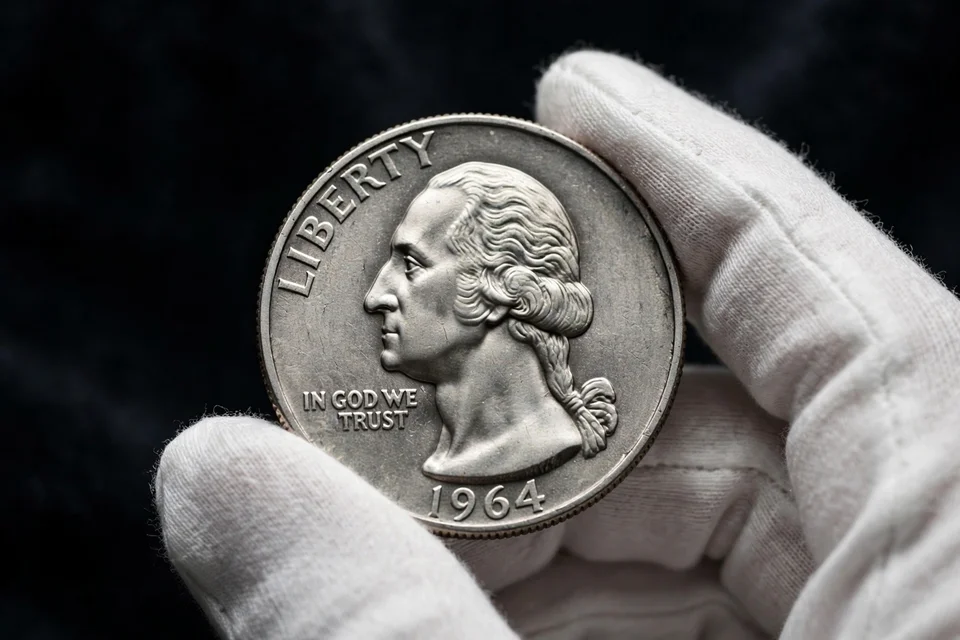
Silver quarters run from the Barber (1892–1916) and Standing Liberty (1916–1930) series through Washington quarters dated 1964. Every quarter dated 1965 or later and struck for circulation is clad — no exceptions. Here is how to sort them fast.
First, check the date. Anything 1964 or earlier is silver; anything 1965 or later is clad, except 40% silver Bicentennial quarters and 90% silver proof quarters from collector sets — neither of which was released into circulation.
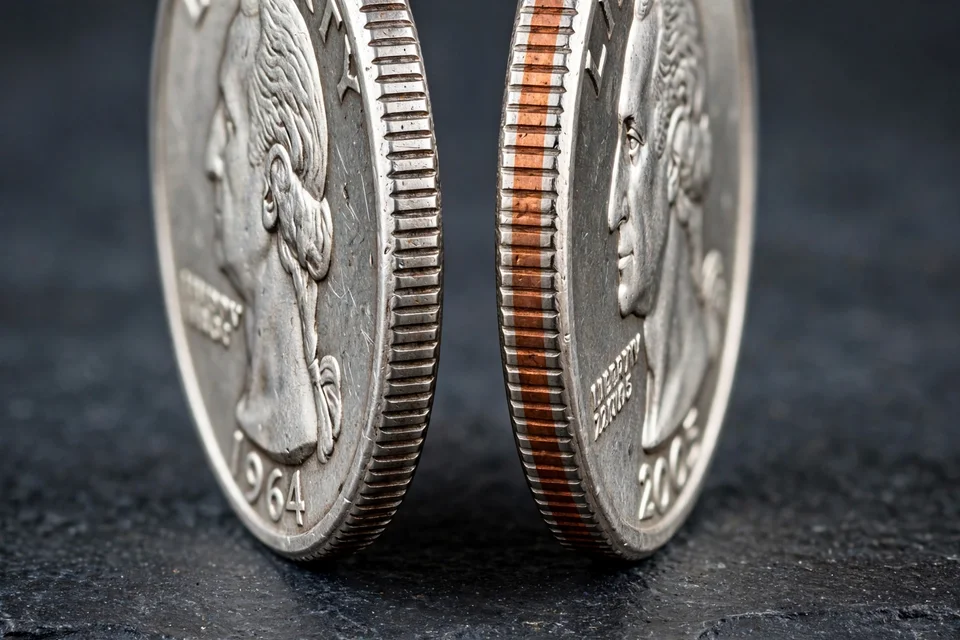
Second, check the edge. A silver quarter's reeded edge is solid silver-gray all the way around, while a clad quarter's edge shows a copper-colored stripe — the copper core of the clad sandwich. You can spot this at the exposed ends of a roll without unrolling it.
Third, weigh it: silver is 6.25 grams, clad is 5.67 grams. On a pocket scale the difference is decisive, and it catches silver quarters whose dates have worn away.
Key Dates and Errors to Hunt in Quarter Rolls
Most rolls contain nothing but modern clad quarters. These are the exceptions to pull aside for closer examination.
| Quarter to Look For | Mintage / Notes | Typical Values |
|---|---|---|
| 1932-D Washington quarter | 436,800 minted | $100+ worn, record $143,750+ (MS66, 2008) |
| 1932-S Washington quarter | 408,000 minted | $100+ worn, record $45,500+ (MS66, 2020) |
| 1932-P Washington quarter | 5,404,000 minted | $10+ worn, $35+ uncirculated |
| 2004-D Wisconsin Extra Leaf High | Denver only | $200+ circulated, record $2,530+ (MS66, 2006) |
| 2004-D Wisconsin Extra Leaf Low | Denver only | $300+ circulated, record $6,000+ (MS67, 2020) |
| 2019–2020 W mint mark quarters | 2 million per design | $10+ circulated |
| 1982-P and 1983-P quarters | No mint sets issued | $5+ circulated, $25+ uncirculated |
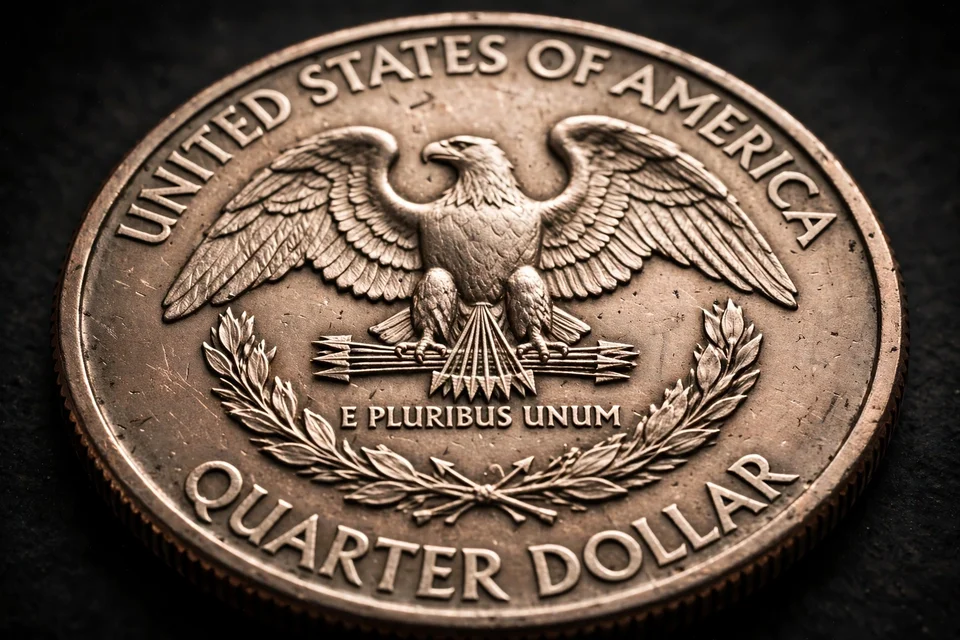
The 1932-D and 1932-S are the king and queen of Washington quarters. Struck in the Great Depression, when demand for new coins collapsed, they are the lowest-mintage coins in the series. Even heavily worn examples are worth $100+ because collectors need them to complete sets, and mint-state examples reach five and six figures.
The 2004-D Wisconsin Extra Leaf quarters are the most famous modern roll find: a die gouge on some Denver-struck Wisconsin state quarters left what looks like an extra leaf on the corn stalk. Both the High Leaf and Low Leaf varieties are Denver-only, easy to spot with a loupe, and worth hundreds even circulated.
The W mint mark quarters are the modern sleeper. In 2019 and 2020, West Point struck 2 million of each circulating quarter design with a W mint mark and released them into circulation. Except for that tiny W, they look ordinary — yet circulated examples trade for $10+.
Finally, watch for high-grade 1982-P and 1983-P quarters: the Mint issued no mint sets in those years, so uncirculated examples are scarcer than mintages suggest, and a top-grade 1982-P set a record of $10,200+.
How to Roll Hunt Quarters Like a Collector
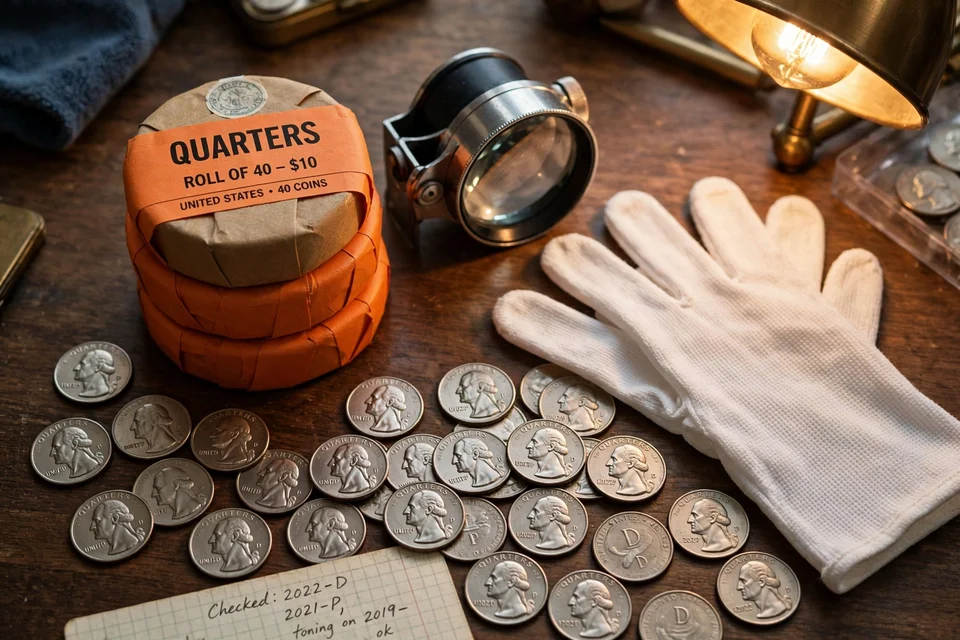
Start at your bank: most banks sell rolls to account holders at face value, and some will order boxes on request. Search systematically — unroll onto a soft cloth, check dates first, then mint marks, then edges. Set silver aside in one pile, key dates and possible errors in another. A loupe is essential for the Wisconsin Extra Leaf varieties and worn mint marks.
Follow roll-hunting etiquette: do not dump searched clad quarters back at the same bank where you bought the rolls — return them to a different branch or spend them normally. And never clean a coin you think might be valuable: cleaning destroys collector value instantly. Keep records of which bank and box produced what; over time you will learn which sources produce silver and which produce only fresh clad.
Quarter Wrapper Colors at a Glance
The wrapper color system lets anyone identify a roll without opening it: orange means quarters, green means dimes, blue means nickels, red means pennies. The system is the same at every bank in the country. Quarter rolls are sometimes sold in plastic tubes rather than paper wrappers, but a standard tube also holds 40 coins — the count never changes with the packaging.
Frequently Asked Questions
How many quarters are in a roll?
A standard U.S. quarter roll contains 40 quarters, worth $10 in face value. The roll uses an orange paper wrapper under the American Bankers Association standard, and the count is the same at every bank.
How much is a roll of quarters worth?
A roll of modern clad quarters is worth $10 at face value. A roll of pre-1965 silver quarters is worth $390+ in melt value alone at October 2026 silver prices, and a roll containing a key date or error can be worth far more.
How much does a roll of quarters weigh?
A roll of modern clad quarters weighs 226.8 grams (8 ounces). A roll of pre-1965 silver quarters weighs 250 grams. The 23.2-gram difference is a reliable way to spot a silver roll on a scale.
How much silver is in a roll of pre-1965 quarters?
Each silver quarter contains 0.1808 troy ounces of pure silver, so a full roll of 40 holds 7.232 ounces. At October 2026 prices that silver is worth $390+ per roll.
How many quarters are in a bank box?
A standard bank box holds 50 rolls, which is 2,000 quarters worth $500 in face value. A box of clad quarters weighs about 11.34 kilograms.
Can a roll of quarters be worth more than $10?
Yes. Silver rolls are worth $390+ in melt, and a single key-date quarter — such as a worn 1932-D or 1932-S worth $100+ — can push one roll far past its $10 face value. Error coins like the 2004-D Wisconsin Extra Leaf varieties can add hundreds more.
Curious what your own quarters might be worth? Run them through the Coin Value Checker for an instant estimate, verify key dates with the Key Date Checker, or scan for mint mistakes with the Error Identifier. See how quarters compare across the whole series in the full quarter value guide, and learn the same roll math for smaller coins in the dime roll guide and the nickel roll guide.
Related Reading
- How Much Is a Quarter Worth? From Pocket Change to $207,400+ — the full value story of the twenty-five-cent piece, from silver melt to the rarest Washington quarters
- How Many Dimes in a Roll? The Complete Dime Roll Guide — Values, Silver Finds & Roll-Hunting Tips — what dime rolls are worth, silver finds, and roll-hunting tips
- How Many Nickels in a Roll? From $2 Rolls to $500,000+ Hidden Finds — what nickel rolls hide, from silver war nickels to the 1950-D key date
The Bottom Line
A roll of quarters is 40 coins, $10, and an orange wrapper — the same at every bank. But inside that standard hides the whole hobby: $390+ of silver in an old roll, a $100+ key date in a worn one, a W mint mark or an extra leaf in a modern one. The next roll costs $10. What is inside it could be worth far more.