How Much Is a Barber Dime Worth? From $4+ Silver to $2,160,000+ Rarities
Dimes · 9 min read · Published October 29, 2026
Most Barber dimes are worth $4+ to $15 circulated, because every issue from 1892 through 1916 is 90% silver and carries a melt floor of about $4 at late-2026 silver prices near $54 an ounce. Common dates in uncirculated condition start around $150, key dates climb from $30+ worn to $25,000+ in Mint State, and the series crown jewel — the 1894-S proof struck in a mintage of just 24 — sold for $1,250,550 in September 2026, with the finest known example reaching $2,160,000. Date, mint mark, and grade decide where your dime lands.
What Is a Barber Dime?
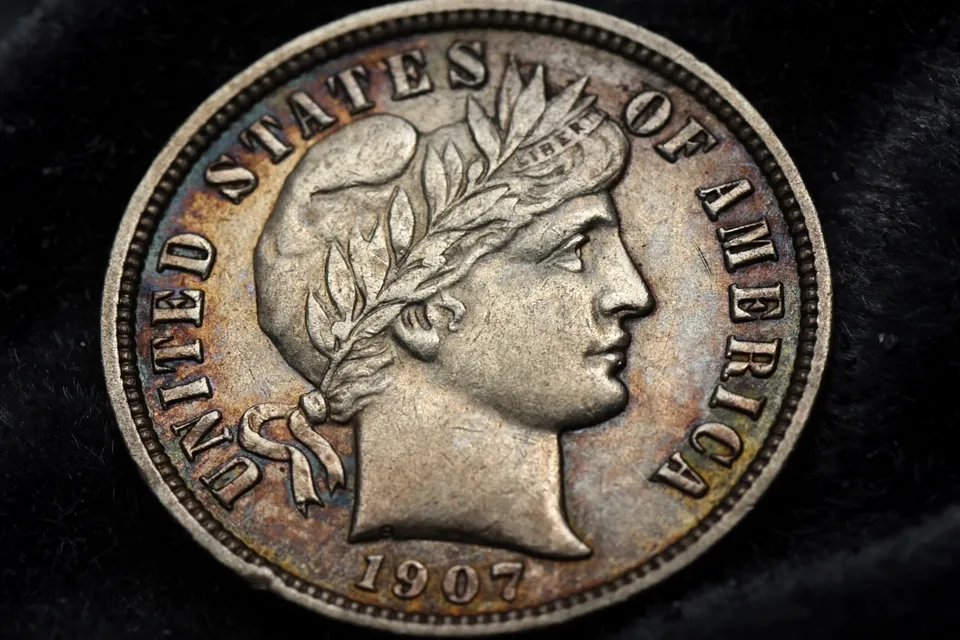
The Barber dime is the Liberty Head dime struck from 1892 to 1916, part of the complete redesign of America's silver coinage ordered after the long-running Seated Liberty design had grown stale. Chief Engraver Charles E. Barber designed all three new silver denominations — dime, quarter, and half dollar — which debuted together in 1892, sharing the same Liberty portrait. The dime is the smallest of the trio and the one that holds the single most famous small-denomination rarity in American numismatics.
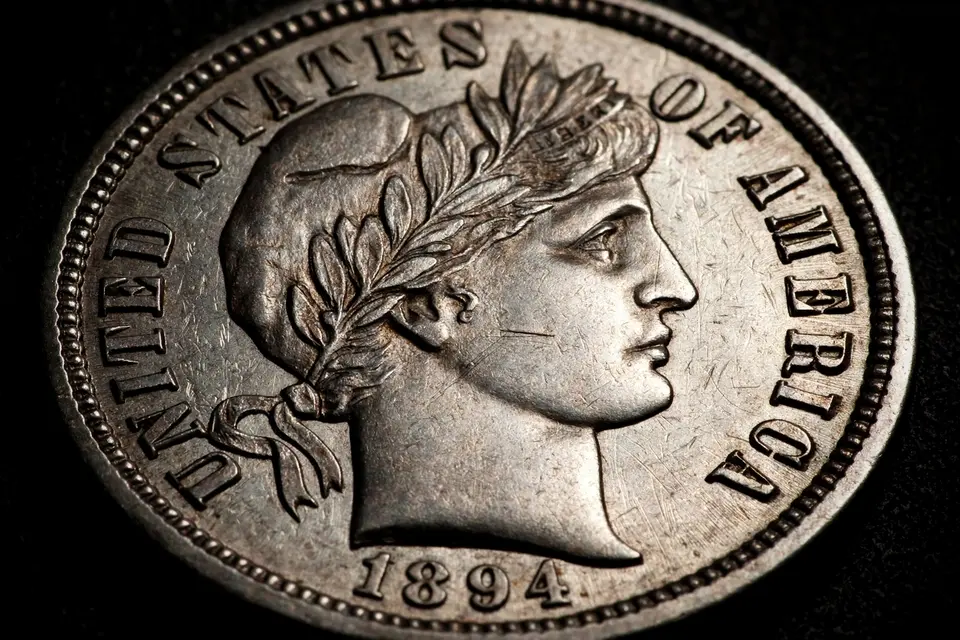
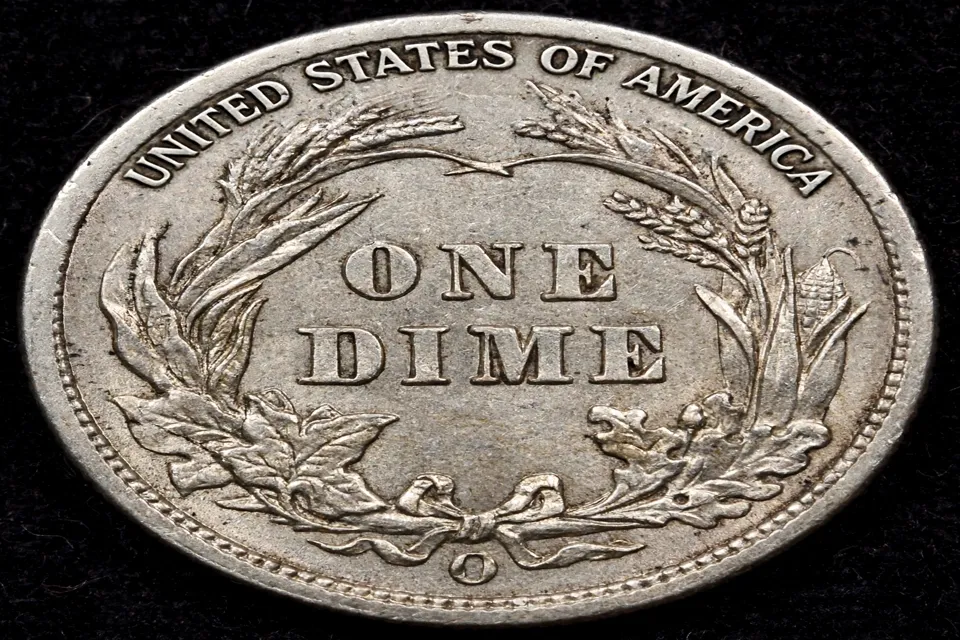
The obverse shows Liberty facing right, wearing a laurel wreath and a cap, with the word LIBERTY on a headband across her forehead, stars around the rim, and the date below. The reverse carries an open wreath tied with a bow at the bottom, with ONE DIME in the center and UNITED STATES OF AMERICA around the edge. Every Barber dime is 90% silver and 10% copper, weighs 2.5 grams, measures 17.9 millimeters across, and has a reeded edge. Its actual silver weight is 0.07234 troy ounces, which is why even the most worn common date is worth several dollars over face value.
Production ran at four mints over the series: Philadelphia, New Orleans, and San Francisco from the start, with Denver joining in 1906. New Orleans struck its last Barber dimes in 1909. The series ended in 1916, when Adolph A. Weinman's Winged Liberty Head — the Mercury dime — replaced Barber's design.
How to Identify Your Barber Dime
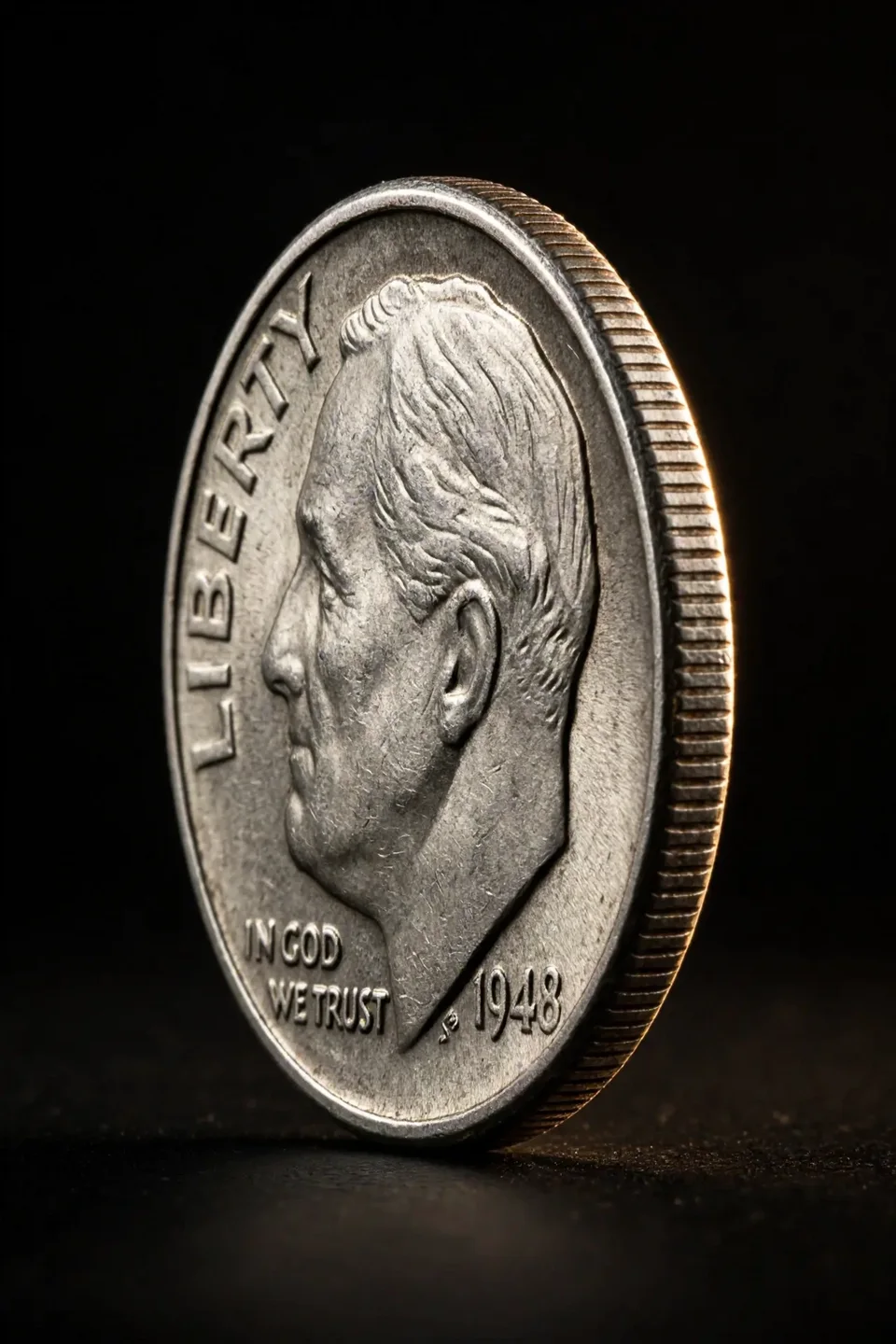
Three checks identify almost any Barber dime in under a minute. First, read the date on the obverse, below Liberty's portrait. Any date from 1892 through 1916 is a Barber dime; a winged-cap portrait means you are holding the later Mercury design instead.
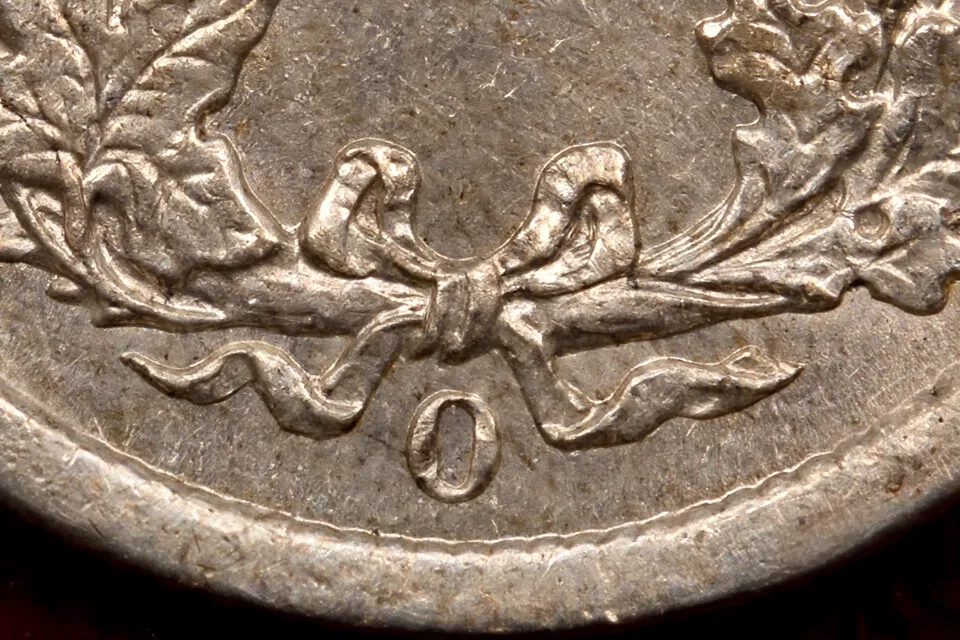
Second, find the mint mark on the reverse, directly below the bow that ties the wreath. No letter means Philadelphia. A D means Denver, an S means San Francisco, and an O means New Orleans. The mint mark is small, so use a 5x to 10x loupe. This one letter is the whole game on a Barber dime: an 1895 with no mint mark is a common coin worth a few dollars, while an 1895-O is a five-figure rarity in high grade.
Third, confirm the silver. A genuine Barber dime weighs 2.5 grams and shows a solid silver-grey edge with no copper stripe. Any five-figure key date belongs in a PCGS or NGC holder before it is bought or sold.
Barber Dime Value by Grade
Condition drives Barber dime values harder than date for most issues, because these small silver coins circulated hard for decades and genuinely uncirculated survivors are scarce. The table below covers common dates — the Philadelphia and later Denver and San Francisco issues struck in the millions.
| Common-date condition | Typical value |
|---|---|
| Good (G-4), heavily worn | $4 to $8 |
| Fine (F-12), moderate wear | $8 to $15 |
| Very Fine (VF-20) | $15 to $30 |
| Extremely Fine (XF-40) | $30 to $60 |
| About Uncirculated (AU-50) | $60 to $120 |
| Uncirculated MS60 to MS63 | $150 to $300 |
| Gem MS65 | $400 to $750 |
Even common dates get expensive at the top: gem MS65 examples of most dates run $400+, and MS67 specimens of popular dates have sold for $5,000+. Only a few hundred examples of even the most common dates are certified in MS65 or better.
How to Grade a Barber Dime by the LIBERTY Band
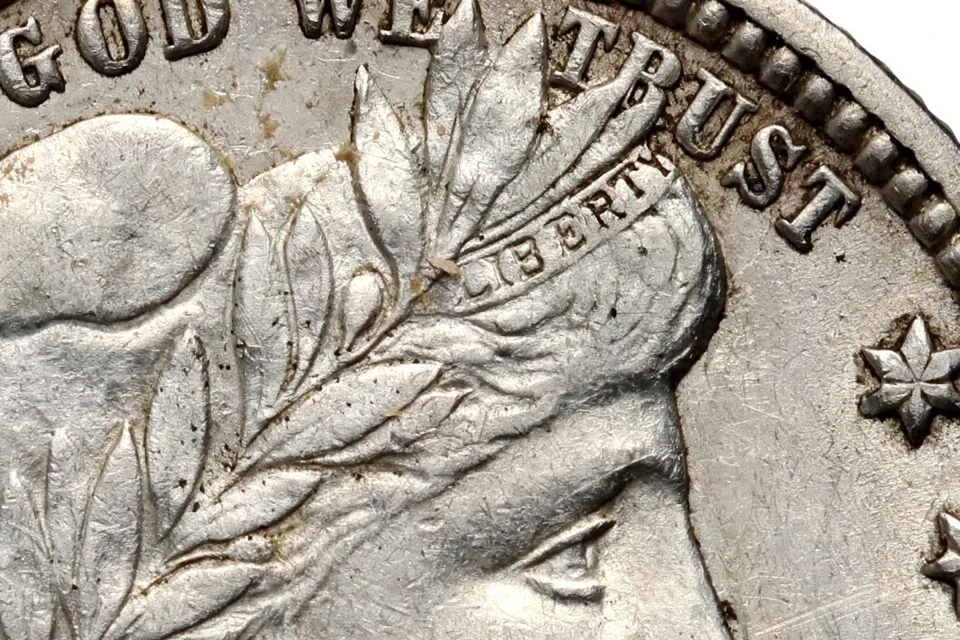
Barber dimes grade by the headband, and collectors have used the same shortcut for generations. Read the word LIBERTY on Liberty's cap. If all seven letters are full and sharp, the coin is at least Extremely Fine. If three or more letters are readable but soft, it grades Fine to Very Fine. If LIBERTY is mostly worn away but the portrait outline is clear, it grades Good to Very Good. Mint State coins keep full cartwheel luster when tilted under a single light, with no flat or dull spots on the hair above the eye or on the cheek.
Original surfaces and natural toning carry the premium — never clean a Barber dime, because cleaning strips the surface and destroys collector value instantly.
The Key Dates That Change Everything
A short list of dates turns a silver dime into a serious payday.
| Key date | Mintage | Good (G-4) | Extremely Fine | MS63 |
|---|---|---|---|---|
| 1894-S (proof only) | 24 | $1,250,000+ | — | $2,000,000+ |
| 1895-O | 440,000 | $350 to $500 | $3,750 | $25,000+ |
| 1896-S | 575,056 | $75 to $150 | $700 | $8,000+ |
| 1901-S | 593,022 | $60 to $120 | $625 | $7,000+ |
| 1903-S | 613,300 | $80 to $100 | $950 | $8,000+ |
| 1913-S | 510,000 | $30 to $60 | $350 | $4,000+ |
The 1895-O is the practical series key: the lowest regular-issue mintage at 440,000, and only eight examples certified in MS65 or finer. The 1896-S is the rarest regularly issued Barber dime in Mint State, with just two examples certified in MS67+ and one of those selling for over $1,000,000 in 2021. The 1901-S, 1903-S, and 1913-S complete the classic key-date set, each scarce in every grade and genuinely rare in gem condition.
Beyond the keys, a second tier of semi-key dates rewards careful checking: the 1892-S (990,710 struck), the 1894-O (720,000), the 1896-O (610,000), the 1895-S, and the 1897-O all trade at strong premiums over common dates, especially in uncirculated grades. An 1894-O in Good starts around $65 and reaches $600 in About Uncirculated, while the 1892-S starts near $60 worn and $350 in AU.
The 1894-S: America's Most Famous Dime
No Barber dime discussion is complete without the 1894-S. Only 24 proof dimes were struck at San Francisco in 1894, reportedly to balance a mint bullion account. Superintendent John Daggett gave several to banker friends and three to his daughter Hallie, who famously spent one on ice cream. About nine examples are known to survive, and the coin sits on every list of the greatest American rarities alongside the 1804 silver dollar and the 1913 Liberty nickel.
The market confirmed the legend again in September 2026, when a PCGS Proof-63 example with CAC and CMQ approval sold for $1,250,550 at Stack's Bowers — the headline lot of a $26.3 million Rarities Night session. The finest known example reached $2,160,000 at Heritage in January 2025. Any claimed 1894-S must be authenticated: counterfeits exist, and the market will not pay seven figures for a raw coin.
Varieties and Errors Worth a Second Look
Barber dimes reward variety hunters. The best-known varieties are the micro-O mint marks: the 1892-O Micro O and the 1905-O Micro O, struck with a mint-mark punch smaller than normal, each carrying a premium over the regular issue — the 1905-O Micro O starts around $50 worn and $300 in Extremely Fine. The 1893/2 overdate, where a 3 was punched over a 2 in the date, is a recognized variety key starting near $130 worn.
Repunched mint marks appear across the series, including the 1899-O RPM, where a second O impression shows beside the primary mark. Doubled dies, off-center strikes, and clipped planchets also exist, and any Barber dime with a visible error and a readable date deserves professional examination before it is sold. Errors on key dates multiply value; errors on common dates still beat melt by a wide margin.
Before You Spend or Sell One
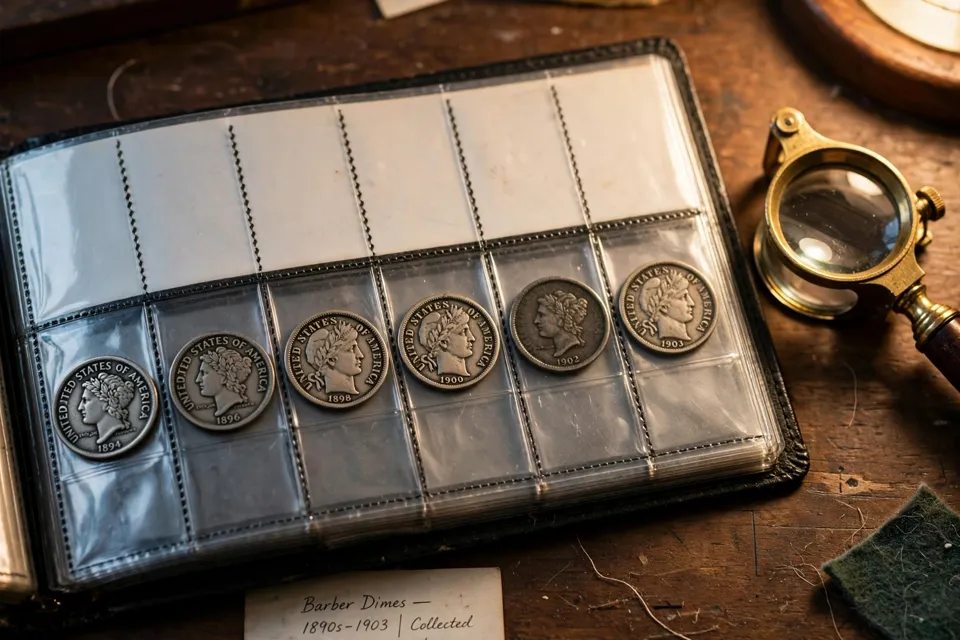
Work through the checks in order: date, mint mark below the wreath bow, weight of 2.5 grams, and the LIBERTY band for grade. Never clean the coin. Keep original surfaces intact, and certify anything whose value clears the $30+ to $65 grading fee: any key date, any coin with a shot at MS65 or better, and any confirmed variety or error. Common-date Barber dimes trade easily as silver, but key dates and gem examples belong in certified holders where buyers pay full value.
Most Barber dimes are worth $4+ to $15, but the gap between a common Philadelphia dime and a key-date San Francisco or New Orleans issue is the difference between pocket change and a five-figure payday. Check the mint mark before you spend one.
Frequently Asked Questions
How much is a Barber dime worth?
Most Barber dimes are worth $4+ to $15 circulated, driven by their 90% silver content with a melt floor near $4 at late-2026 silver prices. Common dates in uncirculated condition start around $150, key dates run $30+ worn to $25,000+ in Mint State, and the 1894-S proof sold for $1,250,550 in September 2026.
Are Barber dimes made of silver?
Yes. Every Barber dime struck from 1892 through 1916 is 90% silver and 10% copper, weighing 2.5 grams with 0.07234 troy ounces of pure silver. That silver content guarantees every genuine example is worth several dollars over its ten-cent face value, whatever its date.
Where is the mint mark on a Barber dime?
The mint mark sits on the reverse, directly below the bow that ties the wreath at the bottom center: no letter for Philadelphia, D for Denver, S for San Francisco, and O for New Orleans. Use a 5x to 10x loupe, because the letter is small and it decides whether your dime is common or a key date.
What is the rarest Barber dime?
The rarest Barber dime is the 1894-S proof, with only 24 struck and about nine known to survive. A Proof-63 example sold for $1,250,550 at Stack's Bowers in September 2026, and the finest known example reached $2,160,000 at Heritage in January 2025. Among regular circulation strikes, the 1895-O is the series key with a mintage of 440,000.
How much is an 1895-O Barber dime worth?
The 1895-O is worth $350+ to $500 in Good condition, around $3,750 in Extremely Fine, and $25,000+ in MS63. It is the lowest-mintage regular-issue Barber dime at 440,000 struck, and only eight examples are certified in MS65 or finer, which is why high-grade examples command five figures.
How do I grade a Barber dime at home?
Grade by the LIBERTY letters in the headband on the obverse: full sharp letters mean Extremely Fine or better, three or more readable letters mean Fine to Very Fine, and a mostly missing LIBERTY with a clear portrait outline means Good to Very Good. Mint State coins show full cartwheel luster with no flat high points on the hair or cheek.
A Barber dime costs nothing to check, and the difference between a $4 silver coin and a $25,000 key date is one letter below the wreath bow. Before you spend or sell any old dime you are unsure about, run it through The Diggin Dave's free Coin Value Checker to confirm its date, mint mark, and value range, use the Key Date Checker to see whether your date is a key issue, and if your coin shows doubling, a clipped edge, or an off-center strike, the Error Identifier helps pin down what you have.
Related Reading
- 1894-S Dime Value: Why the 24-Piece Barber Rarity Is Worth $1,250,000+ — the full story of the ice-cream dime, the September 2026 record sale, and the nine known survivors
- How Much Is a Dime Worth? From Pocket Change to $200,000+ — the complete dime value guide, from Roosevelt clad to the great silver rarities
- How Many Dimes in a Roll? The Complete Dime Roll Guide — Values, Silver Finds & Roll-Hunting Tips — 50 dimes per roll, and the silver and key-date finds hiding in dime rolls