How Many Half Dollars in a Roll? The Complete Half Dollar Roll Guide — Values, Silver Finds & Roll-Hunting Tips
Half Dollars · 9 min read · Published October 24, 2026
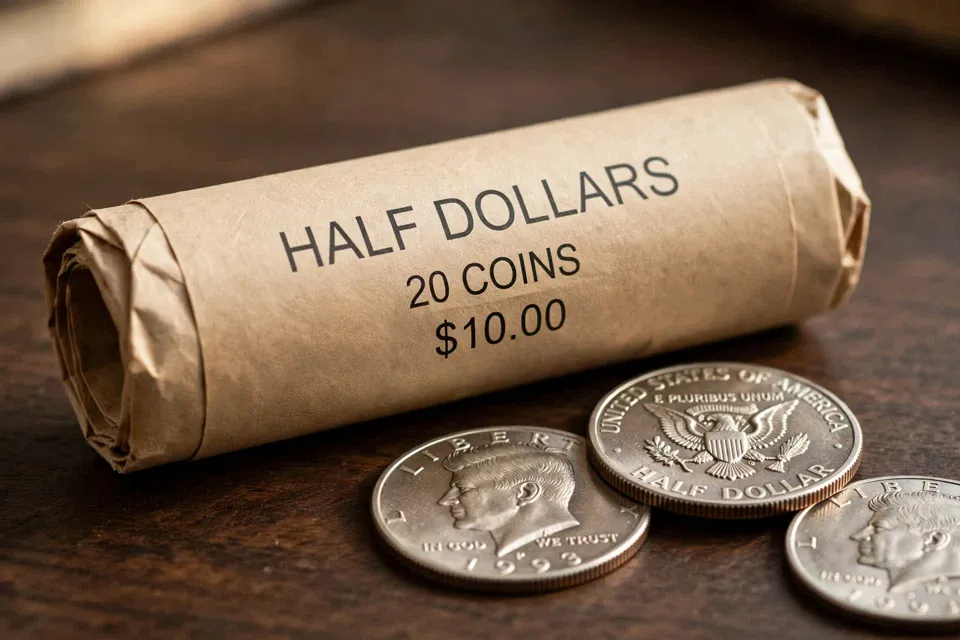
A standard roll of half dollars holds 20 half dollars worth $10 in face value: 20 coins in a tan paper wrapper. But that $10 is only the floor. A roll of pre-1965 silver half dollars holds 7.23 ounces of pure silver worth $410+ in melt alone at October 2026 silver prices, and a single sleeper date inside — a mint-set-only 1970-D or a 1982-P missing its designer's initials — can be worth far more than fifty cents.
How Many Half Dollars Are in a Roll?
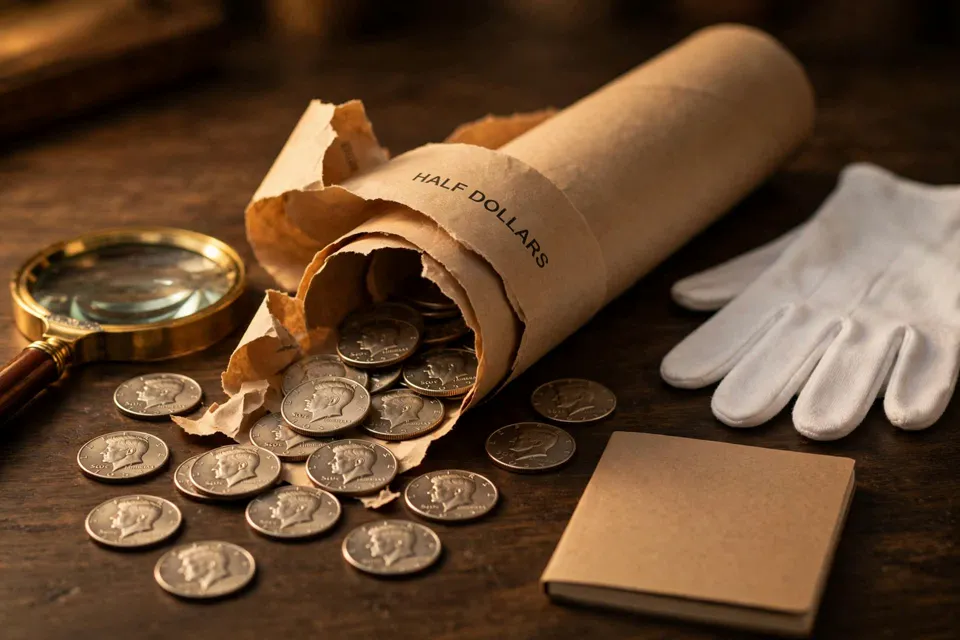
The answer is 20. The American Bankers Association standard fixes every denomination's roll count, and half dollars sit at 20 coins per roll. Half dollars are the largest circulating-size coins in the standard, which is why so few fit: twenty 30.6-millimeter coins already make a roll as heavy as forty quarters. The tan wrapper is part of the standard too — each denomination gets its own wrapper color. Some suppliers print it in a yellow-brown shade; the count and the $10 face value are what matter.
The full U.S. coin roll standard:
| Denomination | Coins per Roll | Face Value | Wrapper Color |
|---|---|---|---|
| Pennies | 50 | $0.50 | Red |
| Nickels | 40 | $2 | Blue |
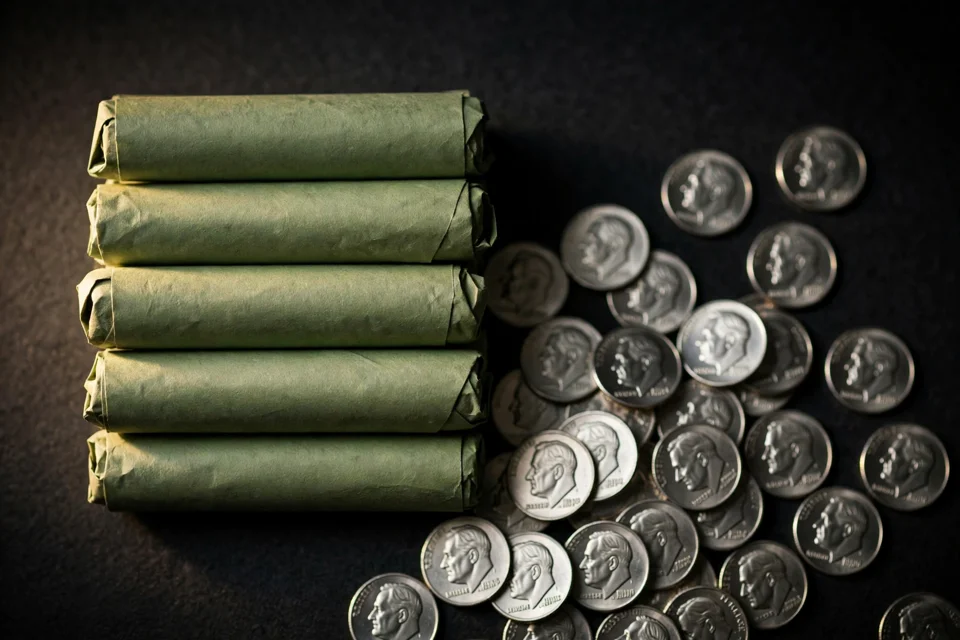
| Dimes | 50 | $5 | Green |
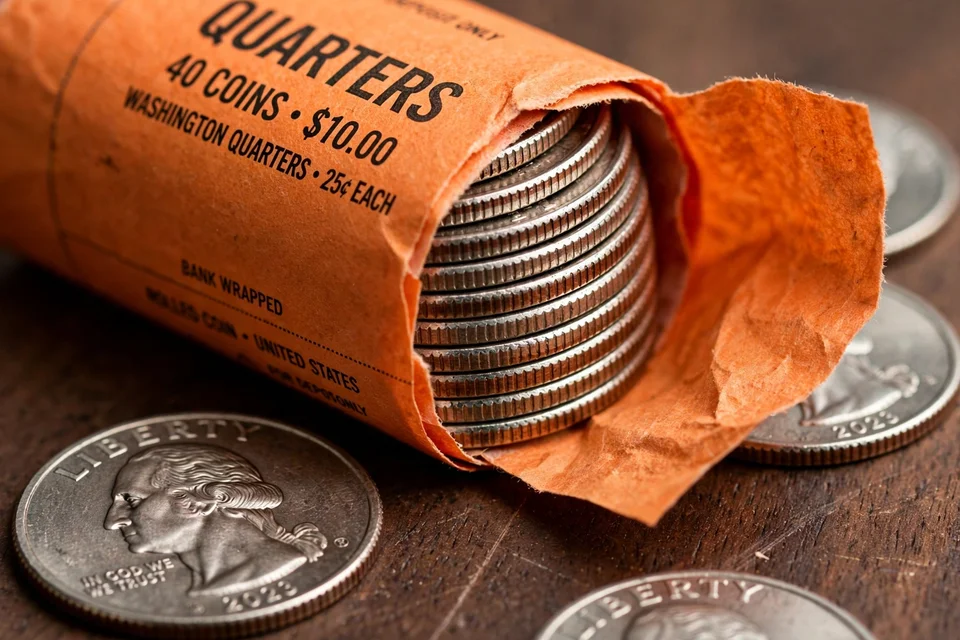
| Quarters | 40 | $10 | Orange |
| Half dollars | 20 | $10 | Tan |
| Dollar coins | 25 | $25 | Black |
Notice the coincidence in that table: a roll of half dollars and a roll of quarters carry the same $10 face value and the same clad roll weight, because one clad half dollar weighs 11.34 grams — precisely twice a clad quarter's 5.67 grams.
How Much Does a Roll of Half Dollars Weigh?
A clad roll weighs 226.8 grams, about 8 ounces, not counting the paper wrapper. A 90% silver roll weighs more: each silver half weighs 12.5 grams, so a full silver roll weighs 250 grams, about 8.8 ounces.
| Roll Type | Weight per Coin | Full Roll Weight |
|---|---|---|
| Modern clad half dollars (1971–present) | 11.34 g | 226.8 g (8 oz) |
| 90% silver half dollars (1964 and earlier) | 12.5 g | 250 g (8.8 oz) |
| 40% silver Kennedy halves (1965–1970) | 11.5 g | 230 g (8.1 oz) |
A bank box holds 50 rolls: 1,000 coins worth $500 in face value. A clad box weighs 11.34 kilograms, about 25 pounds; a silver box, 12.5 kilograms.
How Much Is a Roll of Half Dollars Worth?
A clad roll is worth its $10 face value, unless it hides a key date or an error. A silver roll is worth far more. At roughly $57 per ounce of silver in October 2026:
| Roll Type | Silver per Roll | Melt Value at ~$57/oz Silver |
|---|---|---|
| 90% silver roll (20 coins, 1964 and earlier) | 7.23 oz | $410+ |
| 40% silver roll (20 coins, 1965–1970) | 2.96 oz | $165+ |
| Modern clad roll (20 coins, 1971–present) | None | $10 face value |
Per coin, a 90% silver half dollar carries $20+ in silver alone, and a 40% silver Kennedy half carries $8+ in silver alone. Dealers buy below melt and sell above it, so treat these figures as the metal floor, not a dealer's offer.
Why Half Dollar Rolls Are Different From Other Rolls
First, banks carry very few half dollars. Half dollars barely circulate anymore, so a teller may offer one or two rolls, not a box, and some branches will need to order them in.
Second, half dollar rolls produce the most silver overall, according to coin roll hunters.
Third, the half dollar's modern history is full of collector-only dates. No half dollars were struck for circulation in 1987, and since 2002 most dates have been issued only for collectors — so a 1987-or-later half in a bank roll almost certainly escaped from a broken collector set.
Silver Half Dollars to Look For in Rolls
Silver is the first thing to check in every roll, and the edge test finds it in seconds: a silver half dollar has a solid silver-colored edge with no stripe, while a modern clad half dollar shows a visible copper stripe between silver-colored outer layers. That test alone separates the $10 rolls from the $410+ rolls.
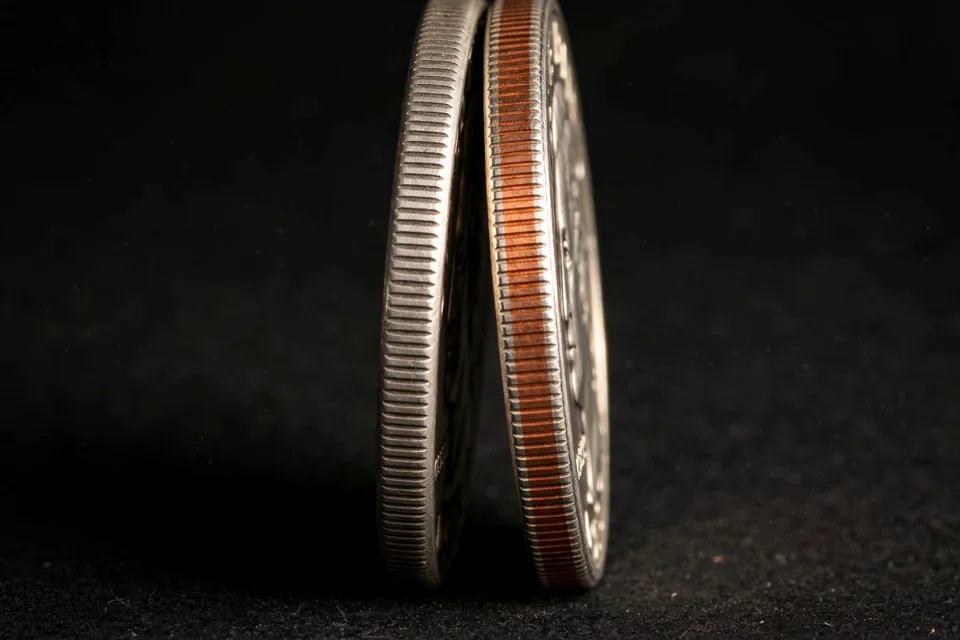
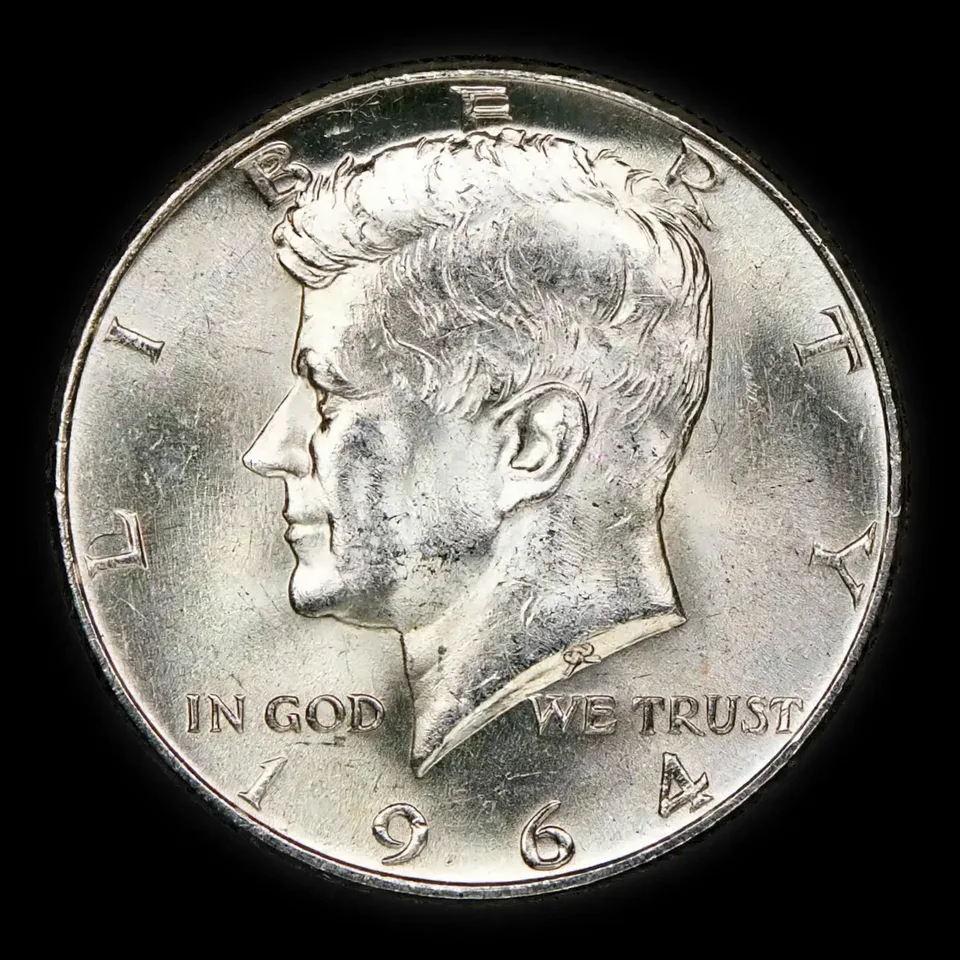
The silver halves you can find break into three groups. The first is the 1964 Kennedy half dollar, the only Kennedy half struck in 90% silver for circulation. The design replaced the Franklin half dollar in 1964, months after President John F. Kennedy's assassination, and the public hoarded the new coins as souvenirs — which is why they still turn up in rolls today. Every 1964 half is worth $20+ in metal.
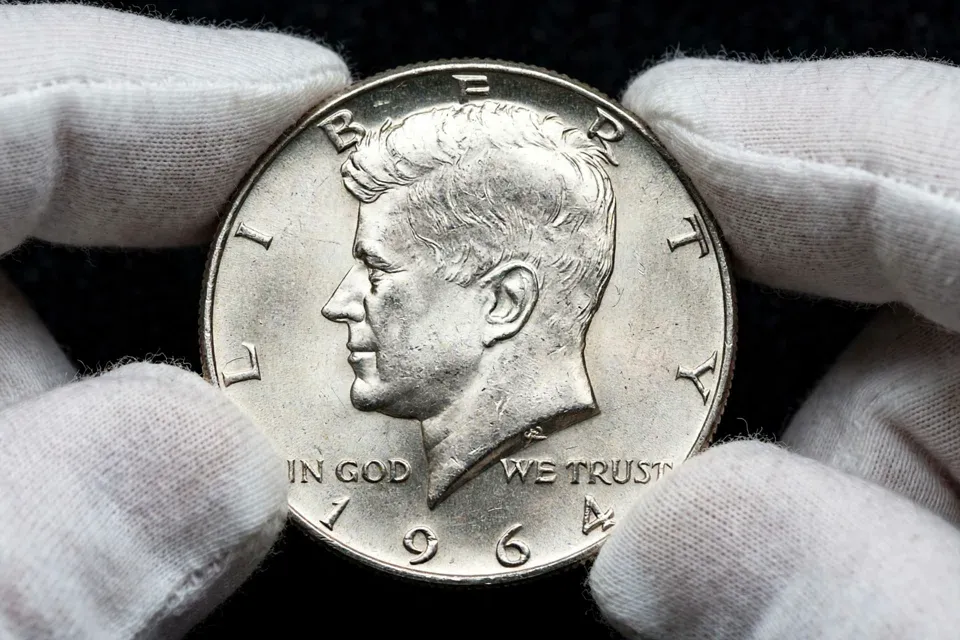
The second group is the 1965–1970 Kennedy halves, struck in 40% silver clad. These look almost identical to the 1964 coins, so check the date, not just the edge. Each carries $8+ in silver. The third group is the older silver series: Franklin halves (1948–1963) and Walking Liberty halves (1916–1947), both 90% silver and worth $20+ at minimum.
Key Dates and Varieties Worth More Than Melt
Silver is the floor, not the ceiling. Several half dollars found in rolls are worth multiples of their metal value. Check every coin's date and mint mark against this table before you spend it:
| Half Dollar | Why It Matters | Collector Value |
|---|---|---|
| 1964 Kennedy (P or D) | Only 90% silver circulation Kennedy | $20+ silver, more in high grade |
| 1970-D Kennedy | Mint-set only, never released for circulation (~2.1 million struck) | $30+ |
| 1987-P and 1987-D Kennedy | No circulation strikes in 1987; both came only from Mint Sets | $5+ each |
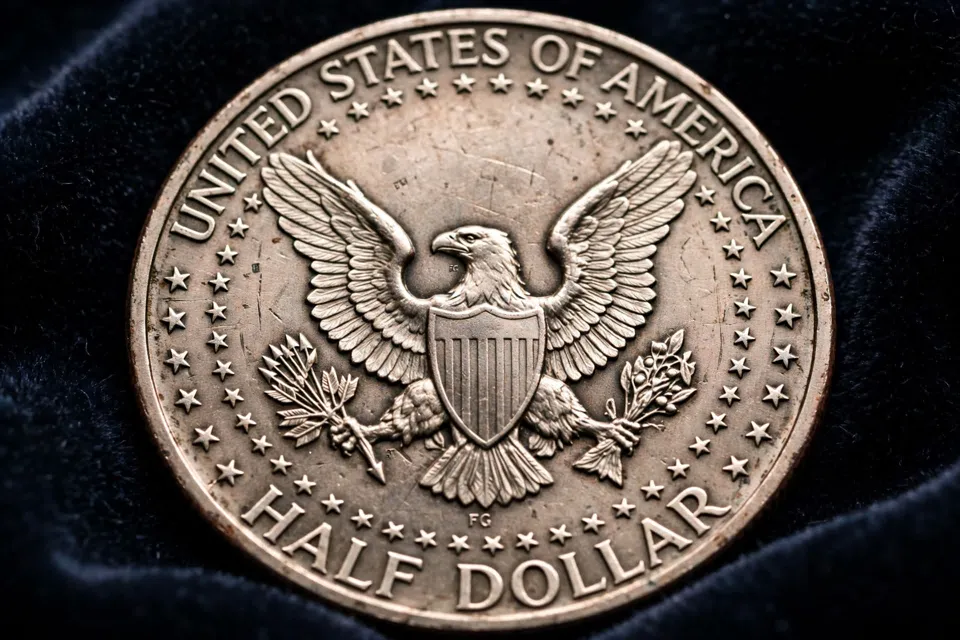
| 1982-P Kennedy, No FG | Designer Frank Gasparro's initials missing below the eagle (FS-901) | $50+ in lower grades, several hundred in MS66 |
| Franklin and Walking Liberty halves | 90% silver, pre-Kennedy series | $20+ silver, premiums for key dates |
The 1970-D is the classic sleeper: Denver struck about 2.1 million, but every one went into official Mint Sets — none was released for general circulation. A 1970-D in a bank roll means someone broke open a collector's set and spent it. The 1987-P and 1987-D are the same story, since no half dollars were struck for circulation in 1987 at all. And the 1982-P No FG — overpolished dies removed Gasparro's FG initials from below the eagle — turns a fifty-cent coin into a $50+ find.
How to Hunt Half Dollar Rolls Like a Pro
Start by asking your bank what it actually has. Half dollars are ordered, not stocked, at many branches, so ask whether customer-wrapped rolls or bank-wrapped rolls are available, and whether a $500 box can be ordered. Customer-wrapped rolls are the classic hunting ground, because they are most likely to contain older coins someone cashed in. Bank-wrapped rolls tend to be newer coin, but they still turn up silver.
Check three things on every coin: the date, the edge, and the reverse initials. Date first — anything 1970 or earlier goes in the keep pile. Edge second — solid silver edges go in the silver pile. Initials third — glance below the eagle for the FG initials; a missing FG on a 1982-P is a variety worth real money. Sort into keepers, silver, and spenders, and never clean a coin you plan to keep.
Two pieces of etiquette keep the hobby sustainable. First, do not dump your searched rolls at the same bank you bought them from; take your spenders to a different branch. Second, banks provide rolls as a service, not an obligation. And if you use a coin-counting machine for your spenders, remember the fee — Coinstar-style machines typically take around 12.9%.
What About Half Rolls and Mint Rolls?
Not every roll holds 20 coins: a half roll — 10 half dollars worth $5 — is a customer-made convenience roll, not a bank standard. Mint rolls are a different product: the U.S. Mint sells 20-coin rolls of current collector half dollars directly to the public, and since 2002 most dates have been available this way rather than through banks. A Mint roll is worth its issue price plus a small premium, not its silver melt — modern Mint rolls are clad, not silver.
Frequently Asked Questions
How many half dollars are in a roll?
A standard U.S. bank roll of half dollars contains exactly 20 coins, totaling $10 in face value. The count is set by the American Bankers Association standard and is the same for every composition.
How much is a roll of half dollars worth?
A roll of modern clad half dollars is worth its $10 face value. A roll of 90% silver half dollars is worth $410+ in melt alone at October 2026 silver prices, and a roll of 40% silver Kennedy halves is worth $165+ in melt. Individual key dates and errors inside can be worth far more.
What color is a half dollar roll wrapper?
The standard half dollar wrapper is tan, sometimes described as buff or beige. Some suppliers print it in a yellow-brown shade. The count — 20 coins — and the $10 face value are the reliable identifiers, not the exact shade.
How much does a roll of half dollars weigh?
A roll of modern clad half dollars weighs 226.8 grams (about 8 ounces). A roll of 90% silver half dollars weighs 250 grams (about 8.8 ounces), and a roll of 40% silver Kennedy halves weighs about 230 grams. A full bank box of 50 rolls weighs 11.34 kilograms clad or 12.5 kilograms silver.
Are there still silver half dollars in bank rolls?
Yes, though they are uncommon. Most rolls are modern clad coin, but 1964 and earlier silver halves, 1965–1970 40% silver halves, and even Franklin and Walking Liberty halves still surface in customer-wrapped rolls.
Where can I get rolls of half dollars?
Ask your bank — most branches can order $10 rolls or $500 boxes, though some need a few days. Credit unions and smaller community banks are often more helpful than large branches. The U.S. Mint also sells 20-coin rolls of current collector half dollars directly, but those are clad collector products, not silver hunting rolls.
A half dollar roll costs $10, and the difference between a $10 roll and a $410+ roll is twenty dates and twenty edges. Before you spend any half dollar you are unsure about, run it through The Diggin Dave's free Coin Value Checker to confirm its date, mint mark, and value range, and use the Key Date Checker to see whether your date is a key issue. If a coin is missing its designer's initials or shows doubled lettering, the Error Identifier walks through the diagnostics.
Related Reading
- 1964 Kennedy Half Dollar Value: What Yours Is Worth — the only 90% silver circulation Kennedy half, its mintages, and the rare Accented Hair variety
- How Many Quarters in a Roll? The Complete Quarter Roll Guide — Values, Silver Finds & Roll-Hunting Tips — the same roll math for quarters: 40 coins, $10, and $390+ silver rolls
- How Many Dimes in a Roll? The Complete Dime Roll Guide — Values, Silver Finds & Roll-Hunting Tips — what dime rolls are worth, silver finds, and roll-hunting tips