How Much Is a Barber Quarter Worth? From $15+ Silver to $170,000+ Rarities
Quarters · 9 min read · Published October 29, 2026
So how much is a Barber quarter worth? Most are worth $15+ to $60 circulated, because every issue from 1892 through 1916 is 90% silver with a melt floor near $10 at late-October 2026 silver prices. Common dates in Mint State start around $300, semi-keys climb from $40+ worn to $5,000+ uncirculated, and the series peaks with the 1913-S, whose finest known MS68 sold for more than $170,000. Date, mint mark, and grade decide where your quarter lands.
What Is a Barber Quarter?
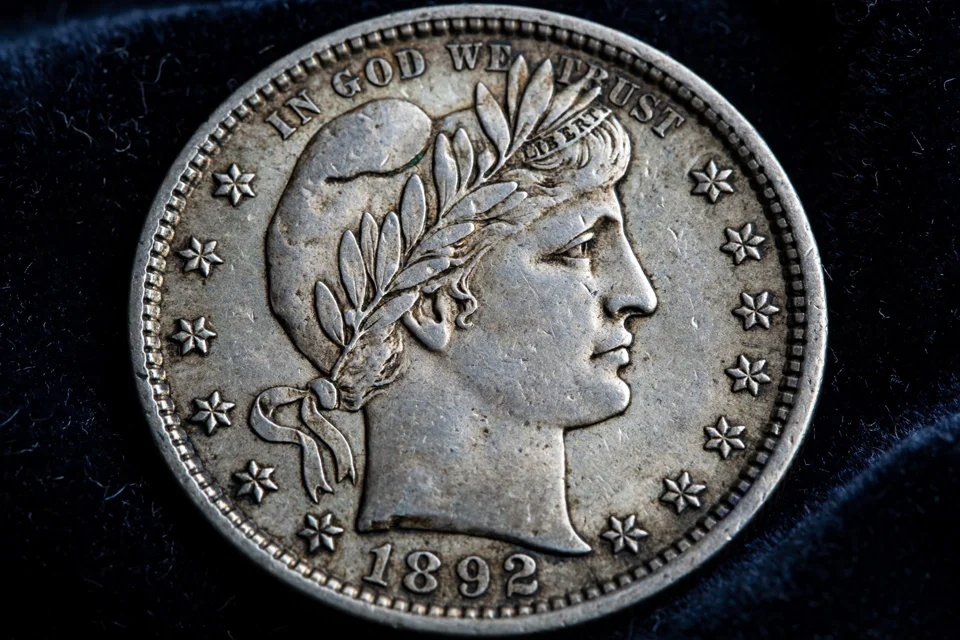
The Barber quarter is the Liberty Head quarter struck from 1892 to 1916, part of the complete redesign of America's silver coinage that replaced the long-running Seated Liberty design. Chief Engraver Charles E. Barber designed all three new silver denominations — dime, quarter, and half dollar — which debuted together in 1892, sharing the same Liberty portrait. The quarter is the middle child of the trio and the one that holds three of the most famous key dates in 20th-century collecting.
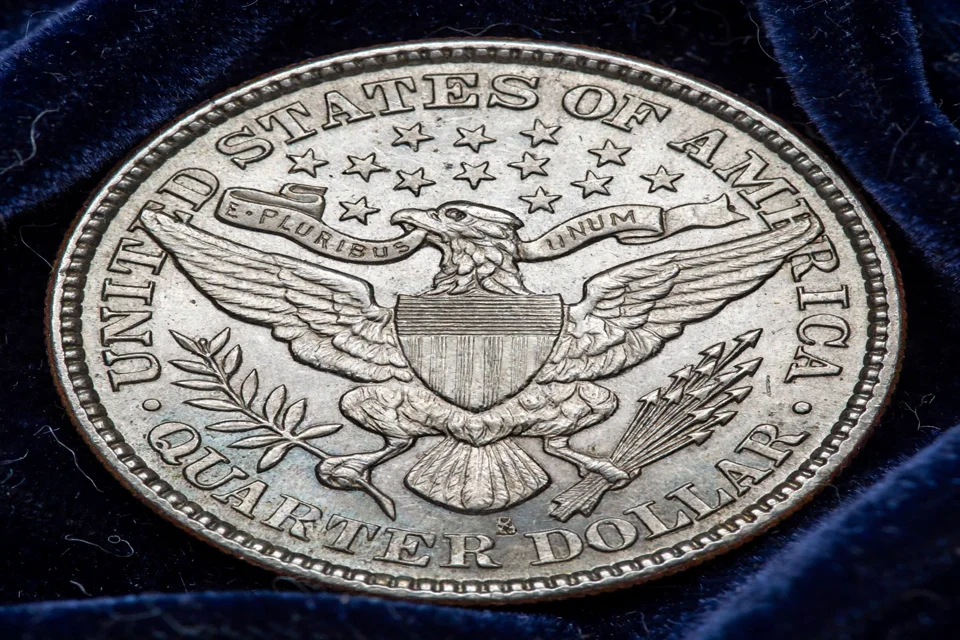
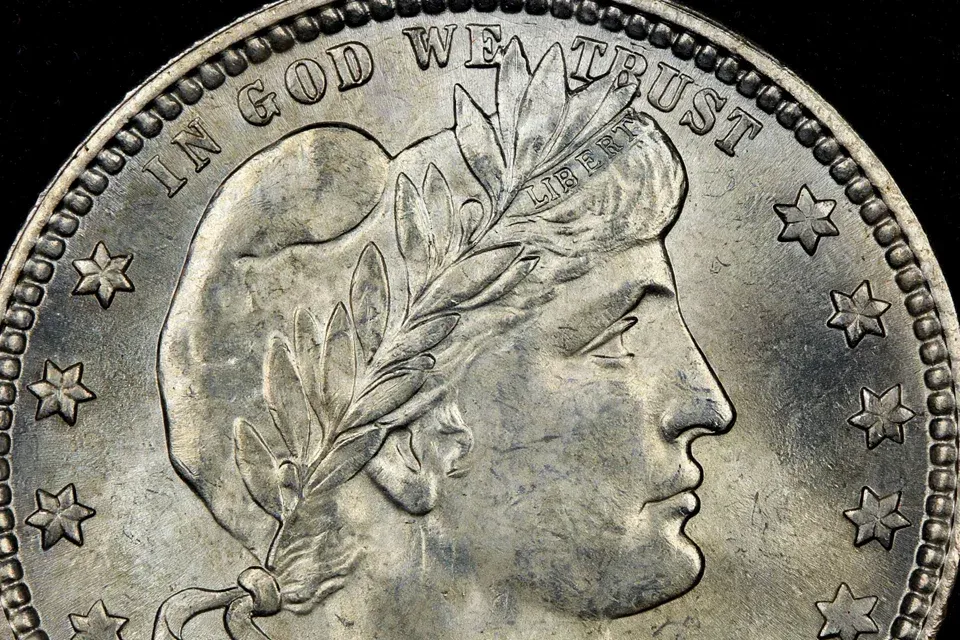
The obverse shows Liberty facing right, wearing a laurel wreath cap, with the word LIBERTY on a headband across her forehead, thirteen stars around the rim, and the date below. The reverse carries a heraldic eagle with outstretched wings, a shield on its breast, UNITED STATES OF AMERICA around the edge, and QUARTER DOLLAR below. Every Barber quarter is 90% silver and 10% copper, weighs 6.25 grams, measures 24.3 millimeters across, and has a reeded edge. Its actual silver weight is 0.18084 troy ounces, which is why even the most worn example is worth far more than face value.
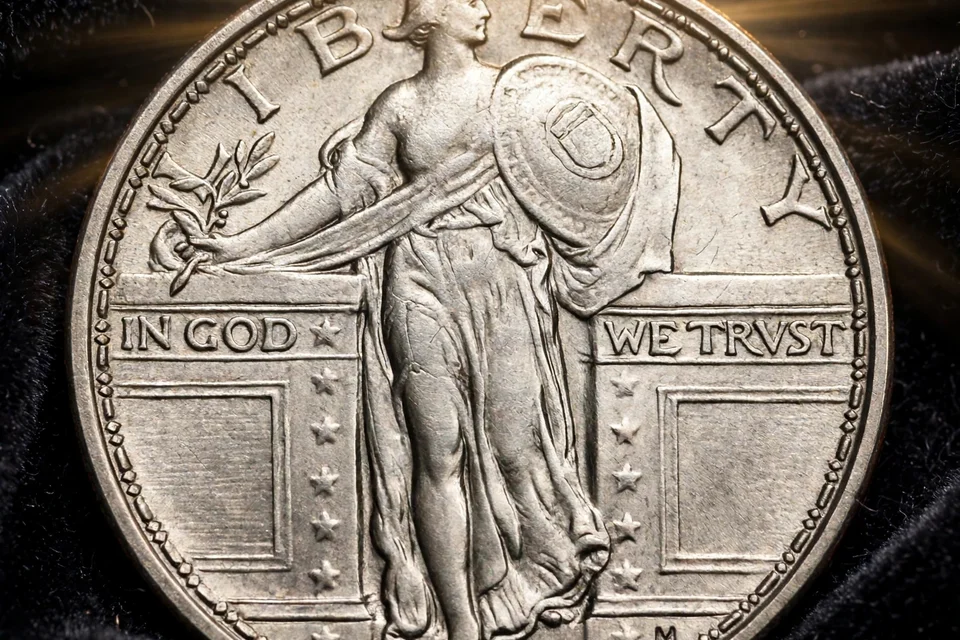
Production ran at four mints. Philadelphia, New Orleans, and San Francisco struck Barber quarters from the start, and Denver joined in 1906. New Orleans struck its last Barber quarters in 1909, when the mint closed its coinage operations. The series ended in 1916, when Hermon A. MacNeil's Standing Liberty design replaced Barber's portrait.
How to Identify Your Barber Quarter
Three checks identify almost any Barber quarter in under a minute. First, read the date on the obverse, below Liberty's portrait. Any date from 1892 through 1916 with this Liberty portrait is a Barber quarter; a seated Liberty with a shield is the earlier Seated Liberty design, and a standing figure is the later Standing Liberty design.
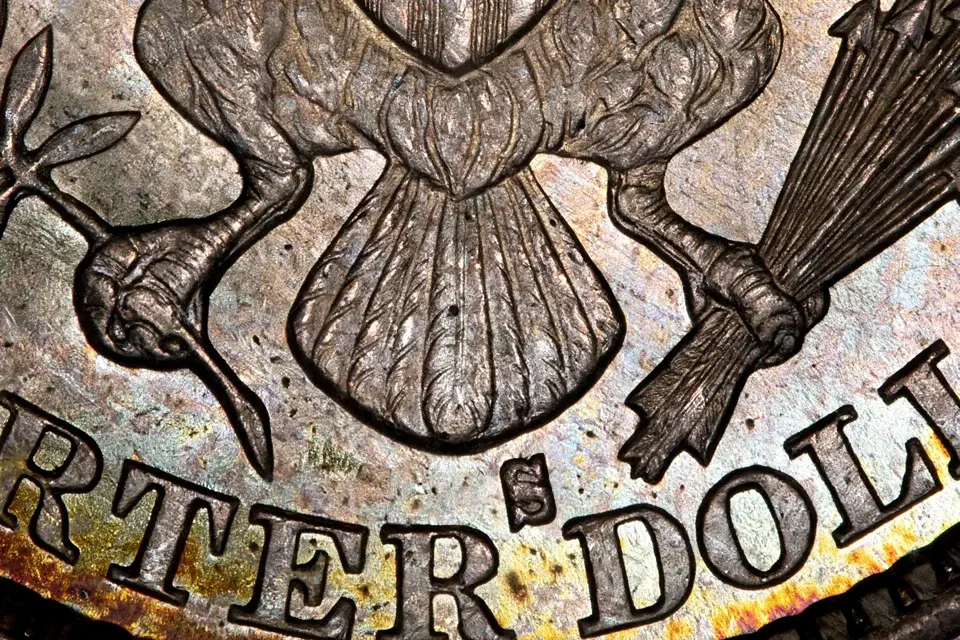
Second, find the mint mark on the reverse, below the eagle's tail feathers and above the letters in QUARTER DOLLAR. No letter means Philadelphia. A D means Denver, an S means San Francisco, and an O means New Orleans. The mint mark is small, so use a 5x to 10x loupe. This one letter is the whole game on a Barber quarter: a common Philadelphia date is a $15 silver coin, while a 1901-S is a five-figure rarity in any grade.
Third, confirm the silver: a genuine Barber quarter weighs 6.25 grams and shows a solid silver-grey edge with no copper stripe. Any Big Three key date belongs in a PCGS or NGC holder before it is bought or sold — counterfeits exist, most famously fake S mint marks added to common 1901 quarters.
How Much Is a Barber Quarter Worth by Grade?
Condition drives Barber quarter values harder than date for most issues, because these silver coins circulated hard for decades and genuinely uncirculated survivors are scarce. The table below covers common dates — the Philadelphia and later Denver and San Francisco issues struck in the millions.
| Common-date condition | Typical value |
|---|---|
| Good (G-4), heavily worn | $15 to $25 |
| Fine (F-12), moderate wear | $35 to $60 |
| Very Fine (VF-20) | $60 to $100 |
| Extremely Fine (XF-40) | $100 to $175 |
| About Uncirculated (AU-50) | $200 to $300 |
| Uncirculated MS60 to MS63 | $300 to $500 |
| Gem MS65 | $700 to $1,300 |
Even common dates get expensive at the top: gem MS65 examples run $700+, and MS67 specimens have sold for $6,900+. Few examples of even the most common dates are certified MS65 or better, because so few were set aside when new.
How to Grade a Barber Quarter
Barber quarters grade by the headband and the eagle. Read the word LIBERTY on Liberty's cap: full sharp letters mean Extremely Fine or better, three or more readable but soft letters mean Fine to Very Fine, and a mostly missing LIBERTY with a clear portrait outline means Good to Very Good. On the reverse, the eagle's breast feathers and the shield's horizontal lines flatten first in circulation, so a sharp breast and full shield lines confirm Extremely Fine or better.
Mint State coins keep full cartwheel luster under a single light, with no flat spots on the hair, cheek, or eagle's breast. Never clean a Barber quarter — cleaning strips the surface and destroys collector value instantly.
The Big Three Key Dates That Change Everything
Three dates dominate every Barber quarter collection, and they make a fascinating study in how mintage and survival tell different stories.
| Key date | Mintage | Good (G-4) | Very Fine | Mint State |
|---|---|---|---|---|
| 1901-S | 72,664 | $5,000+ | $25,000+ | $75,000+ |
| 1896-S | 188,039 | $600+ | $4,500+ | $22,500+ |
| 1913-S | 40,000 | $1,800+ | $14,000+ | $31,000+ |
The 1901-S is the king of the series. San Francisco struck just 72,664, few were saved, and only about 2,000 are believed to survive in any grade. Even worn examples bring several thousand dollars, and Mint State coins reach six figures. The 1896-S is the second of the Big Three: with a mintage of 188,039, it is scarce in every grade and genuinely rare in Mint State, with fewer than a hundred examples believed to exist in MS63 or better. The 1913-S has the lowest mintage in the series at just 40,000, yet more were saved than the 1901-S, so it costs less in every grade — while still ranking second-rarest by survival, at roughly 2,500 known. Its finest known example, a PCGS MS68, once sold for more than $170,000.
Beyond the Big Three, a second tier of semi-key dates rewards careful checking. The 1899-S, with only 708,000 struck, runs $40+ worn to $5,000+ uncirculated. The 1897-S trades from $800 in Very Fine to $3,750 in Choice Uncirculated. The 1909-O — the last quarter struck at New Orleans, with 712,000 minted — runs $1,650 in Very Fine to $6,500 in Choice Uncirculated. The 1914-S, the last scarce date in the series at 264,000 struck, runs $1,000 in Very Fine to $3,500 in Choice Uncirculated. The first-year 1892-S, with 964,079 struck, runs $225 in Very Fine to $1,200 in Choice Uncirculated, while gem MS68 examples of the common 1892 Philadelphia issue set the early-series record at $35,250 in September 2022.
Varieties and Errors Worth a Second Look
Barber quarters reward variety hunters. The best-known first-year varieties are the 1892 Type I and Type II reverses, which differ in how far the eagle's right wingtip overlaps the letter E in UNITED: on Type I the wingtip only partly covers the E, while on Type II it fully covers the crossbar. Both were struck at all three mints in 1892, and neither carries a large premium.
The 1892-O Micro O is the famous small-mintmark variety, struck when a New Orleans worker used a quarter-dollar mintmark punch on a half-dollar die. The 1900-O/CC overmintmark, where an O was punched over a CC, is another collected variety. Repunched dates and mint marks appear across the series, and some 1895-O examples show notable die cracks. Doubled dies, off-center strikes, and clipped planchets also exist, and any Barber quarter with a visible error and a readable date deserves professional examination before it is sold. Errors on key dates multiply value; errors on common dates still beat melt by a wide margin.
Proof Barber quarters were struck only at Philadelphia, in small numbers every year from 1892 through 1915. The 1895 proof, with just 880 struck, trades from $450+ in PR60 to $2,000+ in PR65, with a PR69 Cameo example selling for $43,200 at Heritage in 2021. Proofs are identified by mirror-like fields and squared-off rims, not by a mint mark.
Before You Spend or Sell One
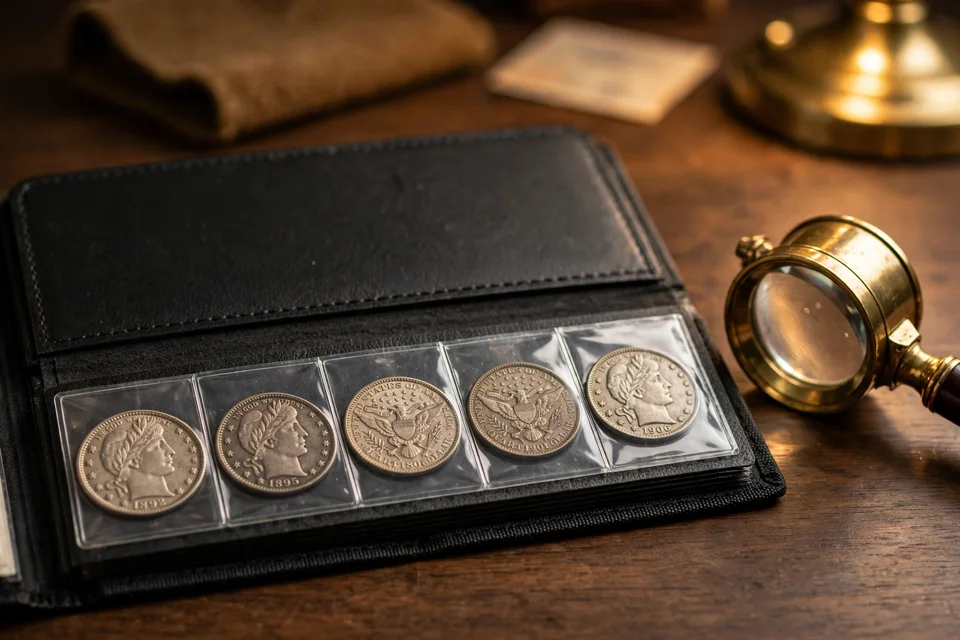
Work through the checks in order: date, mint mark below the eagle's tail feathers, weight of 6.25 grams, and the LIBERTY band plus the eagle's breast for grade. Never clean the coin. Certify anything whose value clears the grading fee: any Big Three or semi-key date, any coin with a shot at MS65 or better, and any confirmed variety or error. Common-date Barber quarters trade easily as silver, but key dates and gem examples belong in certified holders where buyers pay full value.
Most Barber quarters are worth $15+ to $60, but the gap between a common Philadelphia quarter and a key-date San Francisco issue is the difference between pocket change and a six-figure payday. Check the mint mark before you spend one.
Frequently Asked Questions
How much is a Barber quarter worth?
Most Barber quarters are worth $15+ to $60 circulated, driven by 90% silver content with a melt floor near $10 at late-October 2026 silver prices. Common dates in Mint State start around $300, semi-keys run $40+ worn to $5,000+ uncirculated, and the 1913-S in MS68 sold for more than $170,000.
Are Barber quarters made of silver?
Yes. Every Barber quarter struck from 1892 through 1916 is 90% silver and 10% copper, weighing 6.25 grams with 0.18084 troy ounces of pure silver. That silver content guarantees every genuine example is worth far more than its twenty-five-cent face value, whatever its date.
Where is the mint mark on a Barber quarter?
The mint mark sits on the reverse, below the eagle's tail feathers and above the letters in QUARTER DOLLAR: no letter for Philadelphia, D for Denver, S for San Francisco, and O for New Orleans. Use a 5x to 10x loupe, because the letter is small and it decides whether your quarter is common or a key date.
What is the rarest Barber quarter?
The rarest regular-issue Barber quarter is the 1901-S, with only 72,664 struck and roughly 2,000 believed to survive in any grade. Even worn examples bring $5,000+, and Mint State coins reach six figures. The 1913-S has the lowest mintage at 40,000, but more were saved, so it ranks second by survival.
How much is a 1901-S Barber quarter worth?
The 1901-S is worth $5,000+ in Good, around $25,000+ in Very Fine, and $75,000+ in Choice Uncirculated, with gems reaching six figures. Certification is essential — counterfeiters add fake S mint marks to common 1901 quarters.
How do I grade a Barber quarter at home?
Grade by the LIBERTY letters in the headband on the obverse and the eagle's breast on the reverse: full sharp letters and a sharp breast mean Extremely Fine or better, three or more readable letters mean Fine to Very Fine, and a mostly missing LIBERTY with a clear portrait outline means Good to Very Good. Mint State coins show full cartwheel luster with no flat high points.
A Barber quarter costs nothing to check, and the difference between a $15 silver coin and a $75,000 key date is one letter below the eagle's tail feathers. Before you spend or sell any old quarter you are unsure about, run it through The Diggin Dave's free Coin Value Checker to confirm its date, mint mark, and value range, use the Key Date Checker to see whether your date is a key issue, and if your coin shows doubling, a clipped edge, or an off-center strike, the Error Identifier helps pin down what you have.
Related Reading
- How Much Is a Quarter Worth? From Pocket Change to $200,000+ — the complete quarter value guide, from clad Washington quarters to the great silver rarities
- How Much Is a Standing Liberty Quarter Worth? From $10+ Silver to $195,500+ Keys — the design that replaced Barber's quarter in 1916, with Full Head premiums and its own key dates
- How Many Quarters in a Roll? The Complete Quarter Roll Guide — Values, Silver Finds & Roll-Hunting Tips — 40 quarters per roll, and the silver and key-date finds hiding in quarter rolls