How Much Is a Roosevelt Dime Worth? From 10 Cents to $506,250+
Dimes · 9 min read · Published October 30, 2026 · Updated October 30, 2026
Most Roosevelt dimes are worth exactly 10 cents — but a silver Roosevelt dime from 1946 to 1964 starts at $3.60+ in melt value alone, and the rarest Roosevelt dime of all, the 1975 No-S proof, sold for $506,250 at auction. The difference between a dime you spend and a dime you keep comes down to three things: the date, the metal, and the strike.
Roosevelt Dime Value at a Glance
| 1965 to present, circulated, common date | $0.10 (face value) |
|---|---|
| 1965 to present, uncirculated, common date | $0.25 to $3 |
| 1946 to 1964 silver, circulated, common date | $3.60+ (silver melt floor) |
| 1946 to 1964 silver, uncirculated, common date | $5 to $15 |
| 1949-S, 1955, or 1951-S in high grade | $25 to $150+ |
| 1996-W (mint-set only) | $10 to $25+ |
| 1982 No-P error | $300 to $1,500+ |
| 1975 No-S proof (2 known) | $506,250 record |
What Is a Roosevelt Dime?
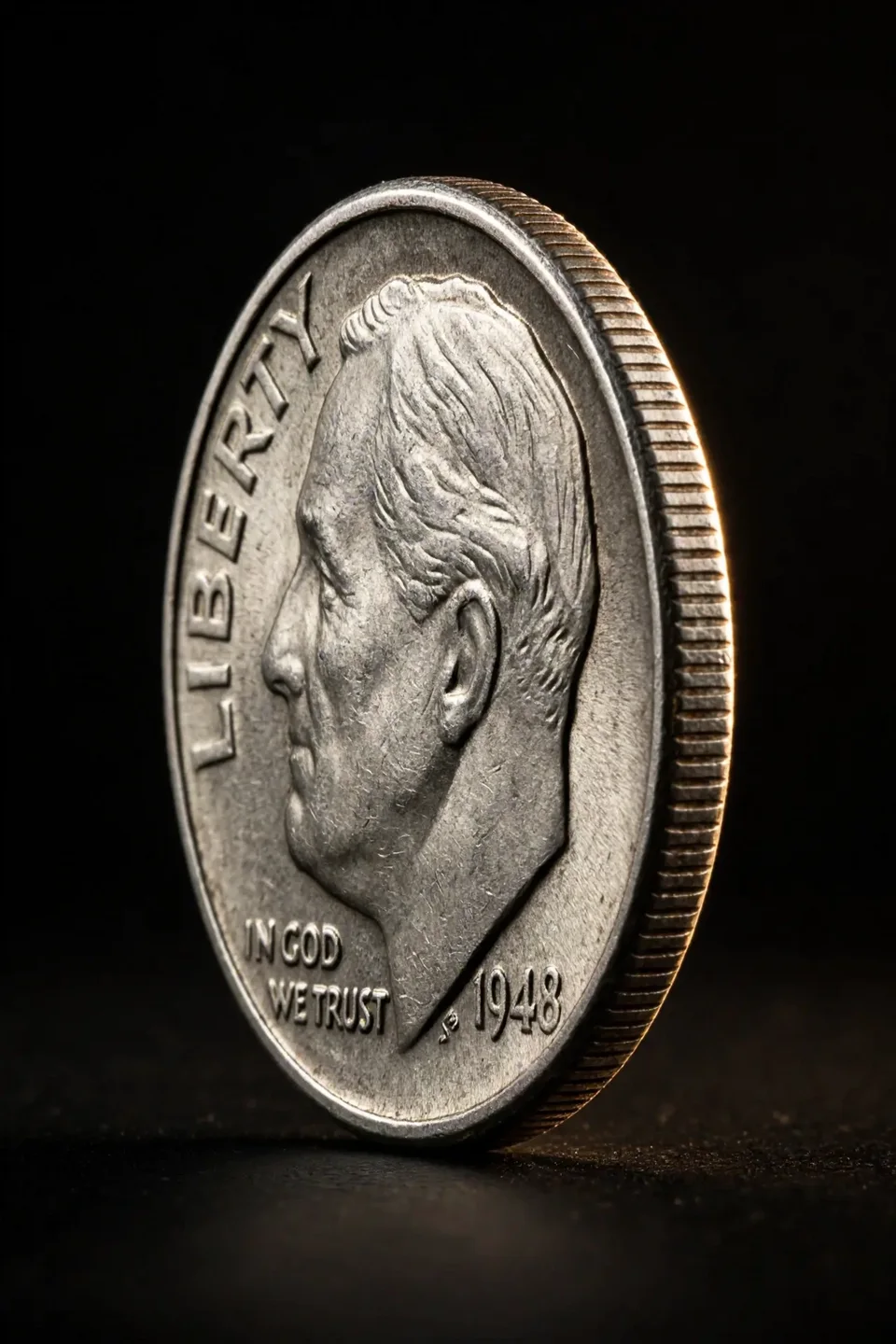
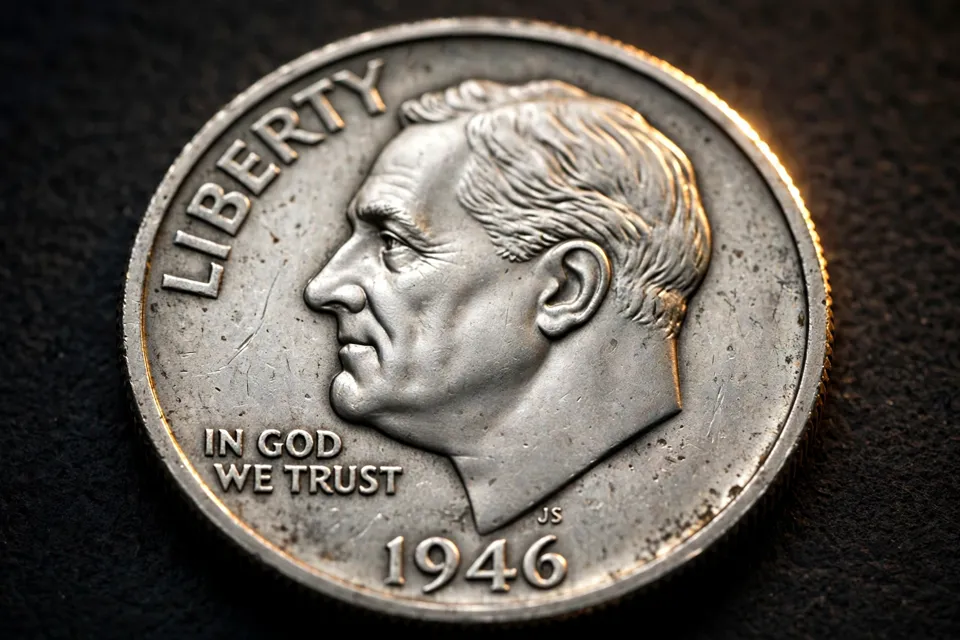
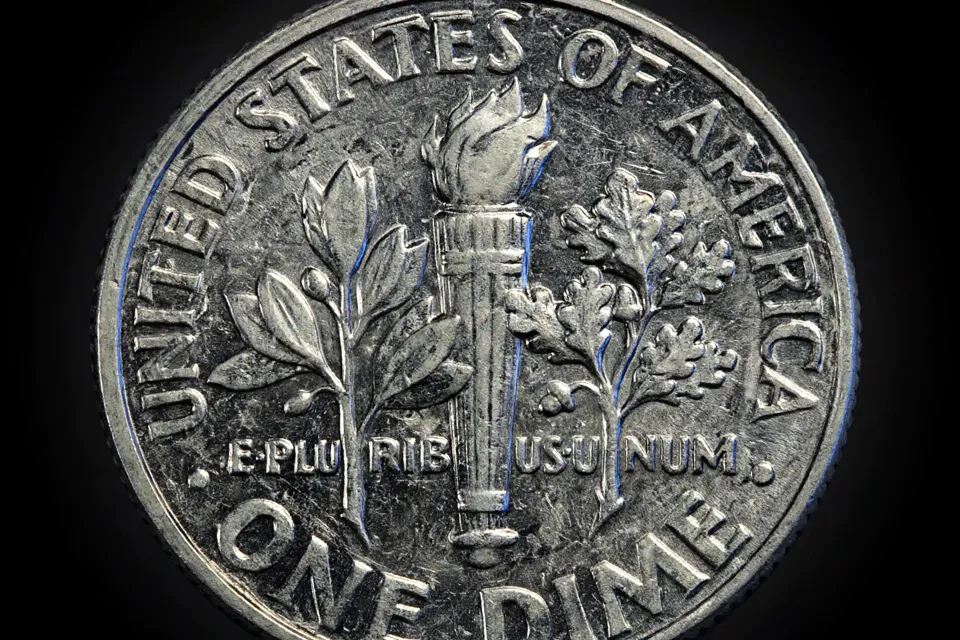
The Roosevelt dime entered circulation in 1946, less than a year after President Franklin D. Roosevelt died in April 1945 while serving his fourth term. Chief Engraver John R. Sinnock designed it: Roosevelt's left-facing portrait on the obverse, and a torch flanked by an olive branch and an oak branch on the reverse.
It is the longest-running design still in circulation in the United States, struck every year from 1946 to today. The specifications changed exactly once, and that change decides most Roosevelt dime values:
| Feature | 1946–1964 (silver) | 1965–present (clad) |
|---|---|---|
| Composition | 90% silver, 10% copper | 91.67% copper, 8.33% nickel over a pure copper core |
| Weight | 2.50 grams | 2.27 grams |
| Silver content | 0.07234 troy ounces | None |
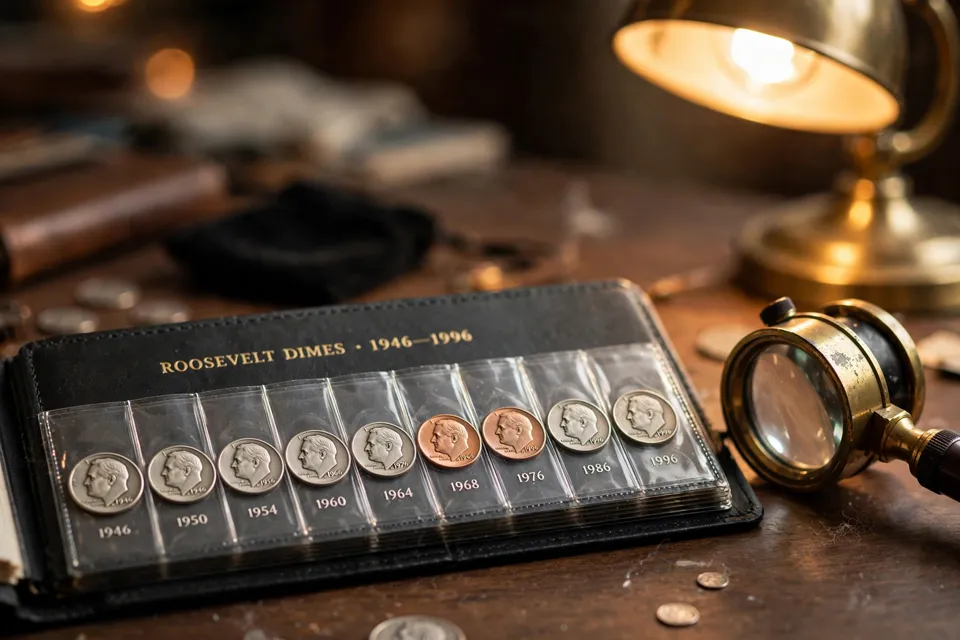
Silver Roosevelt dimes were struck at Philadelphia (no mint mark), Denver (D), and San Francisco (S). From 1968 onward the mint mark moved from the reverse to the obverse, just above the date, and Philadelphia did not use a P mint mark on dimes until 1980.
How to Tell If Your Roosevelt Dime Is Silver
The date settles it in most cases: 1964 or earlier means silver, 1965 or later means clad, except for special silver proof and collector issues that never circulated.
- The date test. 1946–1964 is silver; 1965 onward is clad. This alone answers the question for nearly every dime found in change.
- The edge test. A silver dime shows a solid silver-grey reeded edge. A clad dime shows a copper-colored stripe through the edge, the copper core sandwiched between nickel layers.
- The weight test. Silver weighs 2.50 grams; clad weighs 2.27 grams. A pocket scale settles close calls.
At late-October 2026 silver prices, a silver Roosevelt dime carries a melt floor near $3.60+. That floor moves with the silver market, but it never drops to face value.
Roosevelt Dime Values by Grade
Grade is what separates a $3.60+ silver dime from a $150 one. Circulated coins grade from Good through Extremely Fine; uncirculated coins grade MS60 to MS70, with MS65 and above commanding the real premiums.
| Silver 1946–1964, common date | $3.60+ melt | $5 to $10 | $8 to $15 |
|---|---|---|---|
| Silver 1949-S, 1955, 1951-S | $3.60+ melt | $15 to $35 | $75 to $150 |
| Clad 1965–present, common date | $0.10 | $0.25 to $0.50 | $1 to $3 |
Two warnings matter more than any table. Cleaning destroys value: a cleaned silver dime can sell for less than a dirty one, because collectors pay for original surfaces. And the gap between MS65 and MS67 can be hundreds of dollars on key dates, so any superb coin deserves professional grading before you sell it.
The Key Dates Worth Real Money
Most Roosevelt dimes are common. A handful are not:
- 1949-S. The key date of the silver series in high grade. San Francisco struck about 13.5 million — the second-lowest regular-issue mintage after the 1955 Philadelphia coin — but heavy circulation left few gem survivors. MS67 trades near $80, MS68 has reached $2,150, and an MS67 with Full Bands commands $850+.
- 1955. The lowest-mintage regular issue of the silver series at about 12.8 million. Circulated examples sit at melt, but MS67 examples reach $100, and with Full Bands the figure climbs to $700.
- 1955-D and 1955-S. Both under 20 million struck. The 1955-D in MS68 with Full Bands has reached $7,000, and the 1955-S in MS67 with Full Bands reaches $1,400.
- 1951-S. Scarce uncirculated: $20 to $35 in MS60, $100 to $200 in MS65.
- 1996-W. The only Roosevelt dime ever struck at West Point, issued for the series' 50th anniversary and sold only inside the 1996 Mint Set — never released into circulation. Its mintage of 1,457,000 is the lowest of any mint-state Roosevelt dime, yet nearly the whole mintage survives in mint condition because collectors bought the sets directly. Price stays modest: $5 to $8 in MS60, $15 to $25 in MS65, with MS69 the current top population and an auction record of $411.
The lesson of the 1996-W: low mintage alone does not make a fortune. Survival rate matters just as much. The 1949-S is valuable in gem condition precisely because most of its mintage circulated, wore out, and was melted.
Full Bands: The Strike Premium That Doubles or Triples Value
Full Bands, abbreviated FB by PCGS and FT (Full Torch) by NGC, is the Roosevelt dime's most important quality designation: the two horizontal bands around the torch on the reverse are fully struck, complete and uninterrupted from edge to edge.
Full Bands only applies to uncirculated coins, and it is genuinely scarce: even mint-set coins struck with extra care often fail the test, because the torch bands sit at the highest point of the reverse design and are the first detail lost to a soft strike. On common silver dates it roughly doubles the price; on key dates it multiplies it — the 1955-D jumps from $115 in MS67 to $7,000 in MS68 with Full Bands, and the 1949-S from $80 in MS67 to $850 with Full Bands.
To check your coin, hold it under a good light with a loupe and look at the torch. The upper and lower bands must each show two clean, separated lines. If the lines blur together or fade at the edges, the coin is not Full Bands.
Roosevelt Dime Errors and Varieties Worth Hunting
The Roosevelt series is quiet compared with pennies and nickels, but its errors include the most valuable modern American coin:
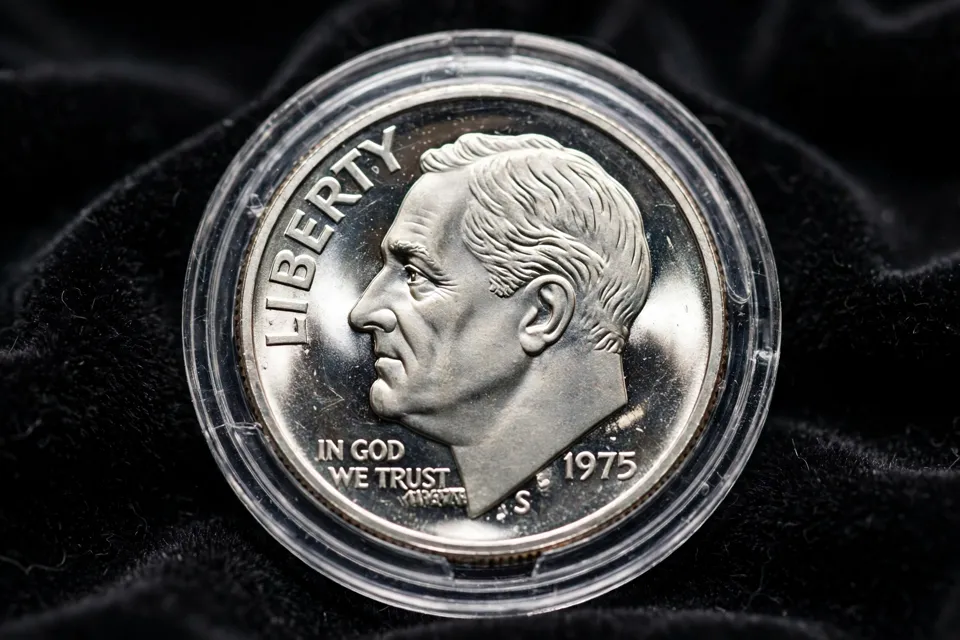
- 1975 No-S proof — $506,250 record. In 1975, the San Francisco Mint struck proof sets that should all carry an S mint mark. Two proof dimes escaped without one. One, graded PR68, sold for $349,600 in 2011 and $456,000 in 2019; the other, the PR67 discovery coin, sold for $506,250 at GreatCollections in October 2024 — a record for the issue and one of the highest prices ever paid for any coin struck after 1950. Warning: an ordinary circulated 1975 dime from Philadelphia also has no mint mark, and more than 585 million were struck. Only a proof-finish coin from a 1975 proof set, with mirror fields and no S, is the rarity.
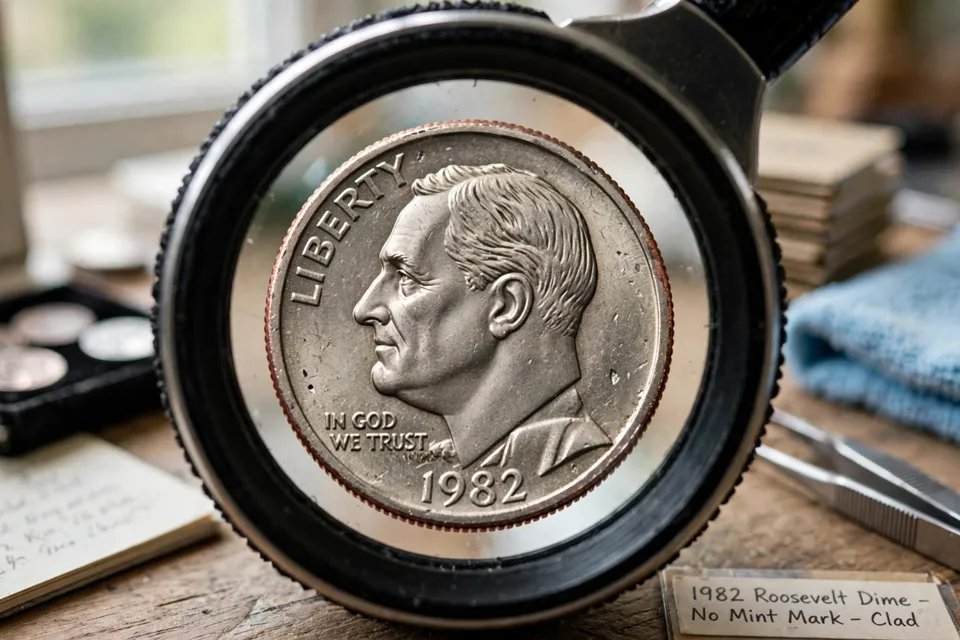
- 1982 No-P — $300 to $1,500+. Philadelphia omitted the P mint mark on a small number of 1982 circulation dimes, the first year P marks were supposed to appear. Strong-strike examples bring the top of the range; weak strikes bring less.
- 1964-D Doubled Die Obverse. Doubling in the date and legends on the final silver-year Denver issue: $200+ in lower grades to $2,000+ in high grades.
- 1950-D/S overmintmark. A Denver punch struck over a San Francisco punch, visible under magnification: $10 to $30 circulated, $100 to $300+ in high grade.
- 1968 No-S, 1970 No-S, and 1983 No-S proofs. The same missing-mint-mark error on later proof issues, worth hundreds to thousands depending on grade.
- Missing clad layer and off-center strikes. A clad dime missing its outer nickel layer shows copper on one side ($50 to $150+). Off-center strikes run $25 to $300 depending on how far off center and whether the date still shows.
Where Is the Mint Mark on a Roosevelt Dime?
- 1946–1964: reverse, lower left beside the torch's base. No mark means Philadelphia.
- 1965–1967: no mint marks at all, under the Coinage Act's temporary ban — a markless 1965, 1966, or 1967 dime is normal, not an error.
- 1968–present: obverse, just above the date. P for Philadelphia (from 1980), D for Denver, S for San Francisco proofs, W for the 1996-W only.
How to Check Your Roosevelt Dimes in 60 Seconds
Sort by date first. Set aside everything 1964 or earlier — silver, worth $3.60+ each at minimum — plus any 1982 with no mint mark, any 1996-W, and anything proof-like with a missing S. Then check the survivors under a loupe for Full Bands on uncirculated coins and for doubling on 1964-D. Store the keepers in individual flips or a folder, never loose in a jar, and never cleaned.
Check Your Dime's Value
If your Roosevelt dime looks special — a silver date in superb condition, a missing mint mark, or a sharply struck torch — run it through the Diggin Dave Coin Value Checker and the Key Date Checker. For a coin that could be worth hundreds or more, the Grade-or-Not tool gives a full verdict before you decide whether professional grading is worth the fee.
Frequently Asked Questions
How much is a Roosevelt dime worth today?
Most Roosevelt dimes are worth 10 cents. Silver dimes dated 1946 to 1964 start at $3.60+ in melt value, common uncirculated examples run $5 to $15, and key dates and errors range from $25 to $506,250, the record set by the 1975 No-S proof.
What years are Roosevelt dimes silver?
Roosevelt dimes are 90% silver from 1946 through 1964. From 1965 onward they are copper-nickel clad with no silver, except for special silver proof and collector issues that never circulated.
How can I tell if my Roosevelt dime is silver?
Check the date first: 1964 or earlier is silver, 1965 or later is clad. A silver dime also shows a solid silver-grey reeded edge and weighs 2.50 grams instead of 2.27 grams.
How much is a 1975 No-S Roosevelt dime worth?
The 1975 No-S proof dime, of which only two examples are known, holds a record of $506,250 set at GreatCollections in October 2024. Only proof-finish coins from 1975 proof sets count — an ordinary circulated 1975 Philadelphia dime is worth 10 cents.
How much is a 1982 No-P Roosevelt dime worth?
Strong-strike 1982 No-P dimes trade from $300 to $1,500+ depending on condition, with weak strikes bringing less. It is the most findable valuable Roosevelt error, because it actually reached circulation.
What does Full Bands mean on a Roosevelt dime?
Full Bands means the two horizontal bands around the torch on the reverse are fully and sharply struck, complete from edge to edge. The designation applies only to uncirculated coins and can double or triple the value, especially on key dates like the 1949-S and 1955-D.
A Roosevelt dime costs nothing to check, and the difference between a 10-cent clad coin and a $506,250 proof error is one date, one mint mark, or one pair of torch bands. Before you spend or sell any dime you are unsure about, run it through The Diggin Dave's free Coin Value Checker to confirm its date, mint mark, and value range, use the Key Date Checker to test it against the key-date list, and try Grade-or-Not for a grade verdict on your best examples.
Related Reading
- How Much Is a Dime Worth? From Pocket Change to $200,000+ — the broader dime guide, from Mercury and Barber rarities to the 1916-D and the 1894-S
- How Many Dimes in a Roll? Values, Silver Finds & Roll-Hunting Tips — how many dimes come in a roll, what a silver roll is worth, and how to hunt rolls for key dates
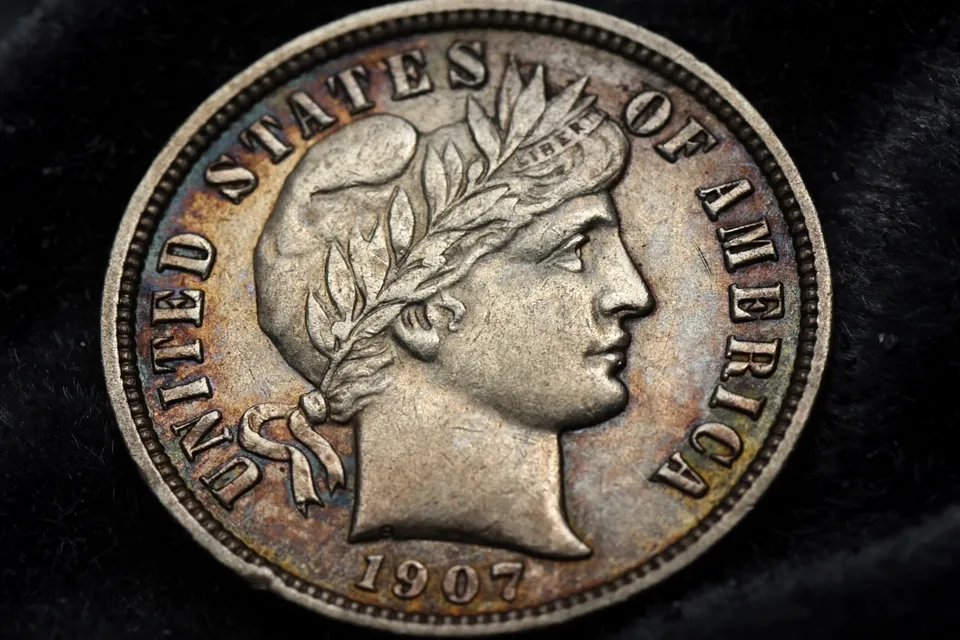
- How Much Is a Barber Dime Worth? From $4+ Silver to $2,160,000+ Rarities — the dime series that came before Roosevelt, from $4+ silver commons to the $2,160,000 1894-S