How to Identify a Clipped Planchet Coin: Real Clips, Fake Cuts & Values
Coin errors · 9 min read · Published October 30, 2026 · Updated October 30, 2026
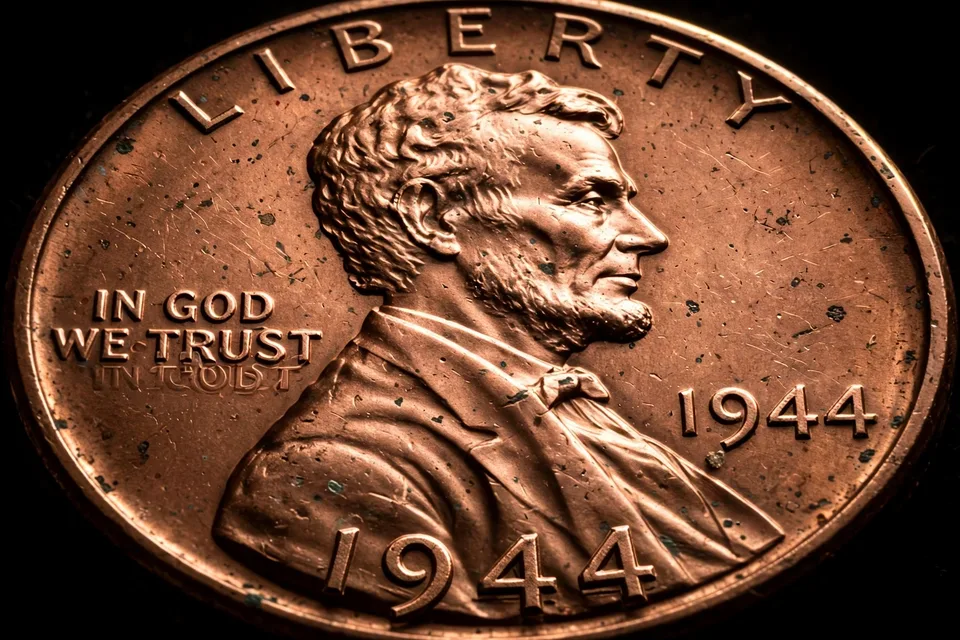
A clipped planchet coin is a genuine mint error struck on a blank missing a piece of metal before it ever reached the dies. To identify a clipped planchet coin, look for three things together: a smooth curved or straight section of missing metal at the edge, a weak or missing rim directly opposite the clip (the Blakesley effect), and stretched design details next to the clip. A coin showing all three is a real mint error worth $10+ to $1,020+ by clip size and denomination. A coin with a shiny, sharp, freshly cut edge and a full-strength rim opposite the gap is almost certainly post-mint damage worth face value only.
What Is a Clipped Planchet Error?
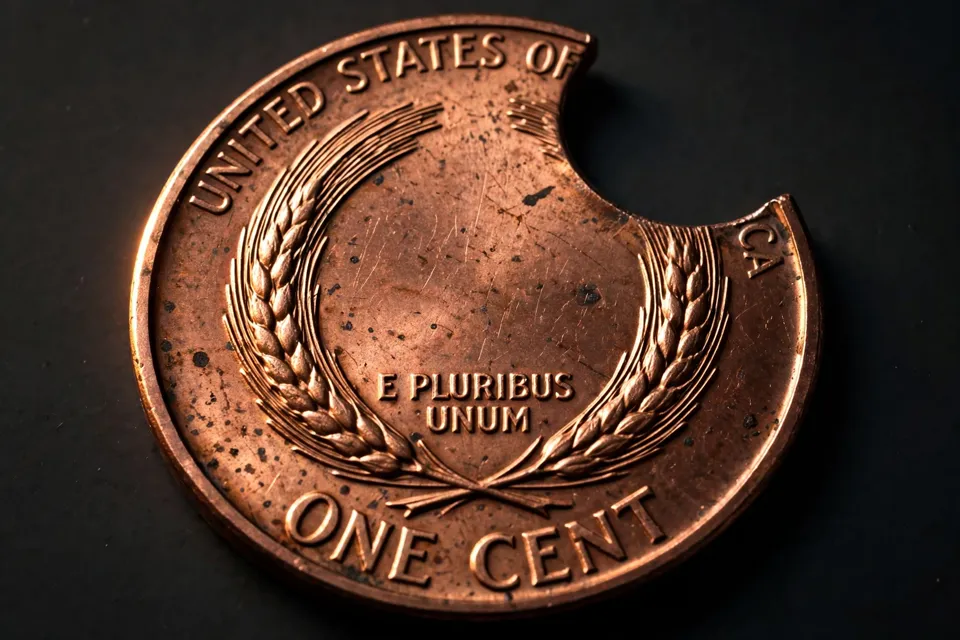
Every coin starts as a flat round blank punched from a long strip of metal. A blanking press stamps circle after circle out of the strip, the strip advances, and the press stamps again. When the strip fails to advance far enough, the next punch overlaps a hole left by the previous blank, leaving a crescent-shaped piece missing. When the punch overlaps the end or edge of the strip instead, the blank comes out with a flat, straight edge. The flawed blank then goes through rimming and striking like any normal planchet.
That sequence explains every test in this guide: the metal was never there, and the strike itself left evidence — metal flowed differently, the rim formed weakly opposite the gap, and the design stretched near the missing area. A person cutting a finished coin cannot reproduce those signatures.
Clipped planchets are planchet errors, the earliest mint-error category. They differ from doubled dies, which come from the die, and from off-center strikes, which come from a misaligned strike: a clipped coin is usually well-centered with a full design except where metal is missing, while an off-center coin is a full round planchet with part of the design struck off the edge.
The Four Types of Clipped Planchet Errors
Curved clips are the most common type: a smooth crescent, the exact arc of the round punch overlapping a previous hole, matching the edge of a normal coin of the same denomination. Most circulation finds are curved clips on cents and nickels.
Straight clips happen when the punch overlaps the straight end or side edge of the strip, leaving one flat, smooth edge instead of a crescent. They are scarcer than curved clips and command a small premium at the same size.
Ragged clips come from a blank punched out of a defective or untrimmed section of the strip, leaving a rough, jagged edge rather than a clean curve or straight line. Because rough edges also resemble damage, the Blakesley test below matters even more for this type.
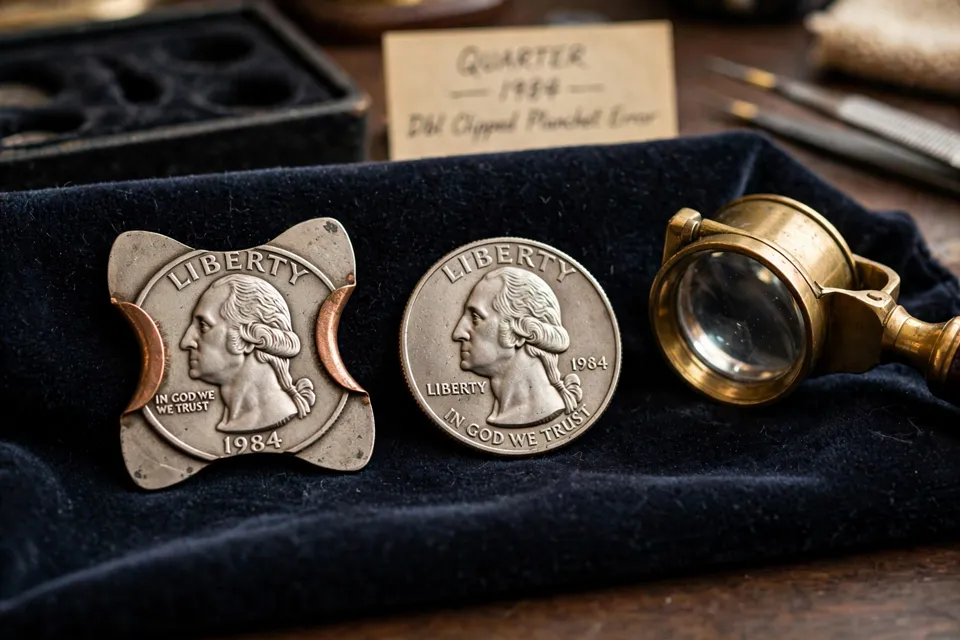
Bowtie clips, also called double clips, are the rarest of the four: two opposing curved clips leave the coin shaped like a bowtie. Any bowtie-shaped coin deserves careful authentication before it is bought or sold. When a curved clip removes 70% or more of the planchet, collectors call it a crescent clip: spectacular, rare, and the most frequently faked.
The Blakesley Effect: The Single Best Test
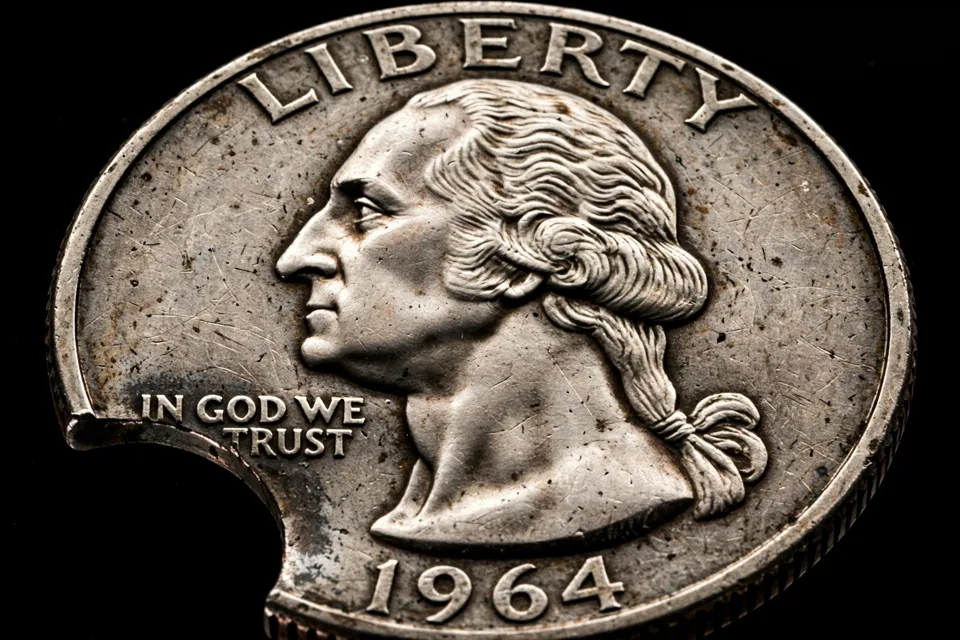
The Blakesley effect, named for the numismatist who first described it, is the weak, faint, or entirely missing rim directly opposite the clipped area. It is the single most reliable test for a genuine clip.
When a normal planchet is struck, the collar forces metal upward into the rim all the way around. When a planchet has a clip, metal escapes toward the missing section instead, so the opposite rim forms weakly: reeding looks faint, the rim line thins or vanishes, and nearby lettering looks soft, on both sides at the same position.
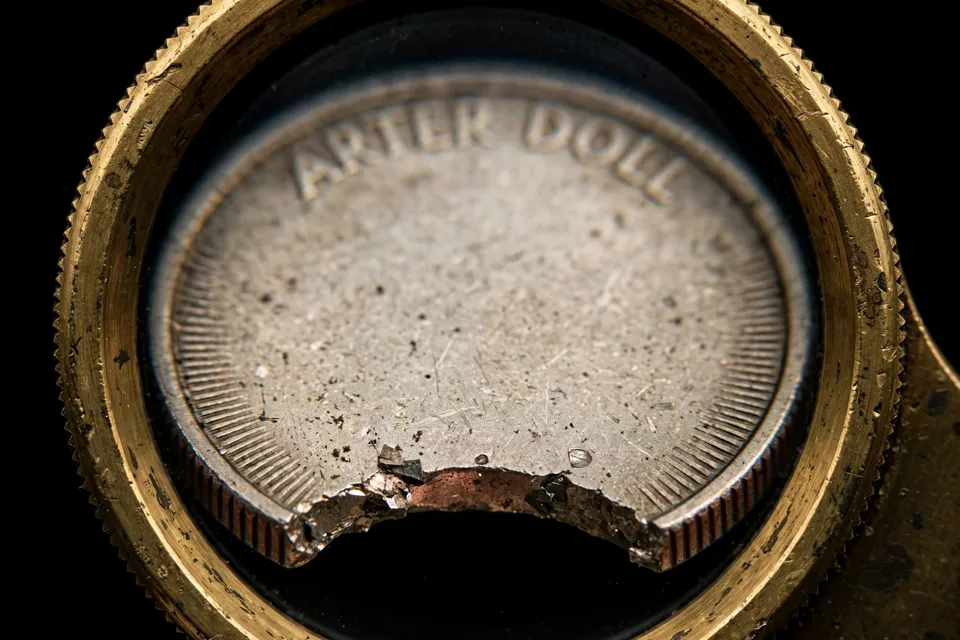
To run the test, hold the coin so the clip faces you, rotate it 180 degrees, and examine the far rim with a 10x loupe. On a genuine clip that rim is visibly weaker than anywhere else; on a coin cut after minting, it is full strength, because the coin was struck whole. No weak opposite rim means no genuine clip, except on very large clips where the effect can be faint or absent. A missing Blakesley effect on a small or medium clip is a strong reason to reject the coin.
The 5-Step Clipped Planchet Identification Checklist
1. Match the clip curve. A curved clip must follow the arc of a normal coin of the same denomination. Place a normal coin beside the suspect coin: the missing crescent should match its round edge. A curve too tight, too flat, or irregular for no reason signals damage.
2. Read the clip edge. A genuine clip edge shows two textures side by side, called cut-and-tear marks: part smooth where the punch sheared the metal, part rougher where it tore. It is never bright, sharp, or burred like a freshly sawn coin.
3. Check for metal flow. On a genuine error, metal stretched toward the missing area during striking, so letters or design elements near the clip look pulled toward the gap. Post-mint cutting leaves the design crisp right up to the cut.
4. Test the opposite rim. Run the Blakesley test above: the rim opposite the clip should be weak, faint, or missing on both sides. This catches most fakes.
5. Weigh and measure. A clipped coin is lighter than normal and slightly smaller across the clipped axis: a major clip can drop a cent noticeably below its standard 2.5 grams or a nickel below 5.0 grams. Weight alone never proves a clip, since a cut coin is light too, but a full-weight coin with a supposed clip is an immediate red flag.
Clipped Planchet vs. Post-Mint Damage
| Feature | Genuine clipped planchet | Post-mint damage (cut coin) |
|---|---|---|
| Missing area shape | Smooth curve matching a coin edge, or flat strip edge | Irregular, sharp, or tool-marked edge |
| Opposite rim (Blakesley effect) | Weak, faint, or missing on both sides | Full strength, normal rim |
| Design near the gap | Stretched, distorted, pulled toward the gap | Crisp right up to the cut |
| Clip edge texture | Cut-and-tear: smooth plus rough, aged tone | Bright, sharp, burred, fresh metal |
| Value | $10+ to $1,020+ by clip size | Face value only |
When a coin passes the shape test but the opposite rim looks full, treat it as damage no matter how convincing the clip looks.
How Much Is a Clipped Planchet Coin Worth?
Clip value follows one rule: bigger clip, bigger price, provided the date survives. A major clip that eats the date is worth less than a slightly smaller clip with the date fully visible. Condition matters next, then denomination and metal: a clipped silver or gold coin carries its metal value plus the error premium, while a clipped modern clad coin carries only the error premium.
| Clip size | Typical value range | Notes |
|---|---|---|
| Small clip, under 10% | $10+ to $30+ | Common on cents; Blakesley effect required |
| Medium clip, 10% to 20% | $30+ to $150+ | The roll-hunter sweet spot |
| Major clip, over 20%, date intact | $300+ to $1,020+ | 2010-P nickel sold for $1,020 at Heritage in 2020 |
| Bowtie (double) clip | $300+ to $1,000+ | Rare; premium by symmetry and grade |
| Crescent clip, 70%+ missing | $500+ to $1,000+ | Heavily faked; certification essential |
| Silver or gold clipped coin | Metal value plus $100+ | Starts from the melt floor |
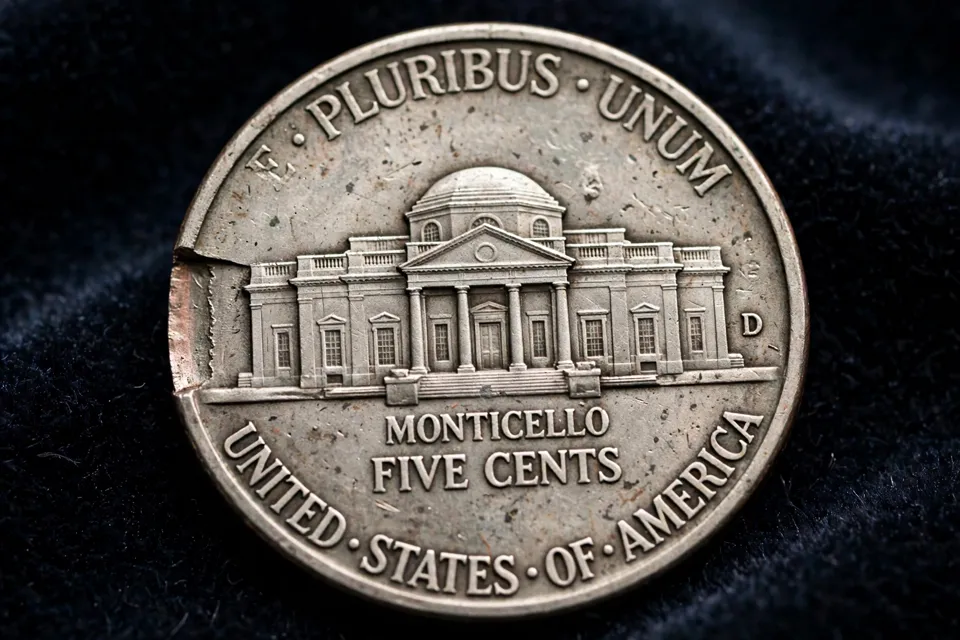
Real market anchors confirm the table. A certified 2010-P Jefferson nickel with a major clip sold at Heritage Auctions for $1,020 in 2020, two hundred times face value, because the clip removed over 20% of the planchet while leaving the date complete. Certified clipped cents trade in the $180+ to $325+ range in mint state, and a certified 1856 large cent with a clip has been listed at $1,099+. Uncirculated examples always outprice circulated ones.
Where to Find Them, and What to Do Next
Clipped planchets turn up in circulation more often than most mint errors, because the flawed blanks entered the same bags and rolls as normal coins. Cents produce the most finds, and nickels are next. Roll hunting is the most productive method: bank-wrapped rolls of cents and nickels regularly yield small curved clips. The clip is one of the few errors visible without magnification once you know the shape to look for.
If you find one, do not clean it: cleaning strips original surface and destroys the toning that helps authenticate the clip edge. Place it in a 2x2 holder or flip, photograph both sides and the clip edge under magnification, and note the clip type, the percentage of missing metal, and whether the date is complete. If the clip is major, a bowtie, or on a silver or gold coin, submit it for certification. Finally, run the coin through The Diggin Dave's free Error Identifier tool before you list or sell it.
Frequently Asked Questions
How do I know if my coin is a real clipped planchet or just damaged?
Check the rim opposite the missing section with a loupe. A genuine clip shows the Blakesley effect, a weak or missing rim on both sides, plus stretched design next to the gap, while a cut coin keeps a full-strength rim.
What is the Blakesley effect on a clipped coin?
The Blakesley effect is the faint, thin, or absent rim directly opposite a clip, caused by metal escaping toward the missing section during striking instead of being forced up into the rim. It is the most reliable single test for a genuine clip.
How much is a clipped planchet coin worth?
Small clips under 10% are worth $10+ to $30+, medium clips of 10% to 20% bring $30+ to $150+, and major clips over 20% with the date intact reach $300+ to $1,020+, as proven by the 2010-P nickel sold for $1,020 at Heritage in 2020. Bowtie and crescent clips command $300+ to $1,000+, and silver or gold clipped coins add metal value on top.
What is the difference between a clipped planchet and an off-center strike?
A clipped planchet is missing metal: the coin is not round, and the missing section follows another coin's edge or a straight strip edge. An off-center strike is a full round planchet struck out of alignment, so part of the design is missing but no metal is, leaving a blank crescent of unstamped metal.
Are clipped planchet coins rare?
Curved clips on cents are the most common mint error of this type and turn up regularly in rolls and change, so small clips are affordable. Straight clips are scarcer, bowtie clips are rare, and crescent clips missing 70% or more are genuinely rare and heavily faked.
Should I get my clipped planchet coin graded?
Yes, for any major clip, bowtie clip, crescent clip, or clip on a silver or gold coin: certification authenticates the error and protects the premium when you sell. Small circulated clips on common cents are usually sold raw.
A clipped coin costs nothing to check, and the difference between a $1,020 mint error and a face-value cut coin is one weak rim opposite the gap. Before you spend or sell any coin you are unsure about, run it through The Diggin Dave's free Error Identifier to confirm the error type, use the Coin Value Checker to confirm its value range, and try Grade-or-Not for a grade verdict on your best examples.
Related Reading
- How to Identify a Doubled Die Coin: Real Doubling vs Machine Doubling — the other essential error-identification guide, with the raised-vs-flat test that separates true doubling from machine doubling
- 1955 Doubled Die Penny Value: Famous Error Worth $2,000+ — America's most famous error coin, and the doubled-die diagnostics that also apply to clipped planchets
- 1943 Copper Penny Value: The $1.7 Million Rarity — the wrong-planchet rarity that shows how a planchet mistake becomes a million-dollar coin