How to Tell If a Quarter Is Silver: 6 Tests That Work in Seconds
Coin Identification Guides · 9 min read · Published October 25, 2026
A quarter is silver if it was struck in 1964 or earlier, shows a solid silver-grey edge with no copper stripe, and weighs 6.25 grams. A quarter dated 1965 or later is copper-nickel clad and worth 25 cents — with three collector exceptions: the 40% silver Bicentennial quarters, silver proof quarters dated 1992 or later, and the rare 1965 quarter struck on a leftover silver planchet. Run the date test first, then the edge and weight tests, and you will know in under a minute.
The Date Test: The Fastest Answer
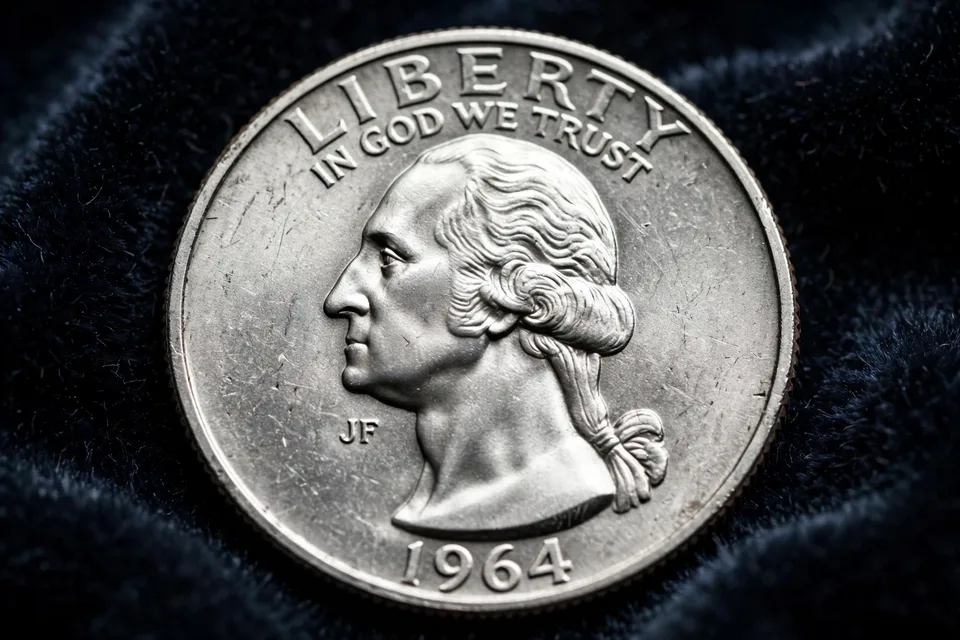
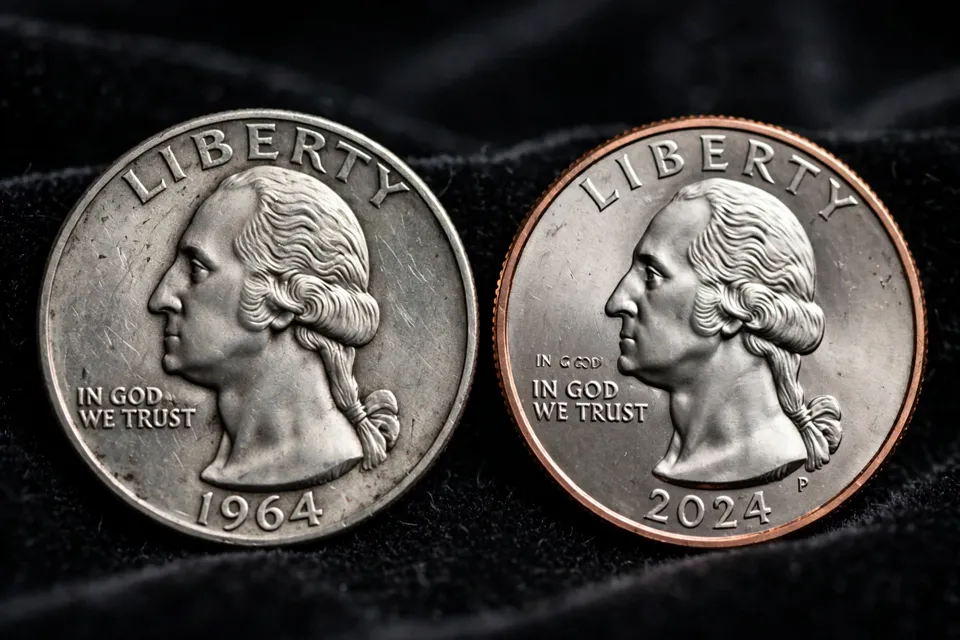
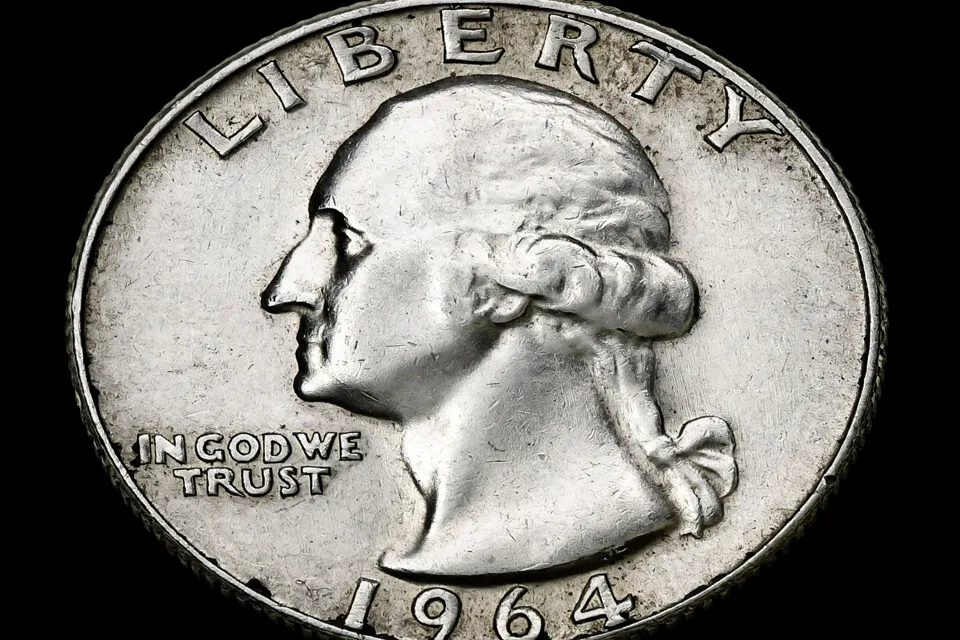
The date is the single most reliable test, because the United States Mint changed quarter composition on a fixed date and never went back. Every circulating quarter struck from 1796 through 1964 contains silver. Every circulating quarter struck from 1965 onward is clad copper-nickel — except for the collector issues covered below.
That 1964 line is the whole game: a worn 1964 Washington quarter holds 0.1808 troy ounces of pure silver, worth $10+ at October 2026 silver prices near $57 an ounce, while a worn 1965 quarter, identical in size and design, holds no silver and is worth 25 cents.
One wrinkle: no 1965–1967 quarter carries a mint mark, because the Mint suspended mint marks during the changeover. A 1965–1967 quarter without a mint mark is normal, not an error — and clad, unless it is a rare silver-planchet error below.
The Edge Test: Look for the Copper Stripe
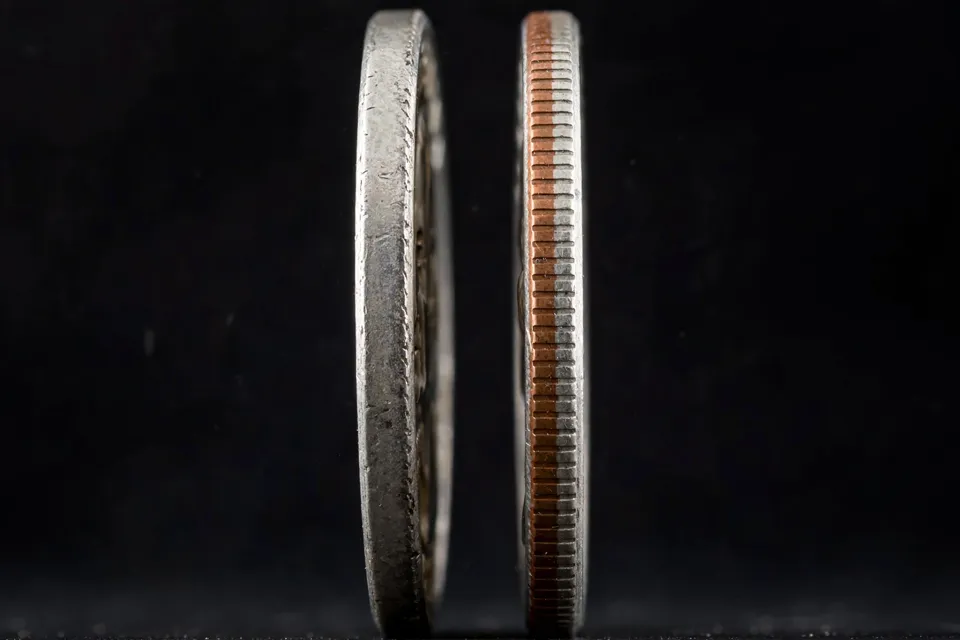
Turn the quarter on its side and look at the reeded edge under a good light. A clad quarter is a sandwich: a pure copper core between two copper-nickel outer layers. That copper core shows as a distinct brown-orange stripe running around the edge, plain as day once you know to look for it.
A silver quarter has no layers and no stripe. Its edge is one solid silver-grey colour all the way around, the same metal through and through. This test works in seconds, even on a coin too worn to read clearly, and through clear plastic bank rolls — a silver edge stands out against copper-striped clad edges.
Be careful with toned coins: a silver quarter can tone dark grey or nearly black, and a dirty clad quarter can look deceptively silver. Toning changes surface colour, not structure — a toned silver quarter still shows no copper band.
The Weight Test: 6.25 Grams vs 5.67 Grams
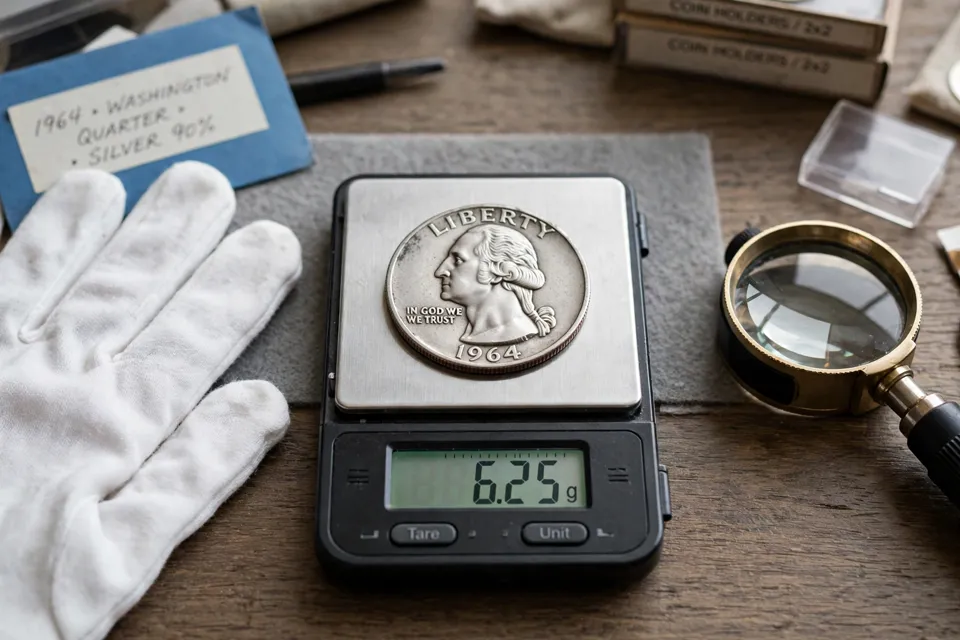
A silver quarter weighs 6.25 grams. A clad quarter weighs 5.67 grams. That 0.58-gram gap is small, but a digital jewellery scale accurate to 0.01 grams settles it instantly.
Weight matters most in three situations: a silver proof and a clad proof look identical in a holder, a rare 1965 silver-planchet quarter looks exactly like an ordinary 1965 clad quarter until weighed, and heavy wear shaves a little weight off any old coin — so allow a tenth of a gram on a heavily circulated piece, but a genuinely silver quarter will never weigh near 5.67 grams.
The Sound Test: The Ring vs the Thud
Balance the quarter on a fingertip and tap it lightly with another coin. A 90% silver quarter rings: a clear, high-pitched tone that sustains for a full second or more. A clad quarter thuds: a short, dull clunk that dies almost immediately. Silver is denser and more elastic than the copper-nickel sandwich, so it sustains vibration longer.
Use the sound test as confirmation, never as your only test, and never drop a possibly valuable coin onto concrete — a wooden table or felt pad still gives you the ring.
The Magnet and Look-Alike Tests
Silver is not magnetic. If a magnet grabs your quarter, it is not a silver quarter — it may be a steel counterfeit, a plated novelty, or a foreign coin that wandered into the jar. But the reverse is not true: clad quarters are not magnetic either, so passing the magnet test proves nothing on its own. Use it only to rule coins out.
The look-alikes that fool beginners are worth knowing. Silver-plated clad quarters — sold as novelties and sometimes spent by mistake — look bright and silvery but still show the copper stripe and weigh 5.67 grams. A 1976 Bicentennial quarter is not automatically silver either: the clad versions in circulation are worth 25 cents, while only the San Francisco collector versions carry silver.
The Exceptions: Three Silver Quarters Dated After 1964
Most guides stop at "1964 or earlier," and that shortcut costs collectors real finds. Three post-1964 silver quarters exist:
1. The 1976-S Bicentennial Quarter in 40% Silver
Struck only for collectors at San Francisco and never released into circulation, it weighs 5.75 grams, carries the S mint mark and the dual date 1776–1976, and holds 0.0737 troy ounces of silver — worth $5+.
2. Silver Proof Quarters From 1992 Onward
From 1992 on, San Francisco has struck 90% silver proof quarters for annual Silver Proof Sets, alongside identical-looking clad proofs. Both carry the S mint mark, but the silver version weighs 6.25 grams with a solid silver edge, against 5.67 grams and a copper stripe for clad. A silver proof state quarter is worth $8+; its clad twin about $1.
3. The 1965 Silver Planchet Error
The rarest exception is the transitional error: a 1965 quarter accidentally struck on a leftover 90% silver planchet when the Mint switched compositions. Only a handful are known, and they are indistinguishable from ordinary 1965 quarters until weighed. Verified examples have brought $7,000+ at auction, which is why every 1965 quarter deserves a trip across the scale.
Which Silver Quarters Are Worth More Than Melt?
Most silver quarters trade close to $10+ melt, because millions of common-date Washington quarters survive from the 1940s through 1964. The coins that break away from melt fall into four groups.
First, the key dates: the 1932-D and 1932-S Washington quarters, struck in small numbers in the series' first year, are worth $100+ even worn and $1,000+ in mint state, while the 1916 Standing Liberty quarter is worth hundreds to thousands more than melt depending on condition.
Second, the early series. Draped Bust (1796–1807), Capped Bust (1809–1838), Seated Liberty (1838–1891), and Barber (1892–1916) quarters all predate the Washington design, and even worn examples carry premiums well above melt, because so few survive.
Third, condition. An uncirculated silver quarter with full mint lustre can be worth several times its circulated twin, and a certified gem many times more again. Never clean a silver quarter: cleaning strips the original surface and can cut value by more than half.
Fourth, the errors and varieties. Doubled dies, wrong-planchet strikes, and off-centre strikes all command premiums over melt, and they are found by the same careful inspection this guide teaches.
| Quarter type | How to spot it | Typical value |
|---|---|---|
| 90% silver Washington (1932–1964) | Date 1964 or earlier, solid silver edge, 6.25 g | $10+ |
| 1932-D and 1932-S keys | First-year date with D or S mint mark, reverse below the eagle | $100+ worn, $1,000+ mint state |
| 40% silver Bicentennial (1976-S) | Dual date 1776–1976, S mint mark, 5.75 g | $5+ |
| Silver proof quarters (1992 onward) | S mint mark, mirror finish, solid silver edge, 6.25 g | $8+ |
| 1965 silver planchet error | Looks like a normal 1965 quarter but weighs 6.25 g | $7,000+ verified examples |
| Clad quarters (1965 onward) | Copper stripe on the edge, 5.67 g | $0.25 |
Where the Mint Mark Sits
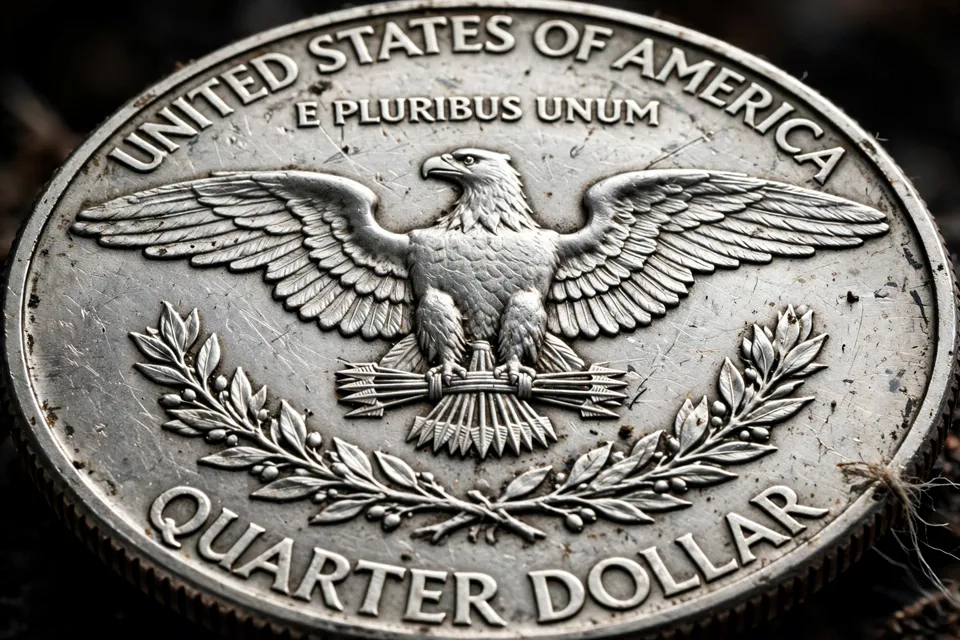
Mint marks help confirm what you have, and their location changed over the years. On Washington quarters dated 1932 through 1964, the mint mark sits on the reverse, below the eagle. From 1968 onward, it moved to the obverse, just to the right of Washington's ponytail. Philadelphia quarters carry a P (or no mark before 1980), Denver a D, San Francisco an S.
The S mint mark deserves special attention after 1964: no San Francisco quarter struck for circulation exists after 1964, so every S-mint quarter from 1968 onward is a proof or collector issue. An S-mint quarter dated 1992 or later might be silver or clad, so weigh it; an S-mint Bicentennial quarter is the 40% silver version; and an S-mint state quarter is silver only if it came from a Silver Proof Set.
When to Get a Professional Opinion
Home tests identify silver with confidence in nearly every case, but two situations call for a dealer or grading service: a suspected 1965 silver planchet error, high-value key date, or major error variety, where the premium depends entirely on certified confirmation — and a coin that passes some tests but fails others, where a dealer's non-destructive X-ray fluorescence test reads the exact composition in seconds. For everything else, the six tests here are enough.
Found a silver quarter and want its full value? Run it through The Diggin Dave's free Coin Value Checker tool, confirm whether its date is a key date with the Key Date Checker, and use Grade-or-Not to estimate the grade that sets its price.
Frequently Asked Questions
Is every quarter dated before 1965 silver?
Yes, for circulating quarters: every quarter struck for circulation from 1796 through 1964 contains silver — 90% for the 1873–1964 issues. The only post-1964 silver quarters are collector issues and rare transitional errors.
Are state quarters silver?
Ordinary state quarters from Philadelphia and Denver are clad and worth 25 cents. The silver versions are San Francisco proofs from 1992 onward — 90% silver, 6.25 grams, solid silver edge, worth $8+ each.
How much silver is in a silver quarter?
A 90% silver quarter holds 0.1808 troy ounces of pure silver — $10+ in metal value alone at October 2026 silver prices near $57 an ounce, before any collector premium.
Can you still find silver quarters in circulation?
Rarely, but yes. Silver quarters still turn up in bank rolls, old jars, and inherited collections, because most people never check dates.
What does a silver quarter weigh?
A 90% silver quarter weighs 6.25 grams, against 5.67 grams for clad. The 40% Bicentennial weighs 5.75 grams. A scale accurate to 0.01 grams settles any doubt.
Is a 1965 quarter ever silver?
Almost never — but the exceptions are valuable: a small number of 1965 quarters were struck on leftover 90% silver planchets, and verified examples have brought $7,000+ at auction. Weigh every 1965 quarter: 6.25 grams means silver, 5.67 grams means clad.
Related Reading
- How Much Is a Quarter Worth? From Pocket Change to $207,400+ — the full quarter value guide, from silver melt to the rarest key dates
- How to Grade a Coin: The Complete Guide to the 1–70 Scale, Luster, Wear & Value — grade decides a silver quarter's price, from worn examples to mint state gems
- How to Identify a Doubled Die Coin: Real Doubling vs Machine Doubling — the identification skill that turns a silver quarter check into an error hunt