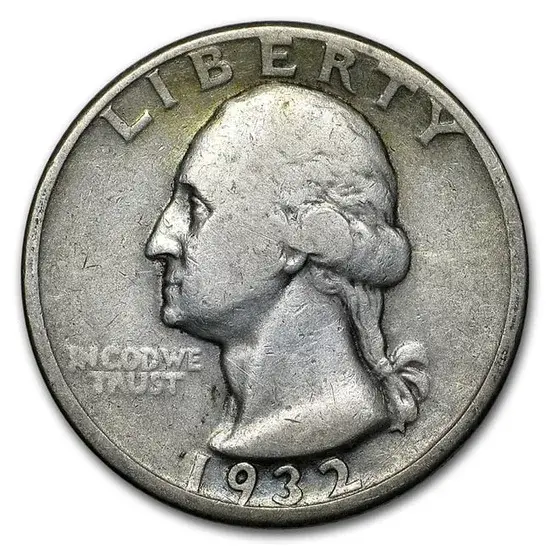
1932-S Washington Quarter: San Francisco's First-Year Key
Coin Encyclopedia · 8 min read · Published November 7, 2026
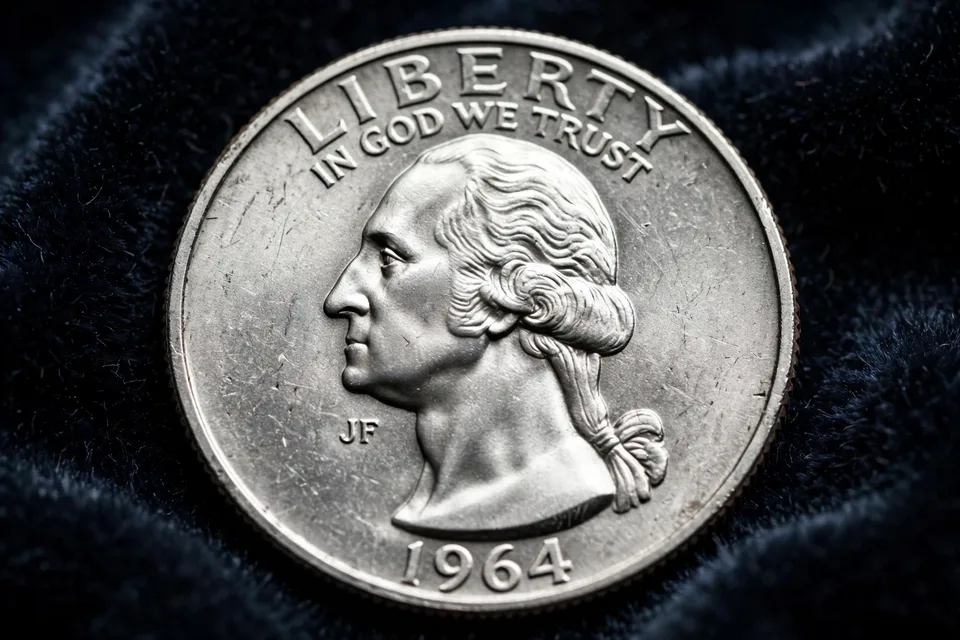
San Francisco struck fewer Washington quarters in 1932 than Denver did — 408,000 against 436,800 — which makes the 1932-S the lowest-mintage issue of the first year. It is the quieter of the two first-year keys: the Denver coin gets more attention, but the San Francisco coin is the scarcer of the pair by the numbers, and collectors building the series by date and mint mark hunt it just as long.
The 1932-S shares the first-year story with its Denver brother: a bicentennial coin meant for one year, struck in the depths of the Depression, and sent straight into circulation. This page explains the mintage, where the S sits, and how the metal underneath sets the floor while the grade figures are still being researched.
The lowest mintage of 1932
Three mints struck Washington quarters in 1932, and San Francisco struck the fewest. Philadelphia produced the issue by the millions, Denver struck 436,800, and San Francisco struck 408,000 — the smallest run of the first year. The coins went into circulation on the West Coast, where they wore hard in a cash economy, and few were ever set aside.
The 1932-S is often overshadowed by the 1932-D, which carries the higher collector value in most grades despite the larger mintage. That is a quirk of demand, not of numbers: the Denver coin was recognised as a key earlier, and the market followed. By mintage alone, the San Francisco coin is the scarcer of the two, and a collector who owns the 1932-D still needs the 1932-S to complete the first year.
Where the S sits
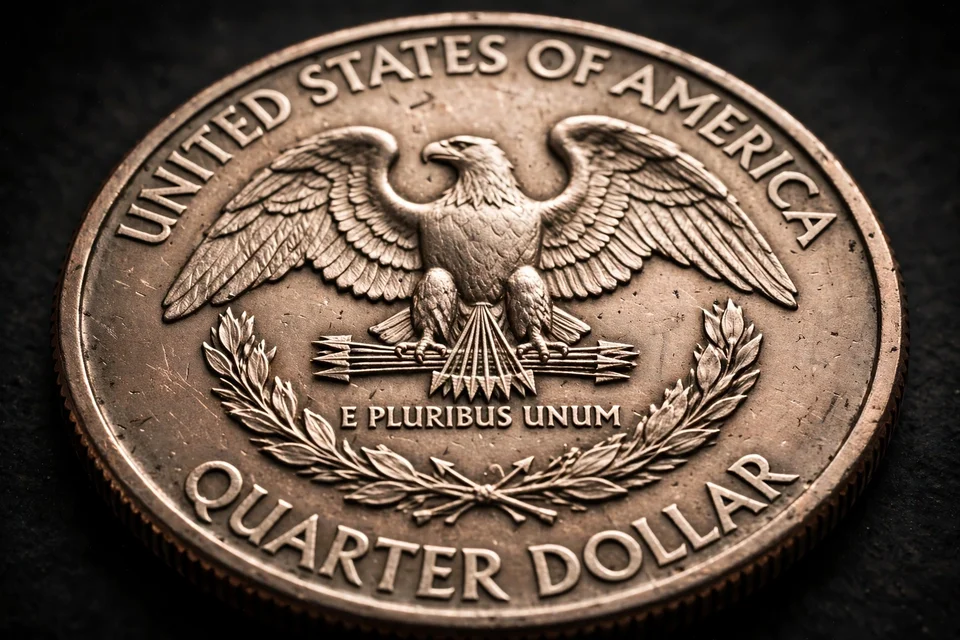
The mint mark on a Washington quarter of this era is on the reverse, below the eagle, just above the R in QUARTER. On the 1932-S it is a small S, and it is the whole difference between a scarce coin and a common one: a Philadelphia 1932 quarter is an ordinary first-year coin, while the San Francisco issue is a key date. Check the reverse before anything else, and check it under a loupe.
A genuine S is crisp, correctly positioned, and struck at the same depth as the rest of the design. A letter that looks added, shallow, or out of place is a warning sign, and the right move is a professional opinion rather than a guess. First-year key dates attract altered mint marks, and the 1932-S is a prime target because the gap between a common 1932 and this coin is so large.
How a Washington quarter wears
Washington quarters wear in a predictable pattern, and reading it helps you judge a coin honestly. Washington’s hair above the ear goes first, then the cheek and the jaw. On the reverse, the eagle’s breast feathers and the wreath soften early, while the wings hold detail longer. A coin with even wear across both sides has circulated naturally; a coin with one side sharp and the other flat has usually been damaged or altered.
Original surfaces matter as much as wear. A 1932-S that was never cleaned shows a soft grey tone with a gentle lustre in the protected areas around the letters. A cleaned coin looks bright and washed out, with fine parallel hairlines visible under a loupe. Cleaning is the single most common way a scarce coin loses collector value, and it cannot be reversed.
What our guide shows for the 1932-S
Our value guide has not yet researched grade-by-grade figures for this date, so the table below shows “—” for every grade. That blank is honest: the mintage of 408,000 is documented, the first-year key status is documented, and a guessed figure would help nobody. Grade figures will be added here when they are researched.
| Grade | Estimated value |
|---|---|
| Good (G-4) | — |
| Fine (F-12) | — |
| Extremely Fine (XF-40) | — |
| About Uncirculated (AU-50) | — |
| Mint State 60 (MS-60) | — |
| Mint State 65 (MS-65) | — |
Guide values reviewed November 5, 2026 — figures update live from our Worker.
What can be said with confidence is the shape of the market. The 1932-S is one of the two first-year keys, and the lowest-mintage issue of 1932. Worn examples with a clear date and a clear S are the ones collectors encounter most often, and uncirculated examples are genuinely scarce. The premium sits on the mint mark and the grade together, and both need to be confirmed by a professional.
The silver underneath
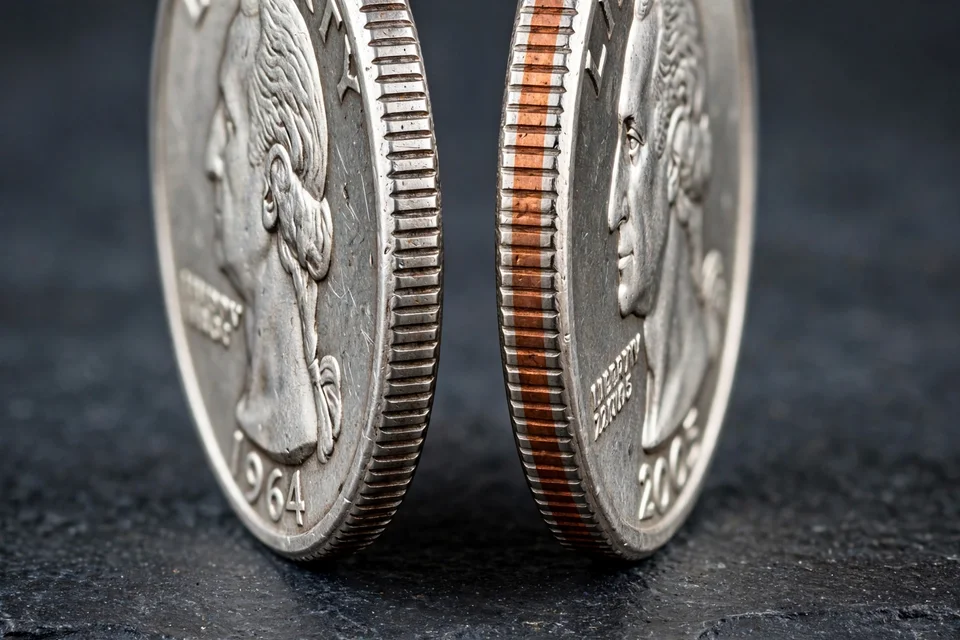
Every Washington quarter from 1932 to 1964 is 90% silver, struck on a 6.25-gram planchet, 24.3 millimetres across, with a reeded edge and about 0.18 troy ounces of pure silver. That metal gives every genuine example a floor: $9.42. Silver moves daily, so the floor moves with it, but the floor is real — no genuine 1932-S is worth less than its metal.
Metal floor updates live from our Worker — last updated November 7, 2026.
There were no quarters struck in 1933, so the 1932-S has no neighbour to confuse it with: the next Washington quarters came in 1934. Weigh a suspect example: a genuine coin reads 6.25 grams, and a coin far from that figure deserves a professional look.
A coin to certify
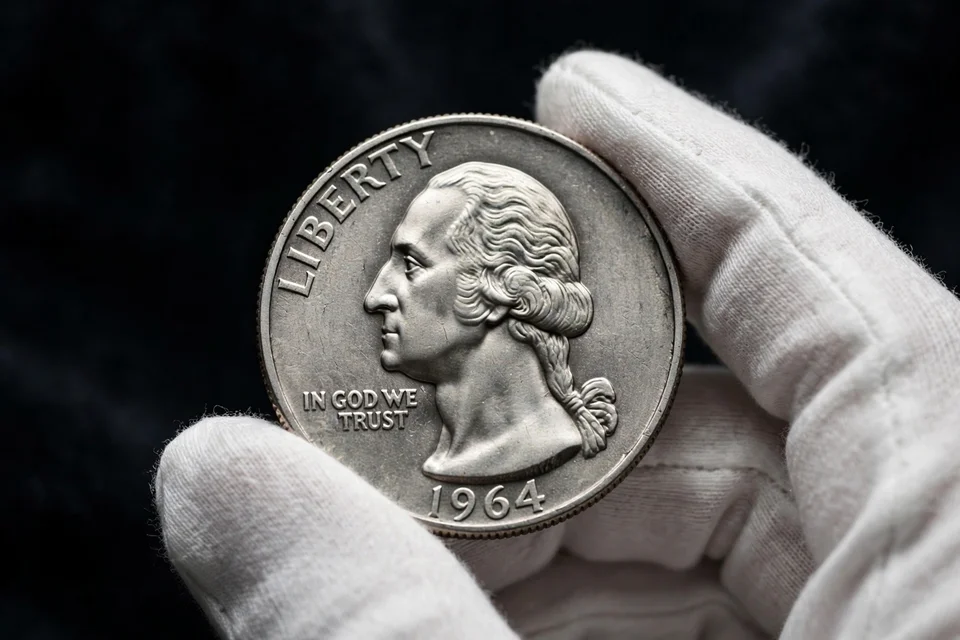
For a first-year key date, certification is the standard. It settles authenticity, confirms the grade, and gives the coin a record that travels with it. A raw 1932-S with a clear date and mint mark is worth the cost of a professional opinion, and a certified example is the form in which this coin most often changes hands among serious collectors.
Handle it by the edges, keep it in an acid-free holder, and do not clean it. Photograph both sides before sending it anywhere, and keep a note of where it came from. A first-year key with a clear history is a stronger coin.
Latest reported results for this coin
Checking for newly reported results…
Your questions, answered
How many 1932-S Washington quarters were struck?
San Francisco struck 408,000 Washington quarters in 1932, the lowest mintage of the first year — fewer than Denver's 436,800 and far fewer than Philadelphia's millions.
Where is the mint mark on a 1932-S Washington quarter?
The S is on the reverse, below the eagle just above the R in QUARTER. It separates the scarce San Francisco key from the common Philadelphia 1932 quarter.
Why is the 1932-S less famous than the 1932-D?
The Denver coin was recognised as a key earlier, so demand followed it, even though the San Francisco mintage is lower. By the numbers the 1932-S is the scarcer of the two first-year keys.
Is the 1932-S Washington quarter silver?
Yes. Every Washington quarter from 1932 to 1964 is 90% silver, 6.25 grams, with about 0.18 troy ounces of pure silver. The live metal floor for this coin is in the specs section above, and it moves with the silver market.
Should a 1932-S Washington quarter be certified?
Yes. Certification settles authenticity, guards against added mint marks, and is the accepted standard for a first-year key date.
Check your 1932-S
Run the date and mint mark through the free Coin Value Checker for an instant estimate, or get a Grade-or-Not verdict on whether certification is worthwhile. The wider quarter guide is here: Rare Quarters in Your Change Worth $207,400+. The other first-year key is the 1932-D Washington Quarter, and the 1936-D Washington Quarter is the better Denver date of the mid-1930s.
Four hundred eight thousand struck, fewer than its Denver brother, and a mint mark that changes everything — the 1932-S teaches collectors to count before they assume, because the quieter key is sometimes the scarcer one.
This guide is for education — learn the coin first, and get a professional opinion before buying or selling.