How Much Is a Barber Half Dollar Worth? From $20+ Silver to $199,750+ Rarities
Half Dollars · 9 min read · Published October 29, 2026 · Updated October 29, 2026
Most Barber half dollars are worth $20+ to $35 in worn condition, because every issue from 1892 through 1915 is 90% silver and carries a melt floor near $19 at late-2026 silver prices near $54 an ounce. Common dates in uncirculated condition start around $560, key dates climb from $500+ worn to $45,000+ in Choice Uncirculated, and the series crown jewel — the 1892-O Micro O variety — sold for $199,750 in 2022. Date, mint mark, and grade decide where your half dollar lands.
What Is a Barber Half Dollar?
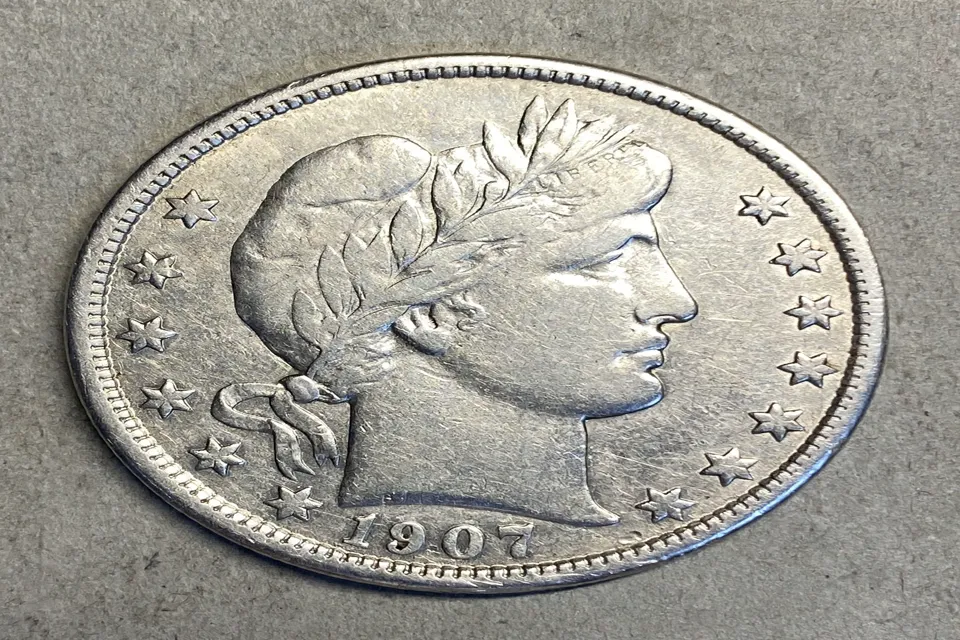
The Barber half dollar is the Liberty Head half dollar struck from 1892 to 1915, part of the complete redesign of America's silver coinage that replaced the long-running Seated Liberty design. Chief Engraver Charles E. Barber designed all three new silver denominations — dime, quarter, and half dollar — which debuted together in 1892, sharing the same Liberty portrait.
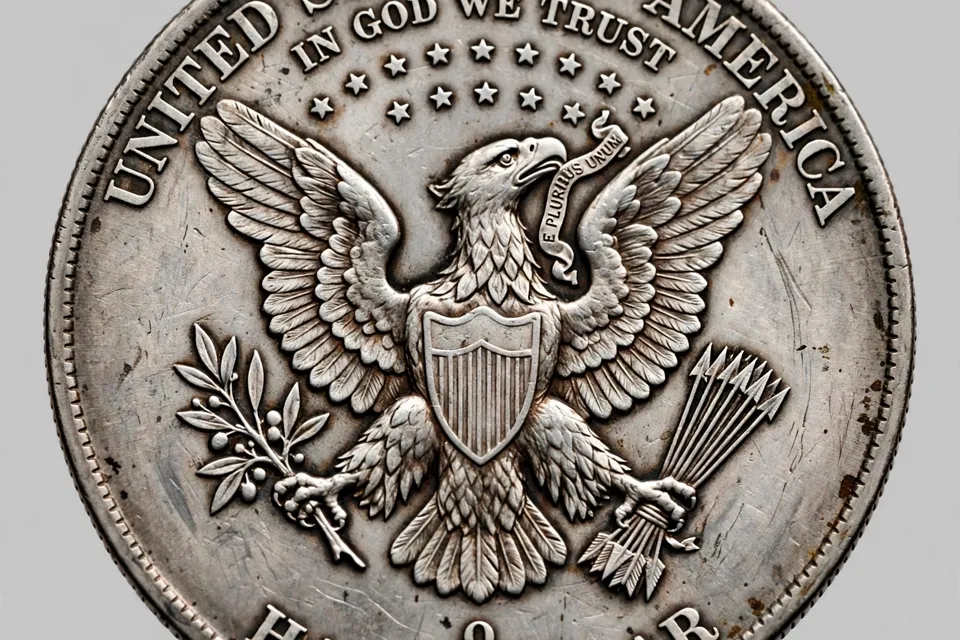
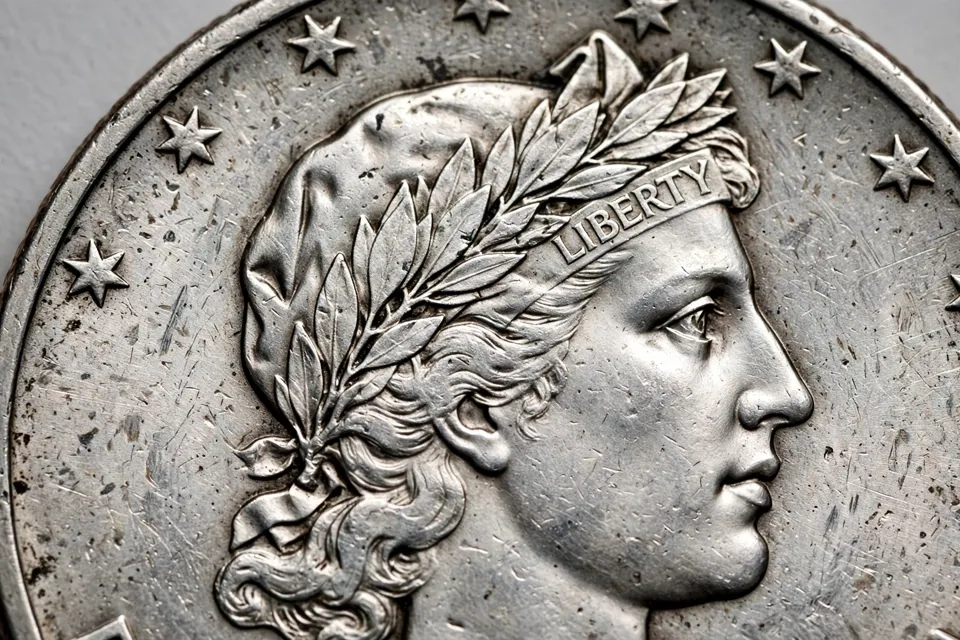
The obverse shows Liberty facing right, wearing a cap with the word LIBERTY on a headband across her forehead, with thirteen stars around the rim and the date below. The reverse carries a heraldic eagle with outstretched wings and a shield on its breast, an olive branch and arrows in its talons, IN GOD WE TRUST above the eagle, UNITED STATES OF AMERICA around the edge, and HALF DOLLAR below. Every Barber half dollar is 90% silver and 10% copper, weighs 12.5 grams, measures 30.6 millimeters across, and has a reeded edge. Its actual silver weight is 0.3617 troy ounces, which is why even the most worn common date is worth many times its fifty-cent face value.
Four mints struck the series: Philadelphia every year with no mint mark, New Orleans (O) from 1892 through 1909, San Francisco (S) throughout, and Denver (D) from 1906. The design ran for exactly twenty-four years because an 1890 Act of Congress required new coin designs to circulate for at least twenty-five years before they could be changed — and in 1916 the Walking Liberty half dollar took over.
How to Identify Your Barber Half Dollar
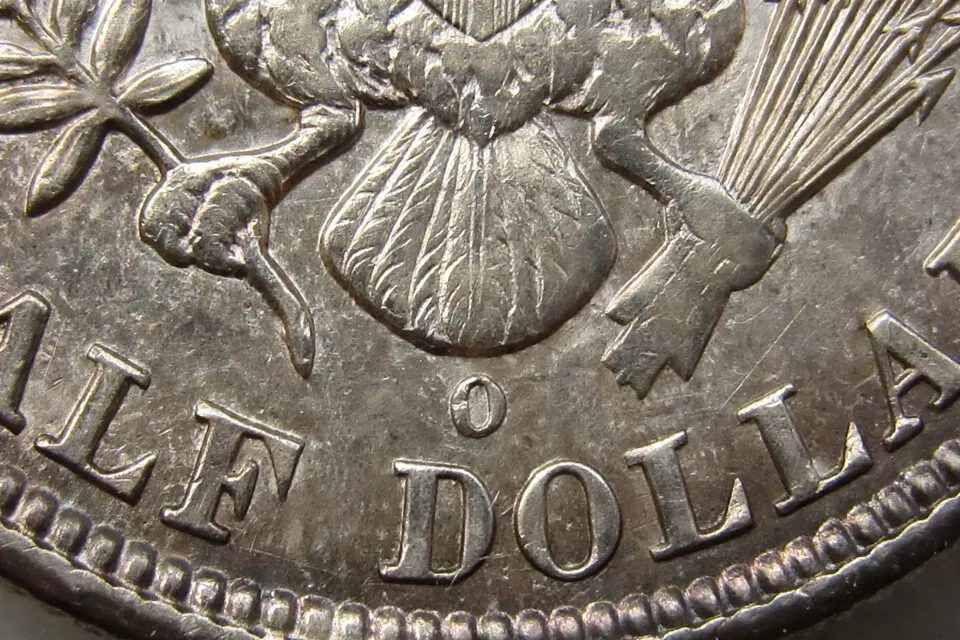
Work through the checks in order. First, read the date on the obverse, below Liberty's portrait. Second, flip the coin over and find the mint mark on the reverse, directly below the eagle's tail feathers and just above the letters DO in HALF DOLLAR. No mint mark at all means Philadelphia. A small O means New Orleans. A small S means San Francisco. A small D means Denver, and only dates from 1906 onward can carry one — a Denver mark on an earlier date is a red flag.
Third, confirm the silver. A genuine Barber half dollar weighs 12.5 grams and shows a solid silver-grey edge with no copper stripe. A magnet test helps: silver is not magnetic, so a coin that sticks to a magnet is not a genuine silver Barber half. Fourth, look for the variety that changes everything: the 1892-O Micro O carries a mint mark dramatically smaller than the standard O, occupying far less than half the space of a normal mint mark and appearing noticeably thinner and lighter. A 10x loupe makes the difference straightforward once you know where to look. Any five-figure key date or suspected Micro O belongs in a PCGS or NGC holder before it is bought or sold.
How to Grade a Barber Half Dollar by Wear Points
Condition drives values harder than date for most issues, because these large silver coins circulated hard and uncirculated survivors are scarce. On the obverse, check Liberty's cheek and the hair above her forehead first — these are the highest points and the first to go flat. The letters of LIBERTY in the headband must be full and sharp for higher grades; weak or merged letters cap the grade immediately. On the reverse, check the eagle's breast feathers, the tops of the wings, and the lines of the shield.
The table below covers common dates — the Philadelphia, New Orleans, San Francisco, and later Denver issues struck in the millions and traded most often.
| Grade | Typical value |
|---|---|
| Good to Very Good (G-4 to VG-8) | $20–$30 |
| Fine to Very Fine (F-12 to VF-20) | $50–$110 |
| Extremely Fine to About Uncirculated (EF-40 to AU-50) | $230–$400 |
| Mint State (MS-60 to MS-65) | $560–$1,200 |
Never clean a Barber half dollar: cleaning strips original surfaces and can cut a coin's value in half or worse. Certify anything whose value clears the $30+ to $65 grading fee: any key date, any coin with a shot at MS-65 or better, and any confirmed variety or error.
The Key Dates That Change Everything
A short list of dates turns a silver half dollar into a serious payday. The 1914, struck in a mintage of only 124,230, is the lowest-mintage issue of the entire series, followed closely by the 1915 at 138,000 and the 1913 at 188,000. The early San Francisco and New Orleans issues are keys because so few survived in collectible condition, and the 1904-S is the scarcest non-variety issue in Mint State despite a mintage above half a million.
| Date / Mint | Mintage | Very Fine | About Uncirculated | Choice Uncirculated |
|---|---|---|---|---|
| 1892-O | 390,000 | $900 | $1,250 | $2,000 |
| 1892-O Micro O | Included above | $15,000 | $25,000 | $45,000 |
| 1892-S | 1,029,028 | $775 | $1,400 | $2,500 |
| 1893-S | 740,000 | $1,400 | $2,750 | $5,000 |
| 1896-S | 1,140,948 | $1,200 | $2,500 | $3,500 |
| 1897-O | 632,000 | $1,100 | $3,000 | $4,500 |
| 1897-S | 933,900 | $1,000 | $3,250 | $3,850 |
| 1904-S | 553,038 | $2,000 | $10,500 | $20,000 |
| 1913 | 188,000 | $700 | $1,650 | $2,000 |
| 1914 | 124,230 | $800 | $1,750 | $2,400 |
| 1915 | 138,000 | $500 | $1,350 | $2,500 |
The late-date Philadelphia trio — 1913, 1914, and 1915 — is scarce in every grade and genuinely rare in Mint State, because the Mint struck far fewer half dollars as new designs approached.
The 1892-O Micro O: A Quarter Punch on a Half-Dollar Die
No Barber half dollar discussion is complete without the 1892-O Micro O. In the first year of the series, a New Orleans Mint worker accidentally used a mint-mark punch meant for the smaller quarter dollar on a half-dollar die, producing an undersized O beneath the eagle's tail feathers. Fewer than 100 examples are believed to exist, and the variety is instantly recognizable once you compare it against a normal 1892-O: the tiny O sits directly above the D in DOLLAR, occupies far less than half the space of a standard mint mark, and looks noticeably thinner and lighter.
The finest known example, graded PCGS MS-68 and formerly from the Eliasberg and Dale Friend collections, sold at Heritage Auctions in May 2022 for $199,750 — the auction record for the variety and one of the highest prices ever paid for any Barber half dollar. Even heavily worn Micro O examples start around $2,800, and Mint State specimens command $30,000+. A suspected Micro O must be third-party certified before any serious collector pays full value.
The 1904-S: The Scarcest Half Dollar in Mint State
The 1904-S teaches the most important lesson in Barber half dollar collecting: mintage is not the same as survival. A total of 553,038 pieces were struck at San Francisco in 1904, a figure that looks unremarkable next to the 124,230 of the 1914. Yet the 1904-S is the scarcest non-variety issue of the series in Mint State grades, because the coins went straight into hard circulation in the West and were almost never saved in rolls or bags. Very Fine examples already bring $2,000, About Uncirculated pieces reach $10,500, and Choice Uncirculated examples command $20,000.
The 1896-S tells the same story: despite a mintage of 1,140,948, very few survived in Gem Mint State because San Francisco coins circulated heavily and were rarely set aside — which is why it starts around $1,200 even in Very Fine.
Before You Spend or Sell One
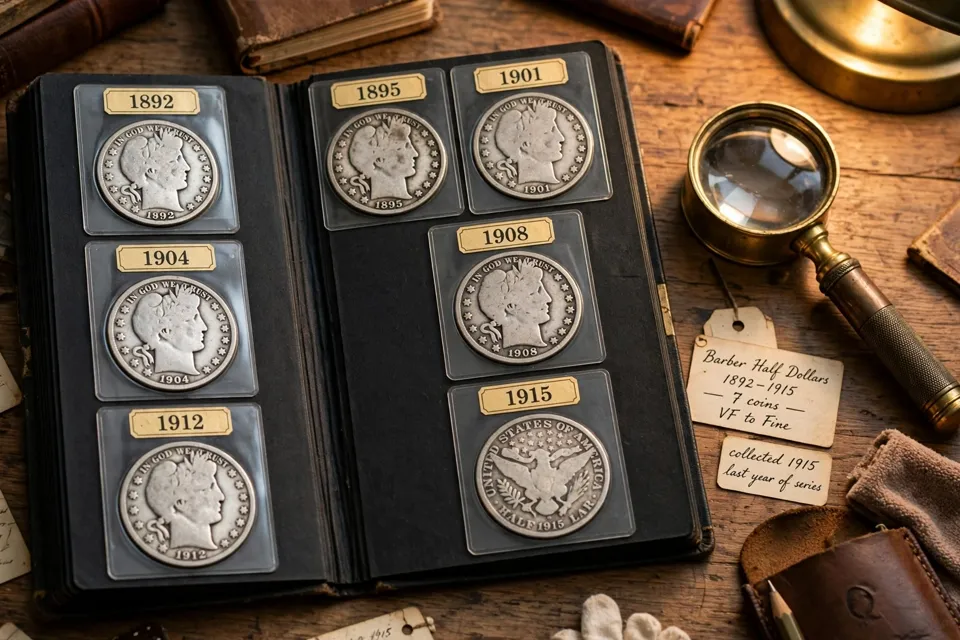
Work through the checks in order: date, mint mark below the eagle's tail, weight of 12.5 grams, and the LIBERTY band for grade. Never clean the coin. Keep original surfaces intact, and certify anything whose value clears the $30+ to $65 grading fee: any key date, any coin with a shot at MS-65 or better, and any confirmed variety or error. Common-date Barber half dollars trade easily as silver, but key dates and gem examples belong in certified holders where buyers pay full value.
Most Barber half dollars are worth $20+ to $35 worn, driven by their 90% silver content and a melt floor near $19. Common dates in uncirculated condition start around $560, key dates run $500+ worn to $45,000+ in Choice Uncirculated, and the 1892-O Micro O sold for $199,750 in 2022. Check the date, check the mint mark, and check it twice — the difference between a $20 silver coin and a $199,750 rarity is one tiny letter below the eagle's tail.
Frequently Asked Questions
How much is a Barber half dollar worth?
Most Barber half dollars are worth $20+ to $35 in worn condition and $50+ to $110 in Fine to Very Fine, driven by their 90% silver content. Common dates in Mint State start around $560, while key dates like the 1892-O, 1904-S, and the late-date Philadelphia issues run $500+ worn to $45,000+ in Choice Uncirculated.
What is the most valuable Barber half dollar?
The 1892-O Micro O variety is the most valuable Barber half dollar, with the finest known example, graded PCGS MS-68, selling for $199,750 at Heritage Auctions in May 2022. Among regular issues, the 1904-S is the scarcest in Mint State, with Choice Uncirculated examples commanding $20,000.
Where is the mint mark on a Barber half dollar?
The mint mark is on the reverse, directly below the eagle's tail feathers and just above the letters DO in HALF DOLLAR. No mint mark means Philadelphia, O means New Orleans, S means San Francisco, and D means Denver. Denver struck half dollars only from 1906 onward, and New Orleans only through 1909.
What is the 1892-O Micro O?
The 1892-O Micro O is a variety created when a New Orleans Mint worker accidentally used a quarter-dollar mint-mark punch on a half-dollar die, producing a visibly undersized O. Fewer than 100 examples are believed to exist, and even worn specimens start around $2,800, while Mint State examples reach $30,000+.
Are Barber half dollars made of silver?
Yes. Every Barber half dollar struck from 1892 through 1915 is 90% silver and 10% copper, weighing 12.5 grams with 0.3617 troy ounces of pure silver. That silver content guarantees every genuine example is worth many times its fifty-cent face value, whatever its date.
What years were Barber half dollars made?
Barber half dollars were struck from 1892 through 1915 at Philadelphia, New Orleans, San Francisco, and, from 1906, Denver. They were replaced in 1916 by the Walking Liberty half dollar after an 1890 law required the Barber design to circulate for at least twenty-five years.
A Barber half dollar costs nothing to check, and the difference between a $20 silver coin and a $199,750 rarity is one tiny letter below the eagle's tail feathers. Before you spend or sell any old half dollar you are unsure about, run it through The Diggin Dave's free Coin Value Checker to confirm its date, mint mark, and value range, use the Key Date Checker to see whether your date is a key issue, and if your coin shows doubling, a clipped edge, or an off-center strike, the Error Identifier helps pin down what you have.
Related Reading
- How Much Is a Walking Liberty Half Dollar Worth? From $25+ Silver to $188,000+ Keys — the successor series that replaced Barber halves in 1916, with its own key dates and the September 2026 Chase records
- How Much Is a Franklin Half Dollar Worth? From $20+ Silver to $129,500+ Keys — Full Bell Lines diagnostics, the Bugs Bunny variety, and the 1961 doubled die
- How Many Half Dollars in a Roll? The Complete Half Dollar Roll Guide — Values, Silver Finds & Roll-Hunting Tips — 20 halves per roll, and the silver and key-date finds hiding in half-dollar rolls