How to Identify a Brockage Error Coin: Mirror Images, Die Caps & Real Values
Coin errors · 9 min read · Published November 3, 2026 · Updated November 3, 2026
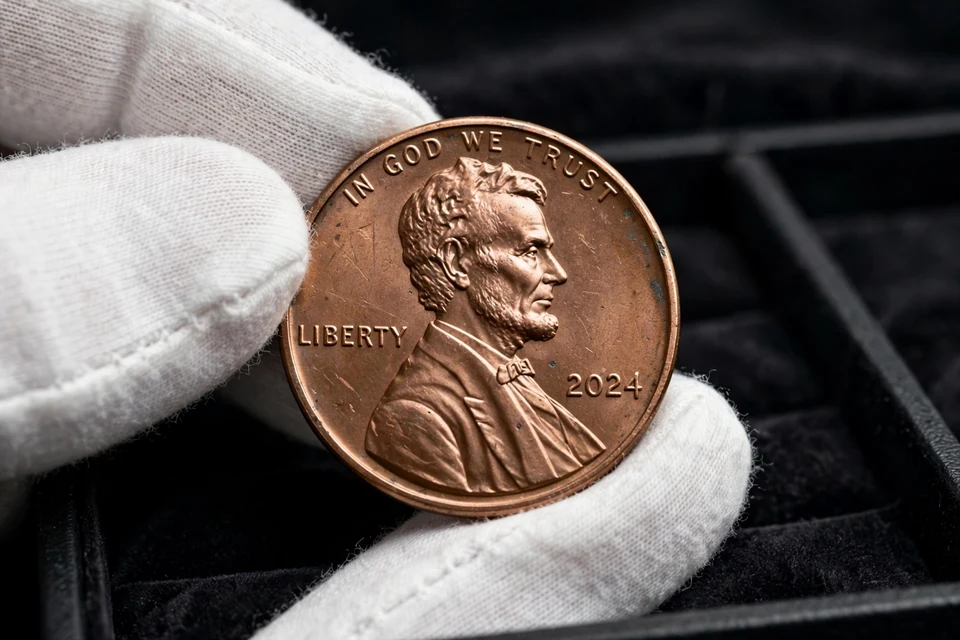
A brockage error coin is a coin struck by another coin. When a freshly struck coin fails to eject and sticks to a die, it becomes a surrogate die, and the next blank planchet is struck against it. The short answer to how to identify a brockage error coin is this: look for a mirrored, sunken (incuse) impression on one side of the coin, where the normal design for that side should be, while the other side looks normal.
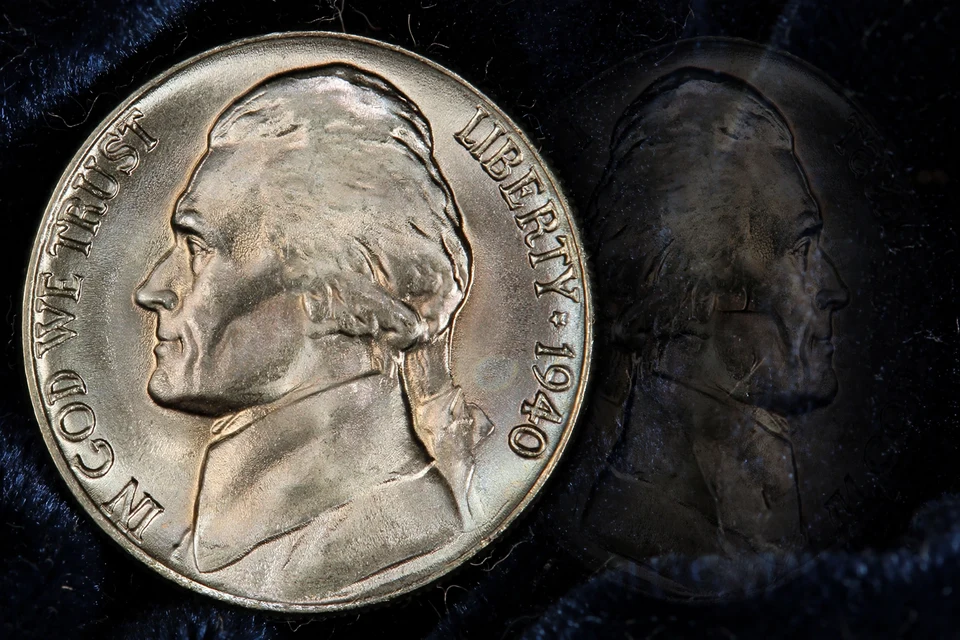
Mirrored, because the impression comes from a coin, not a die. Sunken, because a coin's raised design presses into the new planchet instead of standing above it. One-sided, because only the side facing the stuck coin carries the ghost. If your coin shows all three, you are almost certainly holding a brockage.
What a brockage error actually is
Normal striking is simple: a blank planchet drops between two dies, both dies impress their designs at once, and the finished coin is ejected. A brockage breaks that rhythm at the ejection step.
Sometimes a struck coin clings to a die instead of falling clear. Heat, suction, grease, or a slightly oversized planchet can hold it there. The press does not notice: the next blank is fed in, the dies close, and the stuck coin presses its raised design into the new planchet in reverse. The new coin leaves the press with one normal side and one ghost side.
The stuck coin often stays on the die for several strikes, each flattening it a little more — which is why brockages range from razor-sharp to nearly melted away. Specialists call the stuck coin a die cap once it wraps around the die. The cap is the tool; the brockage is the product.
Obverse brockage vs reverse brockage
Which side carries the ghost tells you which die the stuck coin clung to. A coin stuck to the upper hammer die leaves an obverse brockage: the new coin's reverse shows a mirrored obverse design. A coin stuck to the lower anvil die leaves a reverse brockage: the new coin's obverse shows a mirrored reverse design.
Reverse brockages are rarer. A coin stuck to the lower die sits in plain sight and is usually spotted quickly, while a coin stuck to the upper die hides above the work area and can strike several brockages before anyone notices. Scarcer usually means higher value at the same grade and completeness.
A full brockage covers the whole face with the mirrored design; a partial brockage covers only part of it, because the stuck coin was off-center or the new planchet was misaligned. Full brockages are more dramatic and more valuable. Partial brockages are more common and still collectible, especially when the mirrored detail is crisp and the date reads clearly in reverse.
First-strike, late-stage, and double brockages
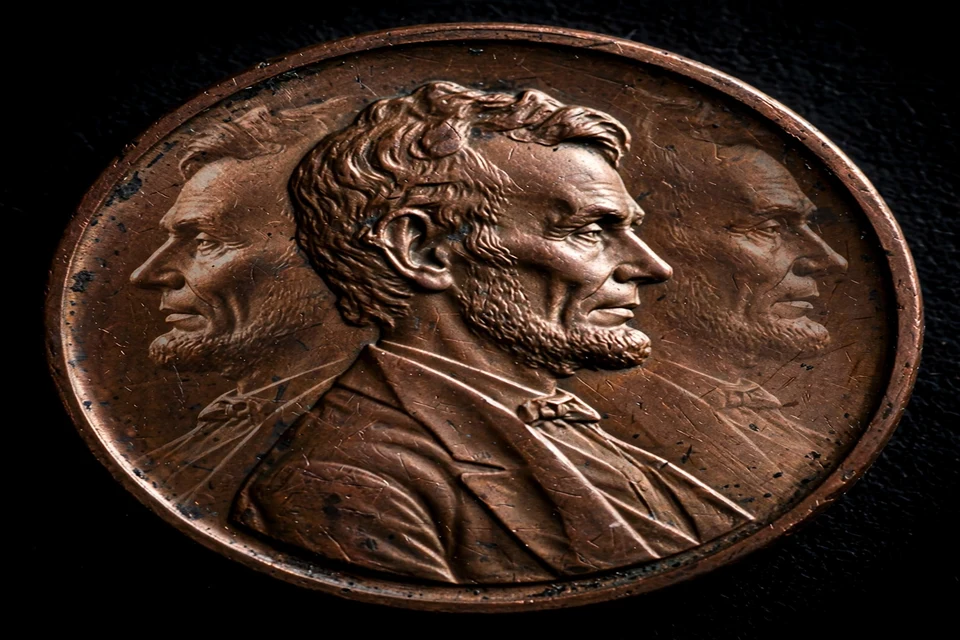
Not all brockages are equal: the difference is the age of the stuck coin when it struck yours. A first-strike brockage is made on the stuck coin's first repeat strike, while its design is crisp. The mirrored image is sharp, deeply incuse, and easy to read — these mirror brockages command the highest prices.
Early-stage brockages are still sharp but slightly softened; mid-stage examples show spreading, fading detail; late-stage brockages, struck after the cap has been hammered many times, can be so distorted that the mirrored design is barely a shadow. Late-stage pieces are still genuine errors, but their values fall hard, because the readable mirror image — the feature collectors pay for — has been pounded away.
A double brockage is rarer still: a coin struck twice by stuck coins, leaving two overlapping mirrored impressions. Double brockages on nickels are documented in the $500+ to $1,500+ range, and the premium grows with the clarity of both impressions.
The 5-step identification checklist
Work through these steps in order. Do not skip the mirror test — it catches fakes.
First, find the normal side. Every genuine brockage has one fully normal face, struck by the open die. If both faces look wrong, it is a different error, not a brockage.
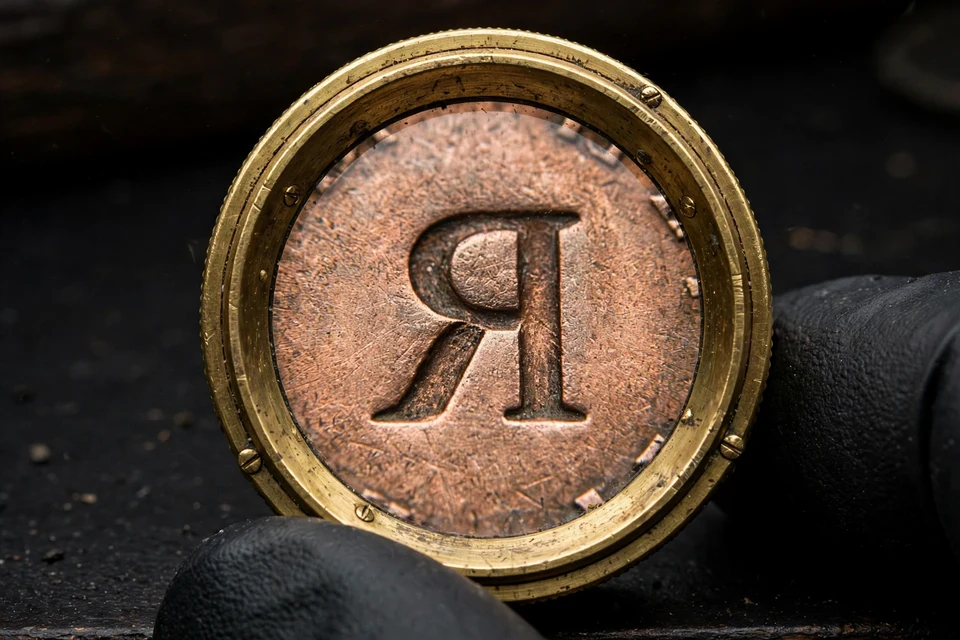
Second, test the mirror. Hold the ghost side beside a normal coin of the same type: the brockage impression should read as a mirror image — lettering reversed, portrait facing the wrong way. A genuine brockage is always reversed.
Third, test the depth. Tilt the coin under a single lamp: a brockage impression is incuse, sunk below the level of the field. Normal design is raised, die cracks are raised, and scratches leave torn metal beside them. A brockage sits smooth and low, because metal flowed into the stuck coin's recesses rather than being cut away.
Fourth, check the weight and the edge. A brockage weighs the normal weight for its type, because the planchet was complete — only the design was wrong. A coin that is light or missing part of its rim has a different problem, such as a clipped planchet.
Fifth, look for the die-cap connection. A brockage struck late in a cap's life may show a slightly dished shape, a flared rim, or faint stretching lines radiating from the center — signs the striking coin had begun to wrap around its die.
Brockage vs the lookalikes
Three errors and one fake routinely get mistaken for brockages.
A die clash happens when the dies strike each other with no planchet between them, transferring faint traces of each design onto the opposite die. Later coins show ghostly traces — but raised, not incuse, and usually faint and partial. Raised ghost means clash; sunken ghost means brockage.
A double-struck coin is struck twice by the normal dies, so it shows two overlapping normal impressions that both read the right way round. A brockage's ghost always reads backwards. If the second image is not reversed, it is not a brockage.
A struck-through error is a coin struck through grease, cloth, or debris, leaving a blank or textured patch where design never formed. The patch is a gap, not a picture. A brockage patch is a picture — a recognizable mirrored design.
The fake to fear is the vise job: someone presses a genuine coin into a soft blank in a vise, creating an incuse mirrored impression that mimics a brockage. Vise jobs usually betray themselves — an impression too perfect and too shallow, a squeezed or flattened edge, wrong alignment for a real press strike, and disturbed metal around the ghost. A genuine brockage was struck at full mint pressure, so its rim, edge, and metal flow look like a real strike.
Brockage error coin values
Brockage values run wider than most error types, because completeness, stage, and denomination all pull together. The typical range for an ordinary modern brockage is $75+ to $500+, while complete first-strike mirror brockages on older coins reach several thousand dollars.
| Type | Typical value range | What moves it up |
|---|---|---|
| Modern nickel or dime, partial brockage | $75+ to $150+ | Crisp mirror detail, full date visible |
| Modern cent, single brockage | $50+ to $500+ | First-strike sharpness, full design |
| Nickel, double brockage | $500+ to $1,500+ | Both impressions readable |
| 19th–20th century complete brockage, Extra Fine or better | $500+ to $5,000+ | Mirror clarity, rare date or mint |
| Three-cent nickel brockage | $5,000+ to $6,000+ | Scarce denomination, high grade |
| Uncirculated Eisenhower dollar brockage | $7,500+ | Size, completeness, mint state |
| World gold brockage, mint state | $9,000+ to $31,000+ | Gold content, rarity, auction record |
An 1876 Victoria half-sovereign obverse brockage graded MS64 realized $31,200+ at Heritage, and an 1880 example graded MS61 realized $9,987+. Those are world gold coins, where rarity and metal stack together. For United States coins, the working rule is simpler: a complete, sharp, first-strike brockage on a scarce denomination is a four-figure coin, and a partial brockage on a modern nickel or dime is a $75+ find.
What to do with a coin you suspect
Hold it by the edge, photograph both sides with side lighting that shows the incuse depth, and put it in an acid-free flip. Photograph the ghost side twice: once straight on, and once beside a normal coin of the same type.
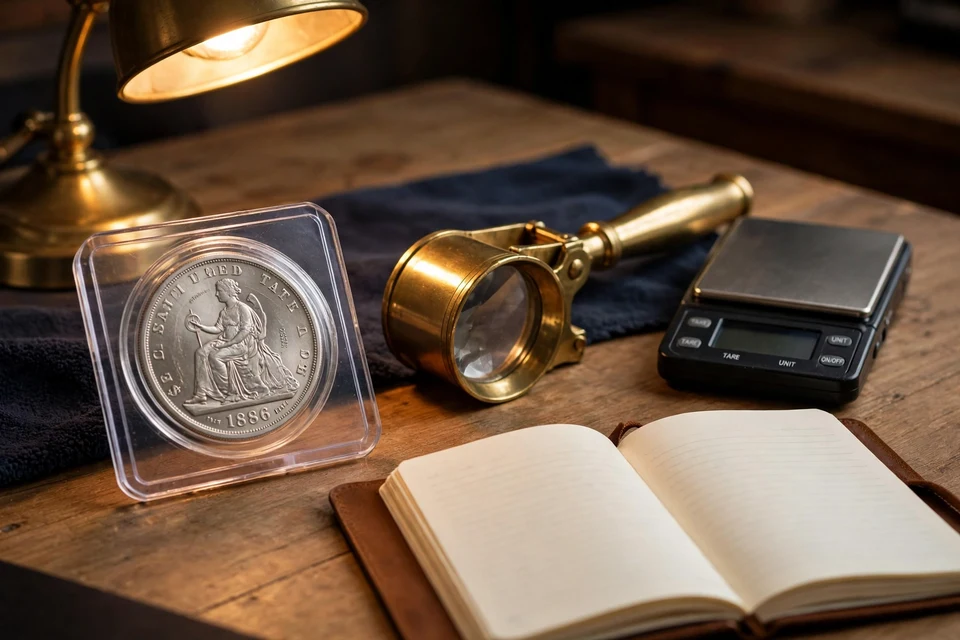
Do not clean the coin: cleaning can soften the very incuse detail that proves what the coin is. Do not try to flatten a domed example, and do not press anything against the ghost side to "test" it — that is how a genuine brockage gains damage that looks exactly like a vise job.
Send dramatic, complete, or high-grade examples for professional authentication: a certified brockage sells for more than the same coin raw. A partial brockage on a modern coin worth under $150+ is a collection find, not a grading submission.
Frequently Asked Questions
What is a brockage error coin?
A brockage error coin is a coin struck by another coin instead of by a die: a freshly struck coin stuck to a die and impressed its mirrored design into the next planchet, leaving one normal side and one side with a sunken, reversed impression.
How can I tell a brockage from a die clash?
A brockage impression is incuse, sunken into the surface, and usually bold and complete. A die clash impression is raised and usually faint and partial. Sunken ghost means brockage; raised ghost means clash.
What is the difference between an obverse and a reverse brockage?
An obverse brockage carries a mirrored obverse design on the reverse, made by a coin stuck to the upper hammer die. A reverse brockage carries a mirrored reverse design on the obverse, made by a coin stuck to the lower anvil die — and reverse brockages are rarer because a coin on the lower die is spotted faster.
Are brockage error coins valuable?
Most modern brockages are worth $75+ to $500+. Complete first-strike mirror brockages on older or scarcer coins reach several thousand dollars — three-cent nickel brockages trade around $5,000+ to $6,000+, and an uncirculated Eisenhower dollar brockage can reach $7,500+.
How do I spot a fake brockage (vise job)?
Check for a squeezed or flattened edge, an impression too shallow or too perfect, wrong alignment for a real press strike, and disturbed metal around the ghost. A genuine brockage was struck at full mint pressure, so its rim, edge, and metal flow look like a normal strike.
Should I get a brockage coin graded?
Grade a brockage when its value clearly clears the grading fee — complete, sharp, high-grade, or scarce-denomination examples all qualify. A partial brockage on a modern coin worth under $150+ is a collection find, but certification removes the vise-job doubt for the next buyer.
A brockage error coin costs nothing to check, and the difference between a $75+ partial example and a $7,500+ mint-state showpiece is one careful look under a loupe. Before you spend or sell any coin you are unsure about, run it through The Diggin Dave's free Error Identifier to confirm the error type, use the Coin Value Checker to confirm its value range, and try Grade-or-Not for a grade verdict on your best examples. A 10x loupe and acid-free flips are the only tools the mirror test needs.
As an Amazon Associate, this site may earn from qualifying purchases.
Related Reading
- How to Identify a Doubled Die Coin: Real Doubling vs Machine Doubling — the raised-vs-flat test that separates true doubling from machine doubling
- How to Identify a Clipped Planchet Coin: Real Clips, Fake Cuts & Values — the Blakesley effect, clip shape and metal-flow tests that separate real mint errors worth $10+ to $1,020+ from fakes
- How to Identify a Struck-Through Error Coin: Grease, Cloth, Wire & Real Values — weak or missing design in one bounded patch, with grease, cloth, wire, and retained types and values $1+ to $500+