How to Identify a Struck-Through Error Coin: Grease, Cloth, Wire & Real Values
Coin errors · 9 min read · Published November 3, 2026 · Updated November 3, 2026
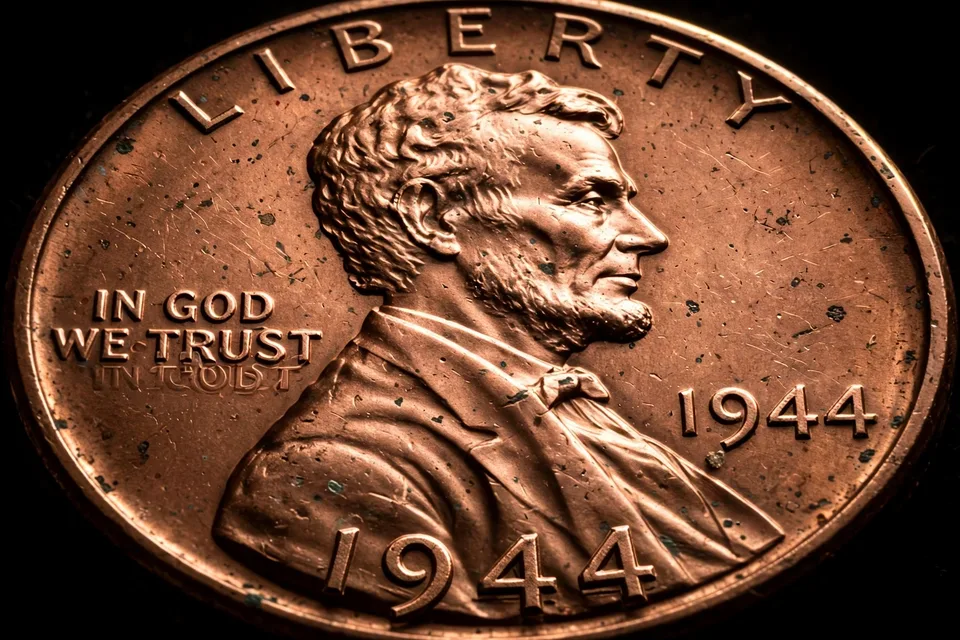
A struck-through error coin is a coin that was struck with something in the way. Cloth, grease, wire, a metal shaving, or a reeding strip got between the die and the blank at the instant of striking, so part of the design never formed. The short answer to how to identify a struck-through error coin is this: look for design that is weak or missing in one bounded patch while the rest of the coin is sharply struck, with a clear edge to normal detail.
What a struck-through error coin actually is
Every coin starts as a blank planchet. A struck-through error happens when foreign material sits on the die or on the planchet when the dies close. The material absorbs the force, so the design there comes out blank, faint, or textured.
That is why struck-through errors are the most common mint error type. Presses run fast, shops use grease and rags, and metal shavings and broken fins are part of the process. Most struck-through coins are small pocket-change finds.
The two types: struck-through and struck-through and retained
There are two basic categories. A plain struck-through is a coin struck through something that is no longer there: the object left its mark and fell away, leaving a blank patch, a faint patch, or an impression of cloth weave, wire, or thread.
A struck-through and retained error still carries the object. Part or all of the intruder stayed in the coin through the strike. Documented retained objects include staples, wire, tape, string, washers, and metal fragments. Retained errors are roughly 100 times rarer than non-retained ones. In both categories, the rule is simple: the more unusual, larger, and more dramatic the strike-through, the more valuable it is.
The five things coins get struck through
Grease and filled dies are the most common culprit by far. Press grease, oil, and compacted metal dust clog the fine recesses of a die, especially lettering and the date, leaving soft or missing letters in one area while the rest of the design is sharp. Minor grease strikes carry only a small premium, but a grease strike that obliterates a whole word or the date is a different coin entirely.
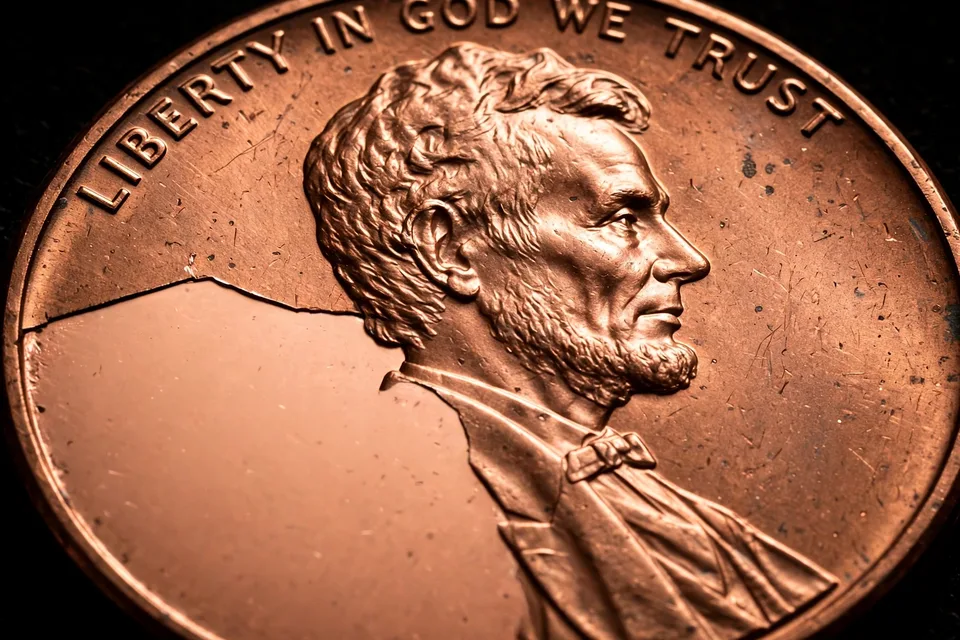
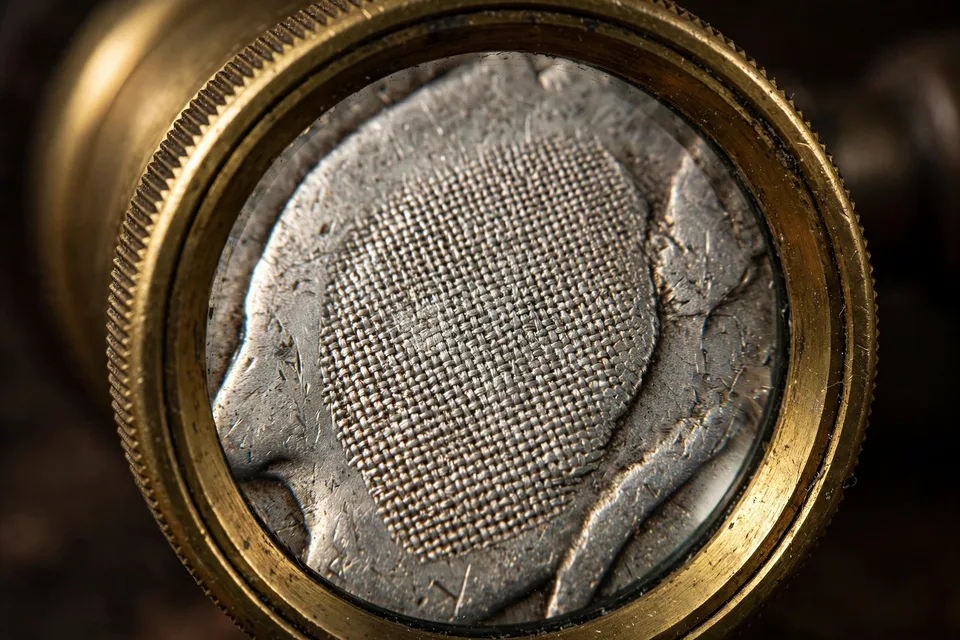
Cloth, thread, and fabric leave the most beautiful struck-through marks. A rag fragment or scrap of shop cloth pressed into the planchet leaves a woven texture stamped into the metal, often visible under 10x magnification. A Lincoln cent struck through cloth is the classic example: the portrait dissolves into a patch of fabric weave with a sharp boundary. If you can see weave, you are not looking at wear. Wear never weaves.
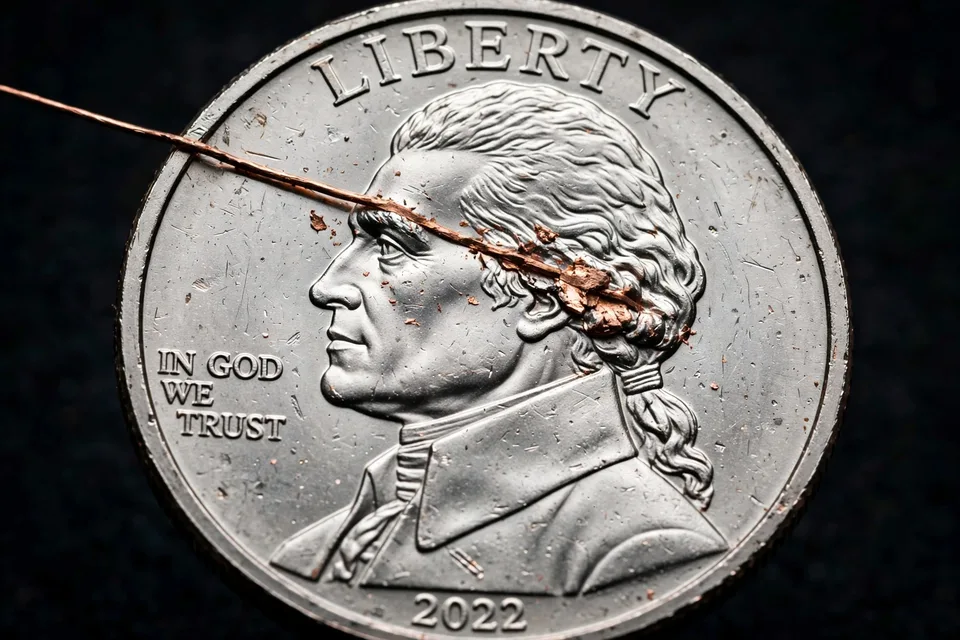
Wire and metal fragments leave thin, hard lines. A wire struck into a coin leaves a narrow incuse groove. The difference from a post-mint scratch is the edge: a struck-through groove has smooth, rounded walls formed by metal flowing around the wire, while a scratch has sharp, torn edges with displaced metal piled beside it.
Reeding strips are the most dramatic metal culprit. When a coin is struck too hard, or a die is tilted, a thin fin of metal can be forced up between the die and the collar, tear off, and get struck into the next planchet, leaving a long reeding impression across the face. A 1971-D Kennedy half dollar struck through a long piece of reeding is a documented example.
Retained objects are the fifth culprit and the prize of the category. A staple, a washer, a piece of tape, or a length of string that stays on the coin after striking is a retained struck-through. Never pull a retained object off a coin: removing it destroys the evidence and most of the value in one motion.
The 5-step identification checklist
Work through these steps in order.
First, map the weak area. A struck-through has a bounded patch: weak or missing design inside a definable shape, with normal detail outside it. Wear and weak strikes fade everything evenly. A struck-through stops at a line.
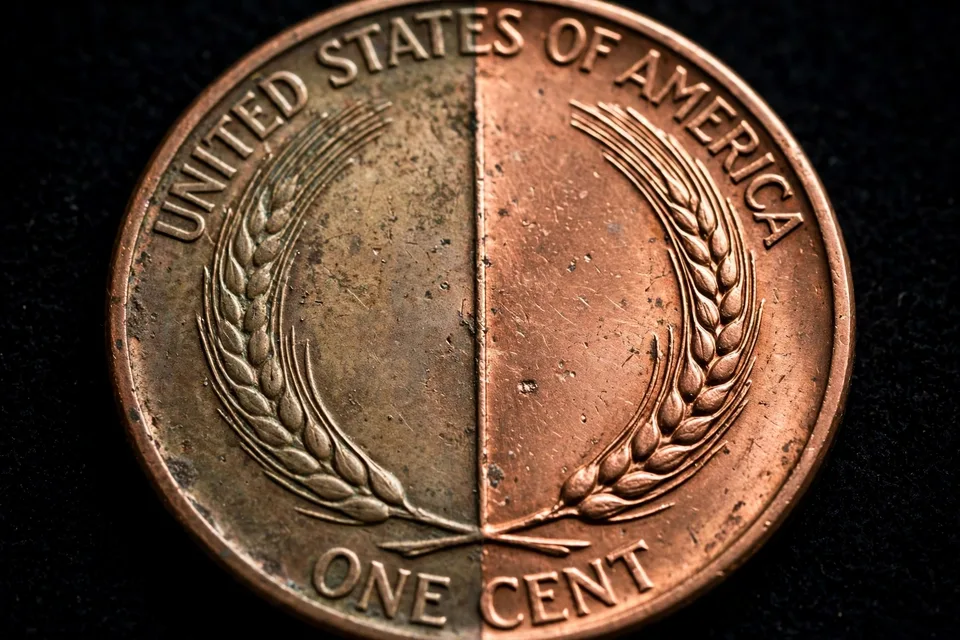
Second, check the opposite side. A struck-through affects one face. If the same area is weak on both faces, you are probably looking at a thin planchet, a weak strike, or a damaged coin, not a struck-through.
Third, read the texture inside the patch. Grease leaves a smooth, mushy blank. Cloth leaves weave. Wire leaves a groove. A retained object leaves the object itself. A smooth patch means grease; a patterned patch names its culprit.
Fourth, check the weight and the edge. A struck-through coin weighs the normal weight for its type, because nothing was removed from the planchet, only blocked from striking. A clipped planchet coin is light, because metal is missing.
Fifth, test the boundary under magnification. The edge of a struck-through patch is sharp where the material ended, and the metal inside sits slightly lower than the surrounding field, because it was never fully pressed into the die. Scratches sit on top of the design and cut through it; a struck-through sits underneath the design that never formed.
Struck-through vs the lookalikes
| Suspect | What you see | Why it is not a struck-through |
|---|---|---|
| Weak strike | Whole coin soft, both faces | No bounded patch, no texture |
| Worn die | Mushy detail across the die face | Repeats on every coin from that die |
| Circulation wear | High points flat, fields shiny | Gradual fade, no boundary |
| Scratch or gouge | Sharp line cutting through design | Raised metal beside it |
| Lamination error | Flaking or peeling surface metal | Metal lifts in layers |
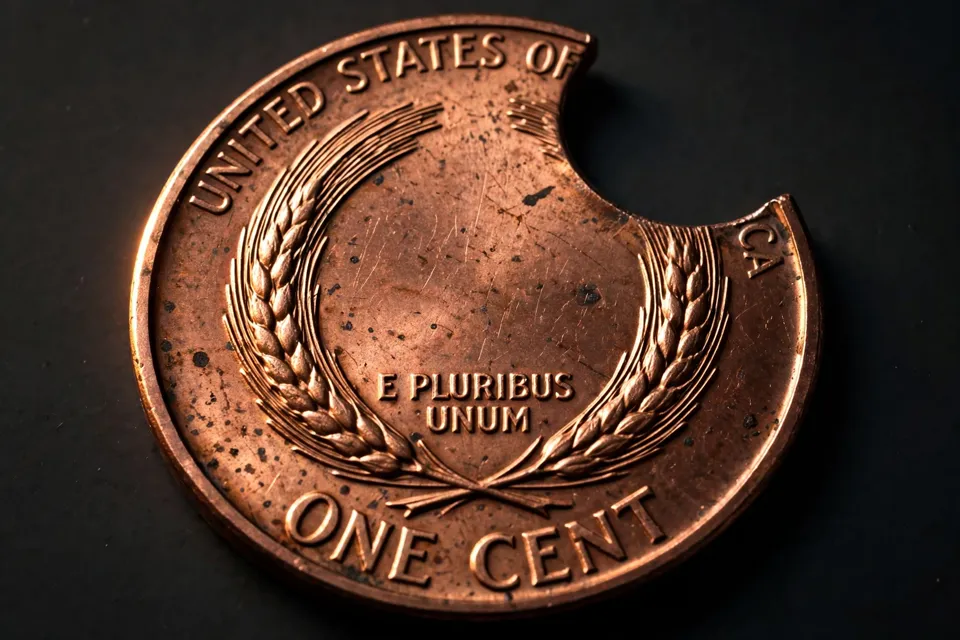
| Clipped planchet | Curved bite from the rim, light weight | Metal missing |
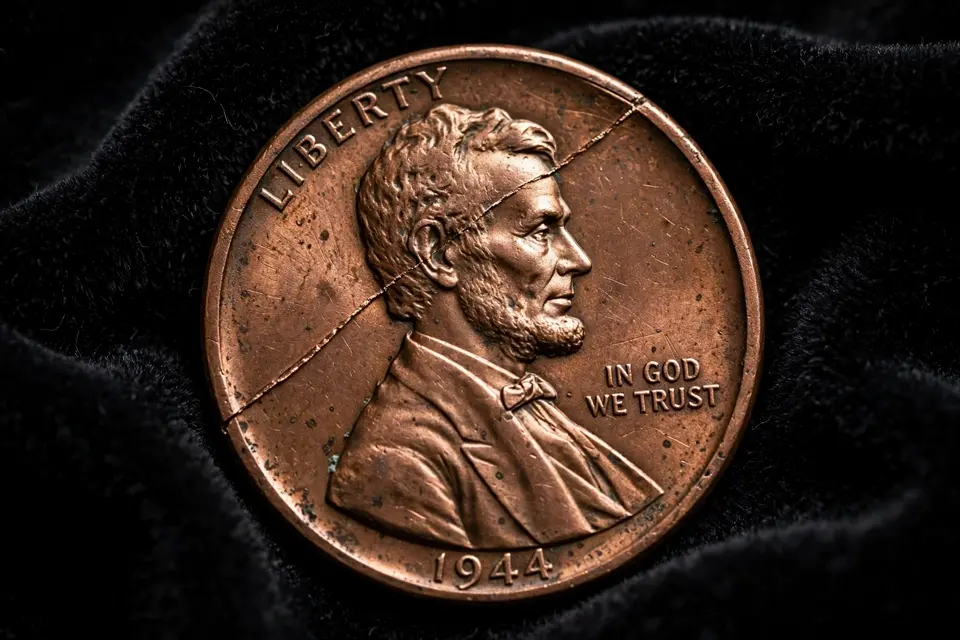
| Die crack | Raised line across the coin | Raised, not incuse |
Struck-through error coin values
Most struck-through coins trade for modest money. The typical range for an ordinary struck-through in most series is $1+ to $50+, from minor grease strikes to dramatic examples. Large strike-throughs covering 25% or more of the coin command much more, and retained examples command more again.
| Type | Typical value range | What moves it up |
|---|---|---|
| Minor grease strike, small patch | $1+ to $10+ | Date or lettering affected |
| Dramatic grease strike, large area | $25+ to $75+ | Word/date missing |
| Golden dollar struck-through | $25+ to $200+ | Blank area |
| Retained struck-through, golden dollar | $300+ to $400+ | Object visible |
| Silver Eagle struck-through | $100+ | Large patch |
| Silver Eagle retained struck-through | $500+ | Retained object |
| Large strike-through, 25% or more | $100+ to $500+ | Size and clarity |
One warning belongs in every struck-through guide. On a rare coin, a strike-through can lower the value instead of raising it. A mark on a rare key date is a distraction to its collectors. The premium belongs to struck-through errors on common host coins, where the error is the whole story.
Famous struck-through finds
The In God We Rust quarter is the grease strike every collector knows. Grease filled the T in TRUST on the 2005-P Kansas quarter die, and thousands of examples reached circulation reading In God We Rust. Sharp examples with the full missing-T effect bring the best premiums.
The 1971-D Kennedy half dollar struck through reeding shows the metal side of the error. A long strip of reeding, sheared from a fin on a previous strike, lay across the planchet and left its ridged pattern pressed into the reverse.
What to do with a coin you suspect
Condition still matters, and handling decides whether a struck-through keeps its value. Hold the coin by the edge and put it in an acid-free flip as soon as you have photographed both sides. Photograph the patch with side lighting, which shows the incuse depth.
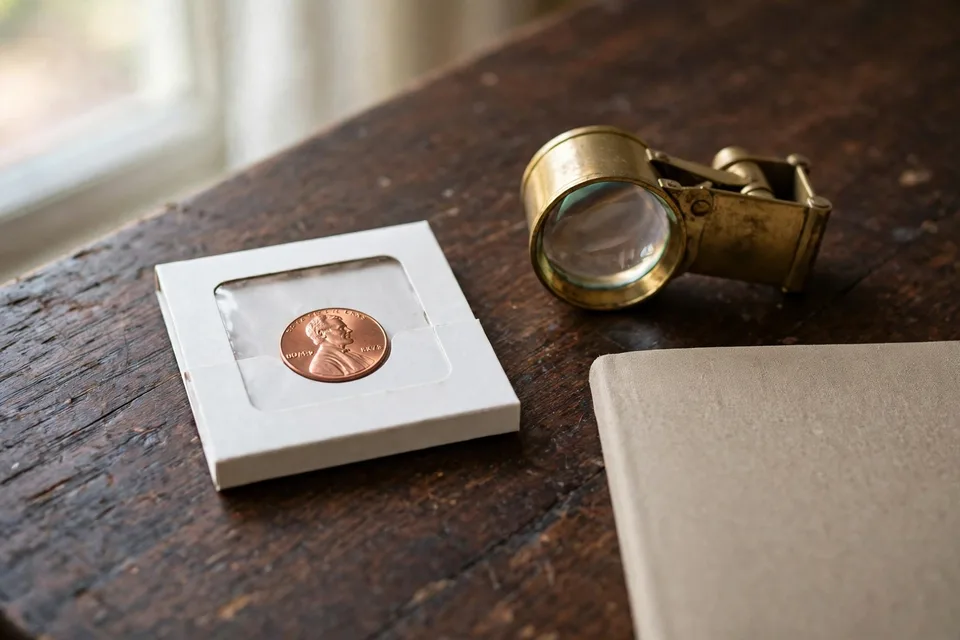
Do not clean the coin or pull anything off it. Cleaning strips value from every error coin, and pulling a retained object off destroys the error itself. Dramatic, retained, or silver and gold examples are worth professional authentication.
Frequently Asked Questions
What does struck through mean on a coin?
Struck through means a foreign object sat between the die and the planchet when the coin was struck, so part of the design was blocked from forming. The result is a patch of weak or missing design on one face. Common intruders are grease, cloth, wire, and reeding strips.
How can I tell a struck-through coin from a weak strike?
A struck-through has a bounded patch of weak or missing design with a sharp boundary, while the rest of the coin is sharp. A weak strike is soft everywhere on both faces, with no patch and no texture. If the weakness has a shape, a weave pattern, or a groove, it is a struck-through.
Are struck-through coins valuable?
Most struck-through coins are worth modest money, typically $1+ to $50+ for ordinary examples. Large strike-throughs covering 25% or more of the coin, and retained examples with the object still on the coin, are worth much more, from $100+ to $500+.
What is a retained struck-through error?
A retained struck-through error is a coin that still carries the object it was struck through, such as a staple, wire, or washer embedded in its surface. Retained examples are roughly 100 times rarer than ordinary struck-through coins, which is why they command the highest premiums.
Is the In God We Rust quarter a struck-through error?
Yes. The 2005-P Kansas quarter reading In God We Rust is a grease-filled-die error, which is a type of struck-through. Grease filled the T in TRUST on the die, so the T never struck onto the coin. Sharp examples bring the best premiums.
Should I get a struck-through coin graded?
Grade a struck-through coin only when its value clearly clears the grading fee. Dramatic, retained, or silver and gold struck-through coins are worth authenticating. A minor grease strike worth a few dollars is a collection find, not a grading submission.
A struck-through error coin costs nothing to check, and the difference between a $1+ grease strike and a $500+ retained example is one careful look under a loupe. Before you spend or sell any coin you are unsure about, run it through The Diggin Dave's free Error Identifier to confirm the error type, use the Coin Value Checker to confirm its value range, and try Grade-or-Not for a grade verdict on your best examples.
As an Amazon Associate, this site may earn from qualifying purchases.
Related Reading
- How to Identify a Doubled Die Coin: Real Doubling vs Machine Doubling — the raised-vs-flat test that separates true doubling from machine doubling
- How to Identify a Clipped Planchet Coin: Real Clips, Fake Cuts & Values — the Blakesley effect, clip shape and metal-flow tests that separate real mint errors worth $10+ to $1,020+ from fakes
- How to Identify a Die Crack Coin: Raised Lines, Cuds & Real Values — the raised-line test that separates genuine die cracks from scratches, plus cud values