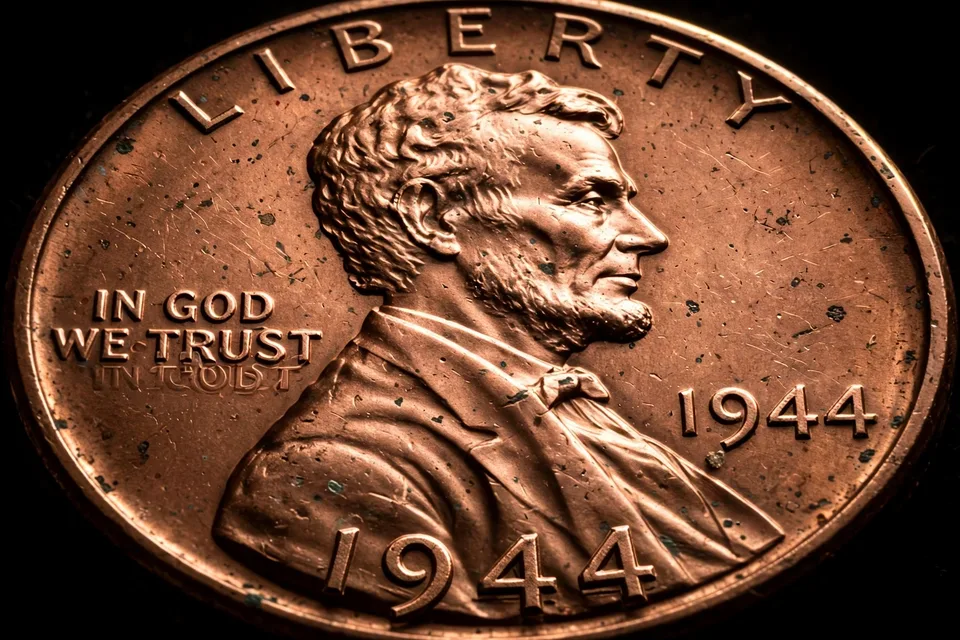
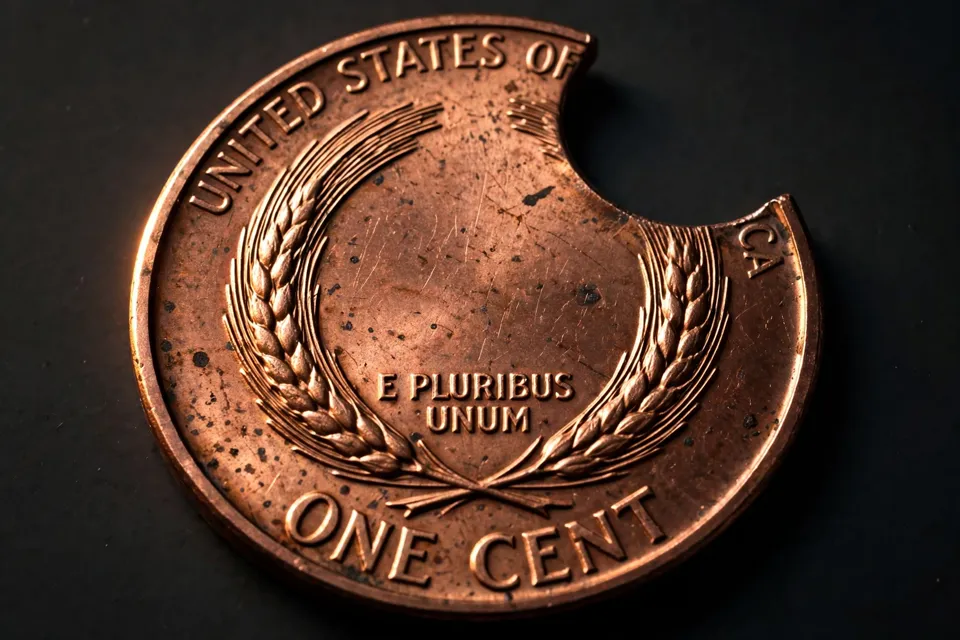
How to Identify a Die Crack Coin: Raised Lines, Cuds & Real Values
Coin errors · 9 min read · Published October 31, 2026 · Updated October 31, 2026
# How to Identify a Die Crack Coin: Raised Lines, Cuds & Real Values
Opening
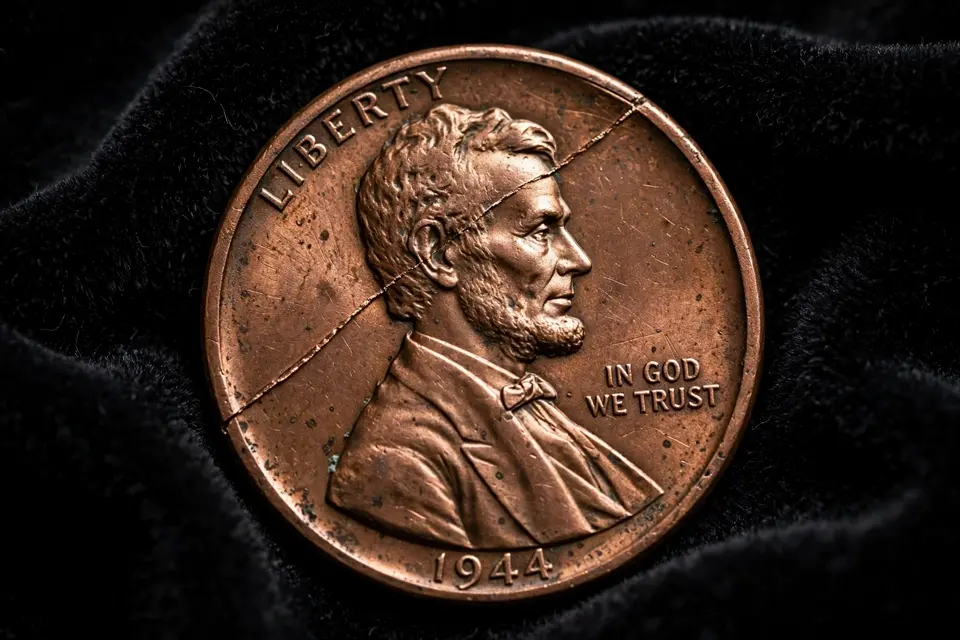
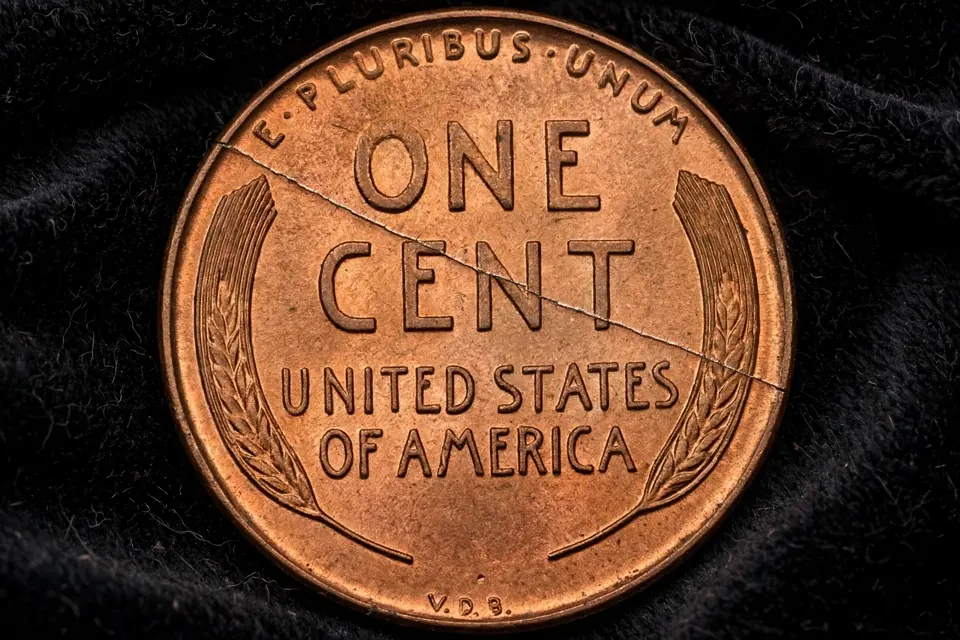
Learning how to identify a die crack coin comes down to a single test: the line is raised. A die crack coin is a coin struck from a cracked steel die. When the die fractures under striking pressure, metal flows up into the crack, so the flaw stands above the coin's surface like part of the design. A scratch, by contrast, is cut into the surface and sits below it. If the line is raised, follows the design, and runs from a weak point such as the rim or a letter, it is a genuine die crack. Most are worth $1+ to $25+, dramatic rim-to-rim cracks and rim cuds run $25+ to $350+.
What a Die Crack Actually Is
A coin die is a hardened steel stamp that strikes tens or hundreds of thousands of planchets under enormous pressure. That repeated stress eventually fatigues the steel, and a hairline fracture opens in the die face. The Mint does not always catch it: the cracked die keeps striking, and every coin it produces carries the crack as a raised line of metal. Die cracks are therefore die states, not one-off accidents: a crack that starts as a faint hairline grows longer and wider the longer the die stays in service.
Die cracks are among the most common mint errors, and that commonness shapes their value. A small crack on a common date adds only a few dollars. What collectors pay for is drama: a crack that crosses the portrait, splits the field rim to rim, or ends in a broken piece of die. The same coin with the same crack can therefore be a $5+ curiosity or a $100+ prize, depending on how bold the break is and where it sits.
How to Identify a Die Crack Coin: The 5-Step Checklist
Run these five tests in order. A genuine die crack passes all five; damage fails at least one.
1. Feel the line — raised beats recessed
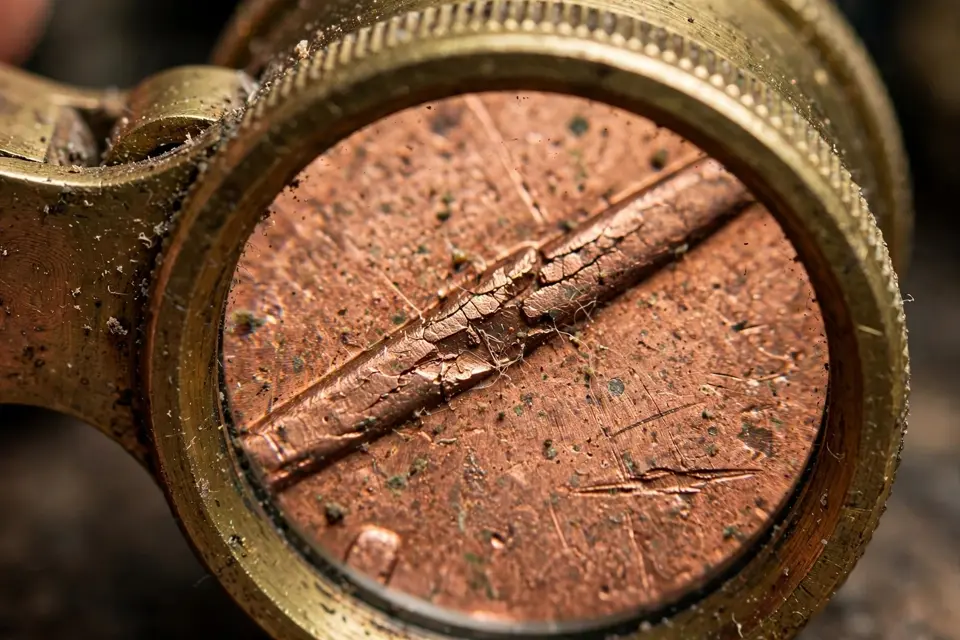
Move a single light slowly across the surface. A die crack is raised: it catches the light as a thin ridge and throws a tiny shadow on one side. A scratch is recessed: it catches the light as a groove, often with displaced metal pushed up along its edges. This one test settles most arguments — if the line is cut into the coin, it is damage.
2. Follow the line — cracks obey the die
A die crack starts at a stress point and follows the die's geometry: from the rim inward, from a letter outward, or along the edge of a device. It looks like it belongs to the design. A scratch runs wherever the object that made it happened to travel, straight across devices and fields alike.
3. Check the rim — where cracks are born
Most die cracks begin at the rim, where the steel is thinnest and the stress is highest, and run inward. A line that touches the rim and travels into the design is a strong candidate. A line floating mid-field with no rim connection can still be a crack, but it needs the raised and design tests to convince.
4. Look for the family — one die, many coins
A cracked die strikes coin after coin, so the same crack repeats on other coins from that die pairing. Several examples of the same date and mint mark with the line in the same place are powerful confirmation. Scratches never repeat, which is why attributed die-crack varieties exist.
5. Test weight and diameter — cracks change nothing
A die crack is a surface flaw, so the coin keeps its normal weight, diameter, and composition. If the coin is also light, small, or the wrong color, something else — a wrong planchet, a clip, or alteration — is going on, and the line may not be the story at all.
A 10x jeweler's loupe makes every test easier: under magnification a raised crack shows a smooth, rounded ridge, while a scratch shows torn, bright metal. A 10x loupe is the standard choice for checking cracks, doubling, and mint marks. As an Amazon Associate, this site may earn from qualifying purchases.
Die Crack vs the Lookalikes
Several flaws and forms of damage imitate a die crack:
| Flaw | What it looks like | The tell |
|---|---|---|
| Die crack | Thin raised line, follows the design | Raised, repeats on other coins from the same die |
| Scratch | Thin recessed line, random path | Cut in, displaced metal along the edges, never repeats |
| Die chip | Small raised blob on a letter or device | Blob-shaped; the "BIE" cent, where a chip fills the space between B and E of LIBERTY, is the classic example |
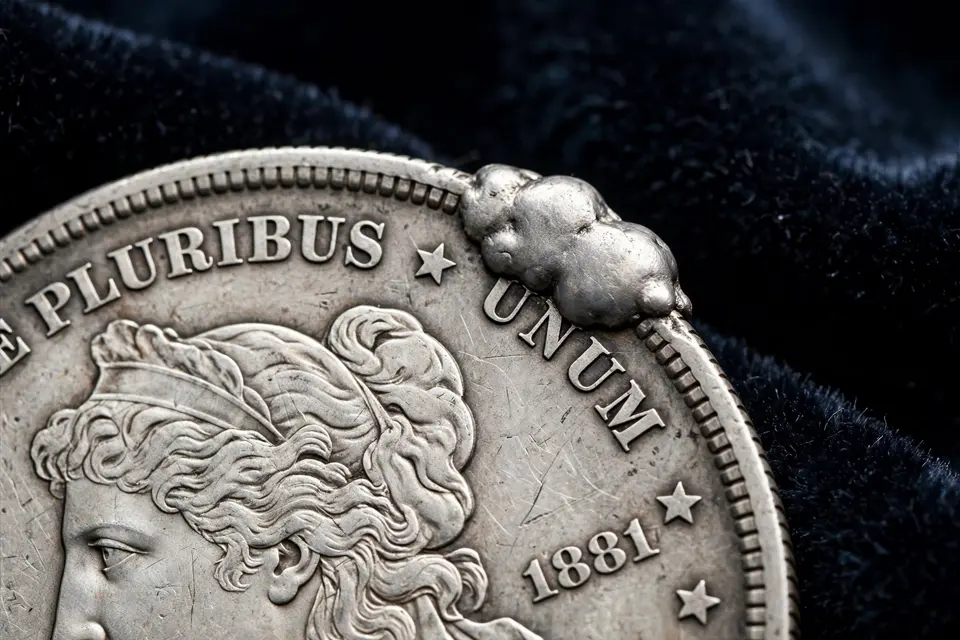
| Cud | Large raised featureless blob at the rim | A piece of the die broke away at the edge; the design is missing under the blob |
| Die gouge | Raised line, usually straight, in the field | Made by a tool used on the die, not by fatigue; often unnaturally straight |
| Strikethrough | Depressed mark, sometimes line-shaped | Something was struck into the coin; no raised metal |
| Lamination crack | Flaky, peeling line with lifted metal | The coin's own metal layer is separating, not the die |
The Crack Family: Six Forms, One Cause
Hairline cracks are the most common form: faint raised lines, often near the rim or through the lettering, visible only under magnification. They add $1+ to $5+ and are the starting point of every larger break.
Rim-to-rim cracks run from one edge of the coin to the other, sometimes straight through the portrait. These bisecting cracks are the most dramatic crack form short of a break, and they are collectible precisely because they are impossible to miss.
Retained breaks happen when a crack reaches the rim in two places and the piece of die between them shifts but does not fall off, leaving a raised, slightly offset section bounded by cracks on both sides.
Die chips are small interior breaks: a tiny piece of the die face breaks away from the design itself, leaving a raised blob where a detail should be. Chips that fill letters are the most popular, and the "BIE" Lincoln cent is the most famous of them.
Cuds are the end of the line. When the broken piece falls off the die at the rim, the coin shows a raised, featureless blob where the design should be. Cuds are worth more than cracks — generally about ten times a comparable die break — because they are bold and unmistakable.
Crazing and shattered dies are the extreme end: a web of fine cracks across the coin, scarce and collected as die-state curiosities on early coinage.
Famous Die Cracks and What They Are Worth
Die crack coin value follows a simple rule: the bolder and more famous the break, the higher the premium. The most famous die crack in American coinage is the 1888-O Morgan dollar known as the Scarface variety. A crack starts at the rim between E and P of PLURIBUS, runs inward under Liberty's eye, and crosses her cheek to her neck. It is scarce in all grades, and Scarface dollars carry a clear premium over ordinary 1888-O dollars.
The "atheist cent" is the most popular cud on the Lincoln cent: a rim break that swallows part or all of IN GOD WE TRUST. Recent sales of atheist cents in various dates and mint marks run $22+ to $65+, a strong premium for a cent that otherwise trades for a few cents.
The 1976 Bicentennial half dollar is the textbook cud series. Ordinary die breaks on Bicentennial halves trade at $4+ to $8+, while the much rarer cud coins reach $350+ in top condition. A 1975-D cent with a major cud affecting LIBERTY sold for $285+ at a Stack's Bowers auction in 2023, while smaller rim cuds on the same date trade at $15+ to $50+ circulated. A 2019 nickel with a prominent reverse die chip sold for $165+ at auction.
The honest rule behind these numbers: most die cracks are minor and low value, and some add nothing unless they are extreme or interesting. Of one group of cracked coins shown to a specialist, only an 1838 dime with an advanced die crack merited a premium, and only to a specialist in that series. Condition still rules.
| Severity | What you see | Typical value |
|---|---|---|
| Minor hairline crack | Faint raised line, needs a loupe | $1+ to $5+ over normal value |
| Prominent crack | Bold raised line across a device or the field | $5+ to $25+ |
| Rim-to-rim crack | Crack crossing the full coin | $25+ to $100+ |
| Die chip (including "BIE") | Raised blob filling a letter or device | $10+ to $50+ |
| Cud at the rim | Featureless raised blob, design missing | $25+ to $350+ |
| Famous variety (Scarface, atheist cent) | Attributed crack or cud with a collector following | $22+ to a strong premium over the base coin |
Fakes and Damage: How They Give Themselves Away
No one fakes an ordinary hairline die crack — it is worth too little to bother — but damage is constantly mistaken for cracks, and that mistake costs money in the other direction: a scratched coin is worth less than an undamaged one, so calling a scratch a die crack overpays twice.
The scratch test is decisive: scratches are recessed with displaced metal at the edges, cracks are raised and smooth. Direction is a second giveaway: a scratch running perfectly straight across the portrait, ignoring every device, is almost certainly post-mint damage. Be wary of any "crack" that looks painted or glued on. A genuine crack is struck metal, the same color and texture as the rest of the coin.
What to Do If You Find One
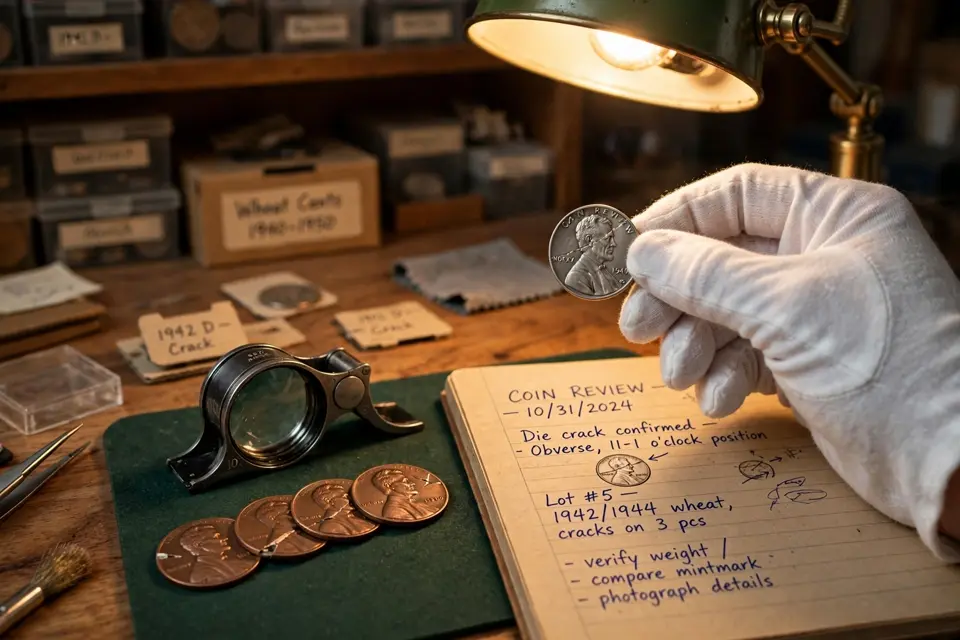
Do not clean it. Cleaning strips the original surfaces collectors pay for and can turn a genuine crack into a coin that looks altered. Photograph both sides in angled light so the raised line shows, note the date and mint mark, and check whether other coins of the same date carry the same crack — that repetition is your best evidence. Store it in a 2x2 coin flip or a non-PVC holder; standard 2x2 coin flips are the usual storage for error finds.
Certification is worth it only for the bold examples. A minor hairline crack costs more to certify than it adds in value, but a rim-to-rim crack, a large cud, or an attributed variety such as Scarface gains real marketability from a PCGS or NGC holder.
Die cracks reward the collector who looks closely at ordinary coins. Most coins you check will be scratched, not cracked — but the one with a raised line running from the rim through the portrait is a genuine piece of mint history, struck by a die in its final days of service.
Frequently Asked Questions
How do I know if my coin has a die crack?
Look for a raised line that follows the design from a stress point such as the rim or a letter. Under a moving light, a die crack stands up as a ridge and throws a small shadow, while a scratch sits in a groove. If the line is raised and repeats on other coins of the same date, it is a die crack.
Are die crack coins worth anything?
Most are worth a small premium: minor hairline cracks add $1+ to $5+, prominent cracks $5+ to $25+, and rim cuds $25+ to $350+ depending on size and condition. A few attributed varieties, such as the 1888-O Scarface Morgan dollar and the atheist cent cud, carry larger premiums because collectors seek them by name.
What is the difference between a die crack and a scratch?
A die crack is raised because metal flowed into a fracture in the die during striking; a scratch is recessed because something cut into the finished coin, pushing displaced metal up along its edges. Cracks follow the design and repeat on other coins from the same die; scratches run at random and never repeat.
What causes a die crack?
Metal fatigue. A hardened steel die strikes hundreds of thousands of planchets under extreme pressure and temperature cycles until the steel fractures. The crack grows the longer the die stays in service, so it appears faint on early strikes and bold on late ones.
What is a cud on a coin?
A cud is what happens when a piece of the die breaks away at the rim. The void fills with metal during striking, producing a raised, featureless blob where the design should be. Cuds are worth more than ordinary cracks because they are larger and bolder.
Should I get a die crack coin certified?
Only the bold examples justify the fee. A minor hairline crack adds less value than certification costs, so a loupe and the raised-line test are enough. A rim-to-rim crack, a large cud, or an attributed variety such as Scarface is worth certifying, because PCGS or NGC attribution turns it into a coin collectors will pay full value for.
A die crack costs nothing to check, and the difference between a $350+ cud and a scratched face-value coin is one look under a loupe. Before you spend or sell any coin you are unsure about, run it through The Diggin Dave's free Error Identifier to confirm the error type, use the Coin Value Checker to confirm its value range, and try Grade-or-Not for a grade verdict on your best examples.
Related Reading
- How to Identify a Doubled Die Coin: Real Doubling vs Machine Doubling — the raised-vs-flat test that separates true doubling from machine doubling
- How to Identify a Clipped Planchet Coin: Real Clips, Fake Cuts & Values — the Blakesley effect test for clipped blanks
- How to Identify a Wrong Planchet Coin: Weight, Size & Value Tests — the weight and diameter tests that prove a coin was struck on another denomination's blank