How to Identify a Wrong Planchet Coin: Weight, Size & Value Tests
Coin errors · 9 min read · Published October 31, 2026 · Updated October 31, 2026
A wrong planchet coin is a coin struck on a blank meant for a different denomination — a quarter design on a nickel blank, a cent design on a dime blank. You identify one by weight and diameter: the coin weighs and measures exactly like the planchet it was struck on, never like the denomination printed on it. The design looks too big for the blank, rim lettering is cut off, and the color or edge is often wrong for the design. Genuine examples run from $400+ to $46,000+, so a scale and a ruler are all it takes to separate a five-figure mint error from pocket change.
What a Wrong Planchet Error Actually Is
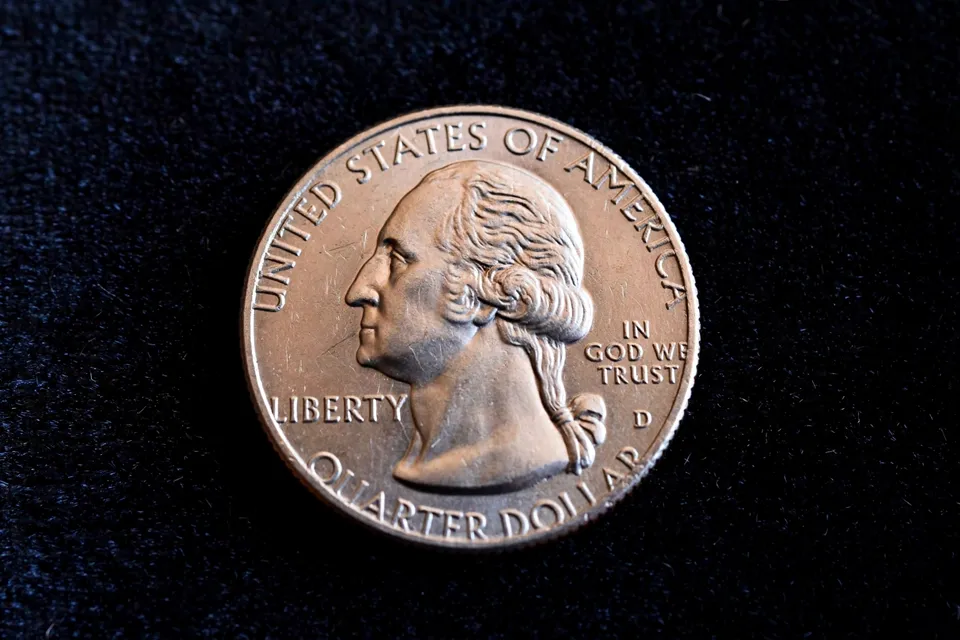
Every coin starts life as a planchet, a blank disc cut from a metal strip and sized for one denomination. Occasionally a blank from one denomination ends up in the press striking another. When the dies close, the result is a wrong planchet error — also called an incorrect planchet or off-metal error.
One physical rule governs the whole error type: the planchet must be smaller than the die striking it. A quarter die can strike a nickel planchet, because the smaller blank fits inside the collar; a nickel die cannot strike a quarter planchet, because the larger blank will not fit. That is why nearly every wrong planchet coin is a large design squeezed onto a smaller blank.
Wrong planchet errors are among the most popular mint errors in American numismatics because they are dramatic and easy to prove. Unlike a doubled die, which takes magnification to confirm, a wrong planchet error announces itself the moment you weigh the coin.
The 5-Step Identification Checklist
Run these five tests in order. A genuine wrong planchet coin passes all five; a damaged or altered coin fails at least one.
1. Weigh it — the weight test decides everything
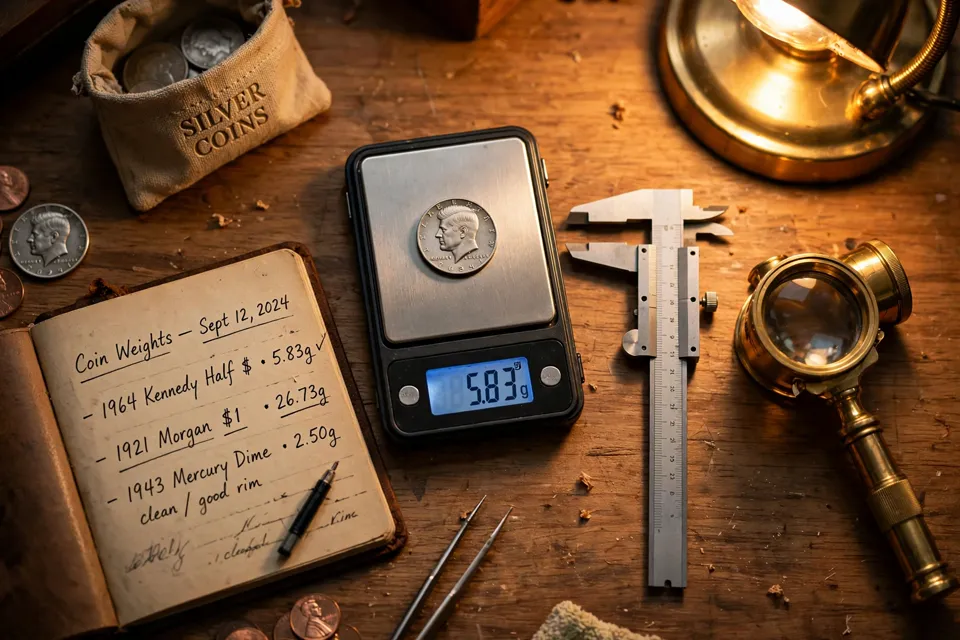
Weigh the coin on a digital scale accurate to 0.01 grams. A genuine wrong planchet coin weighs exactly what the planchet's own denomination weighs, within tolerance. A quarter struck on a nickel planchet weighs 5.00 grams, not 5.67 grams. A Washington quarter struck on a dime planchet weighs about 2.27 grams — one documented example weighed 2.2 grams. If the weight matches the design's own denomination, it is not a wrong planchet error, no matter how odd it looks.
2. Measure it — diameter confirms the planchet
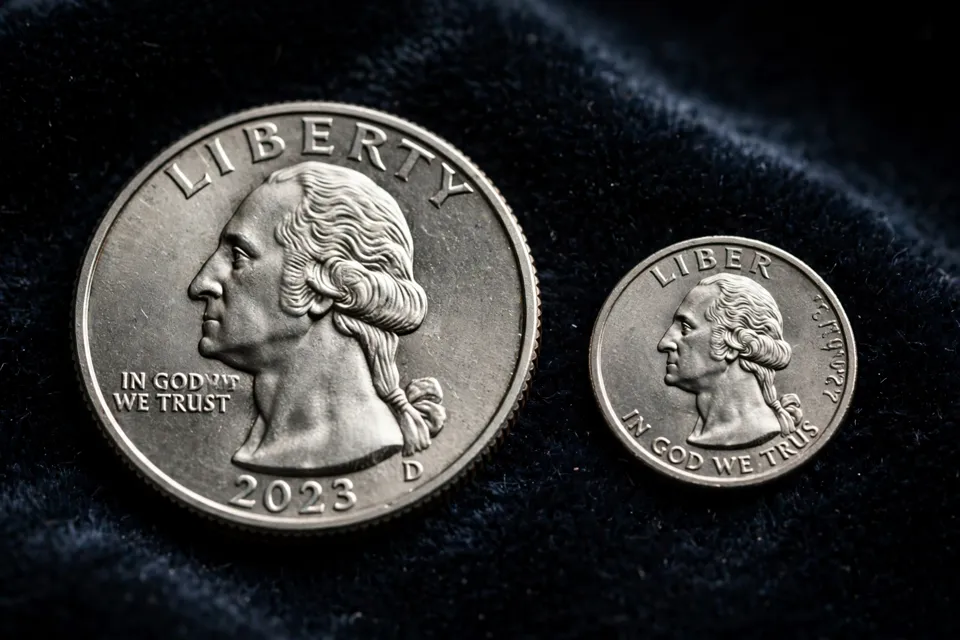
Measure the diameter with a caliper or a millimeter ruler. It must match the planchet, not the design. A quarter design on a nickel planchet measures 21.21 millimeters, a full 3 millimeters narrower than a normal quarter. A cent design on a dime planchet measures 17.91 millimeters, not 19.05. The denomination whose weight and diameter both match is your planchet.
3. Look for a design too big for the blank
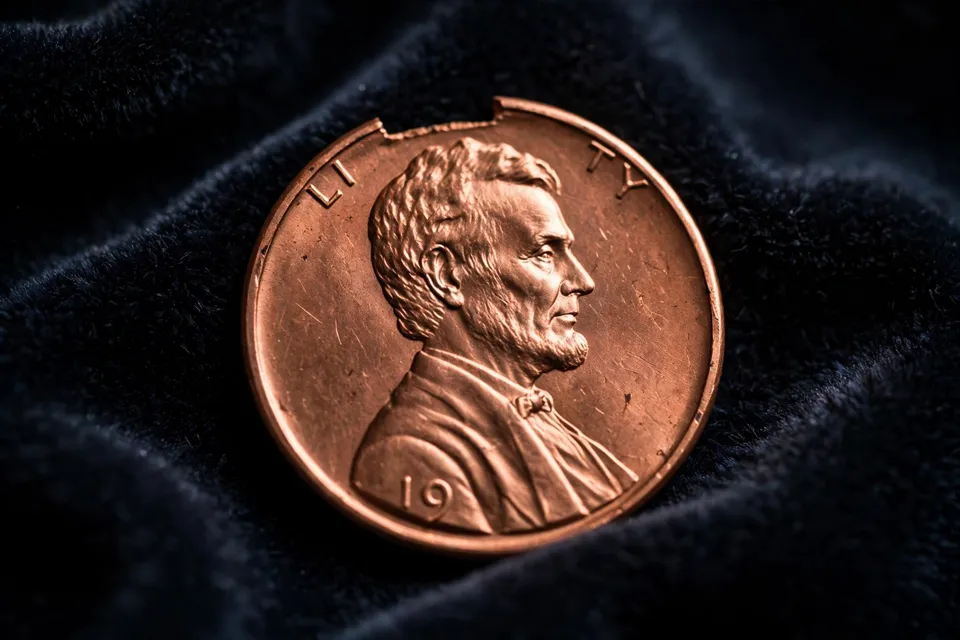
Because the die is larger than the planchet, the outer design never fully fits. Look for lettering cut off at the rim or a portrait that runs off the edge. The missing design is clean and struck, not scraped away — the metal flows normally right up to the smaller blank's edge.
4. Check color, magnet, and edge
The planchet's metal decides the coin's color and edge, not the design. A nickel struck on a cent planchet shows copper color. A quarter struck on a nickel planchet has a plain edge, because nickel planchets carry no reeding, while a normal quarter is reeded. A steel cent planchet is magnetic; a copper one is not.
5. Check the date and mint mark
The date and mint mark may be missing entirely, because they sat outside the smaller blank when the dies closed. A missing date does not disqualify the error — it is expected on the most dramatic examples.
U.S. Coin Specifications: The Matching Table
Match your suspect coin's weight and diameter to a row, and that row names the planchet.
| Denomination | Diameter | Weight | Edge |
|---|---|---|---|
| Cent (copper-plated zinc, 1982–present) | 19.05 mm | 2.50 g | Plain |
| Cent (bronze, 1864–1982) | 19.05 mm | 3.11 g | Plain |
| Nickel | 21.21 mm | 5.00 g | Plain |
| Dime (clad, 1965–present) | 17.91 mm | 2.268 g | Reeded |
| Quarter (clad, 1965–present) | 24.26 mm | 5.67 g | Reeded |
| Half dollar (clad, 1971–present) | 30.61 mm | 11.34 g | Reeded |
| Dollar (golden, 2000–present) | 26.49 mm | 8.10 g | Edge-lettered |
Mint tolerances are small — about 0.10 grams on a cent, 0.091 grams on a dime, 0.227 grams on a quarter — so a coin a few hundredths of a gram light is just normal variation or wear. A wrong planchet coin is off by whole grams.
Wrong Planchet vs the Lookalikes
Several errors and forms of damage imitate a wrong planchet coin:
| Type | What happened | How to tell it apart |
|---|---|---|
| Wrong planchet | A blank from another denomination was struck | Weight and diameter match another denomination |
| Transitional error | A correct-size blank from the wrong year or composition was struck | Weight and diameter match the design's own denomination; only the metal is wrong |
| Foreign planchet | A blank made for another country was struck | Weight and diameter match no U.S. denomination |
| Mule | Dies from two different denominations were paired | Full-size, full-weight coin, mismatched obverse and reverse |
| Clipped planchet | Part of the blank was missing before striking | Crescent missing, Blakesley effect opposite the clip |
| Broadstrike | The collar failed and metal spread outward | Full design, wider, thinner, no reeding |
| Damaged or altered | Someone ground, cut, or plated a normal coin | Weight matches no denomination, design scraped or edge shows tool marks |
The transitional distinction matters most. The famous 1943 copper cent is a transitional error, not a wrong planchet error: a leftover bronze blank from 1942 was struck by 1943 dies, so the coin is full-size and full-weight for a cent. A true wrong planchet coin is always the wrong size and weight for its design.
Famous Wrong Planchet Coins and What They Are Worth
Values depend on the combination, the grade, and how much of the design survives:
| Coin | Planchet | Record / Market Value |
|---|---|---|
| Lincoln cent struck on a dime planchet | Clad dime, 2.268 g | $400+ |
| Washington quarter struck on a nickel planchet | Nickel, 5.00 g | $130+ to $160+ ($225, PCGS MS-64, Stack's Bowers 2021) |
| 1977 Jefferson nickel proof struck on a dime planchet | Clad dime, 2.268 g | $4,000+ |
| 1983 Lincoln cent struck on a copper planchet | Bronze cent, 3.11 g | $18,000+ (transitional — the famous 1983 copper cent) |
| 1882 Shield nickel struck on a cent planchet | Bronze cent, 3.11 g | $20,400 (NGC MS-64, July 2022) |
| 1943 Lincoln cent struck on a Curaçao quarter planchet | Curaçao 25-cent, 3.6 g | $31,200 (Heritage, August 2021) |
| 1945 Walking Liberty half dollar struck on a dime planchet | Silver dime, 2.5 g | $41,125 (NGC MS-64, November 2013) |
| 1913 Type 2 Buffalo nickel struck on a dime planchet | Silver dime, 2.5 g | $46,000 (NGC MS-66, April 2010) |
| 1831 quarter eagle struck on a dime planchet | Silver dime, 2.5 g | $46,000 (NGC G-6, September 2008) |
The pattern is consistent: the rarer the combination and the higher the grade, the higher the price. A modern cent on a dime planchet is a $400+ find; a 19th-century gold coin on a dime planchet is a $46,000 rarity. Proof examples command strong premiums.
Fakes and Altered Coins: How They Give Themselves Away
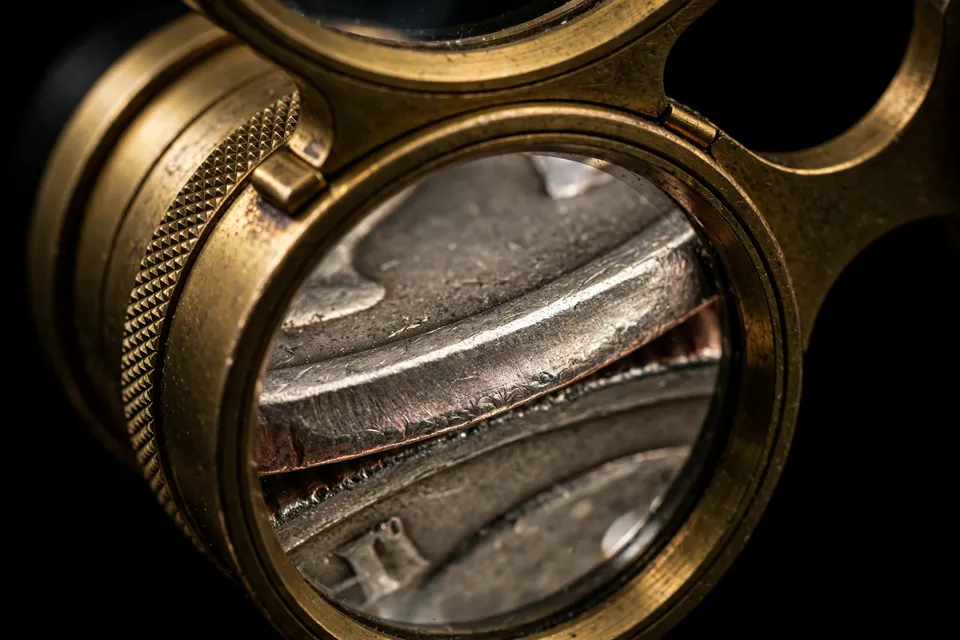
Ground-down coins are the most common fake. Someone grinds a normal coin's edge smaller, then claims a wrong planchet error. The giveaway is weight: a ground-down quarter weighs less than a quarter, but it does not weigh 5.00 grams like a nickel planchet, and its diameter matches no real planchet either. Grinding marks also show under magnification.
Plated coins imitate a wrong metal. A steel cent plated with copper looks like a 1943 copper cent, but it is magnetic and weighs 2.7 grams like a steel cent, not 3.11 grams like a bronze cent. The magnet test and the scale end the argument in seconds.
When in doubt, certification settles it. PCGS and NGC attribute wrong planchet errors on the holder, and buyers pay for a certified attribution. An uncertified coin whose weight matches no planchet is worth what an ordinary coin is worth.
What to Do If You Find One
Do not clean it or try to "improve" it. Cleaning destroys the surfaces collectors pay for, and a harshly cleaned error can lose most of its value. Weigh it, measure it, and photograph both sides beside a ruler. Keep it in a non-PVC holder and get a professional opinion: for a coin that might be worth $400+, the grading fee pays for itself.
Wrong planchet coins reward the collector who checks the ordinary-looking coins. A quarter that feels light, a cent that looks small, a nickel with the wrong color — each is a scale reading away from being identified. The one that weighs exactly 5.00 grams with a quarter design on it is the find that makes the whole search worthwhile.
Frequently Asked Questions
How do I know if my coin is struck on the wrong planchet?
Weigh it and measure it. A genuine wrong planchet coin weighs and measures exactly like the planchet's own denomination — a quarter on a nickel planchet weighs 5.00 grams and measures 21.21 millimeters, not a normal quarter's 5.67 grams and 24.26 millimeters.
What is the difference between a wrong planchet error and a transitional error?
A wrong planchet coin is struck on a blank from a different denomination, so it is the wrong size and weight for its design. A transitional error is struck on a correct-size blank from the wrong year or composition, so it is full-size and full-weight — the 1943 copper cent weighs 3.11 grams like any bronze cent.
How much is a cent struck on a dime planchet worth?
A Lincoln cent struck on a clad dime planchet is worth $400+ in typical uncirculated condition. Value rises with grade, and certified full-date examples bring more than dateless ones.
Can a wrong planchet coin be larger than a normal coin of its design?
No. A planchet larger than the die cannot fit inside the collar, so it cannot be struck. Every genuine wrong planchet coin is a larger design on a smaller blank.
Does a wrong planchet coin always show its date?
No. On the most dramatic examples the date sat outside the smaller blank and never struck up, so the coin is dateless. A missing date is normal for this error type.
Should I get a wrong planchet error certified?
Yes, for any example that passes the weight and diameter tests. PCGS and NGC attribute the exact planchet on the holder, and certification turns a raw curiosity into a coin collectors will pay full value for.
A wrong planchet coin costs nothing to check, and the difference between a $46,000 mint error and a face-value coin is one scale reading. Before you spend or sell any coin you are unsure about, run it through The Diggin Dave's free Error Identifier to confirm the error type, use the Coin Value Checker to confirm its value range, and try Grade-or-Not for a grade verdict on your best examples.
Related Reading
- How to Identify a Doubled Die Coin: Real Doubling vs Machine Doubling — the other essential error-identification guide, with the raised-vs-flat test that separates true doubling from machine doubling
- How to Identify a Clipped Planchet Coin: Real Clips, Fake Cuts & Values — the companion planchet-error guide, with the Blakesley effect test for clipped blanks
- 1943 Copper Penny Value: The $1.7 Million Rarity — the transitional-error cousin of the wrong planchet family, and the coin that shows how a planchet mistake becomes a million-dollar rarity