How to Identify a Cud Error Coin: Raised Blobs, Retained Cuds & Real Values
Coin errors · 9 min read · Published November 3, 2026 · Updated November 3, 2026
A cud error coin is easy to name once you know the one test that matters: a cud is a raised, featureless blob of metal on a coin where a piece of the striking die broke away, so the design that should be there is simply missing underneath it. If the blob is raised, sits at the rim or reaches the edge of the die, and the lettering or design beneath it is gone rather than scratched away, you are looking at a cud. Most cud error coins are worth $5+ to $100+, with large, dramatic cuds on classic silver dollars climbing to $350+ and beyond.
What Is a Cud Error on a Coin?
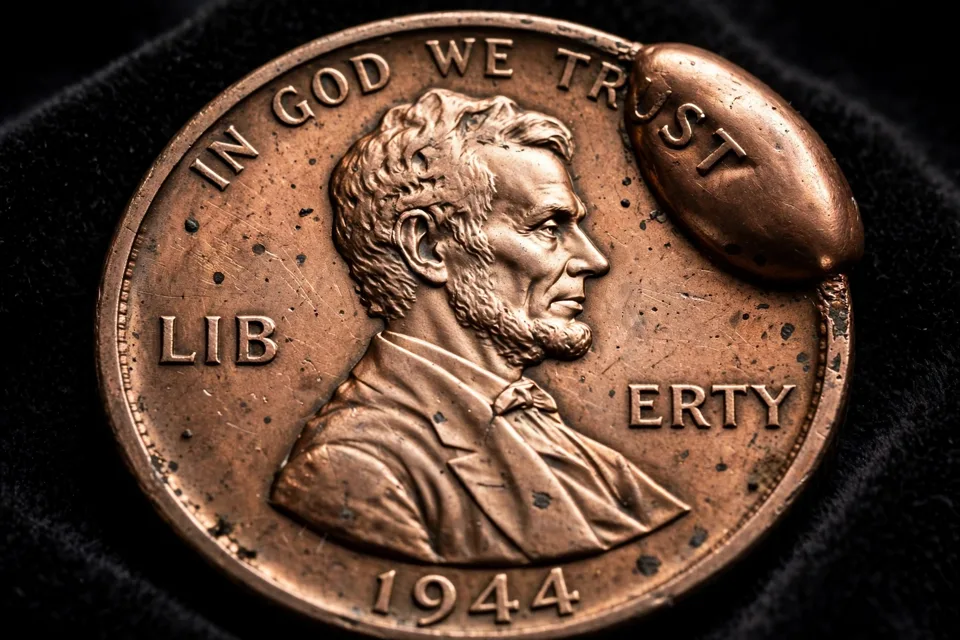
A cud forms when a piece of a coin die cracks off and falls out of the press. Every planchet struck after that break flows into the empty space where the die piece used to be. The result is a raised, smooth lump of coin metal in exactly the shape of the missing die fragment, and because the die fragment carried part of the design, that design never reaches the coin. That is why a true cud always shows blank metal where design should be: the die simply had nothing left there to print with.
The word cud has been used by error collectors since Del Ford's United States Major and Minor Mint Errors gave the term its modern meaning. For a blob to count as a cud, the broken part of the die must include part of the edge of the die face. A raised blob sitting entirely in the middle of the design, with no connection to the rim, is a die chip, not a cud, and that distinction decides value: true rim cuds command real premiums, while small interior die chips usually add only a few dollars.
The Types of Cud Every Collector Should Know
Not every cud looks the same, and the type decides both identification and price.
| Cud type | What you see | How to confirm it |
|---|---|---|
| Full cud | A large raised, featureless blob at the rim; design missing under it | The blob touches the rim and the opposite side often shows weakness |
| Retained cud | A raised plateau with a visible step or crack line around it | Design is faintly visible on the plateau, shifted out of alignment |
| Rim cud | A small raised blob confined to the rim and denticles | Does not reach into the field or the main design |
| Interior die break | A raised blob in the field that does not touch the rim | Technically a die chip or interior break, not a true cud |
| Collar cud | A raised or distorted section on the edge of the coin | Check the edge itself; the faces may look almost normal |
A full cud is the classic find. The broken die piece is gone, so the coin shows a smooth, design-free mound and, on large cuds, visible weakness on the opposite side exactly across from the blob. That weakness is physics, not damage: with part of the die missing, the press cannot push back evenly, so the opposite design strikes soft. A retained cud is subtler and, to many specialists, more interesting. The die piece broke but stayed in place, held by the collar or by its own bolts, and it sank slightly below the die face or slid sideways. The coin then shows a plateau with a faint ghost of the design still visible on it and a step where the fragment shifted.
Rim cuds are the most common and the least valuable. They happen because the rim of a die is the part most easily nicked in storage and transport, and they often cover only the denticles. A rim cud that stays in the rim adds $5+ to a common coin and little more. The money sits in size: a cud that swallows letters, a date digit, or a major device is a different coin entirely.
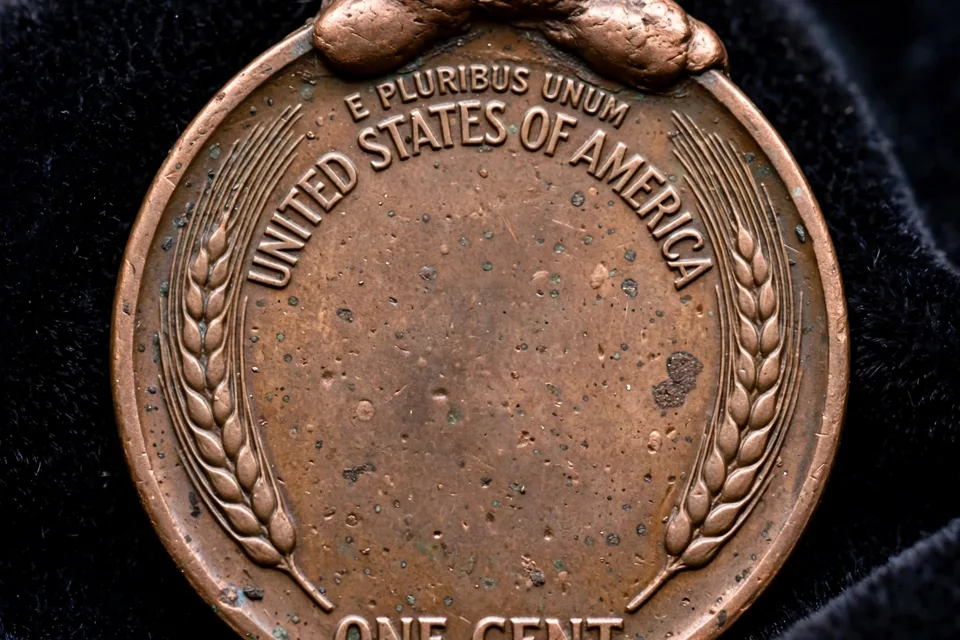
How to Identify a Cud Error Coin: The 5-Step Checklist
Work through these steps in order, under a good light, before you call any blob a cud. A 10x magnification loupe is the standard tool for this check, and angled light matters more than bright light: tilt the coin until the raised metal throws a shadow.First, check that the blob is raised. Tilt the coin and watch the light move across it: a cud stands above the field, while a scratch or stain sits in the surface, and a lamination flaw peels upward in flakes rather than forming a smooth mound.
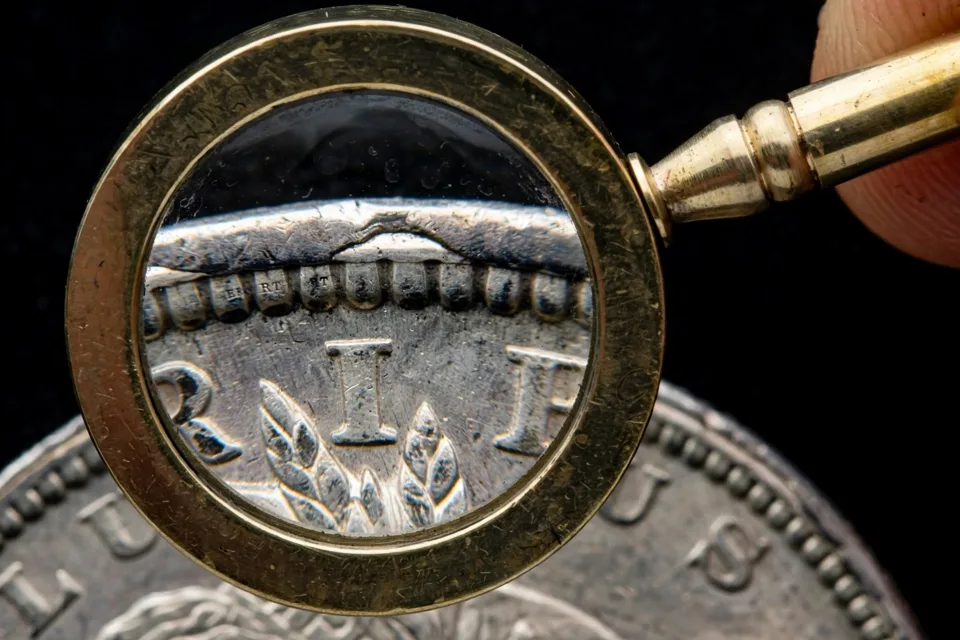
Second, check the rim connection. Trace the blob to the edge of the coin. A true cud reaches the rim or the edge of the die face. If the blob floats in the middle of the field with normal design all around it, it is a die chip or an interior die break, and you should describe it that way.
Third, check what is missing. Under a cud there should be no design at all, or only a faint, shifted ghost in the case of a retained cud. If you can see full, sharp lettering running underneath a bump, the bump was added after striking: glue, solder, or corrosion sitting on top of a normal coin.
Fourth, check the opposite side. On a large full cud, look directly across from the blob for strike weakness: soft letters, a missing detail, or a washed-out patch. That paired weakness is strong evidence the coin is a genuine mint error rather than post-mint damage, because damage done after striking does not weaken the opposite face in the same way.
Fifth, check for repetition. Cuds are die errors, so every coin struck from that broken die carries the same blob in the same place. If other collectors report an identical cud on the same date, your attribution is confirmed.
Cud vs Die Crack, Die Chip, and Damage
Several die problems look alike at first glance. The table below separates them by whether the metal is raised or cut in, and whether the design is missing or merely crossed.
| Flaw | What it looks like | The tell |
|---|---|---|
| Cud | Large raised featureless blob at the rim | Design missing under the blob; blob touches the rim |
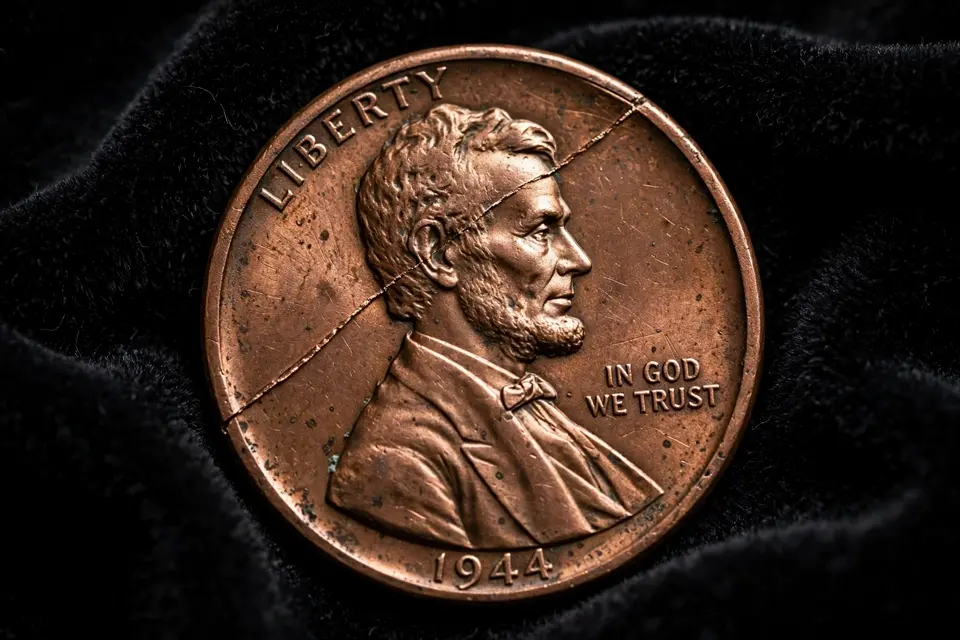
| Die crack | Thin raised line, often jagged, across the design | A line, not a blob; the design continues on both sides of it |
| Die chip | Small raised blob on a letter or device | Blob-shaped but small and away from the rim; the classic BIE cent is a chip, not a cud |
| Scratch or gouge | Thin recessed line with torn, bright metal | Cut into the surface; metal is displaced along the edges, never raised as a smooth mound |
| Lamination flaw | Flaky, peeling line with lifted metal | The coin's own metal layer is separating, not the die |
| Corrosion or glue | Lumpy deposit sitting on the surface | Design is fully visible underneath; the lump can often be felt as separate from the coin |
A cud usually starts life as a die crack: a crack opens, closes a loop near the rim, and the enclosed piece breaks away. That is why many cuds still show a crack line leading into them. A raised line that suddenly widens into a blank blob at the rim is the moment a crack became a cud.
How Much Is a Cud Error Coin Worth?
Cud values are driven by size, visibility, and the host coin, in that order. A small rim cud on a common modern cent is a $5+ curiosity. A cud large enough to see without magnification on a circulated coin typically brings $10+ to $25+. A dramatic cud that obliterates letters or a date digit on a collectible series runs $50+ to $100+, and large cuds on classic coins, especially Morgan and Peace dollars where cuds are cataloged as VAM varieties, climb to $150+ and $350+ for the biggest, best-documented examples. Proof coins with cuds are a separate market: because proofs are struck carefully and inspected, a cud on a proof is rare, and dramatic proof cuds command strong premiums over the same error on a circulation strike.
Condition still matters. A cud on a coin with original surfaces is worth far more than the same cud on a cleaned coin, and a large cud attributed on a PCGS or NGC holder sells more easily than a raw example. Do not clean a cud coin: cleaning strips the surfaces collectors pay for. Photograph both sides in angled light, note the date and mint mark, and store the coin in an acid-free flip or a non-PVC holder.
Frequently Asked Questions
What is a cud error on a coin?
A cud is a mint error caused when a piece of the striking die breaks away at its edge. Coins struck afterward show a raised, featureless blob of metal where the missing die piece should have printed the design. The blob always connects to the rim, and the design beneath it is missing rather than damaged.
What is the difference between a cud and a die chip?
A cud comes from a die break that includes the edge of the die face, so the blob touches the rim. A die chip comes from a small break in the middle of the die, so the blob sits inside the design with normal metal all around it. The famous BIE cent, where a chip fills the space between B and E of LIBERTY, is a die chip, not a cud.
Are cud error coins valuable?
Most are modestly valuable: small rim cuds bring $5+, medium cuds $25+ to $50+, and large dramatic cuds $100+ to $350+ on classic coins. A cud barely visible under magnification adds little, while a naked-eye blob that swallows lettering adds the most.
What is a retained cud?
A retained cud forms when the broken die piece stays in the press instead of falling out. It sinks or slides sideways, so the coin shows a raised plateau with a step around its edge and often a faint, shifted ghost of the design on it.
How can I tell a cud from post-mint damage?
Check three things: the blob must be raised, not cut in; the design under it must be missing, not visible under a deposit; and on a large cud the opposite side should show strike weakness. Damage done after striking fails at least one of these tests.
Should I get a cud coin graded?
Grade a cud coin when the blob is large, the host coin is a classic series, or the value clearly exceeds the grading fee. Certification locks in the attribution and makes a dramatic error far easier to sell. For a small rim cud on a common coin, a photograph and an acid-free flip are enough.
A cud error coin costs nothing to check, and the difference between a $5+ rim cud and a $350+ classic cud is one careful look under a loupe. Before you spend or sell any coin you are unsure about, run it through The Diggin Dave's free Error Identifier to confirm the error type, use the Coin Value Checker to confirm its value range, and try Grade-or-Not for a grade verdict on your best examples.
As an Amazon Associate, this site may earn from qualifying purchases.
Related Reading
- How to Identify a Die Crack Coin: Raised Lines, Cuds & Real Values — the raised-line test that separates genuine die cracks from scratches; cuds start as cracks
- How to Identify a Doubled Die Coin: Real Doubling vs Machine Doubling — the raised-vs-flat test that separates true doubling from machine doubling
- How to Identify a Clipped Planchet Coin: Real Clips, Fake Cuts & Values — the Blakesley test that separates real clips from coins cut after striking