How to Identify a Double Struck Coin: Two Strikes, Overlapping Designs & Real Values
Coin errors · 9 min read · Published November 1, 2026 · Updated November 1, 2026
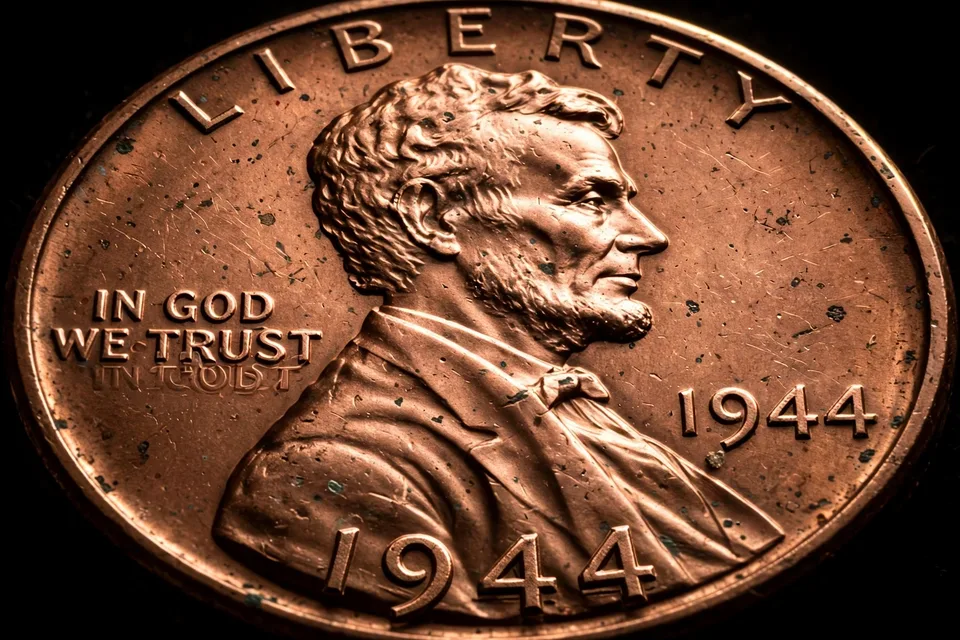
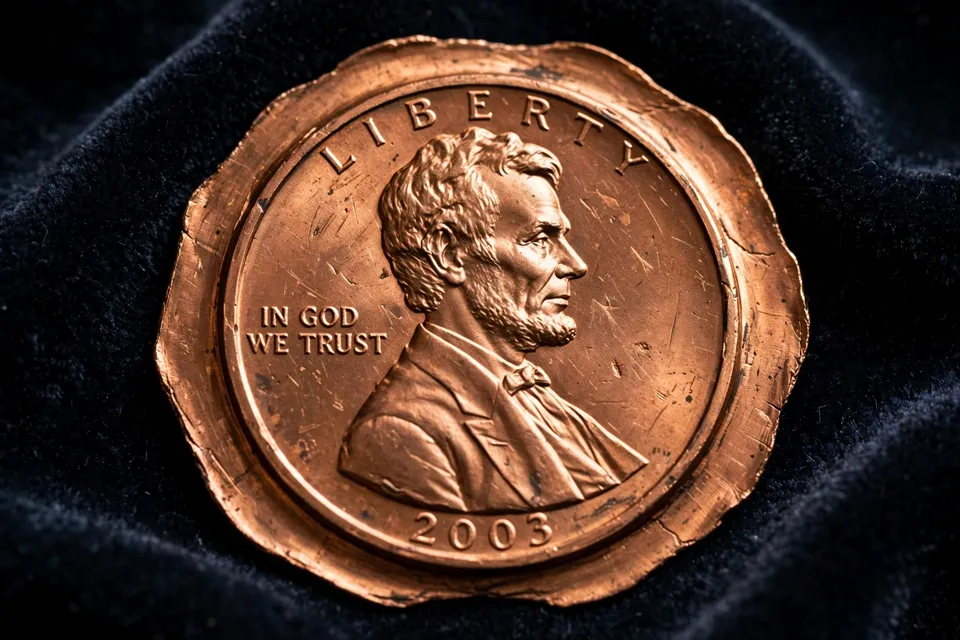
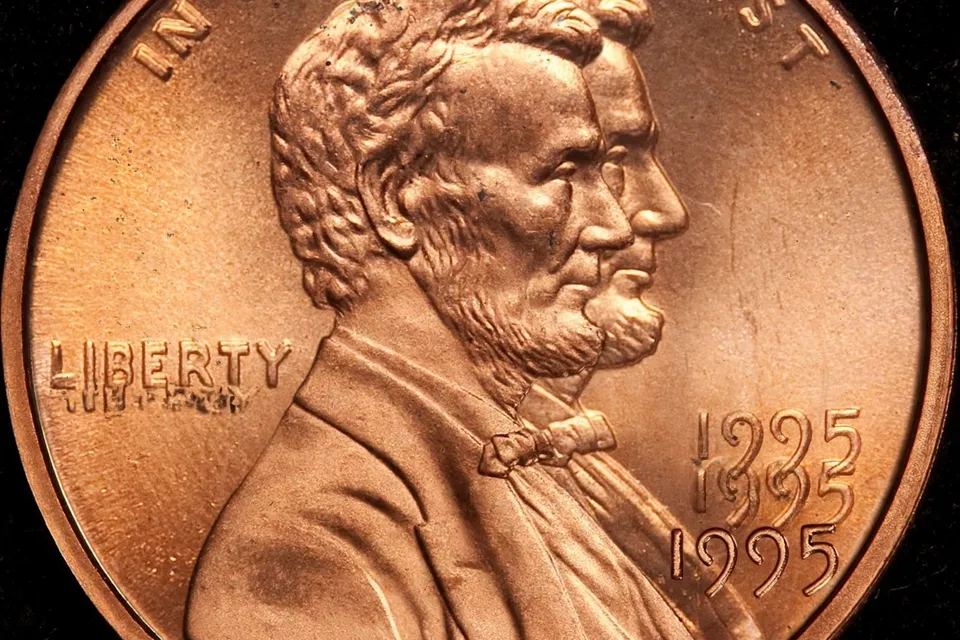
A double struck coin is a coin that was struck twice by the minting press instead of once, leaving two overlapping impressions on the same planchet. You can identify one by looking for a second image of the design — doubled lettering, a ghost portrait, or a second rim — at a shift or angle from the first strike, with both impressions raised. Genuine double struck coins are worth $25+ for minor examples and $200+ to $500+ for dramatic second strikes off-center with a full date visible, while rare multiple-strike pieces on silver or classic coins reach $1,000+.
What a Double Struck Coin Actually Is
Every coin is supposed to be struck once: a blank planchet drops into the collar between two dies, the hammer die falls, both faces are impressed, and the finished coin is ejected. A double strike happens when that last step fails — the struck coin does not eject cleanly, stays in or falls back into the chamber, and the press hits it a second time.
That second blow is what makes the error: it flattens parts of the first impression and adds a second one. The two strikes are almost never identical in position, because the coin shifted, rotated, or landed partly outside the collar.
Three details separate a double strike from every other kind of doubling. First, it is an event that happened to one coin, not a flaw in a die: a doubled die coin carries its doubling on every coin struck from that die, while a double struck coin is unique. Second, the second strike is a real strike, so its details are raised, not flat or shelf-like. Third, it affects both faces at once, because both dies fall together.
Double strikes are most common on Lincoln cents and clad nickels, dimes, and quarters from the late 1950s onward, because those are struck in the largest numbers on high-speed presses. On silver and classic coins the same error commands a much larger premium.
The 5-Step Double Strike Identification Checklist
Work through these five checks in order, under good light and 10x magnification. A genuine double struck coin passes all five; a lookalike fails at least one.
First, find the second impression. Tilt the coin slowly under a single lamp and look for a second outline of the portrait, a second date, a second set of letters, or a second rim arc that does not belong to the main design. On a subtle example it may be only a faint ghost of lettering near the rim. Photograph both faces first — the second impression is often clearer in a photograph.
Second, check that both impressions are raised. A genuine second strike leaves raised metal, because the die pressed the design into the planchet a second time. Flat, shelf-like doubling smeared toward the rim is machine doubling; sunken, mirror-image lettering is a vise job. Raised is the test that matters most, and it rules out both fakes in seconds.
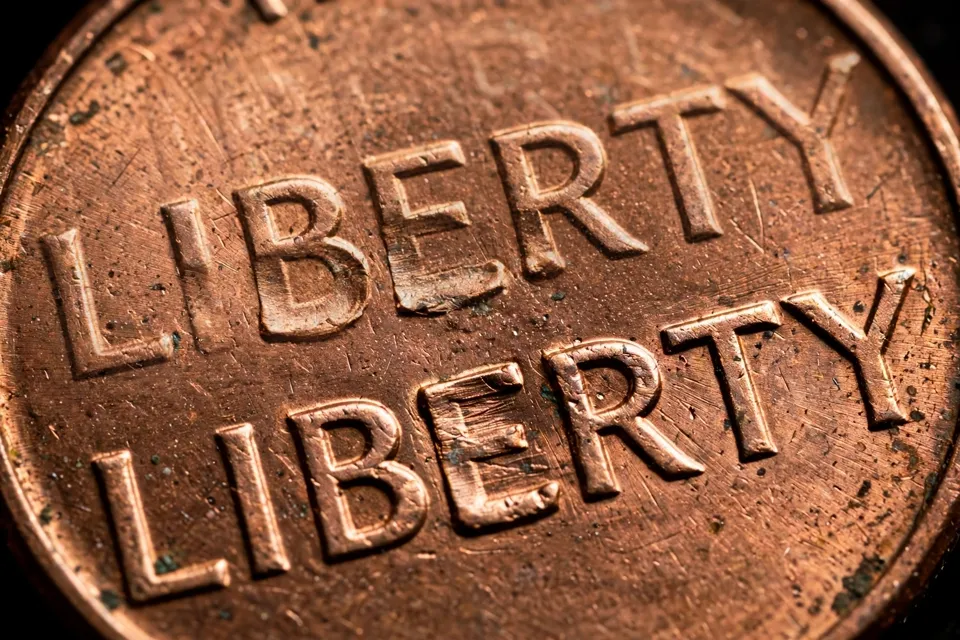
Third, check both faces. A genuine double strike was hit by both dies, so the reverse carries a second impression at the same shift and rotation, even if fainter. If only one face shows doubling, suspect a doubled die variety or post-mint damage.
Fourth, measure the shift and the rotation. A small shift with no rotation is a centered second strike; a shift of 30% to 60% with a blank crescent is a second strike off-center; a second impression turned 45, 90, or 180 degrees is a rotated second strike. Record the numbers — the shift and rotation drive the value more than any other factor.
Fifth, check the date and the edge. A full date survives only when the second strike did not obliterate it, and collectors pay far more for a dramatic double strike they can date than for a prettier one they cannot. Then examine the edge: a second strike struck partly outside the collar leaves a thin flange or partial reeding, while a coin struck twice inside the collar keeps a normal edge.
The Main Types of Double Struck Coins
A centered second strike is the subtlest family. The coin barely moved, so the second impression lands almost on top of the first, looking like heavy doubling with flattened high points. These are easy to confuse with doubled dies, which is why the both-faces and raised-detail checks matter so much. They are the most common and least valuable, but a sharp example still carries a premium.
A second strike off-center is the classic, most collectible family. The coin shifted sideways before the second blow, so the second impression sits well away from the first, leaving a blank crescent of unstruck metal on one side and a doubled design on the other. The sweet spot is 40% to 60% off-center with the full date still visible. Past 80% the value falls, because so little design survives.
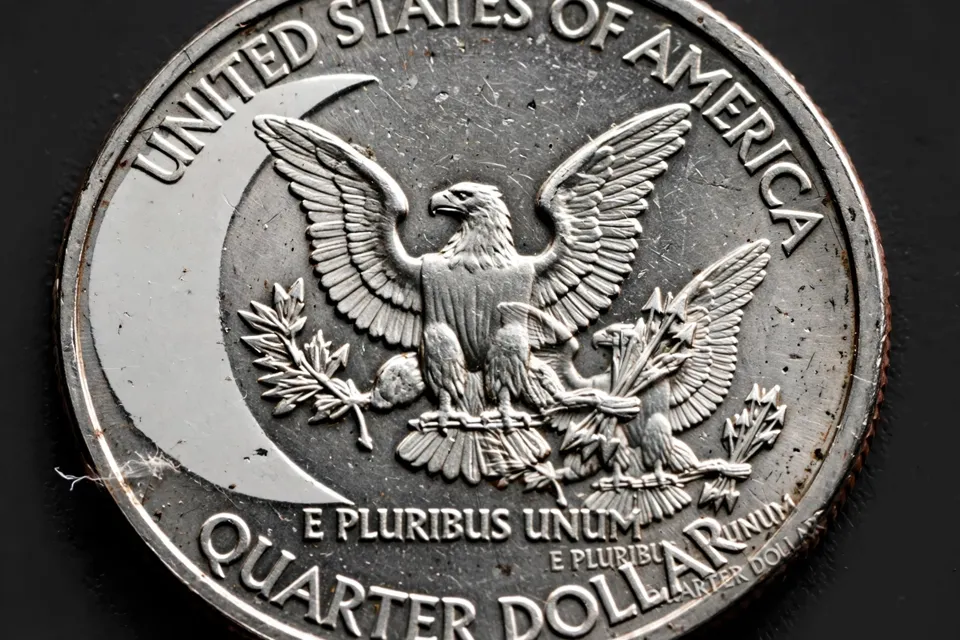
A rotated second strike is the most eye-catching family. The coin turned between blows, so the second impression sits at an angle to the first — 45 degrees, 90 degrees, or in extreme cases fully upside down at 180 degrees. They are rarer than plain shifted ones, because the coin must both stay in the chamber and turn.
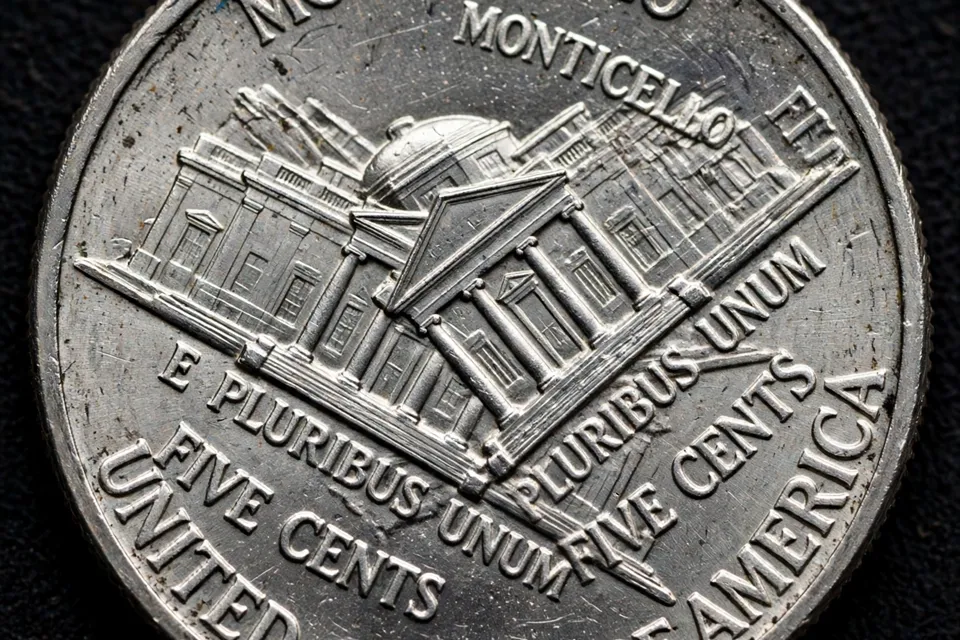
Multiple strikes are the rarest family. The coin failed to eject more than once and was hit three or more times, leaving three or more overlapping impressions at different shifts and rotations. A verified triple-struck coin with a visible date trades well above any double-struck example.
Double Struck vs the Lookalikes
Most coins offered as double strikes are something else. The table below sorts them fast.
| Suspect | What you actually see | Genuine double strike? |
|---|---|---|
| Doubled die | The same doubled detail on every coin from one die; doubling matches a documented variety | No — a die variety, not a second strike |
| Machine doubling | Flat, shelf-like doubling smeared toward the rim; details look scraped, not raised | No — press movement, not a second strike |
| Vise job | Sunken, mirror-image lettering pressed into the surface; design reads backward | No — post-mint damage, made with a vise |
| Glue or transferred image | A ghost image sitting on the surface that flakes, smears, or wipes away | No — foreign material, not struck metal |
| Double denomination | Two different denominations' designs on one coin, such as a cent struck on a dime | No — a different error, struck on an already-struck coin of another denomination |
| Single off-center strike | One shifted design with a blank crescent, but no second impression anywhere | No — one strike, struck off-center |
The doubled die confusion is the most common misidentification in error collecting. A doubled die coin shows doubling identical on every example of that variety, because the doubling lives in the die itself — the famous 1955 doubled die cent is the textbook case. A double struck coin shows doubling unique to that one coin, from where it sat for its second blow. Two coins with identical doubling in identical positions mean a doubled die, not a double strike.
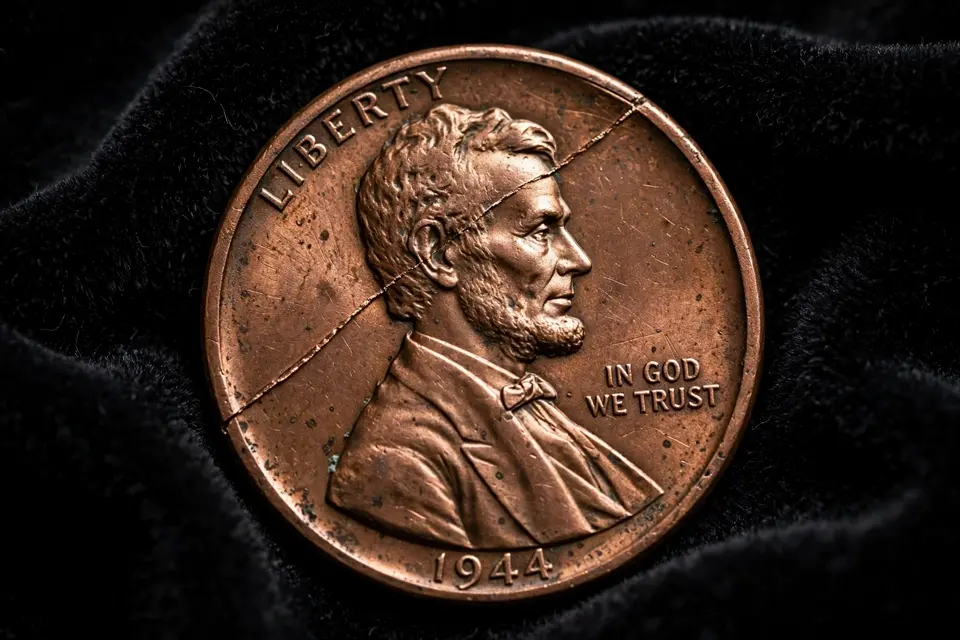
The vise job is the most common outright fake. Someone squeezes one genuine coin atop another in a vise, pressing a mirror image of one design into the other. The giveaway is that the transferred image is incuse — pressed into the surface — and reads backward, like a reflection. A genuine second strike is raised and reads correctly, because it was made by a die. Any coin with backward lettering is post-mint damage.
How Much Is a Double Struck Coin Worth?
Value follows four things in this order: how dramatic the second strike is, whether the full date is visible, the denomination and metal of the host coin, and the coin's condition. The table below gives typical ranges.
| Double strike type | Typical value range |
|---|---|
| Centered second strike, minor overlap | $25+ |
| Centered second strike, strong and clearly visible | $50+ |
| Second strike 10% to 30% off-center, date visible | $75+ |
| Second strike 40% to 60% off-center, full date visible | $200+ |
| Second strike 40% to 60% off-center, date missing | $75+ |
| Rotated second strike, 90 degrees or more, date visible | $300+ |
| Multiple strikes (three or more impressions), date visible | $500+ |
| Major multiple strike on a silver or classic coin | $1,000+ |
Three rules explain most of the spread. First, date visibility is worth more than drama alone: a 50% off-center second strike with a full date routinely sells for double or more the price of a more dramatic example with no readable date. Second, denomination matters: the same strike on a silver half dollar or classic coin is scarcer and more valuable than on a modern cent. Third, condition counts: a mint-state coin commands a premium.
A note of caution: double struck coins are unique by definition, so no price table can replace a comparison with genuinely similar authenticated sales.
What to Do With a Suspect Coin
Handle a suspect double strike like any coin that might be worth real money. Hold it by the edge only, never clean it, and never try to flatten or "improve" it — cleaning alone can cut an error coin's value by a third or more.
Photograph both faces straight on under even light, plus a close-up of the doubled detail and one of the edge. Write down the denomination, the readable date, and the shift and rotation you measured.
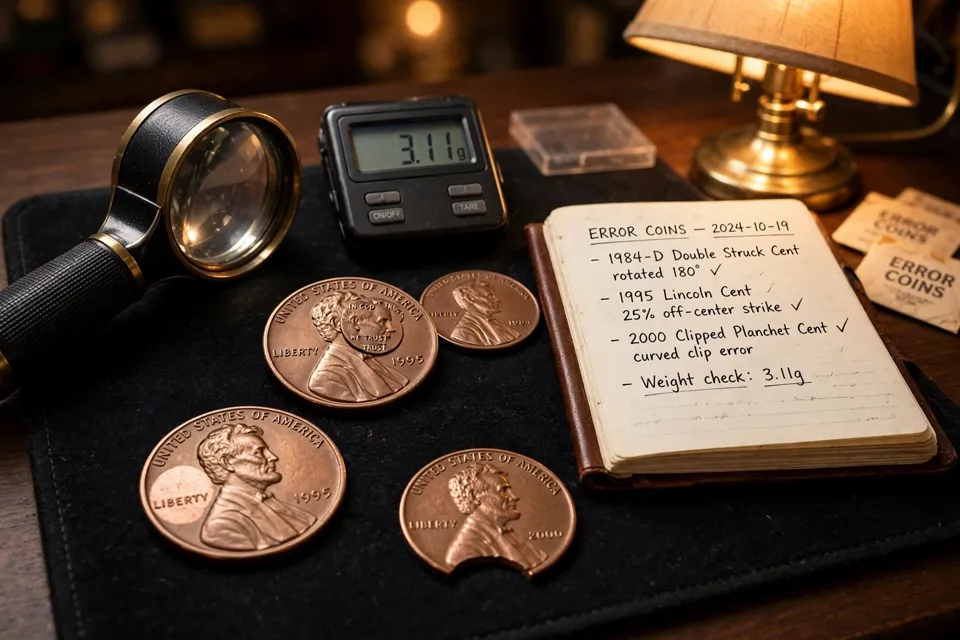
For a minor centered second strike on a modern coin, a reputable error dealer can confirm the attribution without certification. For a dramatic, rotated, or multiple strike, or any example worth $200+, submit it to PCGS or NGC for authentication and grading. A certified holder settles the genuine-versus-vise-job question permanently. Once identified, store the coin in an acid-free flip or certified holder, not loose where the raised impression can be rubbed flat.
Frequently Asked Questions
What is a double struck coin?
A double struck coin failed to eject from the minting press and was struck a second time, leaving two overlapping impressions on the same planchet. The second impression is usually shifted, rotated, or partly off-center, and both impressions are raised.
A double struck coin is a coin that failed to eject from the minting press and was struck a second time, leaving two overlapping impressions on the same planchet. The second impression is usually shifted, rotated, or partly off-center, and both impressions are raised because both were made by the dies.
How can I tell if my coin is double struck?
Look for a second, raised impression at a shift or angle from the first, and confirm it on both faces under 10x magnification. It must be raised, not flat or sunken: flat doubling is machine doubling, and sunken backward lettering is a vise job.
What is the difference between a double struck coin and a doubled die coin?
A doubled die coin carries doubling built into the die, so every coin struck from that die shows the same doubling in the same position. A double struck coin was struck twice, so its doubling is unique to that one coin. Matching doubling across coins points to a doubled die; unique doubling on both faces points to a double strike.
Are double struck coins valuable?
Yes, in proportion to how dramatic and identifiable they are. Minor centered second strikes start around $25+, clear second strikes off-center with a full date reach $200+, rotated second strikes reach $300+, and multiple strikes reach $500+ to $1,000+ on silver or classic coins. A missing date or a cleaned surface cuts the value.
Is a double struck coin the same as a double denomination coin?
No. A double denomination coin, such as a cent struck on a dime, carries designs from two different denominations because an already-struck coin entered another denomination's press. A double struck coin carries two impressions from the same denomination's dies.
Should I get a double struck coin graded?
Get any dramatic, rotated, or multiple-struck example graded, and any coin worth $200+ — certification settles the genuine-versus-fake question and protects the value. A minor centered second strike can be confirmed by a reputable error dealer without certification.
Get any dramatic, rotated, or multiple-struck example graded, and any coin worth $200+ — certification settles the genuine-versus-fake question and protects the value. A minor centered second strike on a modern coin can be confirmed by a reputable error dealer without certification, but never sell an uncertified dramatic example at a certified price.
A double strike costs nothing to check, and the difference between a $1,000+ major error and a face-value coin is one careful look under magnification. Before you spend or sell any coin you are unsure about, run it through The Diggin Dave's free Error Identifier to confirm the error type, use the Coin Value Checker to confirm its value range, and try Grade-or-Not for a grade verdict on your best examples.
As an Amazon Associate, this site may earn from qualifying purchases.
Related Reading
- How to Identify a Doubled Die Coin: Real Doubling vs Machine Doubling — the raised-vs-flat test that separates true doubling from machine doubling
- How to Identify a Broadstrike Coin: Oversized, Full Design & Real Values — the diameter test for coins struck outside the collar
- How to Identify a Die Crack Coin: Raised Lines, Cuds & Real Values — the raised-line test that separates genuine die cracks from scratches, plus cud values