How to Tell If a Coin Is Real: 7 Tests That Catch Most Fakes
Coin identification · 10 min read · Published November 2, 2026 · Updated November 2, 2026
A real coin matches its official weight, diameter, and thickness, sticks to no magnet it should not stick to, rings true when tapped, and shows sharp, struck detail under a loupe. Run those four checks together and most fakes fail at least one of them. No single home test proves a coin genuine on its own, but a coin that passes every test in this guide, bought from a reputable source, is almost always the real thing, and a coin that fails even one test deserves a second look before any money changes hands.
Counterfeiting is not a rare problem. The most faked United States coins are the ones collectors want most: Morgan dollars, key-date Mercury dimes, rare Lincoln cents, and gold coins. Modern fakes range from crude cast copies to struck copies in near-correct metal that fool experienced dealers. The United States Mint struck every genuine coin to exact specifications, and counterfeiters, working with cheaper metals and copied dies, almost never match all of them at once. This guide follows the professional sequence: specs first, then weight, magnet, sound, loupe, edge, and finally the holder and the seller.
Start With the Official Specifications
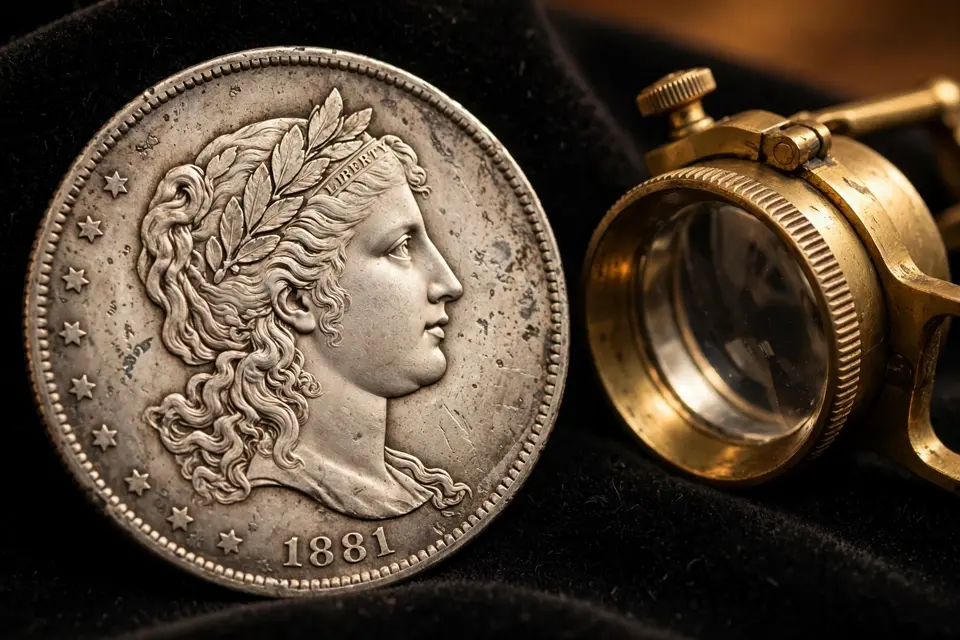
Every authentication starts on paper, not in your hand. Before testing a coin, look up its official weight, diameter, thickness, and composition. The United States Mint publishes specifications for current coins, and standard references list them for every classic series. Write the numbers down, then measure against them. A coin that is a full gram light, a millimeter small, or visibly too thick is not a worn genuine coin: honest circulation wear removes only a fraction of a gram, never twenty percent of a coin's weight.
| Coin | Weight | Diameter | Composition |
|---|---|---|---|
| Morgan dollar (1878-1921) | 26.73 g | 38.1 mm | 90% silver, 10% copper |
| Peace dollar (1921-1935) | 26.73 g | 38.1 mm | 90% silver, 10% copper |
| American Silver Eagle (1 oz) | 31.103 g | 40.6 mm | 99.9% silver |
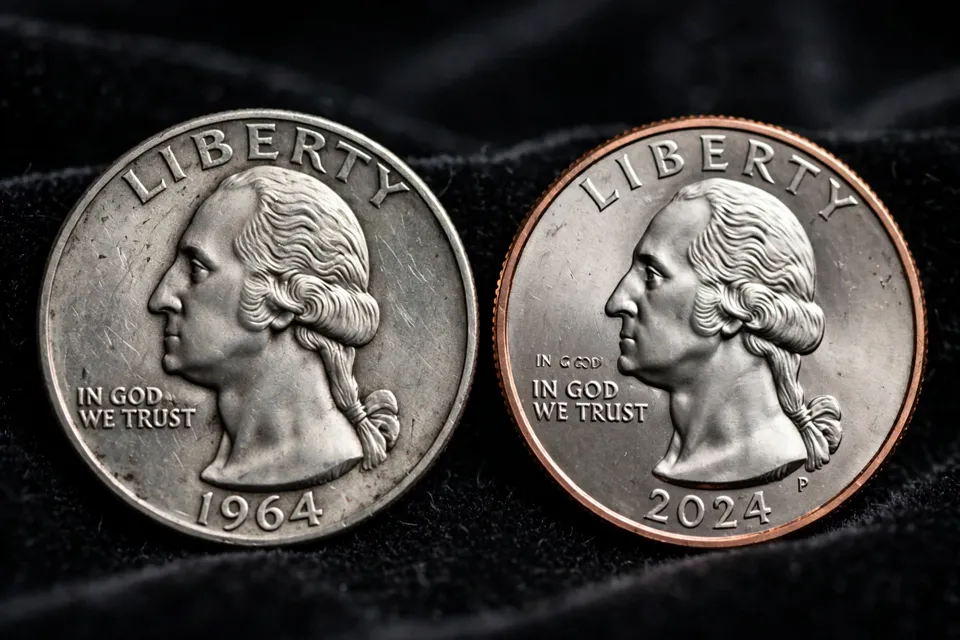
| Silver quarter (1932-1964) | 6.25 g | 24.3 mm | 90% silver, 10% copper |
| Silver dime (1946-1964) | 2.50 g | 17.9 mm | 90% silver, 10% copper |
| Bronze Lincoln cent (1909-1982) | 3.11 g | 19.0 mm | 95% copper |
| Gold dollar, Type 3 (1856-1889) | 1.672 g | 15.0 mm | 90% gold, 10% copper |
Keep this table beside your scale. A Morgan dollar that weighs 24.5 g, a silver eagle that weighs 28 g, or a bronze cent that weighs 2.5 g has already told you its answer, whatever its surfaces look like.
Test 1: The Weight and Dimensions Test
Weigh the coin on a 0.01-gram digital scale, then measure diameter and thickness with calipers. This is the single most reliable home test, because density betrays counterfeiters: if a fake uses a cheaper, less dense metal and matches the genuine diameter and thickness, it comes out light; if the maker adds metal to reach the right weight, the coin comes out too thick or too wide. Genuine coins were struck to tight tolerances, so allow only a small margin, roughly a few tenths of a gram, for honest wear. Anything several grams off is a fake, and anything more than about one percent off on a silver dollar deserves suspicion.
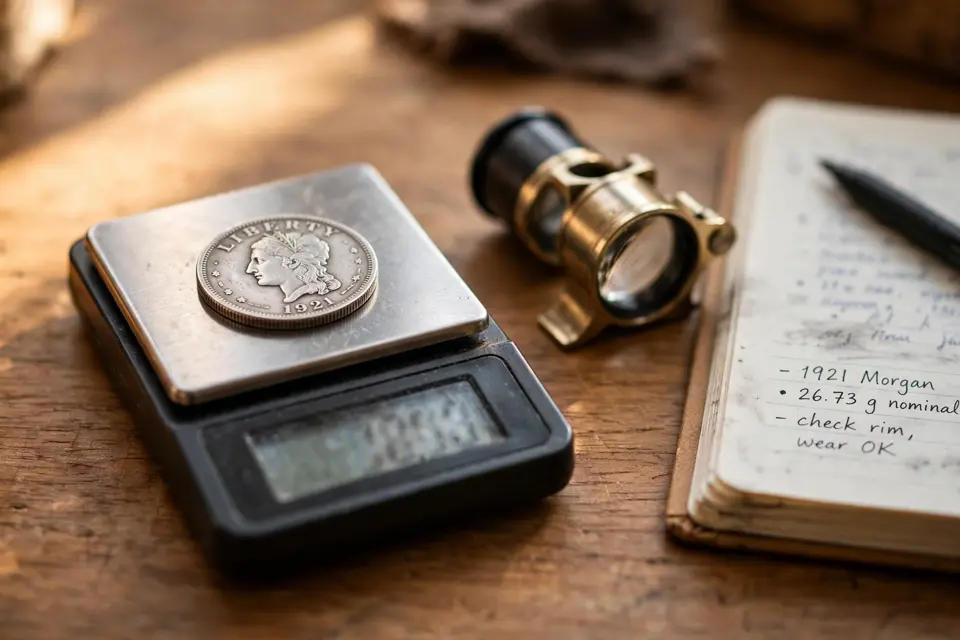
Weigh more than once, on a level surface, with the scale zeroed. Compare against a known-genuine coin of the same type if you own one: the two should feel and weigh alike. A common tell is the "correct look, wrong heft" coin, a silver-plated base-metal Morgan that gleams like silver but weighs 25 g or 27 g. Trust the scale over your eyes every time.
Test 2: The Magnet Test
Gold and silver are not magnetic, so a genuine gold or silver coin should never stick to a strong magnet. Hold a neodymium magnet near the coin: if the coin snaps to it, the coin contains iron or steel and is not genuine precious metal. A second, subtler version of the test uses the magnet's slide: tilt a silver coin at about 45 degrees and let the magnet slide down its face. Real silver's conductivity brakes the magnet, so it slides slowly and gracefully; a base-metal fake either clings or races down the slope.
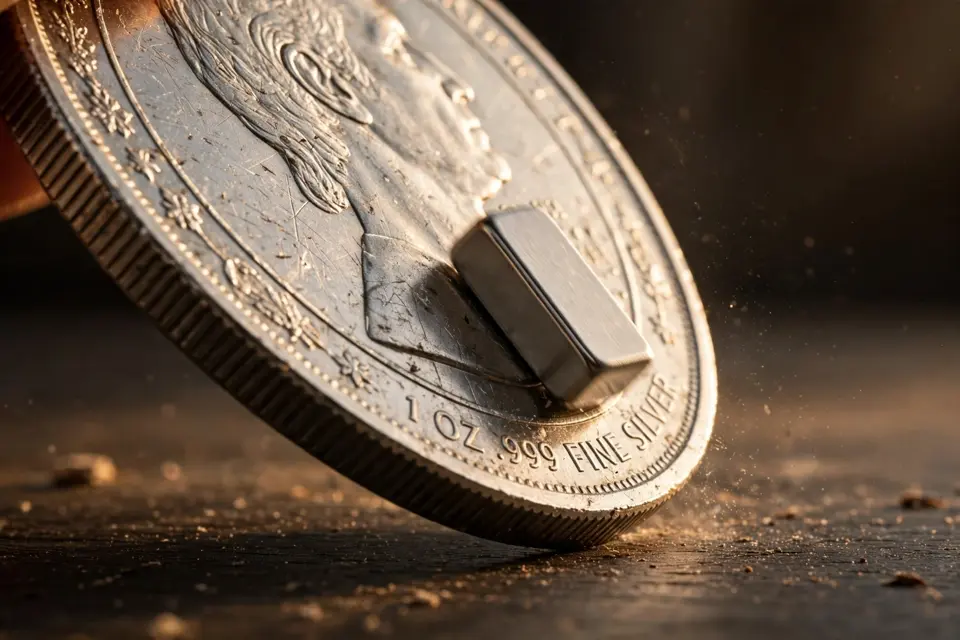
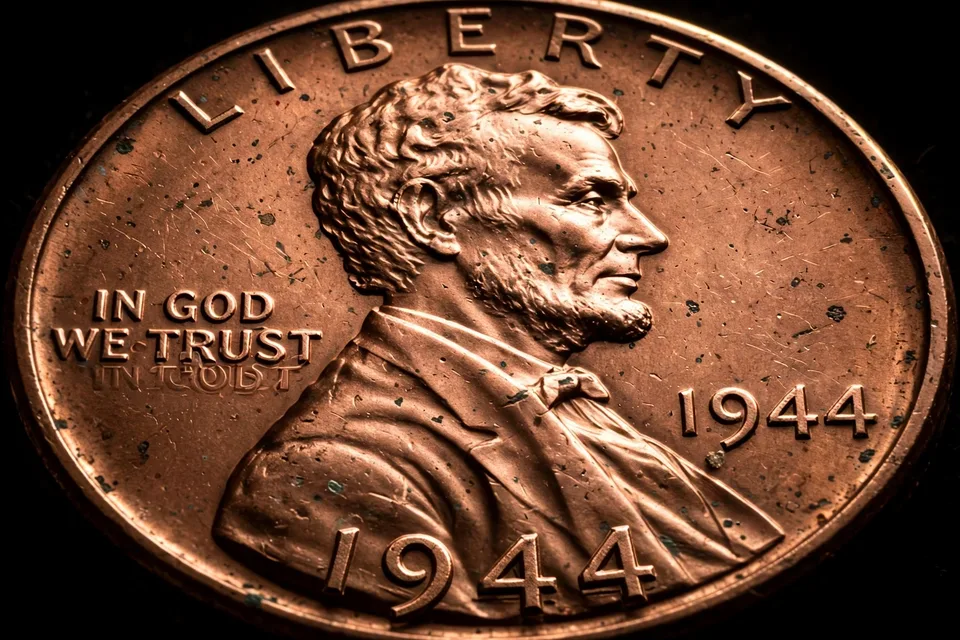
There are two exceptions to learn, because they trap beginners. First, the 1943 steel Lincoln cent is magnetic by design: it is the only regular United States circulation coin struck in steel, so a magnet sticking to a silver-gray 1943 cent proves nothing against it. Second, passing the magnet test never proves a coin real. Many modern fakes use non-magnetic copper, lead, or zinc alloys precisely to pass it, which is why the magnet is a screening test, not a verdict. A coin that sticks fails; a coin that does not stick still has to pass weight, dimensions, and the loupe.
Test 3: The Ping Test
Balance the coin on a fingertip and tap it lightly with another coin. Genuine silver produces a long, clear, high-pitched ring that lingers; a base-metal fake gives a short, dull thud. The difference is dramatic once you have heard both, and it costs nothing. Gold rings less brightly than silver but still sounds clean and sustained compared with the dead knock of a plated slug.
Treat the ping as supporting evidence, not proof. A coin in a holder cannot be pinged, a heavily worn coin rings less clearly, and some struck fakes in near-correct silver alloy ring convincingly. Use it to confirm what the scale already told you, and never to override a weight failure.
Test 4: The Loupe Inspection
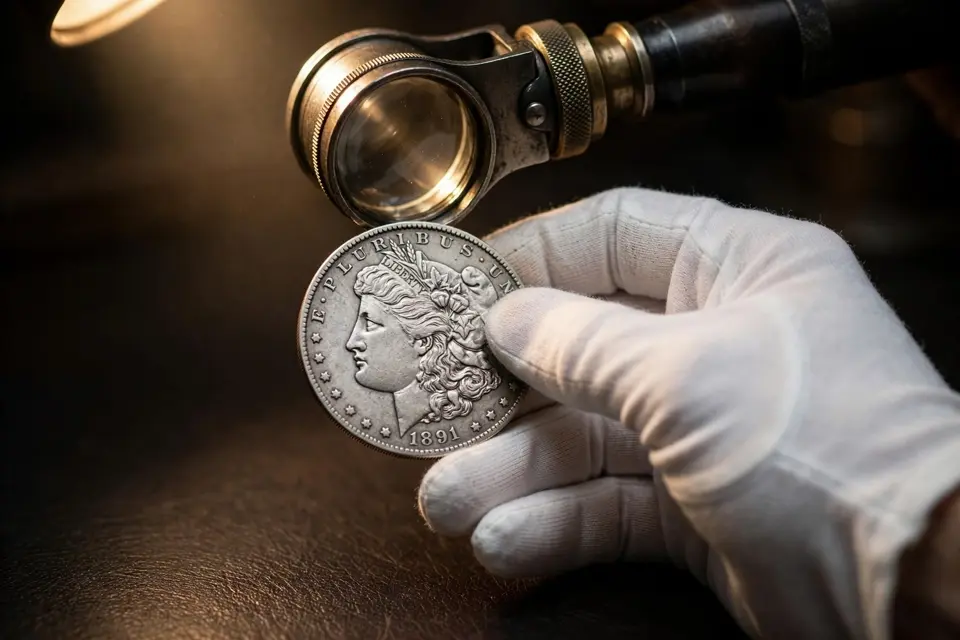
Examine the coin under 10x magnification in strong, single-source light, and compare it with a known-genuine example or a trusted reference image. Genuine coins are struck under enormous pressure, so their details are sharp: individual hair strands over Liberty's ear on a Morgan, crisp feather barbs on an eagle, clean letter edges with full serifs. Fakes most often fail here with soft, mushy detail, lettering with the wrong font or spacing, a date whose digits do not match the genuine style, or a mint mark in the wrong shape or position.
Check three places first. The portrait's highest points, where a struck coin shows modeled relief and a cast fake shows flat, blobby forms. The lettering, where counterfeit dies often crowd, tilt, or thin the letters. And the date and mint mark, where added or altered marks betray themselves: a mint mark soldered onto a common coin sits proud of the surface, shows a seam or color change around its base, or uses a letter style that mint never used for that year. The classic altered coins, a "D" added to a common 1916 Mercury dime to fake the rare 1916-D, or an "S" added to a 1909 cent to fake the 1909-S VDB, are genuine coins with one lying letter, and the loupe is what catches them.
Test 5: The Edge and Surface Test
Turn the coin on its side and study the edge. Cast fakes, poured into a mold rather than struck, almost always leave a faint seam running around the middle of the edge, plus a rough, pitted, or grainy surface where trapped gas bubbled in the mold. Genuine struck coins have clean edges with crisp, even reeding: a Morgan dollar carries 189 reeds, and a fake with uneven, missing, or mushy reeds is suspect even if its faces look good. Look also for the small raised pimples and dimples that casting leaves in the flat fields, and for an unnatural orange-peel texture across the portrait.
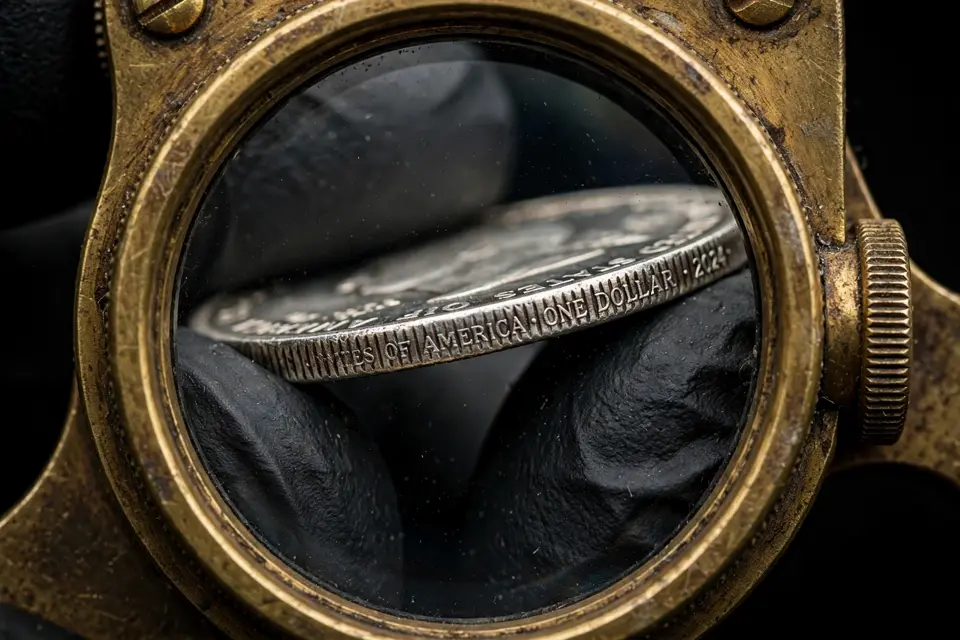
Also watch the color. Silver-plated fakes often look too brassy or too bright, and wear on a plated coin exposes a different metal underneath, copper showing through at the high points of a "silver" coin is a confession. Genuine circulated silver tones soft gray; genuine copper tones warm brown. A coin whose color cannot decide what metal it is probably is not that metal.
Test 6: Know the Fake Families
Counterfeits fall into three families, and each fails differently. Cast fakes are the crudest: seams, porosity, mushy detail, dull sound. Struck fakes, made from dies copied off a real coin, look sharper but repeat the same tiny die marks on every example, the repeating depressions that betray transfer-die work, and often still miss the exact weight. Altered coins are genuine common coins doctored into rarities: added mint marks, altered dates (a 1948 cent re-cut to look like a 1943 bronze error, for example), and removed mint marks. Altered coins pass the scale and the magnet because the underlying coin is genuine, so only the loupe and reference comparison catch them.
A fourth modern problem is the fake holder. Counterfeit grading slabs copy the look of PCGS and NGC holders, sometimes with a genuine certification number stolen from a real coin. Always verify a certification number on the grading service's own website and check that the coin in the holder matches the photo and description on record. A holder that cannot be verified is not protection, it is packaging.
Test 7: When to Send It to the Experts
If a coin passes every home test but is valuable enough that a mistake would hurt, submit it to PCGS or NGC, or take it to a trusted dealer for an in-hand opinion. Professional authentication adds die-diagnostic comparison under high magnification, surface and luster analysis, and instruments such as X-ray fluorescence that read the metal itself. A coin judged not genuine comes back ungraded, never encapsulated as authentic. For a common Morgan dollar worth $38+ in circulated grades, the home tests plus a reputable seller are usually enough. For a coin claimed to be worth $1,000+, a $10,000+ key date, or any gold rarity, certification is not an extra, it is the purchase.
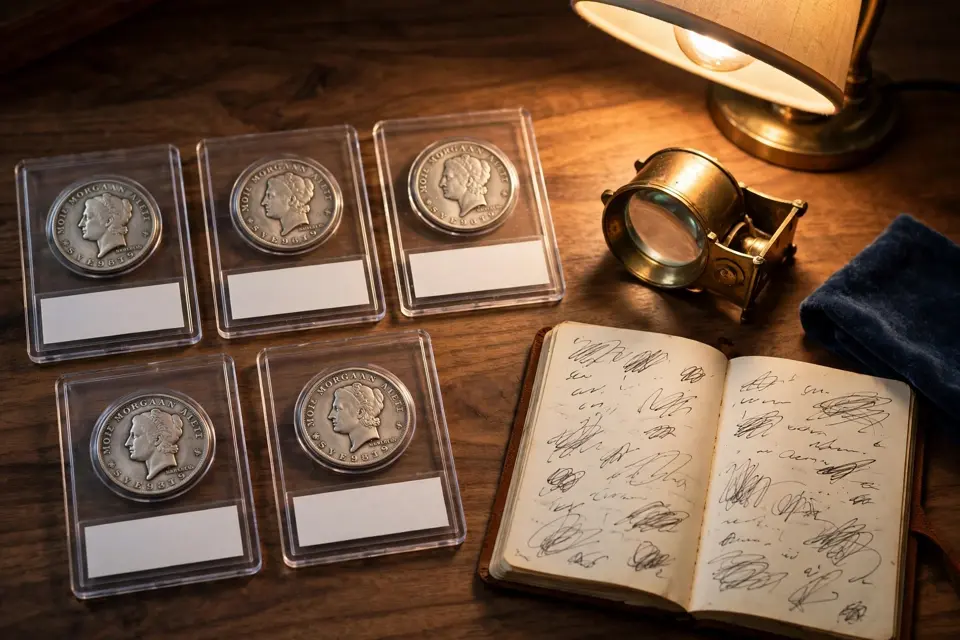
Buy defensively and the tests matter less: buy certified coins for expensive dates, buy from established dealers with return policies, and walk away from any deal that feels too good to be true. A "1893-S Morgan dollar" offered at a fraction of its $5,000+ circulated value is not a bargain discovered, it is a test about to be failed. Keep your scale, calipers, magnet, and loupe in one kit, test every raw coin the day it arrives, and never clean a coin to test it.
Frequently Asked Questions
How can I tell if a coin is fake at home without special tools?
Start with the three checks that need almost no equipment: compare the coin's weight on any gram scale and its diameter against the official specification, hold a strong magnet to it (a silver or gold coin should never stick), and tap it to hear whether it rings or thuds. Then examine it under any magnifier against a trusted reference photo. Most crude fakes fail at least one of these checks, and any failure is reason to get a professional opinion before paying a collector price.
What is the most reliable home test for a fake coin?
The weight and dimensions test is the most reliable, because a counterfeiter cannot match weight, diameter, and thickness all at once with the wrong metal. Use a scale accurate to 0.01 grams and calipers that read in millimeters, and allow only a few tenths of a gram for honest wear. A coin several grams off specification is a fake regardless of how good its surfaces look.
Can a fake coin pass the magnet test?
Yes. The magnet test only catches fakes made with iron or steel. Many modern counterfeits use non-magnetic copper, lead, or zinc alloys specifically to pass it, and some struck fakes use near-correct silver alloy. A coin that does not stick to a magnet has passed a screen, not an authentication, so always pair the magnet with weight, dimensions, and loupe inspection.
Are all magnetic coins fake?
No. The 1943 steel Lincoln cent is magnetic by design, since the wartime Mint struck cents in zinc-coated steel that year, and it weighs 2.70 g instead of the bronze cent's 3.11 g. Every other regular United States silver, gold, or copper coin should be non-magnetic, so a silver or gold coin that sticks to a magnet is not genuine.
How do I check a coin in a grading holder?
Verify the certification number on the grading service's own website and confirm that the coin, grade, and holder photo on record match the coin in your hand. Counterfeit slabs exist, sometimes carrying a real number copied from a different coin. If the number does not verify, or the coin does not match the record, treat the holder as unproven and seek an expert opinion.
Should I clean a coin before testing it?
Never clean a coin to test it. Cleaning scratches the surface and destroys collector value on a genuine coin, and it proves nothing about a fake, since dirt was never what made a counterfeit detectable. Test the coin as it is with weight, magnet, sound, and magnification, and let a grading service handle any coin valuable enough to need conservation advice.
Seven tests, one kit, and five minutes at your desk will settle most authenticity questions before money changes hands. Before you spend or sell any coin you are unsure about, run it through The Diggin Dave’s free Error Identifier to rule out a valuable error first, use the Coin Value Checker to confirm its value range, and try Grade-or-Not for a grade verdict once authenticity is settled.
As an Amazon Associate, this site may earn from qualifying purchases.
Related Reading
- How to Grade a Coin: The Complete Guide to the 1–70 Scale, Luster, Wear & Value — once a coin passes the authenticity tests, grade it properly
- How to Tell If a Quarter Is Silver: 6 Quick Tests That Work — the silver-identification companion: date, edge, and sound tests for quarters
- How to Identify a Doubled Die Coin: Real Doubling vs Machine Doubling — genuine doubling is an error worth money, not a fake; learn the difference