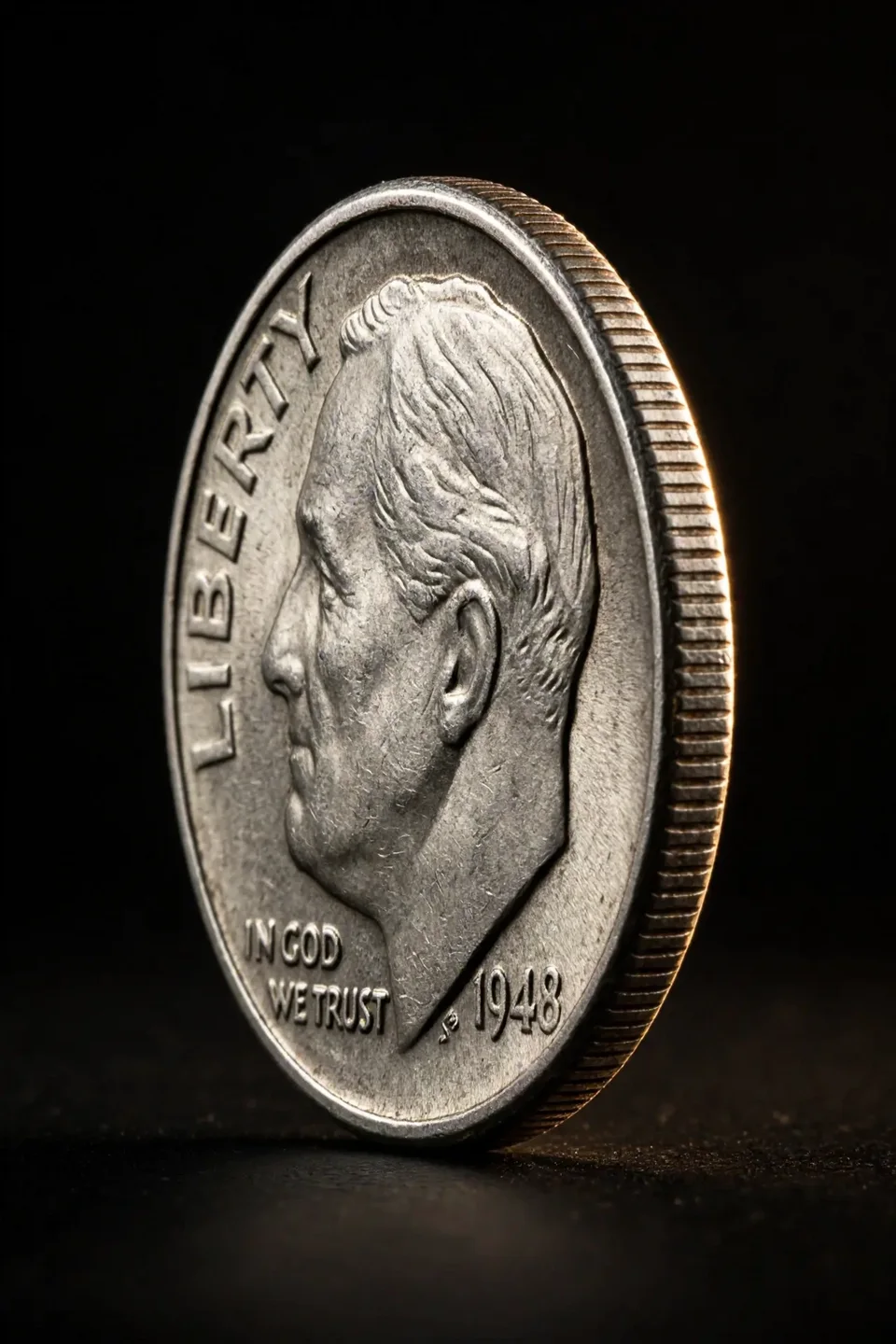
1844 Seated Liberty Dime: Little Orphan Annie Explained
Coin Encyclopedia · 9 min read · Published November 7, 2026
Collectors call the 1844 Seated Liberty dime Little Orphan Annie, and the nickname fits. Philadelphia struck just 72,500 of them in 1844 — the lowest mintage of any Philadelphia Seated Liberty dime — and the survivors are orphans in the truest sense: few in number, scattered across collections, and seldom seen together. There are no researched grade values for this date in our guide yet, so the grade table below shows “—” rather than invented figures. What follows is everything that can be said without guessing: the design, the mintage, the grading, and the history.
The 1844 is a pre-Civil War coin, struck seventeen years before the first shot at Fort Sumter, in a country where the dime was still a working silver coin and the Mint at Philadelphia was the only mint that mattered for most collectors. To hold one is to hold the 1840s — and to understand why a coin struck in such small numbers became one of the great rarities of the Seated Liberty series.
Gobrecht’s Seated Liberty
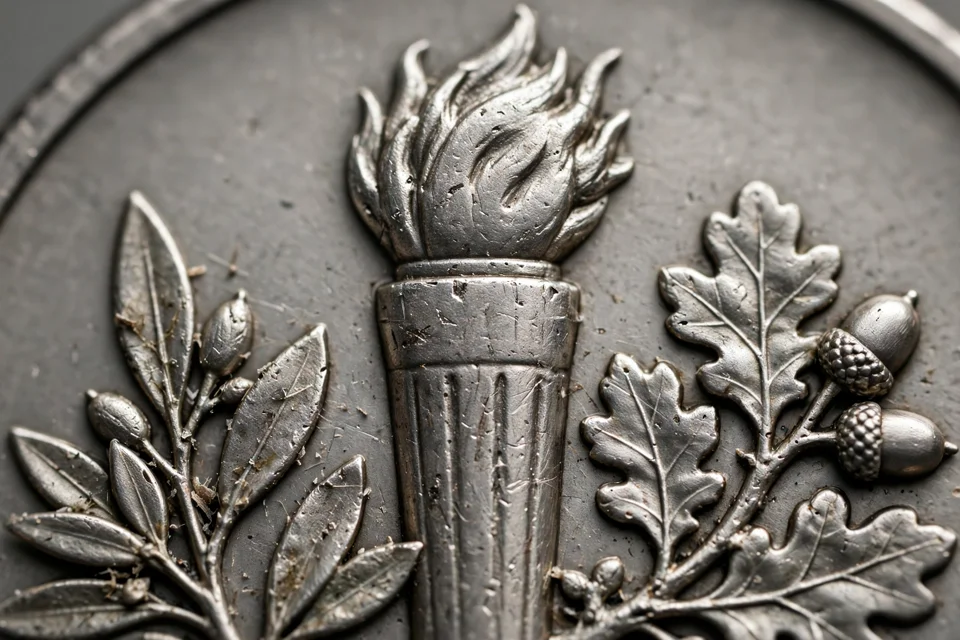
The Seated Liberty design was the work of Christian Gobrecht, the Mint’s engraver, and it ran on the dime from 1837 to 1891 — fifty-four years, longer than any dime design before it. Liberty sits on a rock, her right hand resting on a shield and her left hand holding a liberty cap on a pole. Thirteen stars ring her on the obverse of the 1844 issue, and the date sits below. The reverse carries ONE DIME inside an agricultural wreath of corn, wheat, maple, and oak — a quiet statement that the coin belonged to a farming nation.
The design changed over its long life, and the 1844 sits in the early half of it. The stars obverse — thirteen stars around Liberty — lasted until 1860, when the Mint replaced the stars with the legend UNITED STATES OF AMERICA. The 1844 is therefore a stars coin, and that matters for identification: a Seated dime with stars around Liberty is an early issue, and a Seated dime with the legend around her is a later one. The 1844’s stars are the first thing to check after the date.
Why 72,500 is so few
Philadelphia struck dimes to meet demand, and in 1844 demand was small. The country’s economy ran on larger silver — half dollars and dollars for trade, cents for the everyday — and the dime was a small coin for small transactions. The Mint struck 72,500 of them, and then moved on. For comparison, the Philadelphia Mint would strike tens of millions of dimes in a single year by the 1890s, and hundreds of millions by the 1940s. The 1844’s mintage is small because the 1840s were small.
That small mintage met a long, hard circulation. The 1844 dimes that left Philadelphia went into pockets, tills, and pay envelopes, and they stayed there for decades — through the Mexican War, the California gold rush, and the Civil War itself. Silver coins were hoarded during the war, melted for their metal, and worn down by daily use. By the time collectors began saving Seated dimes systematically, the crisp 1844 examples were mostly gone. The survivors are scarce in every grade, and genuinely rare in high grade.
What an 1844 Seated Liberty dime is worth by grade
Our guide has not researched grade values for the 1844 yet, and the table below says so plainly. A dash is not a zero and it is not a guess — it is a gap, and this page would rather show the gap than invent a figure for it.
| Grade | Estimated value |
|---|---|
| Good (G-4) | — |
| Fine (F-12) | — |
| Extremely Fine (XF-40) | — |
| About Uncirculated (AU-50) | — |
| Mint State 60 (MS-60) | — |
| Mint State 65 (MS-65) | — |
Guide values reviewed November 5, 2026 — figures update live from our Worker.
The live module on this page checks our Worker for reported results for this exact date and grade on every load. When a verified result exists for a grade, it appears in the table above; until then, the dash stands.
What can be said without a number is the shape of the market. A pre-Civil War dime with a mintage of 72,500 behaves like the rarity it is: worn examples are scarce, Mint State examples are events, and each appearance is valued on its own merits. The mintage is the anchor — the lowest Philadelphia mintage of the Seated dime series — and the market has never forgotten a low mintage.
Grading a Seated dime
Grade a Seated Liberty dime by Liberty herself. On the obverse, look at her head, her knee, and the drapery of her gown: on a worn coin they are soft and merged, on a sharp coin each fold is distinct. The shield she rests on carries its own detail, and the stars around her should be full and sharp on a high-grade example. On the reverse, look at the wreath — the leaves and grains should be distinct, not blended into a smooth ring.
On the 1844, add a second check: the date. The date sits on the obverse at the bottom, and on a worn 1844 it can be soft. A 10x loupe settles it: the 1, the 8, the 4, and the final 4 should each be readable, and the last digit is the one that separates an 1844 from a common 1848 or 1854. Never guess a date on a worn Seated dime; the difference is the whole value of the coin. And never clean one: a cleaned Seated dime trades near its silver no matter how sharp it looks, because cleaning strips the surface and destroys collector value instantly.
Specs — silver, heavier than later dimes
The 1844 is a silver dime, but it is not the same silver dime as the later issues. It is 90% silver and 10% copper, 17.9 millimetres across, and it weighs 2.67 grams — heavier than the 2.5-gram standard that came later, because the Mint did not reduce the dime’s weight until 1853. The silver content follows that weight, and the coin feels noticeably heavier in the hand than a Barber or Mercury dime.
The metal floor for this issue is shown as — on this page: our melt table does not cover Seated Liberty dimes, and this page will not invent a figure for it. What the specs do tell you is how to check the coin — weigh it at 2.67 grams, measure it at 17.9 millimetres, and check the edge for sharp, even reeding. A genuine 1844 is exactly that weight and exactly that size, and a cast copy feels light and often shows tiny bubbles or seams under magnification.
The New Orleans companion
Philadelphia was not the only mint striking dimes in 1844. New Orleans struck them too, and the 1844-O is a separate issue with its own mintage and its own market. The difference is the mint mark: on a Seated Liberty dime it sits on the reverse, below the wreath — O for New Orleans, and no letter for Philadelphia. A coin with no letter below the wreath is the Philadelphia issue of this page; a coin with an O is the New Orleans issue.
Check the reverse before you celebrate. The 1844-O is a scarce coin in its own right, but it is a different coin with a different story, and the two are often confused in inherited collections. Read the date on the obverse first, then the mint mark on the reverse. A coin with a clear 1844 and no letter below the wreath is Little Orphan Annie — and it is the coin this page is about.
Verified auction records
No standalone record for the 1844 sits in our verified records file. The Seated Liberty dime series has no single headline record in our data — its market is defined by mintage and grade rather than by one famous result, and the 1844’s mintage of 72,500 is the figure that defines it.
For this date, the honest measure is the live results panel below, which checks for newly reported results every time the page loads. A pre-Civil War dime with the lowest Philadelphia mintage of its series appears rarely enough that each appearance is news, and the panel is where that news lands first.
Latest reported results for this coin
Checking for newly reported results…
Your 1844 Seated Liberty dime questions, answered
How much is an 1844 Seated Liberty dime worth?
Our guide has not researched grade values for the 1844 yet, so the grade table above shows — rather than invented figures. The live module on this page checks for newly reported results on every load. The mintage of 72,500 is the anchor for its scarcity.
Why is the 1844 called Little Orphan Annie?
Collectors gave it the nickname because Philadelphia struck just 72,500 in 1844 — the lowest mintage of any Philadelphia Seated Liberty dime — and the survivors are few, scattered, and seldom seen together.
How do I tell an 1844 Philadelphia dime from an 1844-O?
Look at the reverse, below the wreath. No letter means Philadelphia; an O means New Orleans. The New Orleans issue is a separate coin with its own mintage and market.
Is the 1844 Seated Liberty dime silver?
Yes. The 1844 is 90% silver and 10% copper, weighing 2.67 grams — heavier than the later 2.5-gram standard, because the Mint did not reduce the dime’s weight until 1853. The metal floor for this issue is shown as — on this page.
How do I grade a Seated Liberty dime?
Grade by Liberty herself: her head, knee, and drapery on the obverse, the shield she rests on, and the wreath on the reverse. Full, sharp stars around her mean a high-grade example; soft, merged detail means wear.
Check your 1844
Run the date and mint mark through the free Coin Value Checker for an instant estimate, or get a Grade-or-Not verdict on whether your coin is worth certifying. The full dime guide is here: How Much Is a Dime Worth?.
Written for the history: the 1844 is the orphan of the Seated Liberty series, and this guide exists so the next one found gets its date and mint mark checked before it is spent.
This guide is for education — learn the coin first, and get a professional opinion before buying or selling.