1854-S Liberty Half Eagle: San Francisco's Rarest $5
Coin Encyclopedia · 9 min read · Published November 7, 2026
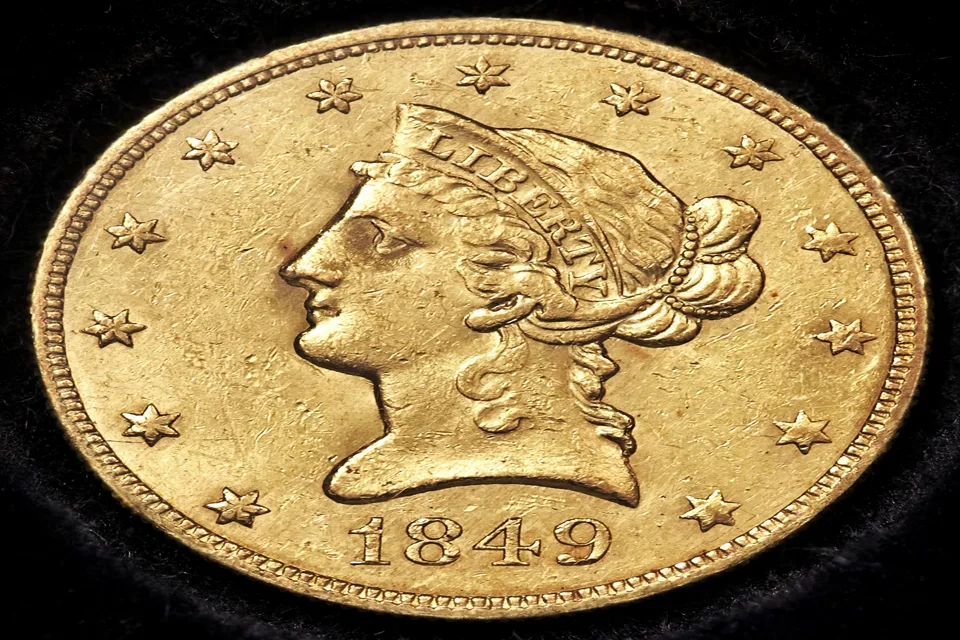
Two hundred and sixty-eight. That is the whole mintage of the 1854-S Liberty half eagle — 268 $5 gold coins struck at San Francisco in 1854, in the mint's opening year, and four of them are known today. One of those four, graded XF45, realized $2,160,000 at Heritage in August 2018, as the newly discovered fourth known example. If you think you have one, read this whole page before you do anything else, because there are only four in the world, and three of them are already known.
This page is about that number. The 1854-S is the first half eagle struck at San Francisco, designed by Christian Gobrecht, struck in the first year of a mint that would become the largest gold coin producer in the nation. Our guide has not researched grade-by-grade figures for this date, so the table below is empty. The record is not.
San Francisco's first five
The San Francisco Mint opened in 1854, built to coin the gold of the California gold rush where it was found, rather than shipping it to Philadelphia. The mint's first year was a rush of its own: double eagles, eagles, half eagles, quarter eagles, and gold dollars, all struck in the first months of operation, all carrying the S mint mark that collectors now chase. The half eagle was the smallest part of that first-year production — 268 coins, against tens of thousands of double eagles.
That number needs context. The half eagle was a working coin, struck for commerce, and the San Francisco Mint's priority in its first year was the big coins — the double eagles and eagles that carried the most gold. The half eagle was struck only when the presses were free, in a single short run, and then the mint moved on. Most of those 268 coins went into commerce in California, wore down there, and were melted in later years. Four survived. That is the coin.
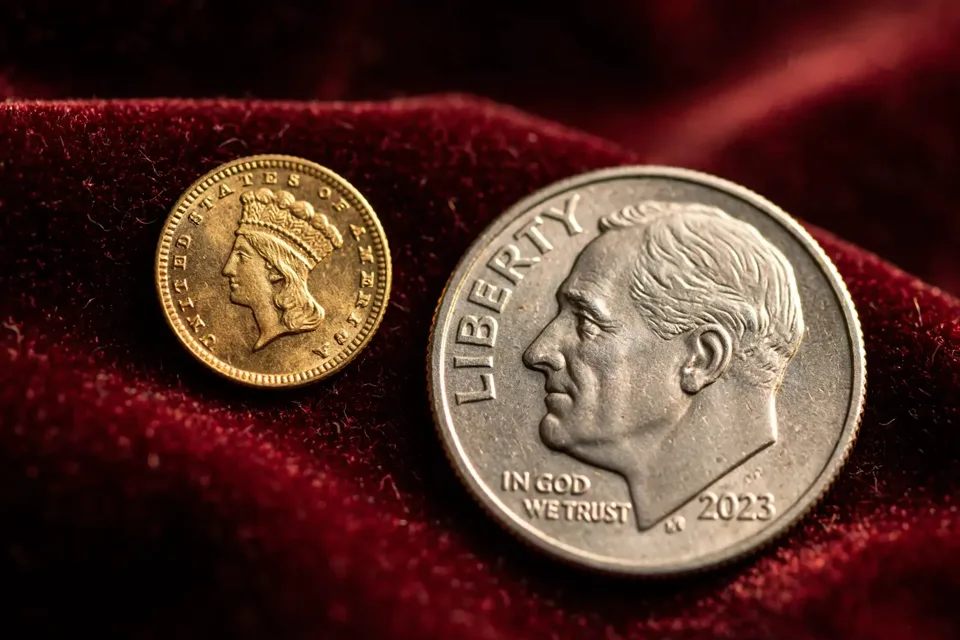
The S mint mark sits on the reverse, below the eagle, and it is the first thing to find. A half eagle dated 1854 without an S is a Philadelphia coin, struck in large numbers. A half eagle dated 1854 with an S is a San Francisco coin, struck in 268, and one of the four known examples — or a fake. The letter is the coin, and on this date, the letter is also the warning.
The grade table, still to be researched
The table below is our researched collector estimates from the live guide, reviewed November 5, 2026. Grades our guide has not researched yet are shown as “—”, not guessed. For this date, that is every grade. No grade-by-grade figures are catalogued yet, so the table below is a statement of what we do not yet know, not a set of numbers to lean on.
| Grade | Estimated value |
|---|---|
| Good (G-4) | — |
| Fine (F-12) | — |
| Extremely Fine (XF-40) | — |
| About Uncirculated (AU-50) | — |
| Mint State 60 (MS-60) | — |
| Mint State 65 (MS-65) | — |
An empty table on a coin with four known examples can feel wrong, and it is worth saying why it is there. The grade table is built from researched figures, and a coin with four survivors does not produce grade-by-grade figures in the ordinary way. There are not enough examples to build a table. There is a record, and the record is below. That is the honest figure for this coin, and it is the only figure that matters.
The record: $2,160,000 for the fourth known example
One verified auction result anchors this coin's market in our records. In August 2018, Heritage Auctions offered an 1854-S Liberty half eagle graded XF45 — the newly discovered fourth known example — and it realized $2,160,000. That is the only verified record in our data for this date, and it is one of the highest figures ever realized for a half eagle.
| Coin | Grade | Auction | Amount |
|---|---|---|---|
| 1854-S Liberty Half Eagle | XF45 | Heritage Auctions, Aug 2018 | $2,160,000 |
Read that record carefully. It is an XF45 — a circulated grade, not a Mint State coin — and it realized $2,160,000. That tells you everything about this coin: the grade is almost irrelevant, because there are only four. The figure is set by the rarity, not by the condition, and the finest known example is not the point. The point is that there are four, and one of them changed hands in 2018 for more than two million dollars. If you think you have the fifth, you do not. You have a fake, or a different coin, or a story that will not survive five minutes with a grader.
Specs and the metal floor
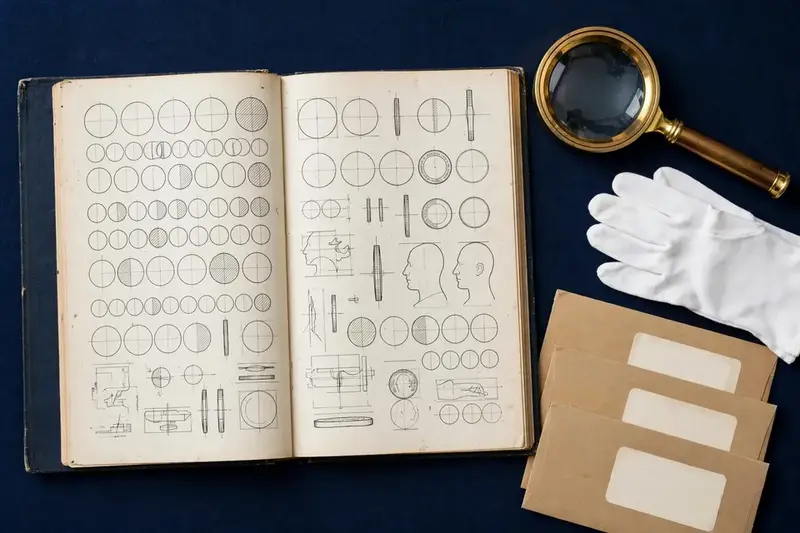
The 1854-S half eagle weighs 8.359 grams and measures 21.6 millimetres across, struck in 90% gold and 10% copper. It holds 0.24187 troy ounces of pure gold — the same specification as every Liberty half eagle from 1839 to 1908. If you have handled any $5 gold coin, the 1854-S feels identical in the hand: solid, compact, and unmistakably gold.
Metal floor: — The live melt figure on this site is calculated only for the $1 gold dollar, whose specification the Worker carries. Larger gold — $2.50, $5, $10 and $20 — has no live melt specification yet, so this page shows “—” for the metal floor rather than a computed figure. The weight above is the honest check: a genuine coin matches it, and a light coin is not genuine.
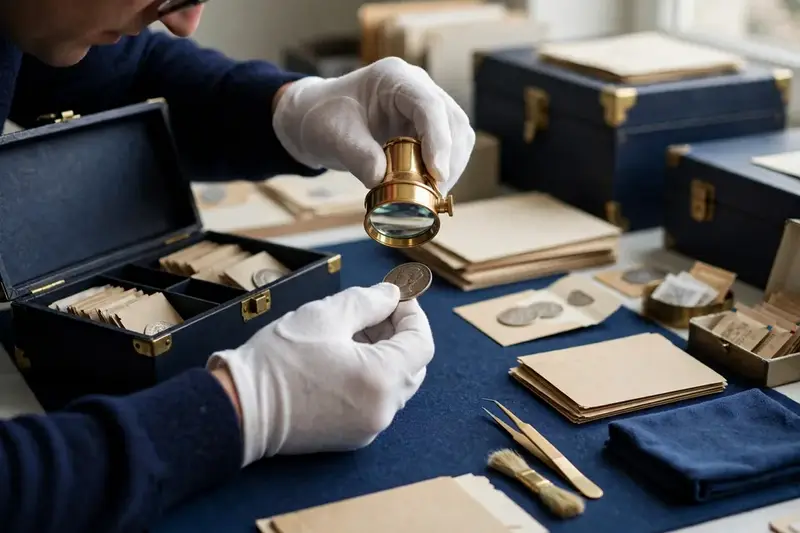
Weigh it first. A genuine half eagle is 8.359 grams, and a counterfeit in base metal will be far too light. Then measure it: 21.6 millimetres, with a reeded edge that is sharp and even all the way round. Then look at the design under a loupe — Gobrecht's Liberty has crisp hair and a clean coronet, the eagle's feathers are sharp, and the S mint mark is in the correct position below the eagle. A cast copy looks soft, with mushy details and tiny bubbles in the fields. On a coin with four known examples, those three checks are the beginning, not the end: certification is where the figure is settled, and certification is the only way the market will accept the coin at all.
Why four survivors is the whole story
The 1854-S half eagle is rare in a way that most rare coins are not. Most rare coins are rare because few were struck. This one is rare because few were struck and almost all of them were destroyed — worn down in commerce, melted in later years, lost to time. The four that survive are the coins that were saved by accident, tucked away, forgotten, and found decades later. The fourth was newly discovered before its 2018 appearance, which means the third was found before it, and the second before that — each one a discovery, each one a story.
That is the demand. San Francisco collectors need it. Half eagle collectors need it. Rarity collectors need it. And every one of them is chasing four coins, struck in a mint's opening year, in a mintage of 268. The result is a coin that trades rarely, through established channels, with certification, at figures that reflect its scarcity. The record above is the evidence. The empty grade table is the honesty.
Latest reported results for this coin
Checking for newly reported results…
Your 1854-S half eagle questions, answered
What is an 1854-S Liberty half eagle worth?
Our guide has not researched grade-by-grade figures for this date, so the grade table below shows — for every grade. The verified record is $2,160,000 for an XF45 example at Heritage in August 2018 — the newly discovered fourth known example.
Why were only 268 struck?
1854 was the first year of the San Francisco Mint, and the mint was still building its capacity. The half eagle was a small part of its first-year production, and most of the mint's gold went into double eagles and eagles.
How many 1854-S half eagles are known?
Four are known, according to our auction records — the fourth was newly discovered before its $2,160,000 appearance at Heritage in August 2018. No other examples are recorded in our data.
What makes the 1854-S half eagle so rare?
It is the first half eagle struck at San Francisco, in the mint's opening year, with a mintage of 268 and only four known survivors. First-year branch-mint coins with tiny mintages are the rarest dates in American gold.
How do I know an 1854-S half eagle is genuine?
Weigh it at 8.359 grams and measure 21.6 millimetres, then examine the S mint mark and the design under a loupe — then get a professional opinion. On a coin with four known examples, certification is the only way the market will accept it.
Check your 1854-S
An 1854-S is 268 coins, four known, and one record of $2,160,000. Weigh it, find the S, and let a grader settle the rest. Run the date and mint mark through the free Coin Value Checker for an instant estimate, or get a Grade-or-Not verdict on whether your coin is worth certifying. The full gold guide is here: Gold Dollar Coin Values by Type and Date.
For learning only: this guide is educational, and the figures here are researched estimates, not a promise of what any single coin will bring. An 1854-S should be authenticated and graded by professionals before any decision is made.
This guide is for education — learn the coin first, and get a professional opinion before buying or selling.