1855-O Gold Dollar Type 2: New Orleans’ Wide, Thin Coin
Coin Encyclopedia · 8 min read · Published November 7, 2026
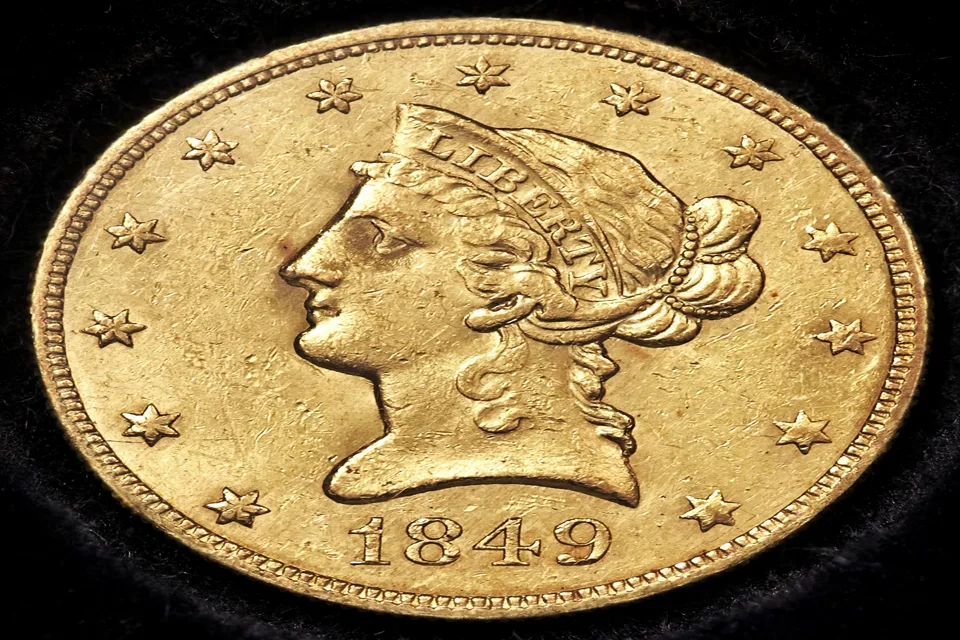
New Orleans struck 55,000 Type 2 gold dollars in 1855, and that number is the whole story of this coin. It is a modest run beside Philadelphia’s output in the same years, from a mint that struck gold dollars only in the 1850s, on a thin, wide planchet that barely struck up. Our researched guide values run from $456 in Good to $60,000–$75,000 in Mint State 65, and the spread between those two figures is the story of the type: a coin that is common enough to find worn, and rare enough in high grade to chase.
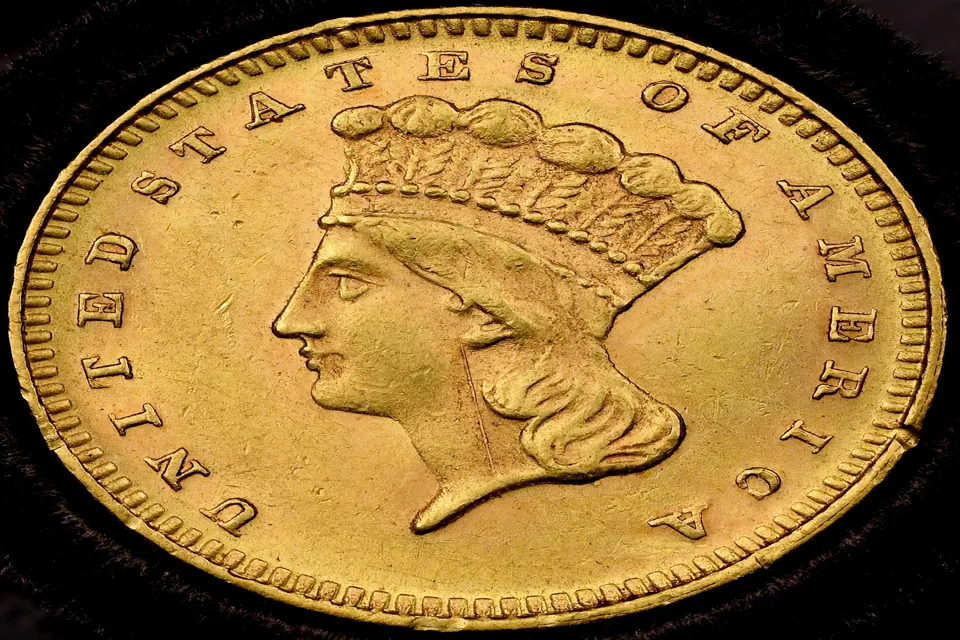
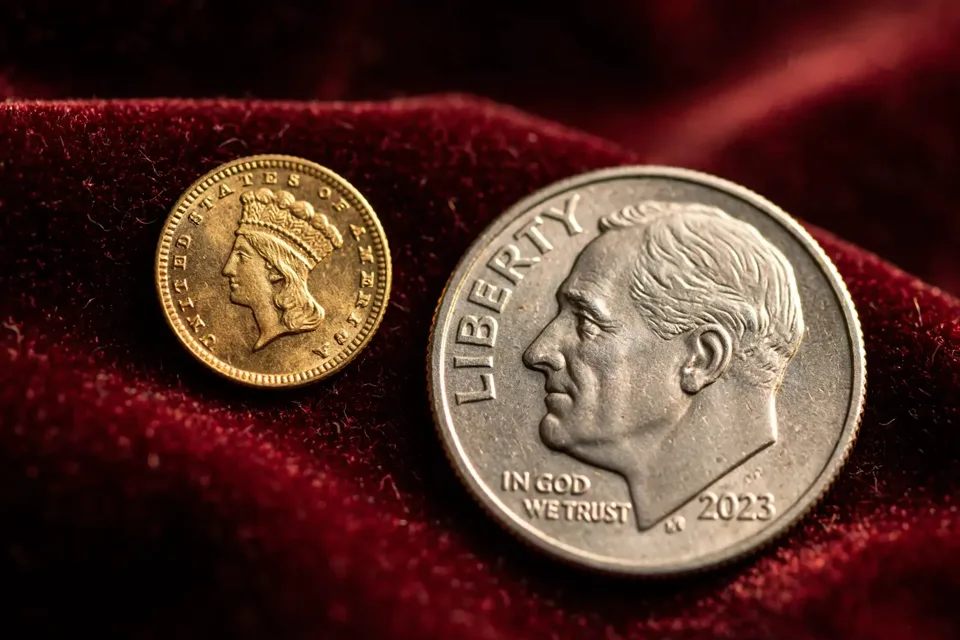
The Type 2 is the middle child of the gold dollar family, and it is the hardest to find well struck. In 1854 the Mint widened the coin to about 15 millimetres to make it easier to handle, and Longacre gave Liberty a feathered Native American headdress. The thin, wide planchet proved nearly impossible to strike well: most Type 2 dollars show softness in the headdress and the wreath, and the 1855-O is no exception. If you find one, the first question is not what grade it is. It is whether it was ever struck properly in the first place.
New Orleans and the wide dollar
New Orleans was a river mint, built to coin the gold and silver flowing through the port, and its gold dollars were working money in a busy commercial city. In 1855 it struck 55,000 of the new Type 2 design, and the coins went into circulation in Louisiana and the Gulf South, where a gold dollar was real money. They were spent, saved in small hoards, and sometimes melted when the gold market moved. The survivors are the ones that left circulation early by accident, and they are fewer than the mintage suggests.
It helps to set the number beside the series around it. Philadelphia struck gold dollars in the hundreds of thousands in the same years, and a New Orleans coin of any date is scarce beside them. The 1855-O is not the rarest New Orleans gold dollar, but it is a genuine branch-mint date with a modest mintage, and it is the date most collectors meet first when they start on New Orleans gold. A worn example is an affordable branch-mint coin. A Mint State one is a different matter entirely.
The mint mark below the bow
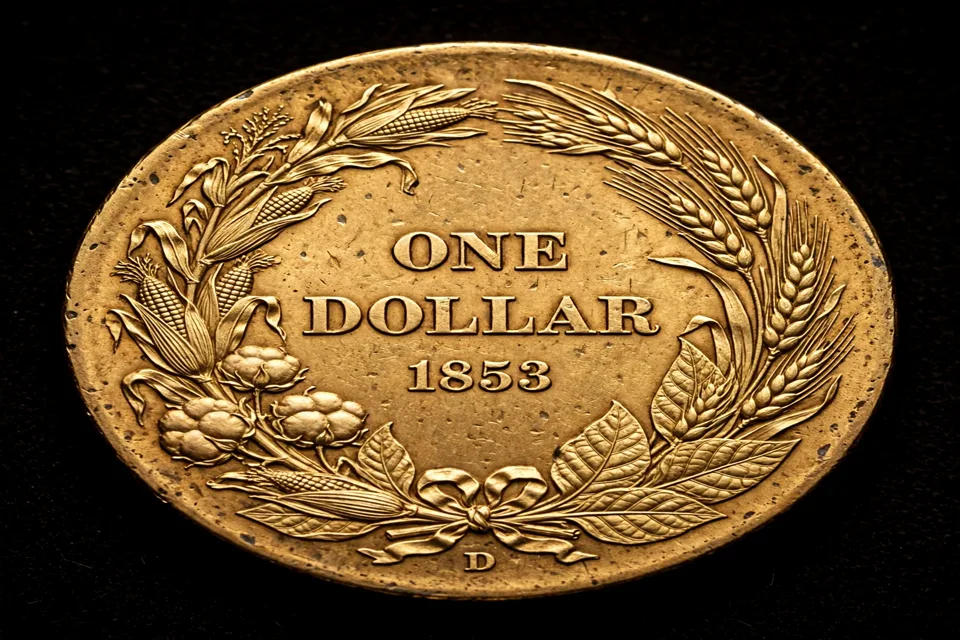
The mint mark is the whole attribution, and it sits in a small, specific place: on the reverse, directly below the wreath’s bow. An O means New Orleans, and no mark means Philadelphia. On a small, worn gold dollar the O can be faint, because the lower reverse takes wear, so check it under a loupe with the light raking across the surface from the side. Compare it against a known New Orleans gold dollar if you can, because a contact mark near the bow can fool the eye at a glance.
Once the O is confirmed, look at the portrait. The Type 2 Indian Princess wears a feathered Native American headdress, and the feathers are the first thing to check for strike: on a sharply struck example they are separate and distinct, and on a weakly struck one they blur into the field. Then the wreath on the reverse, where the leaves go soft next. If both are crisp, you are holding one of the better-struck survivors of the year.
What a 1855-O Type 2 is worth by grade
The figures below are our researched collector estimates from the live guide, reviewed November 5, 2026. Five of the six grades are researched, which makes this the most complete Type 2 table in the batch. Fine is not researched yet, and it shows “—” rather than a guess.
| Grade | Estimated value |
|---|---|
| Good (G-4) | $456 |
| Fine (F-12) | — |
| Extremely Fine (XF-40) | $1,600–$1,920 |
| About Uncirculated (AU-50) | $1,711–$3,172 |
| Mint State 60 (MS-60) | $7,200–$10,000 |
| Mint State 65 (MS-65) | $60,000–$75,000 |
Two things to notice in that table. First, even the lowest grade is a $456 coin, which is the branch-mint premium at work: a common-date Philadelphia Type 2 in Good is a far cheaper coin. Second, the jump from Mint State 60 to Mint State 65 is nearly tenfold, which is why certification matters so much on this date: the premium is paid on certified high grade, not on a raw coin that merely looks sharp.
Why Type 2s strike so poorly
The Type 2’s problem was built into the planchet. The Mint widened the coin to about 15 millimetres but kept it thin, and the design was in high relief, so the metal had further to flow and less of it to flow with. The result is a coin that often looks unfinished straight from the press, with soft feathers, soft leaves, and a soft bow. The Mint knew it: the Type 3, which arrived in 1856, kept the wider size but gave Liberty a larger, better-proportioned portrait in shallower relief that struck up cleanly. The Type 2 lasted only three years, 1854 to 1856, and the 1855-O sits in the middle of that short, troubled run.
That short run is also why the type is collected as a type, not just as dates. A collector who wants one of each gold dollar type needs a Type 2, and the 1855-O is one of the more available ways to get one. But available does not mean cheap, and it does not mean well struck. The coins that look good are the exception, and they are priced as the exception.
Specs and the gold floor
Every gold dollar, of any type, weighs 1.672 grams and carries 0.04837 troy ounces of pure gold, at 90% gold. With gold trading near $4,072 an ounce in November 2026, that metal is worth about $196.97 — the floor under every genuine example, no matter how worn. Gold moves every day, so the floor moves with it; check the live market on the day, and treat anything below the melt figure as a bad offer.
Metal floor updates live from our Worker — last updated November 7, 2026.
The coin is officially the Type 2 Indian Princess small-head gold dollar, designed by James B. Longacre. It measures about 15 millimetres across, wider than the 13-millimetre Type 1, with a reeded edge and the mint mark on the reverse below the wreath’s bow. The gold floor above is the least important number on this page: the date’s worth lives in its mintage and its mint mark, not its metal, and the metal is less than $200 of a coin that starts at $456 worn.
Handling, storage, and getting a second opinion
Hold a gold dollar by its edge, never across the faces, and never clean it. The coins are so small that a fingerprint covers a large part of the surface, and cleaning leaves hairlines that a grader will spot at once. Keep the coin in an acid-free holder, away from humidity, and do not store it loose with other coins. If the coin looks uncirculated, or if the strike is unusually sharp, a professional opinion from PCGS or NGC is worth the fee: certification settles the grade and the strike in one step, and on a branch-mint Type 2 that certainty matters.
Latest reported results for this coin
Checking for newly reported results…
Your 1855-O questions, answered
How many 1855-O gold dollars were struck?
New Orleans struck 55,000 Type 2 gold dollars in 1855. That is a modest run beside Philadelphia’s output in the same years, and it is the main reason this date commands respect in every grade.
What makes the 1855-O a Type 2 gold dollar?
The Indian Princess small-head portrait, struck 1854–1856 on a thin, wide planchet about 15 millimetres across. In 1854 the Mint widened the coin to make it easier to handle, and Longacre gave Liberty a feathered Native American headdress.
Where is the mint mark on an 1855-O gold dollar?
On the reverse, directly below the wreath’s bow. An O means New Orleans, and no mark means Philadelphia. New Orleans struck gold dollars only in the 1850s, so every O-mint gold dollar is a branch-mint coin.
Why are Type 2 gold dollars so weakly struck?
Because the planchet is thin and wide, and the design is in high relief. Most Type 2 dollars show softness in the headdress and the wreath, and a sharply struck example is far scarcer than the grade alone suggests.
What is an 1855-O Type 2 worth by grade?
Our researched guide values run from $456 in Good, $1,600–$1,920 in Extremely Fine, $1,711–$3,172 in About Uncirculated, $7,200–$10,000 in Mint State 60, and $60,000–$75,000 in Mint State 65, reviewed November 5, 2026. Fine is not researched yet and shows “—”.
Check your 1855-O
Run the date and mint mark through the free Coin Value Checker for an instant estimate, or get a Grade-or-Not verdict on whether your coin is worth certifying. The full series guide is here: Gold Dollar Coin Values by Type and Date.
This guide is for learning and collecting, not financial advice. Every estimate here comes from our own researched catalog, and the real worth of any single coin depends on its condition, its strike, and the market on the day you hold it.
This guide is for education — learn the coin first, and get a professional opinion before buying or selling.