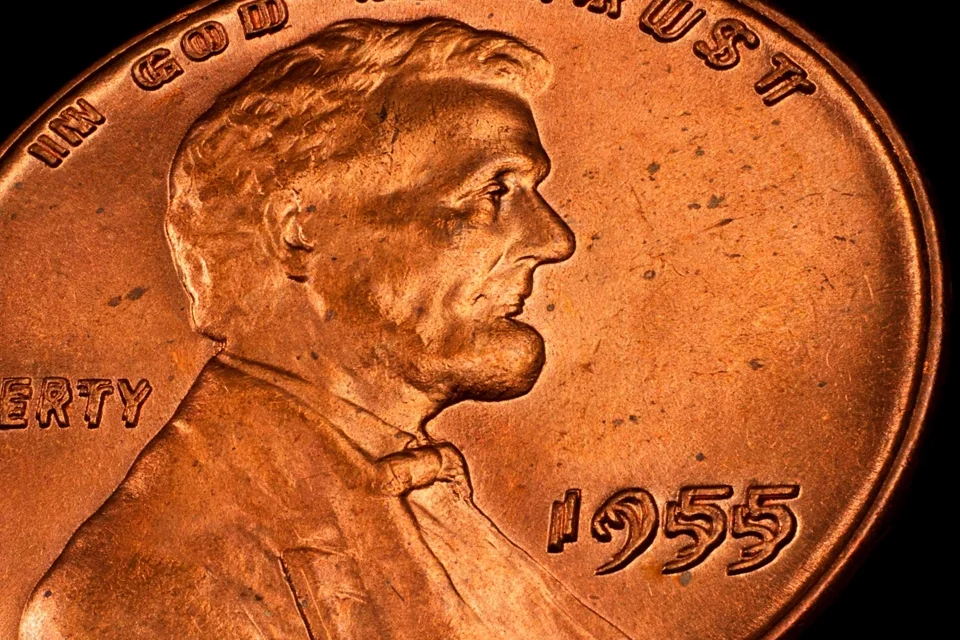
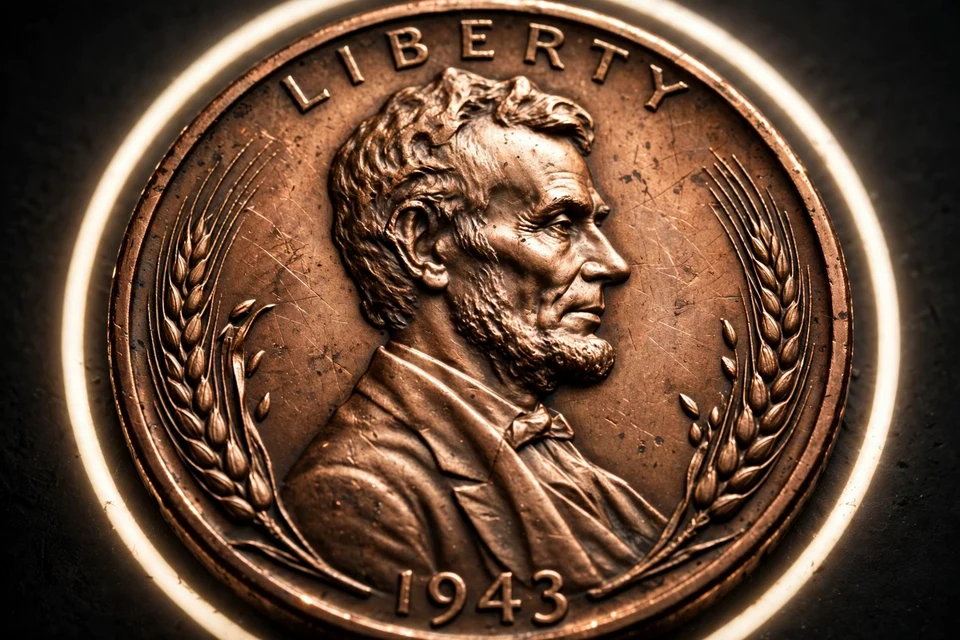
1909-S VDB Lincoln Cent: The $800 Initials Story
Coin Encyclopedia · 8 min read · Published November 7, 2026
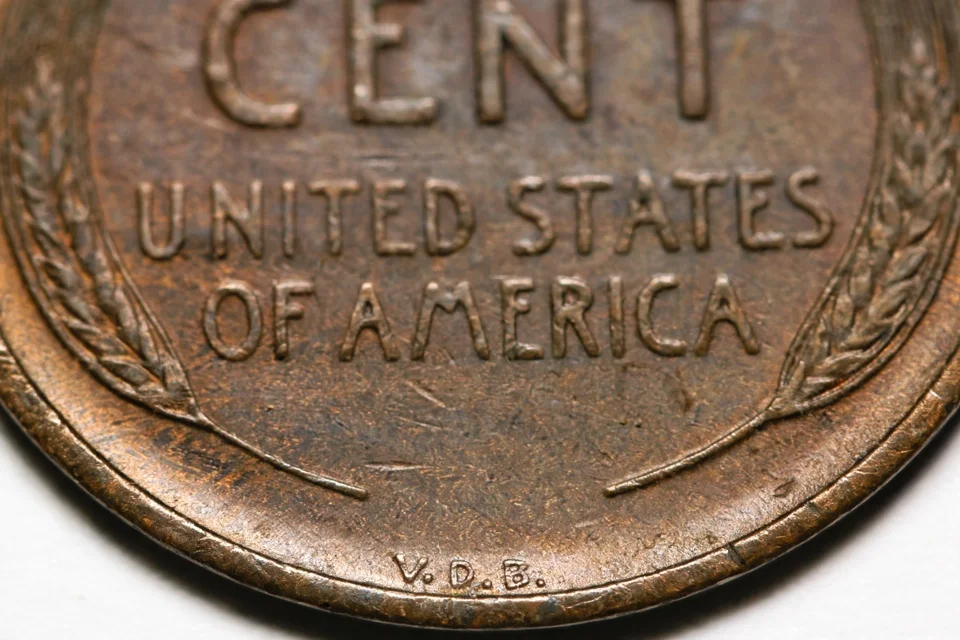
Three small letters caused the first scandal of the Lincoln cent. In 1909, sculptor Victor David Brenner signed his new design with his initials — V.D.B. — stamped boldly across the bottom of the reverse. The public hated it. Newspapers called it advertising, the Mint got complaints, and within weeks the initials were pulled. By then, the San Francisco Mint had already struck 484,000 cents with the initials on them. Those 484,000 coins became the most famous key date in American cents: a worn 1909-S VDB is worth $800+, and the finest red example reached $345,375.
That is the whole story of this coin in one paragraph — a designer’s signature, a public outcry, and a mintage cut short. Everything else on this page is how to tell whether the cent in your hand is one of those 484,000, and what it is worth if it is.
What happened to the initials
The Lincoln cent was issued in 1909 for the 100th anniversary of Abraham Lincoln’s birth — the first United States coin ever to carry a president’s portrait, replacing the Indian Head cent that had circulated since 1859. Brenner’s design put Lincoln on the obverse and two stalks of durum wheat flanking ONE CENT on the reverse, with his V.D.B. initials at the very bottom of the reverse, large enough to read without a loupe.
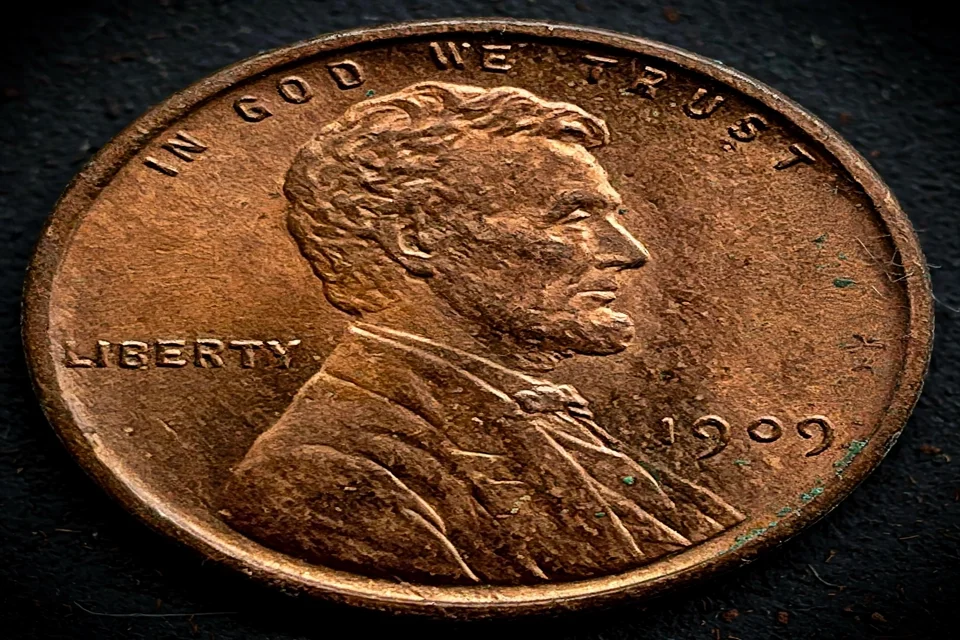
The complaints started almost immediately: the initials were too prominent, too much like a maker’s advertisement on a government coin. The Mint agreed, pulled the initials, and San Francisco went back to striking cents without them — 1,825,000 of the No-VDB variety, which is itself a $100+ coin worn. But the VDB coins already struck could not be un-struck. They went into circulation, and collectors have chased them ever since. The irony is complete: the initials everyone wanted removed are now the very thing that makes the coin worth hundreds.
How to identify a real 1909-S VDB
Two marks must both be present, and neither alone is enough. First, the S mint mark on the obverse, directly below the date — that is San Francisco. Second, the V.D.B. initials at the bottom of the reverse, between the two wheat stalks. A 1909-S without the initials is the No-VDB variety, worth far less. A 1909 with V.D.B. but no S is a Philadelphia cent, worth a few dollars. Only the combination — S below the date, V.D.B. on the reverse — is the key date.
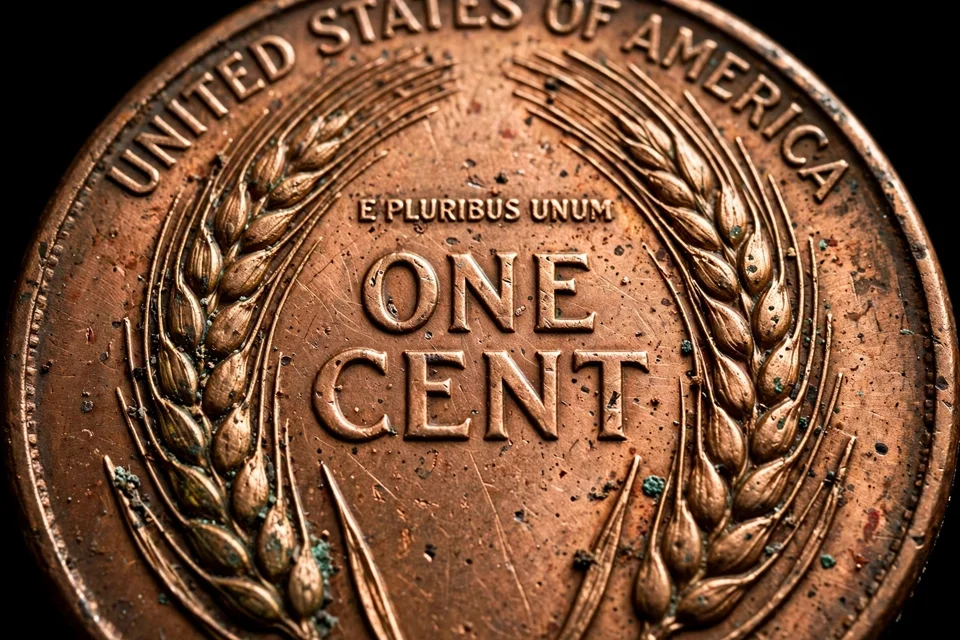
Check both marks under a loupe in good light. The S should be crisp and correctly positioned, and the V.D.B. should be sharp and evenly struck. A genuine 1909-S VDB weighs 3.11 grams — the standard bronze cent weight — and a coin that is light, or whose marks look soft or hand-cut, needs a professional opinion before any money changes hands.
What a 1909-S VDB is worth by grade
Condition is everything on this coin, and colour is nearly as important — a point the table below cannot show, so read the colour section next. The figures are our researched collector estimates from the live guide, reviewed November 5, 2026. Grades our guide has not researched yet are shown as “—”, not guessed.
| Grade | Estimated value |
|---|---|
| Good (G-4) | $800+ |
| Fine (F-12) | — |
| Extremely Fine (XF-40) | $1,187–$1,345 |
| About Uncirculated (AU-50) | — |
| Mint State 60 (MS-60) | $2,000+ |
| Mint State 65 (MS-65) | — |
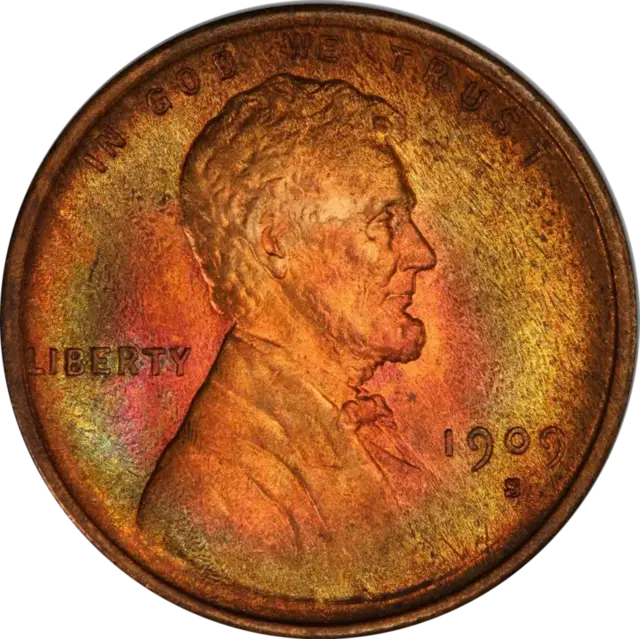
Even heavily worn examples start around $800+, which is why this is the king of the wheat series: no other regular wheat cent holds four figures in Good condition. From there the curve climbs steeply with condition and colour — a gem red MS67 brought $168,000 at Stack's Bowers in April 2022, and the finest reds have gone far beyond that, as the records below show.
Red, Brown, and the colour premium
Copper oxidizes, so grading services describe wheat cents as Red (RD), Red-Brown (RB), or Brown (BN). A Red coin in the same technical grade can be worth many times what a Brown one brings — colour is the single biggest value driver on this coin after grade itself. That is also why you should never clean a 1909-S VDB: cleaning strips the original surface and its colour, and a cleaned coin is worth a fraction of an original one, no matter how sharp the details look. If your coin is original and red, keep it that way — put it in an acid-free holder, handle it by the edges, and let the colour do the talking.
The added-S trap
The 1909-S VDB is one of the most counterfeited wheat pennies, and the fake is as simple as the Mercury dime’s: take a common 1909 Philadelphia VDB cent, add an S below the date, and a few-dollar coin becomes an $800+ coin. Genuine examples need expert authentication at any serious value — the S must sit in the correct position with the correct shape, the surfaces must be original, and the weight must be 3.11 grams. A coin that fails any of those checks is not a bargain, it is a lesson. Send a suspect example to PCGS or NGC before buying or selling; certification is the only thing that makes a 1909-S VDB tradable at its real value.
Verified auction records
Three verified results show how far the top of this coin’s market reaches — all for the same grade, MS67 Red, at very different prices across a decade, which is itself a lesson in how much the market for a finest-known coin can move.
| Coin | Grade | Sale | Price |
|---|---|---|---|
| 1909-S VDB Lincoln cent | MS67 Red, Stewart Blay Collection | GreatCollections, January 2023 | $345,375 |
| 1909-S VDB Lincoln cent | MS67 Red | Heritage Auctions, February 2014 | $117,500 |
| 1909-S VDB Lincoln cent | MS67 Red | Stack's Bowers, April 2022 | $168,000 |
The $345,375 result is the record for the issue. Note that all three records are for red Mint State coins — a brown or circulated 1909-S VDB, even a genuine one, lives in the grade table above, not in this one.
The coin at a glance
Designer Victor David Brenner. Struck 1909 at San Francisco only. Composition 95% copper, weight 3.11 grams. Obverse: Lincoln facing right, date below, mint mark below the date when present. Reverse: two wheat stalks flanking ONE CENT, UNITED STATES OF AMERICA above, and — on the first 484,000 San Francisco cents — V.D.B. at the base. The wheat reverse ran from 1909 through 1958, before the Lincoln Memorial design replaced it in 1959. Nearly fifty years of wheat cents came out of three mints, and billions were made — but only 484,000 carry both the S and the initials, and that is the whole coin.
Latest reported results for this coin
Checking for newly reported results…
Your 1909-S VDB questions, answered
How much is a 1909-S VDB worth?
A worn 1909-S VDB starts around $800+ in Good condition, runs $1,187–$1,345 in Extremely Fine, and reaches $2,000+ in Mint State 60. Red gem examples have reached $168,000+ and more, with the record at $345,375 for a PCGS MS67 Red from the Stewart Blay Collection.
What does VDB stand for?
V.D.B. are the initials of Victor David Brenner, the sculptor who designed the Lincoln cent. They appear at the bottom of the reverse on the first 1909 cents, and were removed after public complaints that they were too prominent.
Where is the mint mark on a 1909-S VDB?
The mint mark sits on the obverse, directly below the date. An S means San Francisco. The V.D.B. initials sit at the bottom of the reverse — both marks must be present for the coin to be the 1909-S VDB key date.
How is the 1909-S VDB different from the 1909-S No VDB?
The No-VDB variety was struck after the initials were removed — 1,825,000 were made, against 484,000 VDB cents. A worn No-VDB brings $100+, against $800+ for the VDB. The V.D.B. initials on the reverse are the only difference, and they are worth the gap.
Check your 1909-S VDB
Run the date and mint mark through the free Coin Value Checker for an instant estimate, or get a Grade-or-Not verdict on whether your coin is worth certifying. The full wheat series guide is here: Wheat Pennies Worth Money, 3¢ to $1.7 Million+.
This guide is for education — learn the coin first, and get a professional opinion before buying or selling.