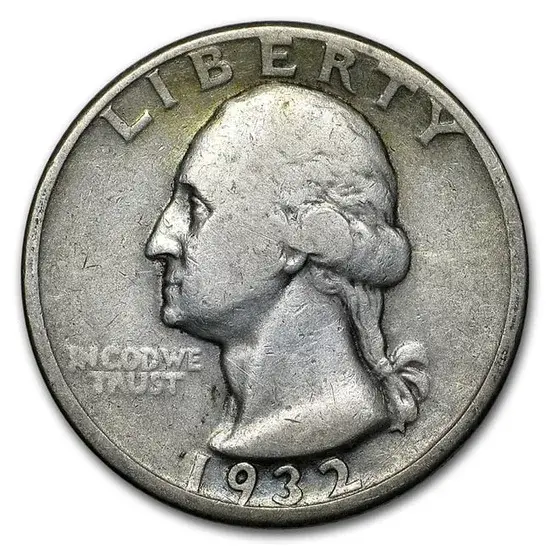
1937-D Washington Quarter: Doubled Die to Look For
Coin Encyclopedia · 8 min read · Published November 7, 2026
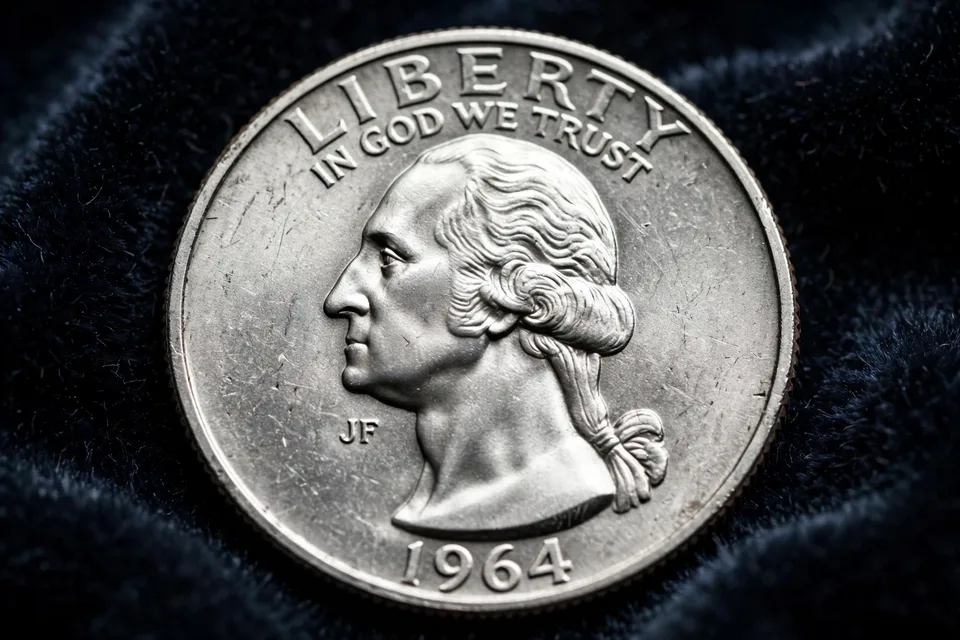
Some varieties shout. The 1937-D doubled die Washington quarter whispers — and that is exactly why collectors miss it. The doubling is on the obverse, in the motto IN GOD WE TRUST and in LIBERTY, where the letters carry a distinct second image, shifted just enough to see under a loupe. It is a doubled die, not damage and not a trick of the light, and it turns an ordinary Denver quarter into a recognised variety.
A doubled die happens at the hub, before the coin is ever struck: the die itself carries a doubled image, and every coin it strikes carries the doubling. That is what separates it from machine doubling, which happens at the strike and adds no collector value. This page explains where the doubling shows, how to tell the two apart, and why the variety deserves a professional opinion.
Where the doubling shows
Turn the coin over to the obverse and look at the motto first. On the 1937-D doubled die, the letters of IN GOD WE TRUST show a clear second image, most visible on the serifs and the uprights of the letters. Then look at LIBERTY, along the rim: the letters there carry the same doubled outline, and the date below can show a hint of it as well. The doubling is consistent across the obverse inscriptions, because it is in the die, not on the coin.
Use a loupe and a single light, and move the coin slowly. Doubling that is real shows as a raised second image with the same rounded profile as the first letter; it does not shift as the light moves. Photograph the motto in good light and compare it with a known example of the variety. If the doubling is there, it is there in the same places every time, and a professional opinion will confirm it.
Doubled die against machine doubling
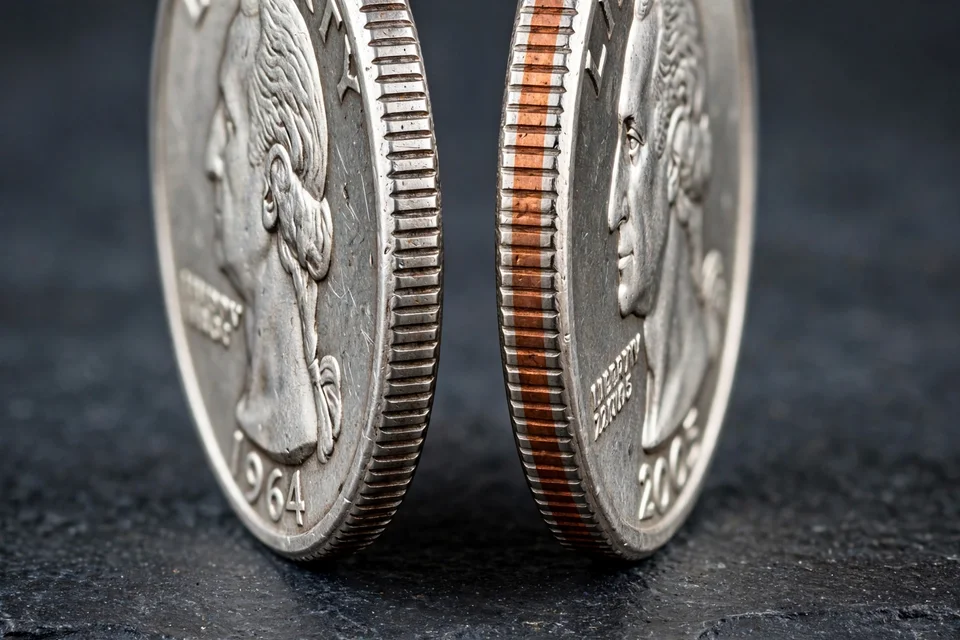
The distinction matters more than the variety itself. A true doubled die is hub doubling: the die was impressed twice by the hub at slightly different alignments, so the die carries two images and every coin struck from it shows them. Machine doubling happens later, at the strike, when the die bounces or shifts as it hits the planchet: it leaves a flat, shelf-like second image that looks scraped rather than raised.
The test is the profile. On a doubled die, the second image is raised and rounded, with the same shape as the first. On machine doubling, the second image is flat and shelf-like, with a sharp step down from the letter. Machine doubling is common and adds no collector value; a doubled die is a recognised variety. If you cannot tell which one you are looking at, that is exactly the moment for a professional opinion.
The mint mark and the date
The D sits on the reverse, below the eagle, just above the R in QUARTER, as on every Washington quarter of this era. It marks the coin as a Denver product, and it is the first thing to check after the doubling: a doubled die obverse without the D is a different coin, and the 1937-D doubled die is a Denver variety. Date, then mint mark, then the doubling — in that order, every time.
The regular 1937-D is a common Denver date, which is what makes the variety so easy to miss. Thousands of ordinary 1937-D quarters pass through hands without anyone looking at the motto, and the doubled die hides among them. That is the variety collector’s edge: the coin is found by looking, not by luck, and the looking costs nothing but attention.
What our guide shows for the 1937-D doubled die
Our value guide has not yet researched grade-by-grade figures for this variety, and the mintage is not yet established in our catalog, so both are shown as “—” here rather than guessed. The variety is the point of this coin, and the variety is documented: a doubled-die obverse, struck at Denver in 1937.
| Grade | Estimated value |
|---|---|
| Good (G-4) | — |
| Fine (F-12) | — |
| Extremely Fine (XF-40) | — |
| About Uncirculated (AU-50) | — |
| Mint State 60 (MS-60) | — |
| Mint State 65 (MS-65) | — |
Guide values reviewed November 5, 2026 — figures update live from our Worker.
What is documented is the shape of the market. Doubled dies are collected as varieties, and the 1937-D is a recognised one in the Washington series. Worn examples with visible doubling are the ones collectors encounter most often, and uncirculated examples with sharp doubling are genuinely scarce. The doubling is the coin’s identity, and everything else follows from it.
The silver underneath
Every Washington quarter from 1932 to 1964 is 90% silver, struck on a 6.25-gram planchet, 24.3 millimetres across, with a reeded edge and about 0.18 troy ounces of pure silver. That metal gives every genuine example a floor: $9.42. Silver moves daily, so the floor moves with it, but the floor is real — no genuine 1937-D is worth less than its metal.
Metal floor updates live from our Worker — last updated November 7, 2026.
Use the weight as a quick test. A genuine coin weighs 6.25 grams on a pocket scale. A light coin, a coin with a soft or uneven edge, or a coin whose surfaces look cast rather than struck should be checked by a professional before any decision is made about it.
Handling a variety coin
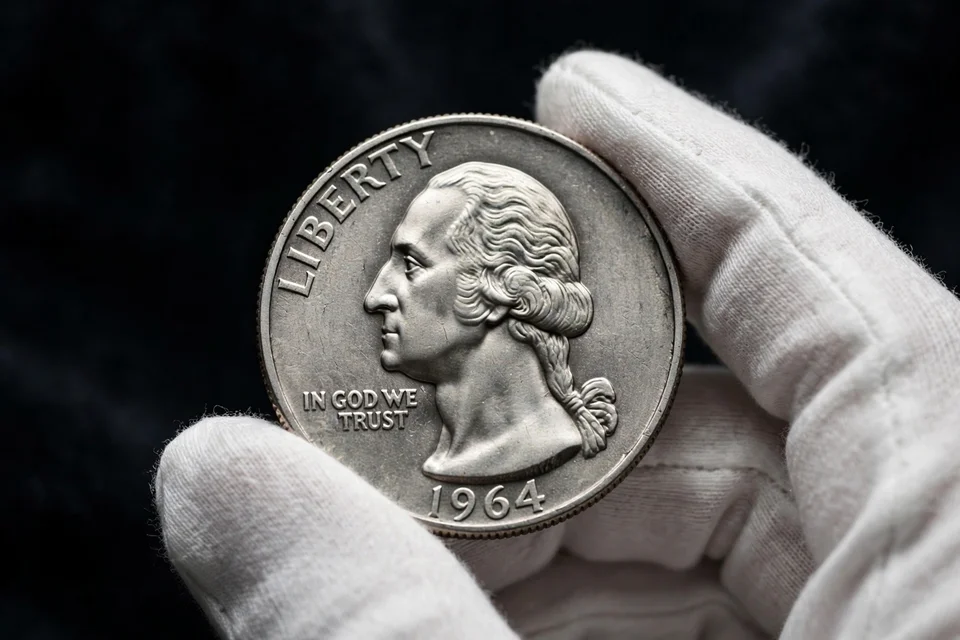
Do not clean it. A variety coin that has survived since 1937 has earned its surfaces, and cleaning strips them away permanently. Handle it by the edges, store it in an acid-free holder, and keep it away from humidity and household chemicals. If the coin is raw, photograph the motto and LIBERTY in good light before sending it anywhere.
Then get the variety confirmed. A professional opinion on doubled die against machine doubling is worth having, because the distinction is the coin’s identity and everything else follows from it. Certification is the standard for a recognised variety like this one.
Latest reported results for this coin
Checking for newly reported results…
Your questions, answered
What is the 1937-D doubled die Washington quarter?
It is a variety of the 1937-D quarter in which the obverse die itself carries a doubled image, so the motto IN GOD WE TRUST and LIBERTY show a distinct second image on every coin struck from that die.
Where does the doubling show on a 1937-D doubled die?
On the obverse inscriptions: the letters of IN GOD WE TRUST show a raised second image on their serifs and uprights, and LIBERTY along the rim carries the same doubled outline.
How do I tell a doubled die from machine doubling?
A doubled die shows a raised, rounded second image with the same profile as the first letter. Machine doubling leaves a flat, shelf-like step that looks scraped, and it adds no collector value.
Is the 1937-D doubled die Washington quarter silver?
Yes. Every Washington quarter from 1932 to 1964 is 90% silver, 6.25 grams, with about 0.18 troy ounces of pure silver. The live metal floor for this coin is in the specs section above, and it moves with the silver market.
Should a 1937-D doubled die quarter be certified?
Yes. Certification settles doubled die against machine doubling, and the distinction is the coin's identity — a professional opinion protects it.
Check your 1937-D
Run the date and mint mark through the free Coin Value Checker for an instant estimate, or get a Grade-or-Not verdict on whether certification is worthwhile. The wider quarter guide is here: Rare Quarters in Your Change Worth $207,400+. The first-year keys are the 1932-D Washington Quarter and the 1932-S Washington Quarter.
A whisper of a second image in the motto, a die impressed twice, and a variety that hides among ordinary coins — the 1937-D doubled die teaches collectors that the motto deserves a loupe, because the die's mistakes are the variety hunter's reward.
This guide is for education — learn the coin first, and get a professional opinion before buying or selling.