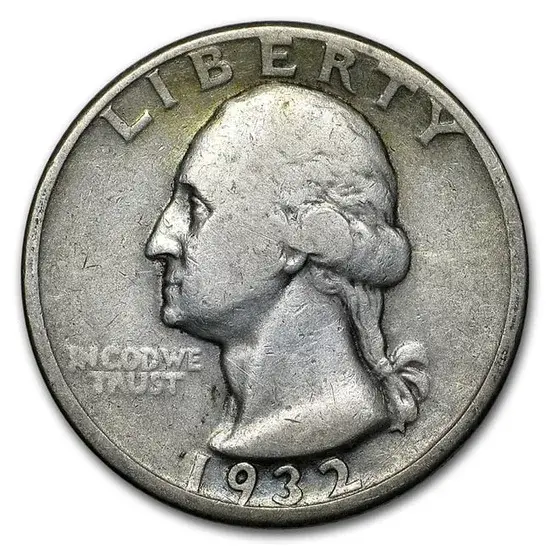
1940-D Washington Quarter: Pre-War Denver Silver
Coin Encyclopedia · 8 min read · Published November 7, 2026
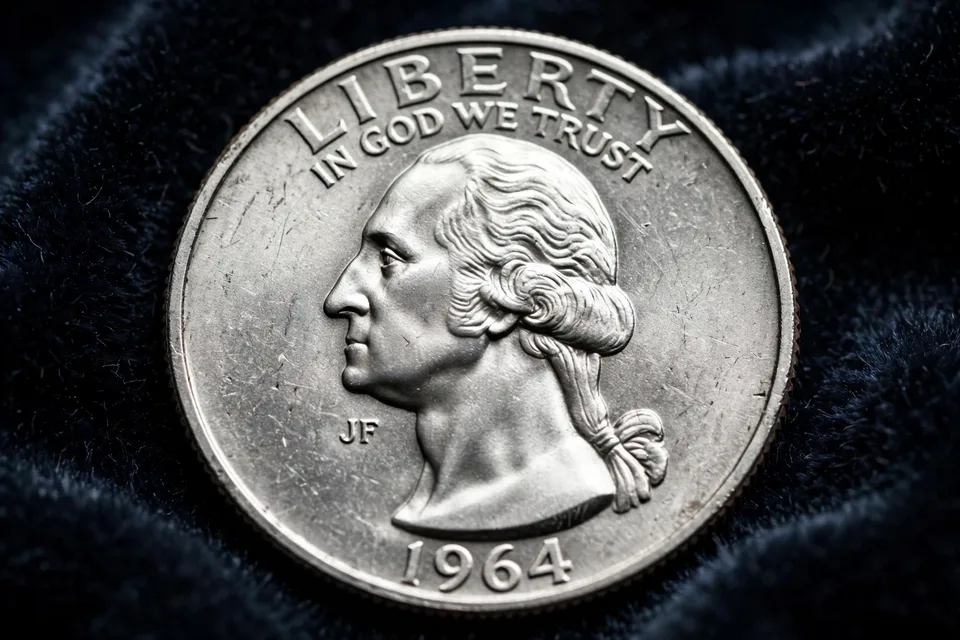
The 1940-D Washington quarter is a better Denver date from the last full year before America entered the war. Denver’s output that year was modest beside Philadelphia’s, and the coins circulated hard in the Mountain West before the war economy changed everything about how coins were made and used. In worn condition it looks like any other quarter; in high grade it is a scarce coin.
Better dates are where most collections are actually built, and the 1940-D is one of the Denver dates collectors chase in Mint State. This page explains the mintage gap, the mint mark, and how to judge a coin that looks common until it is graded.
Denver before the war
In 1940 the Washington quarter was eight years old, an established design struck in large numbers at Philadelphia and in smaller numbers at Denver. The country was not yet at war, but the economy was gearing up, and the demand for coinage was rising. Denver’s output that year was a fraction of Philadelphia’s, and the gap is the whole reason the 1940-D is a better date rather than a common one.
The coins went into circulation in the Mountain West, where they wore the way working quarters wear: in tills, cash registers, and pockets, changing hands hundreds of times a year. Few were set aside, because in 1940 nobody was collecting Washington quarters by date and mint mark in any numbers. The survivors in high grade are the exception, not the rule, and the war years that followed only thinned them further.
Where the D sits
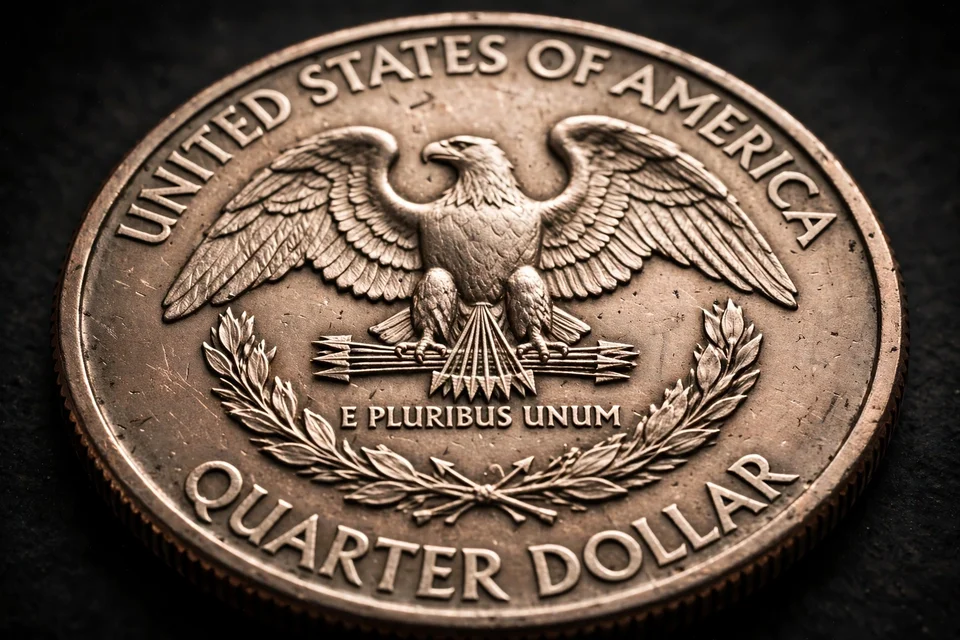
The mint mark on a Washington quarter of this era is on the reverse, below the eagle, just above the R in QUARTER. On the 1940-D it is a small D, and it is the difference between a common 1940 quarter and a better date. Check the reverse before anything else, and check it under a loupe: a genuine D is crisp, correctly positioned, and struck at the same depth as the rest of the design.
Altered mint marks are less of a danger on a better date than on a key date, because the gap is smaller — but they still happen, and a Philadelphia 1940 with an added D is the classic trap. Look for tool marks around the letter, a letter that sits too high or too shallow, and metal flow that does not match the rest of the reverse. Any doubt is a reason for a professional opinion.
Why high grade is the story
In worn condition, the 1940-D is a modest coin: a better date, but not a dramatic one. In Mint State, it is a different story. The coins circulated hard, and the uncirculated survivors are few — and of those, many are softly struck or marked from bag storage. A sharply struck, lustrous 1940-D in Mint State is a scarce coin, and the premium sits on the grade rather than on the date alone.
Judge the coin by its lustre and its strike. Original mint lustre shows as a soft, cartwheel glow that moves across the surface as the coin turns under a single light. A dipped or cleaned coin looks bright and flat, with no movement. On the strike, check Washington’s hair and the eagle’s breast feathers: sharp detail in both places marks a well-struck coin, and a well-struck Mint State 1940-D is the coin collectors want.
What our guide shows for the 1940-D
Our value guide has not yet researched grade-by-grade figures for this date, and the mintage is not yet established in our catalog, so both are shown as “—” here rather than guessed. The better-date status is documented: Denver’s output that year was far smaller than Philadelphia’s, and the coins circulated hard in the West.
| Grade | Estimated value |
|---|---|
| Good (G-4) | — |
| Fine (F-12) | — |
| Extremely Fine (XF-40) | — |
| About Uncirculated (AU-50) | — |
| Mint State 60 (MS-60) | — |
| Mint State 65 (MS-65) | — |
Guide values reviewed November 5, 2026 — figures update live from our Worker.
What can be said with confidence is where the premium sits. On the 1940-D, it sits on condition: worn examples are modest, while sharply struck Mint State examples are scarce and sought after. A collector who finds a lustrous, well-struck 1940-D has found the coin that matters, whatever the grade table says today.
The silver underneath
Every Washington quarter from 1932 to 1964 is 90% silver, struck on a 6.25-gram planchet, 24.3 millimetres across, with a reeded edge and about 0.18 troy ounces of pure silver. That metal gives every genuine example a floor: $9.42. Silver moves daily, so the floor moves with it, but the floor is real — no genuine 1940-D is worth less than its metal.
Metal floor updates live from our Worker — last updated November 7, 2026.
Use the weight as a quick test. A genuine coin weighs 6.25 grams on a pocket scale. A light coin, a coin with a soft or uneven edge, or a coin whose surfaces look cast rather than struck should be checked by a professional before any decision is made about it.
Handling a better date
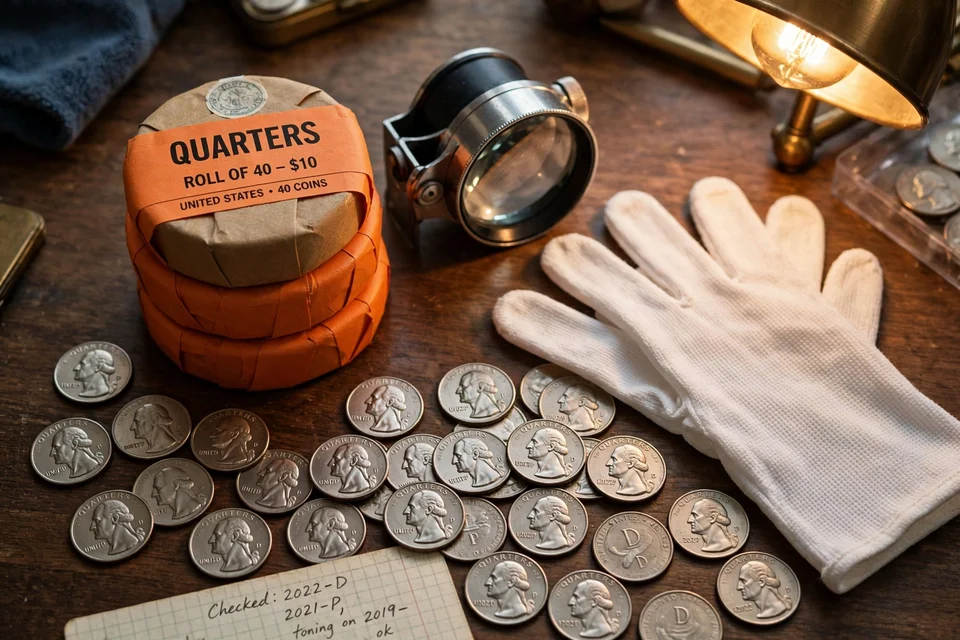
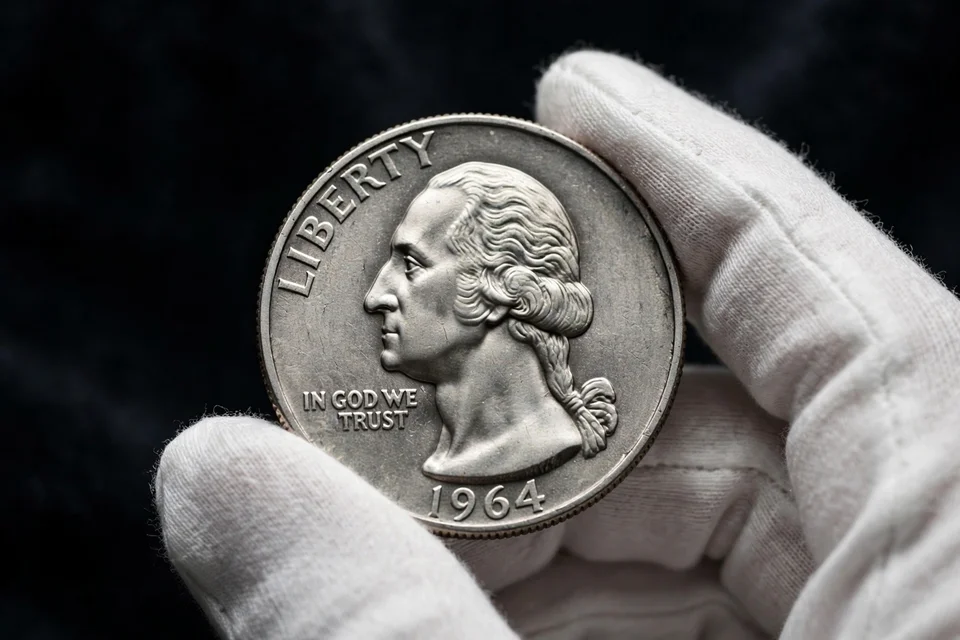
Do not clean it. Cleaning strips away original surfaces and lowers collector value, and the damage cannot be undone. Store the coin in an acid-free flip or holder, handle it by the edges, and keep it away from humidity. A better date deserves better-date handling, even when it is worn.
If the coin looks uncirculated — full lustre, sharp strike, no wear on the high points — get a professional opinion. Certification settles the grade, and on a better date the grade is where the premium lives.
Latest reported results for this coin
Checking for newly reported results…
Your questions, answered
How many 1940-D Washington quarters were struck?
The mintage is not yet established in our catalog, so it is shown as a dash rather than guessed. What is documented is that Denver's output that year was far smaller than Philadelphia's, which is why the 1940-D is a better date.
Where is the mint mark on a 1940-D Washington quarter?
The D is on the reverse, below the eagle just above the R in QUARTER. It separates the better Denver date from the common Philadelphia 1940 quarter.
What makes a 1940-D Washington quarter valuable?
Condition. Worn examples are modest, while sharply struck Mint State examples with full original lustre are scarce — the premium on this date sits on the grade, not the date alone.
Is the 1940-D Washington quarter silver?
Yes. Every Washington quarter from 1932 to 1964 is 90% silver, 6.25 grams, with about 0.18 troy ounces of pure silver. The live metal floor for this coin is in the specs section above, and it moves with the silver market.
Should a 1940-D Washington quarter be certified?
If it looks uncirculated, yes. Certification settles the grade, and on a better date the grade is where the premium lives. Worn examples do not usually need it.
Check your 1940-D
Run the date and mint mark through the free Coin Value Checker for an instant estimate, or get a Grade-or-Not verdict on whether certification is worthwhile. The wider quarter guide is here: Rare Quarters in Your Change Worth $207,400+. The first-year keys are the 1932-D Washington Quarter and the 1932-S Washington Quarter.
A modest Denver run in the last full year before the war, and a premium that lives in the grade — the 1940-D teaches collectors that a better date is found by looking at the coin, not just the mintage.
This guide is for education — learn the coin first, and get a professional opinion before buying or selling.