1950-S Washington Quarter: The S Punched Over a D
Coin Encyclopedia · 8 min read · Published November 7, 2026
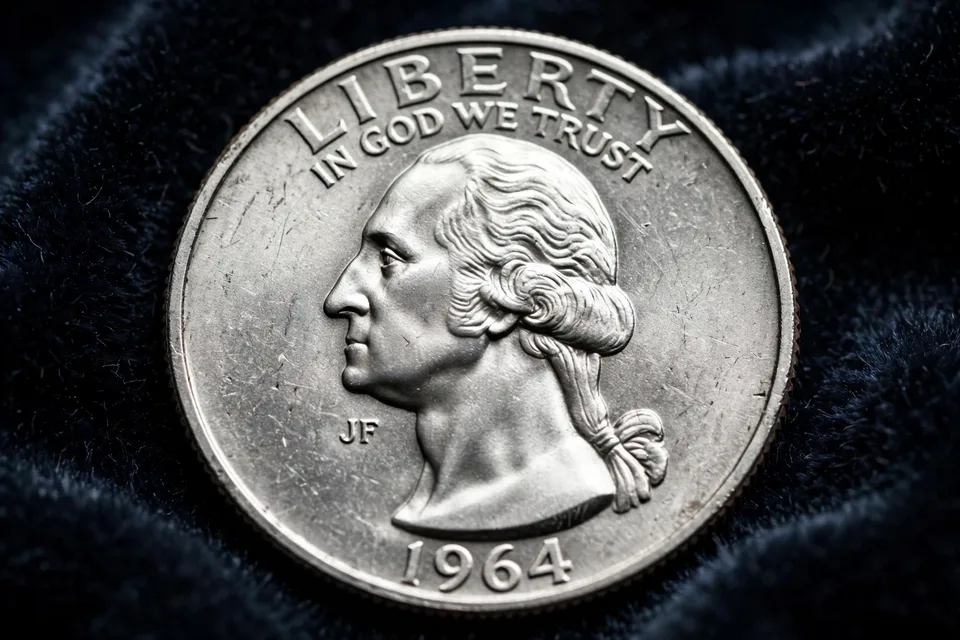
The 1950-S/D Washington quarter is the mirror image of a famous variety: an S punched over a D, on a die that travelled from Denver to San Francisco. The old D still shows through inside the S, a ghost letter along its edge, and the result is a coin that carries two mint marks at once. It is less famous than its Denver brother, the 1950-D/S, and it is the one collectors are more likely to miss.
An overmintmark is a die’s travel story, written in a single letter. The S over D happened the same way the D over S did, only in the other direction, and the two varieties are collected as a pair. This page explains where the D shows, how to tell the two varieties apart, and why the quieter of the pair deserves the same careful look.
What an overmintmark is
A mint mark is punched into the die by hand, after the die is made. When a die prepared for Denver was sent to San Francisco instead, the San Francisco mint punched its S over the D that was already there. The D was not removed first, and it could not be: punching a new letter over an old one leaves the old letter visible underneath. Every coin struck from that die carries both letters.
The variety is a variety of the 1950-S issue, not a separate mintage. The regular 1950-S was a large-mintage coin, and only a small share of the dies carried the overmintmark. That is the whole appeal of the variety — it is a needle in a large and ordinary haystack, and finding it takes a loupe rather than luck.
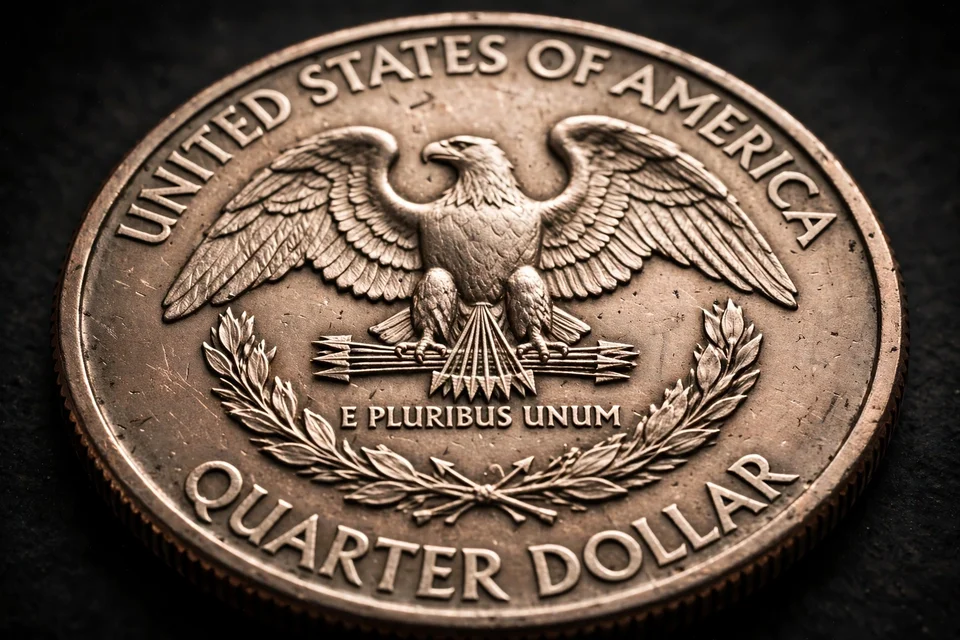
Where the D shows
Hold the coin under a loupe and study the S on the reverse, below the eagle. On a genuine 1950-S/D, the upright and curve of the D show inside the S, and a second outline runs along the S’s edge, most visible at the upper right and the lower left. The D is subtle on worn coins, and it is clearest where the S’s metal is thinnest — but it is there in the same place every time.
Photograph the mint mark in good light and compare it with a known example of the variety. Do not decide from a blurry photo, and do not rely on memory alone: a regular 1950-S with a battered mint mark can fool a hopeful eye. If the D is there, it is there in the same place every time, and a professional opinion will confirm it.
S over D, and D over S
The 1950-S/D has a mirror image: the 1950-D/S, a D punched over an S on a die that went the other way. The two varieties are often confused, and the confusion is understandable — both are 1950 overmintmarks, and both hide one letter inside another. The difference is which letter is on top: on the San Francisco coin the S is uppermost, with the D underneath; on the Denver coin the D is uppermost, with the S underneath.
Check the top letter first. If the letter that reads clearly is an S, and the ghost underneath is a D, the coin is a 1950-S/D. If the letter that reads clearly is a D, and the ghost underneath is an S, the coin is the other variety. The mint mark on the reverse is the whole identification, and it deserves a loupe, good light, and patience.
What our guide shows for the 1950-S/D
Our value guide has not yet researched grade-by-grade figures for this variety, and the mintage is not yet established in our catalog, so both are shown as “—” here rather than guessed. The variety is the point of this coin, and the variety is documented: an S punched over a D, struck at San Francisco in 1950.
| Grade | Estimated value |
|---|---|
| Good (G-4) | — |
| Fine (F-12) | — |
| Extremely Fine (XF-40) | — |
| About Uncirculated (AU-50) | — |
| Mint State 60 (MS-60) | — |
| Mint State 65 (MS-65) | — |
Guide values reviewed November 5, 2026 — figures update live from our Worker.
What is documented is the shape of the market. Overmintmarks are collected as varieties, and the 1950-S/D is the quieter half of the famous 1950 pair. Worn examples with a visible D are the ones collectors encounter most often, and uncirculated examples with a sharp overmintmark are genuinely scarce. The D is the coin’s identity, and everything else follows from it.
The silver underneath
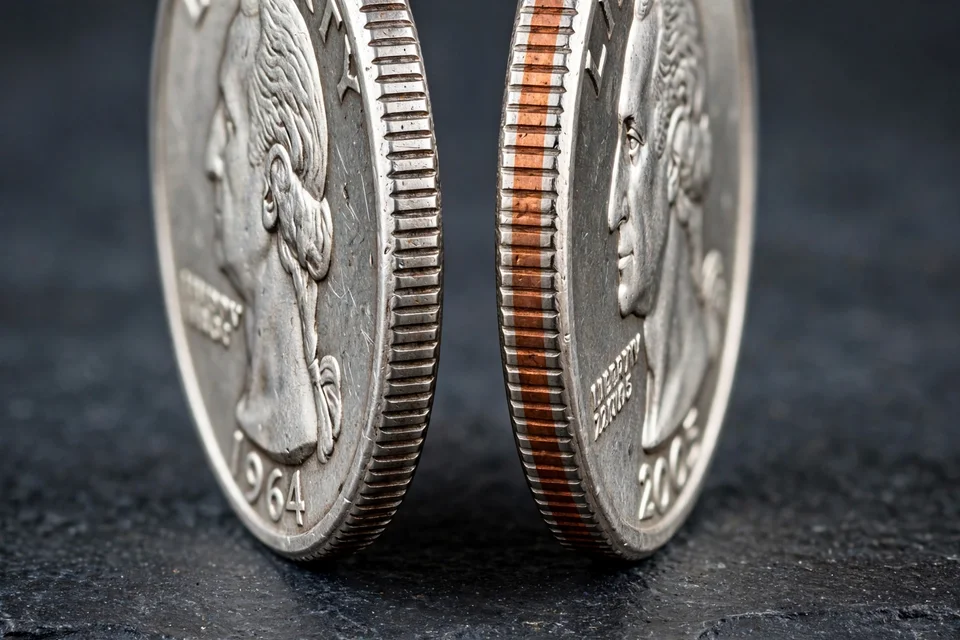
Every Washington quarter from 1932 to 1964 is 90% silver, struck on a 6.25-gram planchet, 24.3 millimetres across, with a reeded edge and about 0.18 troy ounces of pure silver. That metal gives every genuine example a floor: $9.42. Silver moves daily, so the floor moves with it, but the floor is real — no genuine 1950-S/D is worth less than its metal.
Metal floor updates live from our Worker — last updated November 7, 2026.
Use the weight as a quick test. A genuine coin weighs 6.25 grams on a pocket scale. A light coin, a coin with a soft or uneven edge, or a coin whose surfaces look cast rather than struck should be checked by a professional before any decision is made about it.
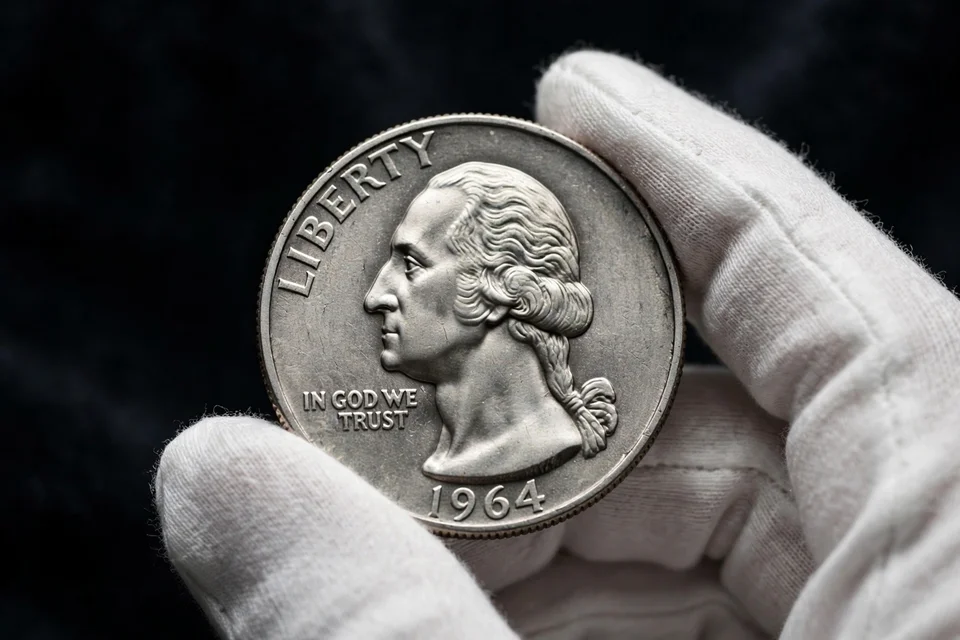
Authentication before anything else
For a variety coin, authentication is not a luxury. It is the step that protects everything else: the variety, the grade, and the worth. A certified example carries a professional opinion that travels with the coin, and for an overmintmark that opinion is part of what collectors are looking for.
If your coin is raw, handle it by the edges, keep it in an acid-free holder, and do not clean it. Photograph the mint mark in good light before sending it anywhere, and keep a record of where it came from. A variety coin with a clear history and a confirmed D is a stronger coin.
Latest reported results for this coin
Checking for newly reported results…
Your questions, answered
What is the 1950-S/D Washington quarter?
It is an overmintmark variety of the 1950-S quarter: an S was punched over a D on a die originally prepared for Denver, so the old D still shows through inside the S.
How do I see the D on a 1950-S/D quarter?
Under a loupe, look inside the S on the reverse: the upright and curve of the D show within the S, with a second outline along its edge, most visible at the upper right and lower left.
What is the difference between the 1950-S/D and the 1950-D/S?
The top letter: on the 1950-S/D the S is uppermost with the D underneath, while on the 1950-D/S the D is uppermost with the S underneath. They are mirror-image varieties of the same year.
Is the 1950-S/D Washington quarter silver?
Yes. Every Washington quarter from 1932 to 1964 is 90% silver, 6.25 grams, with about 0.18 troy ounces of pure silver. The live metal floor for this coin is in the specs section above, and it moves with the silver market.
Should a 1950-S/D quarter be certified?
Yes. Certification settles the variety, guards against wishful reading of a battered mint mark, and is the accepted standard for a classic overmintmark like this one.
Check your 1950-S
Run the date and mint mark through the free Coin Value Checker for an instant estimate, or get a Grade-or-Not verdict on whether certification is worthwhile. The wider quarter guide is here: Rare Quarters in Your Change Worth $207,400+. The mirror-image variety is the 1950-D/S Washington Quarter, and the 1937-D Washington Quarter is the doubled die of the series.
Two mint marks, one letter, and a die that travelled between mints — the 1950-S/D is proof that the quieter half of a famous pair still rewards the collector who looks at the reverse with a loupe.
This guide is for education — learn the coin first, and get a professional opinion before buying or selling.