Mercury Dime Values: 1916-D, Full Bands & $207,000+ Records
Dimes · 10 min read · Published November 5, 2026 · Updated November 5, 2026
How much is a Mercury dime worth? Most are worth $4+ in silver alone, because every one struck from 1916 to 1945 contains 90% silver. A common date trades for $4+ to $6+ worn and $20+ to $60+ in Mint State, and the rare dates climb steeply: the 1916-D starts at $1,000+ even worn, the 1942/1 overdate at $300+, and the finest 1916-D in MS67 Full Bands sold for $207,000.
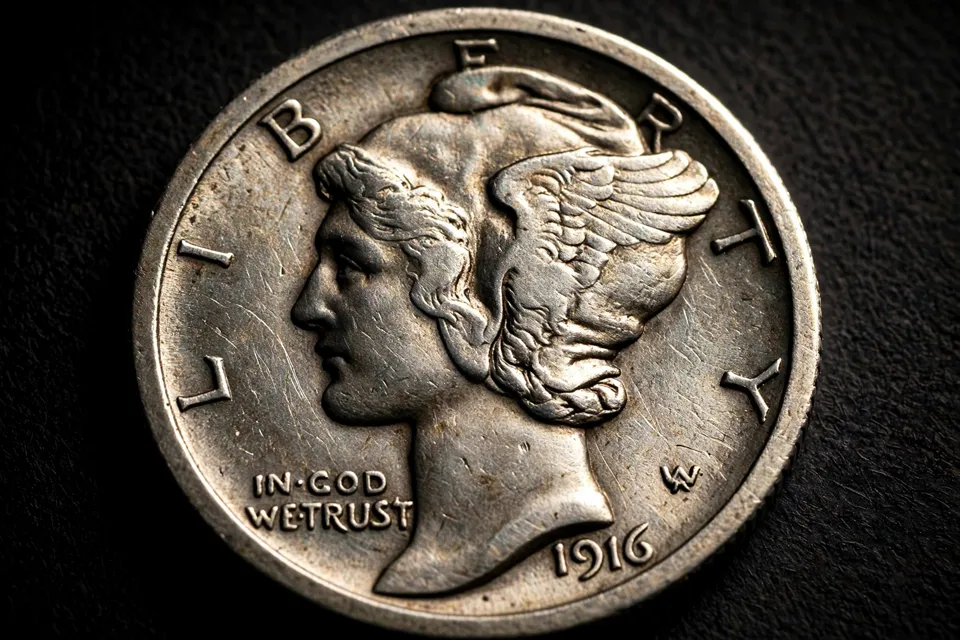
The coin is officially the Winged Liberty Head dime, designed by Adolph A. Weinman. Collectors call it a Mercury dime because Liberty's winged cap recalls the helmet of the Roman god Mercury, but the portrait is Liberty. The Mint struck it for thirty years before the Roosevelt dime replaced it in 1946.
Why every Mercury dime is worth more than ten cents
A Mercury dime weighs 2.5 grams and carries 0.07234 troy ounces of pure silver. Multiply that by the current silver price and you get the melt value, the floor under every example. With silver near $52.71 an ounce in November 2026, that floor is about $3.80, more than thirty-eight times face value.
Silver moves every day, so the floor moves with it. Check the spot price on the day you sell, and treat anything below the melt figure as a bad offer.
Melt is only the starting point. Three things decide how high a Mercury dime climbs above it: the date and mint mark, the grade, and whether the reverse bands are fully struck.
Mercury dime value by grade
Grade is the single biggest lever on a common-date Mercury dime. A worn coin is worth its silver, an uncirculated coin with full mint lustre five to fifteen times as much, and a sharply struck example with Full Bands more again.
| Grade | Typical value, common date |
|---|---|
| Good (G-4) | $4+ |
| Fine (F-12) | $4+ |
| Extremely Fine (XF-40) | $6+ |
| About Uncirculated (AU-50) | $10+ |
| Mint State 63 (MS63) | $20+ |
| Mint State 65 (MS65) | $60+ |
| Mint State 65 Full Bands (MS65 FB) | $150+ |
Two warnings belong with this table. First, cleaning destroys value: a cleaned Mercury dime trades at or near melt no matter how sharp it looks, so never dip, polish, or scrub one. Second, most Mercury dimes found in circulation or inherited collections sit in the Good to Fine range, which means most of them are $4+ to $6+ coins.
The key dates that change everything
Five dates carry the series. Everything else is a silver coin with a small premium.
| Key date | Mintage | Good | MS65 / MS65 FB |
|---|---|---|---|
| 1916-D | 264,000 | $1,000+ | $52,500+ |
| 1921 | 1,230,000 | $50+ | $400+ |
| 1921-D | 1,080,000 | $75+ | $1,500+ |
| 1942/1 overdate | part of 1942 mintage | $300+ | $52,000+ |
| 1926-S | 1,520,000 | $10+ | $8,000+ |
The 1916-D is the king of the series: Denver struck only 264,000 dimes late in the first year, and most went straight into circulation. A worn 1916-D still brings $1,000+, a Fine example $2,800+, and a Mint State example with Full Bands $52,500+. The series record is a 1916-D graded MS67 Full Bands, sold for $207,000.
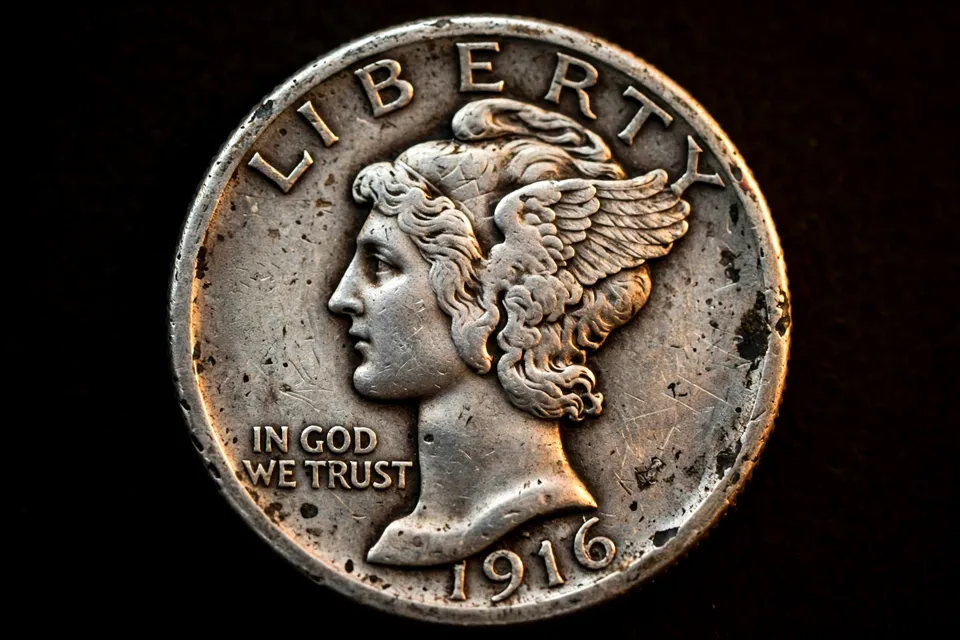
The 1921 and 1921-D are the low-mintage dates of the early 1920s, struck when the Mint cut production sharply: a 1921 is $50+ in Good condition, the Denver issue $75+ worn and $1,500+ in MS65. The 1926-S is a semi-key date at $10+ worn but $8,000+ in MS65 Full Bands.
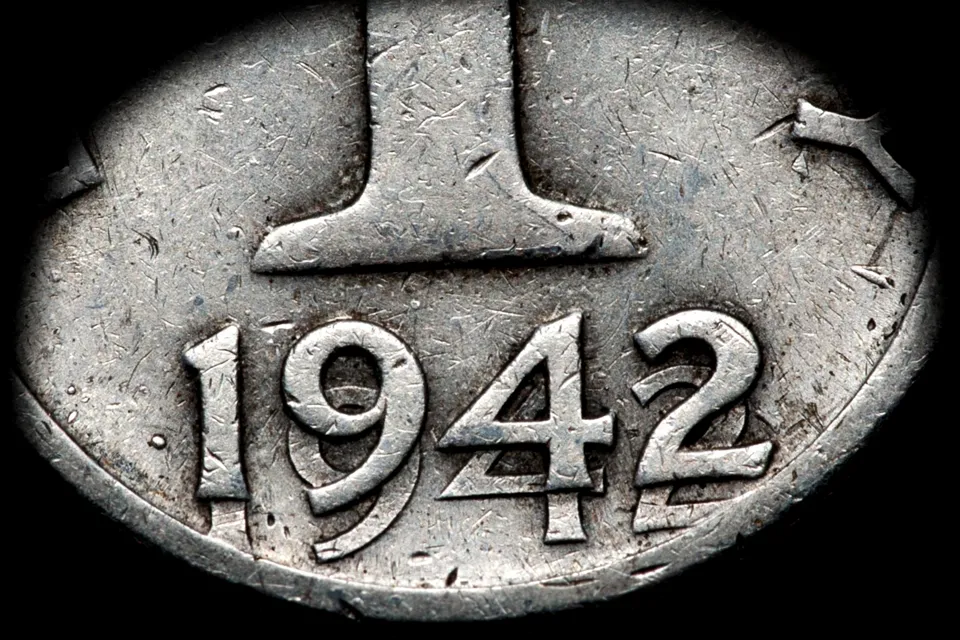
The 1942/1 overdate is the series' most famous variety: the Mint punched a 2 over a 1, and the underlying 1 shows clearly under magnification. A worn 1942/1 trades for $300+ to $430+, and the finest known, graded MS66 Full Bands, sold for $120,000. The 1942/1-D is rarer, from $325+ worn to $27,500+ in top grade.
Also check the 1916 Philadelphia issue ($7+ worn, $275+ in MS65) and the 1919-D, 1919-S, and 1918-D ($15,000+ to $15,500+ in MS65 Full Bands).
Full Bands: the two words that double a Mint State dime
Turn a Mercury dime over and look at the fasces, the bundle of rods on the reverse. Three horizontal bands wrap the bundle. On most Mercury dimes those bands are softly struck and blend together, but on a sharply struck example the middle band splits cleanly into two distinct lines with a visible gap between them. That is Full Bands, and the grading services mark it FB.
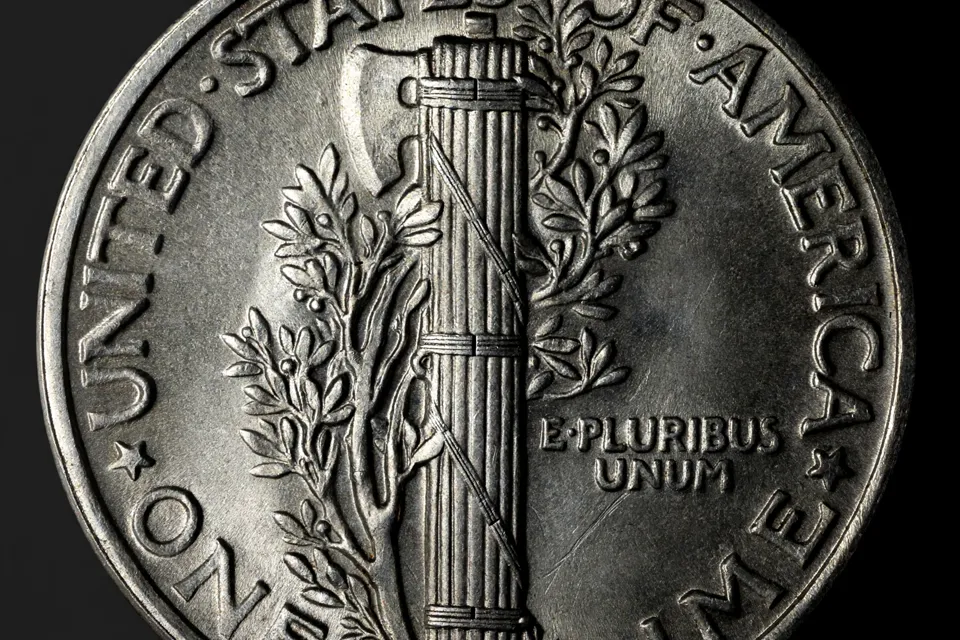
Full Bands only applies to Mint State coins, and it transforms their value: a common-date 1944 dime in MS65 is a $60+ coin without the designation and $150+ with it. On the key dates the gap is enormous: a 1916-D reaches $52,500+ with Full Bands.
To check, hold the coin under a good light with a 10x loupe and look at the centre of the reverse. You need a clean, unbroken split across the full width of the middle band. A partial split, a split that fades halfway across, or bands flattened by wear do not qualify. Weak strikes are common in this series, especially on San Francisco issues of the 1920s, so a flat band usually means a soft strike rather than wear — and it still costs the designation.
The 1945 Micro S and other varieties worth knowing
The 1945-S Micro S is the quiet variety most collectors miss: late in 1945 the San Francisco Mint used a smaller S punch on a minority of that year's dimes. In circulated grades it carries only a small premium, but in Mint State it is a $50+ to $500+ coin. Also look for the 1942/1-D overdate, repunched mint marks on several Denver and San Francisco dates, and doubled dies on the obverse lettering of a few issues, each lifting a $4+ silver dime into double or triple figures.
How to read the date and mint mark
The date sits on the obverse, below Liberty's portrait, and on heavily worn dimes it often fades first. A dateless Mercury dime is worth melt only, because its key-date status can no longer be proved. The mint mark sits on the reverse, low on the left beside the fasces: D for Denver, S for San Francisco, and no mint mark for Philadelphia.
That mint mark is the difference between a $4+ coin and a $1,000+ coin on the 1916-D, which is why the 1916-D is also the most faked key date in the series: a D is often engraved or glued onto a common 1916 Philadelphia dime. A genuine D sits in the correct position and shape, and the coin weighs exactly 2.5 grams. Never buy or sell a suspicious 1916-D raw: send it to PCGS or NGC for authentication first.
Fakes to watch for
Beyond the added-D 1916-D, watch for counterfeit 1942/1 overdates carved into normal 1942 dimes, and for copies of the 1916-D sold online. The tests are the same every time: weigh the coin at 2.5 grams, check the diameter at 17.9 millimetres, examine the mint mark and date under a loupe against a known genuine example, and check the edge for sharp, even reeding. A cast copy feels light and often shows tiny bubbles or seams under magnification.
What to do with a Mercury dime you found
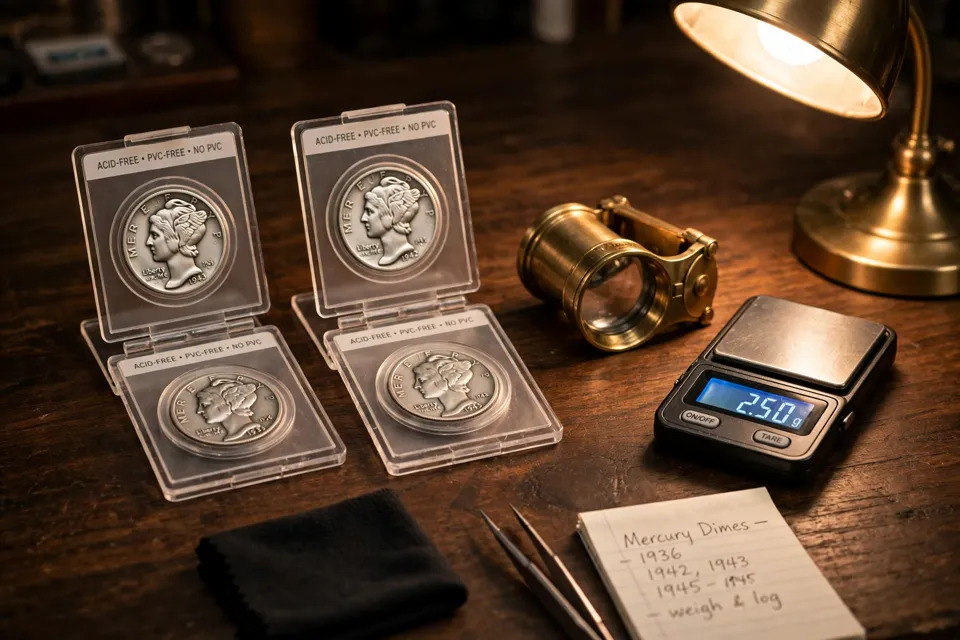
Do not clean it. Check the date and mint mark, weigh it, and run the melt calculation at the current price. Check the reverse bands for Full Bands and look for the 1942/1 overdate if the date is 1942. A 1916-D, 1921, 1921-D, 1926-S, or 1942/1 goes into an acid-free flip, handled by the edges, with a professional opinion before any sale. A Mint State coin with Full Bands is worth grading: certification is where the Full Bands premium is paid.
Frequently Asked Questions
How much is a Mercury dime worth today?
Most Mercury dimes are worth $4+ in silver alone, because every one contains 0.07234 troy ounces of silver. Common dates trade for $4+ to $6+ worn and $20+ to $60+ in Mint State, while the key dates climb from $50+ to $1,000+ worn, with the finest 1916-D selling for $207,000.
What is a 1916-D Mercury dime worth?
A worn 1916-D is worth $1,000+ in Good condition and $2,800+ in Fine, while a Mint State example with Full Bands reaches $52,500+. The series record is a 1916-D graded MS67 Full Bands that sold for $207,000. Only 264,000 were struck, so always authenticate one first.
How do I tell if my Mercury dime is silver?
Every Mercury dime dated 1916 to 1945 is 90% silver, so the date alone proves it. The silver content is 0.07234 troy ounces, worth about $3.80 at the November 2026 silver price near $52.71 an ounce.
What does Full Bands mean on a Mercury dime?
Full Bands means the middle horizontal band of the fasces on the reverse is fully split into two clean lines across its whole width. The designation applies only to Mint State coins: a common-date MS65 rises from $60+ to $150+, and on key dates the gap runs into thousands.
Where is the mint mark on a Mercury dime?
The mint mark is on the reverse, low on the left beside the fasces near the rim: D for Denver, S for San Francisco, and no mint mark for Philadelphia. It separates a $4+ common 1916 dime from the $1,000+ 1916-D key date.
Is a 1942/1 Mercury dime valuable?
Yes. The 1942/1 overdate, where a 2 was punched over a 1, is worth $300+ worn and $52,000+ in MS65 Full Bands, with the finest known selling for $120,000. The 1942/1-D is rarer still, from $325+ worn to $27,500+ in top grade.
A Mercury dime costs nothing to check, and the difference between a $4+ silver coin and a $1,000+ key date is one look at the date, the mint mark, and the bands. Before you spend or sell any Mercury dime you are unsure about, run it through The Diggin Dave's free Coin Value Checker to confirm its value range, and try Grade-or-Not for a grade verdict on your best examples. An LED coin magnifier, a pocket digital scale, and a dime coin album are the only tools the checks in this guide need.
As an Amazon Associate, this site may earn from qualifying purchases.
Further Reading on the Mercury Dime
- Only 24 Made: The 1894-S Barber Dime's $1.25M Value — the 24-coin rarity that shares the dime series' greatest story, and the $1,250,550 record
- Barber Dime Price Guide by Date and Grade — the earlier silver dime series, from $4+ circulated to the $2,160,000+ 1894-S
- Roosevelt Dime Values From $3.56 to $506,250+ — the series that replaced the Mercury dime in 1946, from melt to the $506,250+ No-S proof