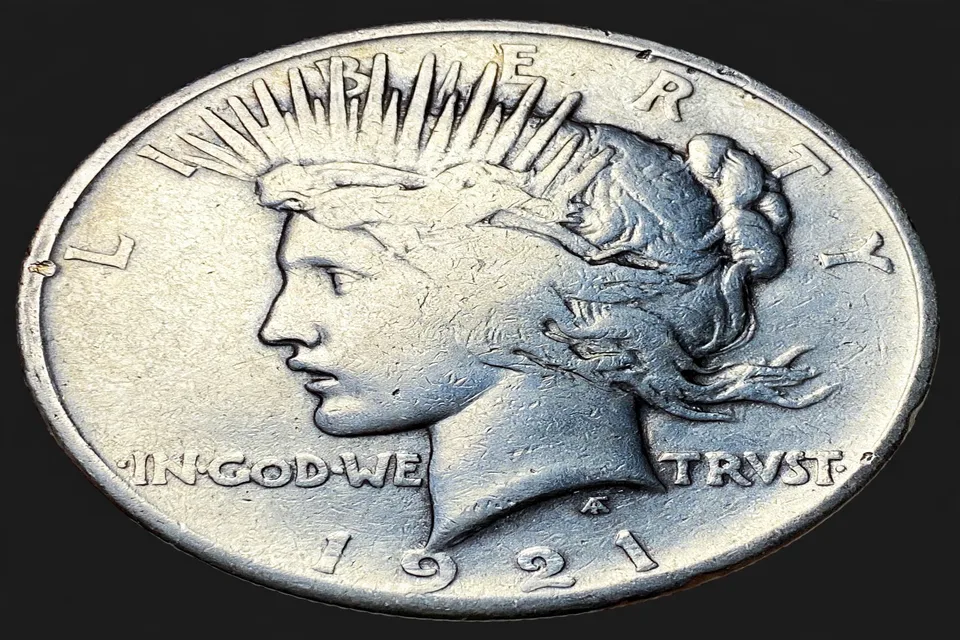
The 1851 Seated Liberty Dollar's 1,300 Mintage
Coin Encyclopedia · 9 min read · Published November 7, 2026
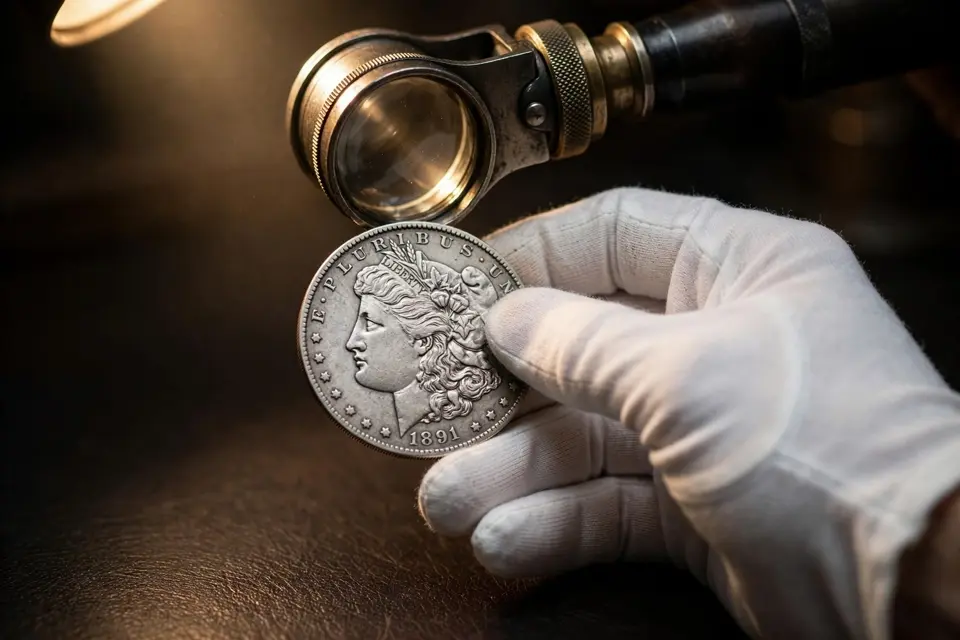
One thousand three hundred. The 1851 Seated Liberty dollar was struck in the smallest numbers of any regular-issue silver dollar of its era, and it is one of the rarest silver dollars ever made by the United States Mint. Philadelphia struck just 1,300 of them in 1851 — a number so small that most collectors will never hold one, and most dealers will never see one in a lifetime of shows. It is a coin that exists mostly as a story, a want-list entry, and a grail.
The reason is silver itself. In the early 1850s, the metal in a silver dollar was worth more than the dollar it represented, so silver dollars were melted and exported rather than spent — and the Mint struck fewer and fewer of them. The 1851 mintage of 1,300 is the proof: a silver dollar that cost more to make than it was worth, struck in numbers that barely register beside the millions of later years.
What we know, and what we do not
This is the honest part of the page, and it matters. Our November 2026 review holds no researched grade figures for the 1851 at any of the six grades — G-4, F-12, XF-40, AU-50, MS-60, and MS-65 are all dashes in the table below. That is not a statement that the coin is worthless; it is a statement that this guide has not yet researched figures it can stand behind for a coin this rare, and it will not invent them.
| Grade | Estimated collector value |
|---|---|
| G-4 | — |
| F-12 | — |
| XF-40 | — |
| AU-50 | — |
| MS-60 | — |
| MS-65 | — |
A dash (—) means our November 2026 review holds no researched figure for that grade yet — it is a gap in our data, not a zero. Figures are collector estimates, reviewed November 5, 2026.
What can be said safely is this: the floor under any genuine 1851 is its silver, and the rarity premium above that floor is enormous at every grade. A genuine 1851 in any condition is a major coin, and a mint-state example is one of the great rarities of American numismatics. For a current figure on a specific coin, a professional opinion is the right next step — not a guessed number on a page, and not the Coin Value Checker alone, because a coin this rare deserves a specialist.
Why so few were struck
The early 1850s were the years when silver left the country. The metal in a silver dollar was worth more than a dollar, so dollars were melted for their silver or shipped abroad, and the Mint saw little reason to strike more. The 1851 mintage of 1,300 is the smallest of the Seated Liberty dollar's early years, and it marks the moment when the silver dollar's output fell to almost nothing — the metal was worth more than the coin, and the Mint saw little reason to strike more.
For the collector, the practical consequence is simple: an 1851 Seated Liberty dollar is not a coin you find in a roll or a drawer. It is a coin you hunt for years, authenticate carefully, and keep for a lifetime.
The Seated Liberty design
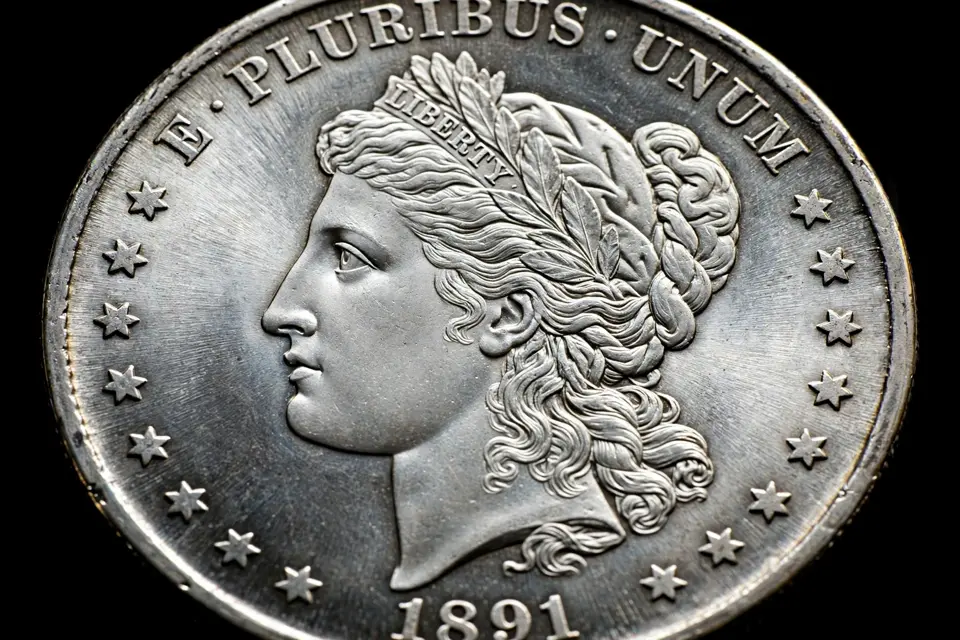
A Seated Liberty dollar is the same size and weight as the Morgans and Peace dollars that followed it: 26.73 grams, 38.1 millimetres across, 90% silver with 10% copper, and 0.7734 troy ounces of pure silver. Christian Gobrecht designed it: Liberty seated on a rock, holding a shield and a pole topped with a liberty cap, with thirteen stars around her; the reverse carries a heraldic eagle.
Metal floor: — — no melt figure is published for this date in our guide, so the floor shows as a dash rather than a guess. The live system leaves it blank until a figure is researched.
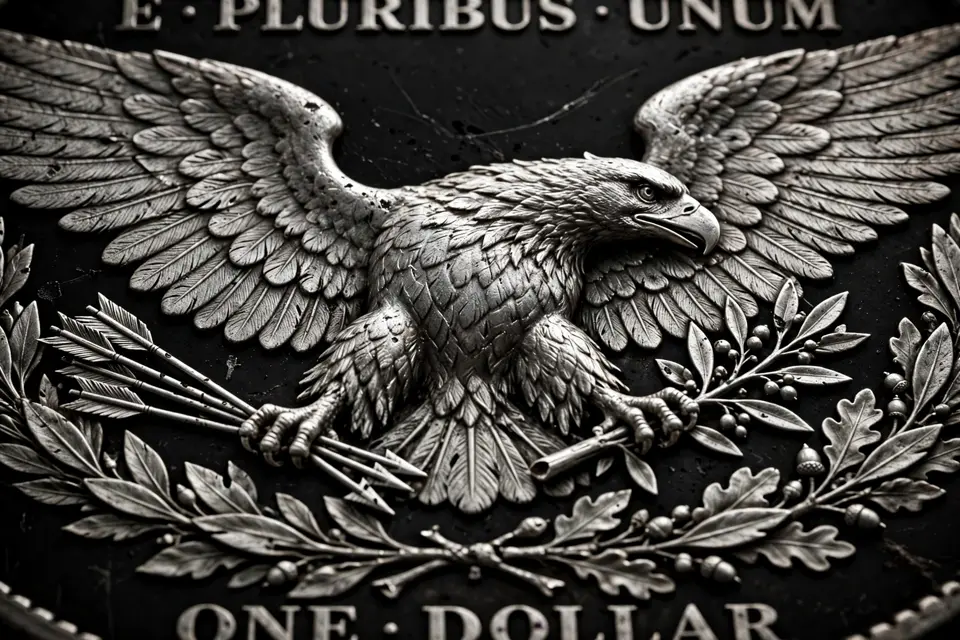
Christian Gobrecht's design had been striking silver dollars since 1840, and by 1851 it was a familiar sight — Liberty seated on a rock, shield in one hand, a pole with a liberty cap in the other, ringed by thirteen stars. The reverse is a heraldic eagle with outstretched wings. On a coin this rare, the design is the first thing to study and the last thing to forget.
Grading an 1851: authentication comes first
Seated Liberty dollars wear first on Liberty's knee, breast, and head, and on the eagle's wing tips and breast on the reverse. Most survivors spent long lives in circulation or in bank vaults, so original, uncleaned surfaces with soft grey toning are the norm, and a coin that looks bright white and dipped has usually lost some of its appeal to serious collectors. Because so few were struck in these years, authentication comes before grading: weight, diameter, and the sharpness of the stars and lettering are the first checks.
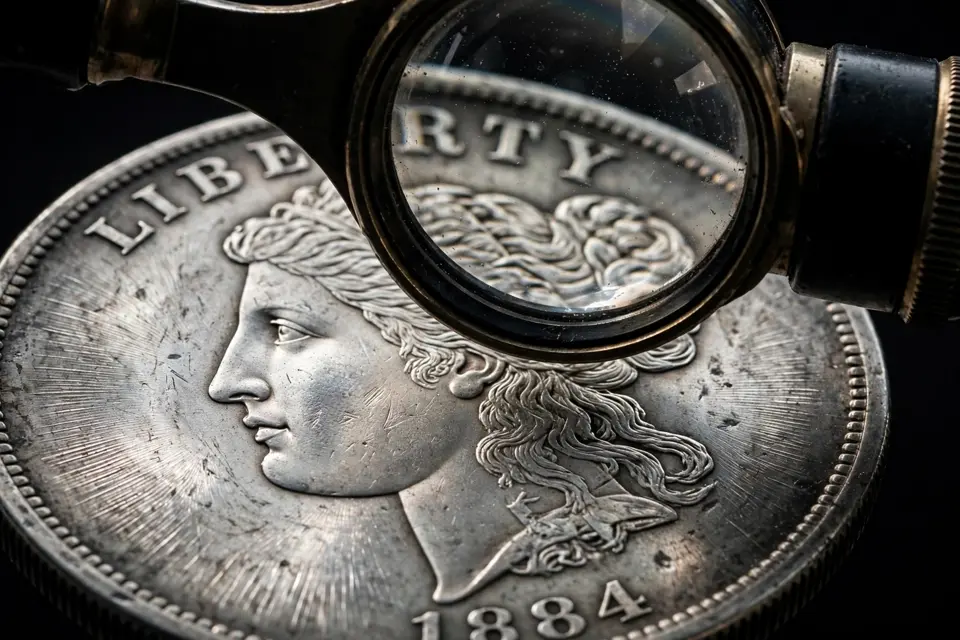
With a mintage this small, the more important question is usually not the grade but whether the coin is genuine at all. Check the weight at 26.73 grams and the diameter at 38.1 millimetres before anything else, then study the sharpness of the stars and lettering with a loupe. Most survivors spent long lives in circulation or in bank vaults, so original, uncleaned surfaces with soft grey toning are the norm, and a coin that looks bright white and dipped has usually lost some of its appeal to serious collectors.
Before you trust an 1851
Before you celebrate a find, run the three cheap tests. A genuine dollar weighs 26.73 grams and spans 38.1 millimetres — most fakes fail on weight alone. A magnet should not grab it, because silver is not magnetic. And a loupe should show sharp, confident lettering and stars; mushy, rounded details and a pitted surface are the fingerprints of a cast copy. None of these tests replaces professional authentication for a coin worth real money, but together they catch the great majority of fakes.
A coin this rare is faked more than most, and the fakes are often good. Weigh it first — 26.73 grams, no excuses — and measure the diameter at 38.1 millimetres. Hold a magnet to it: silver does not stick, and a coin that does is not what it claims to be. Under a loupe, genuine striking leaves crisp, even lettering and clean fields; a cast copy betrays itself with soft details, tiny pits, and a slightly greasy surface. For a coin this rare, certification is not optional — it is the whole point.
Latest reported results for this coin
Checking for newly reported results…
1851 Seated Liberty dollar questions, answered honestly
How much is an 1851 Seated Liberty dollar worth?
Our guide holds no researched grade figures for the 1851 yet — all six grades are shown as dashes rather than guesses. A genuine 1851 in any condition is a major coin, and a mint-state example is one of the great rarities of American numismatics. A professional opinion is the right next step for a current figure on a specific coin.
What is the mintage of the 1851 Seated Liberty dollar?
Philadelphia struck 1,300 Seated Liberty dollars in 1851 — one of the smallest mintages of any regular-issue United States silver dollar ever made.
Why were so few 1851 silver dollars struck?
Because the metal in a silver dollar was worth more than the dollar it represented. In the early 1850s, silver dollars were melted for their silver or shipped abroad, and the Mint struck fewer and fewer of them — the 1851 mintage of 1,300 is the proof.
How do I know my Seated Liberty dollar is an 1851?
Read the date on the obverse, below Liberty's seated figure. An 1851 Seated Liberty dollar carries no mint mark — it was struck at Philadelphia, the main mint. Check the date digits with a loupe: genuine digits are sharp and even, struck at the same depth as the rest of the design.
Is the 1851 Seated Liberty dollar the rarest silver dollar?
It is one of the rarest regular-issue silver dollars ever struck by the United States Mint, with just 1,300 made. The 1852, struck the following year in even smaller numbers, is rarer still.
Should I get my 1851 Seated Liberty dollar graded?
Yes — without exception. This is one of the rarest and most faked silver dollars in American numismatics, and certification is the only way to be sure of authenticity and grade. No 1851 should change hands uncertified.
Check your 1851 Seated Liberty
Run the date and mint mark through the free Coin Value Checker for an instant estimate, or get a Grade-or-Not verdict on whether your coin is worth certifying. For a related silver-dollar guide, see Peace Dollar Values: Silver Prices and Key Dates — the later silver dollar series, with the same silver-value thinking applied. The next year is even rarer — see the 1852 Seated Liberty dollar, just 1,100 struck.
One thousand three hundred coins, and a century and three quarters of history — learn the weight, learn the date, and respect the rarity. Shared for education only.