Carson City's First Quarter: The 1870-CC Seated Liberty
Coin Encyclopedia · 8 min read · Published November 7, 2026
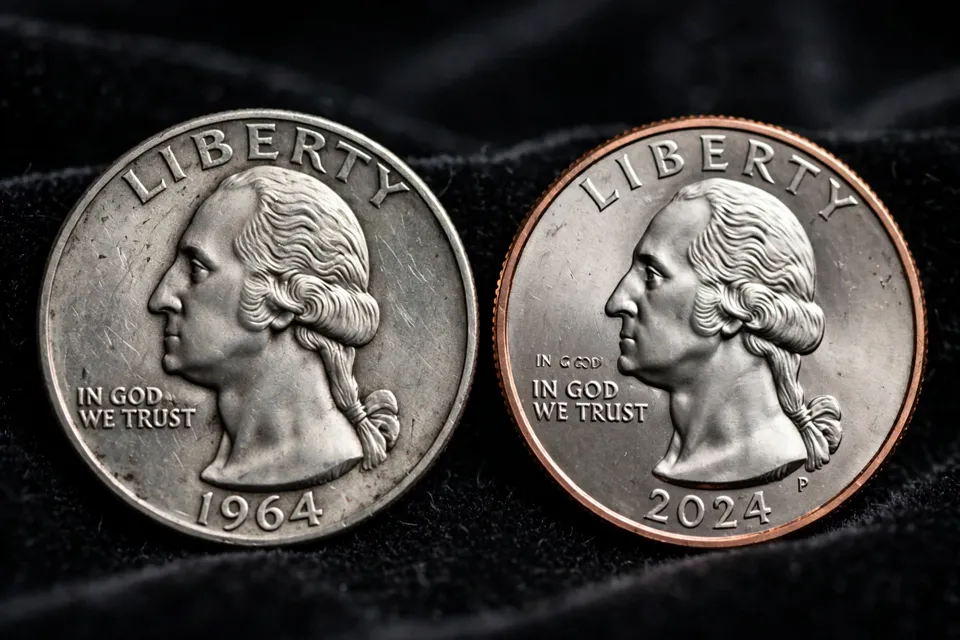
When the Carson City Mint opened its doors in 1870, the first quarters it struck numbered just 8,340. That is a tiny production for a working mint, and it makes the 1870-CC Seated Liberty quarter one of the scarcest regular-issue quarters of the nineteenth century. The coins went into circulation in Nevada’s mining country, where they wore hard and fast, and almost none came back.
A first-year coin from a new mint carries a double appeal: it is scarce, and it is the start of a story. Collectors of Carson City coinage begin here, and the 1870-CC quarter is the date they chase longest. This page explains what the mint was, why the number is so small, and how to confirm the coin in your hand.
8,340 coins and a new mint
The Carson City Mint was built to serve the Comstock Lode, the great Nevada silver strike, and it began striking coins in 1870. Its first year was a learning year: new presses, new staff, new routines, and a remote location that made everything harder. The quarter output of 8,340 reflects that reality. It was a small run from a mint that was still finding its feet, and the coins it produced went straight into the hands of miners, merchants, and saloon keepers.
There was no collector market in Nevada in 1870 waiting to save these coins. They were spent, and spending in a mining camp is hard on a coin. The survivors show it: heavy, honest wear, soft details, and the deep grey tone of silver that has lived in pockets and cash boxes for a century and a half. A worn 1870-CC with a readable date and a clear CC is a coin that has survived against long odds.
The mint mark that matters
The CC mint mark sits on the reverse, below the eagle. Two small letters, and they change everything. A Philadelphia Seated Liberty quarter from 1870 is a common coin. Add the CC and it becomes one of the keys of the series. Check the reverse before anything else, and check it under a loupe: a genuine CC is crisp, correctly positioned, and struck at the same depth as the rest of the design.
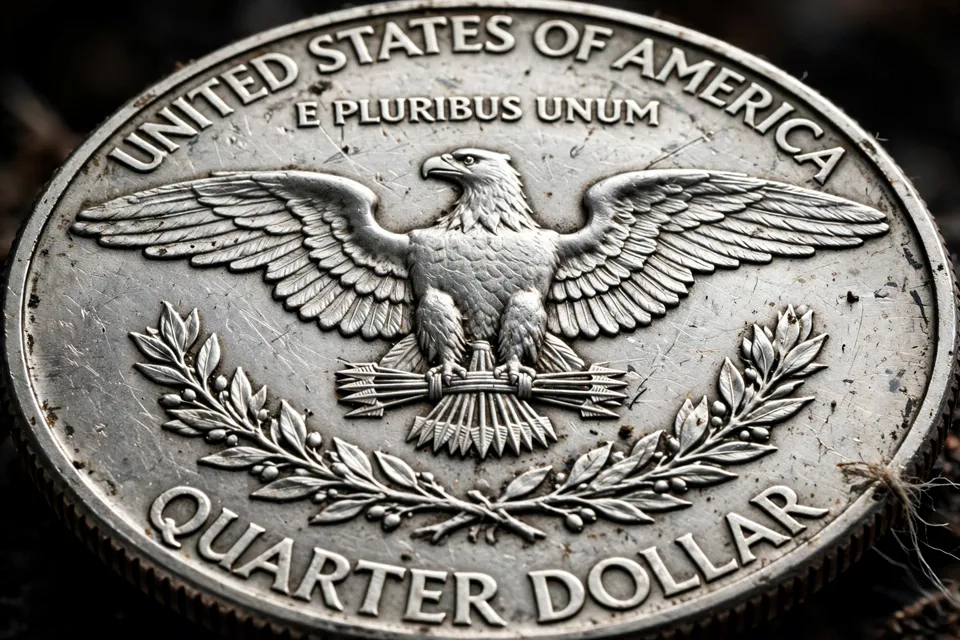
Carson City coins attract altered mint marks, and the 1870-CC is a prime target because the gap between a common date and this one is so large. Look for tool marks around the letters, a CC that sits too high or too shallow, or metal flow that does not match the surrounding design. Any doubt is a reason for a professional opinion, not a guess.
Why CC quarters wear hard
Carson City coinage circulated in a rough economy. Coins were carried loose, dropped, handled with dirty hands, and stored in conditions that would horrify a modern collector. The result is a distinctive look: even, heavy wear, with the high points of Liberty and the eagle softened early and the fields showing the marks of a hard life.
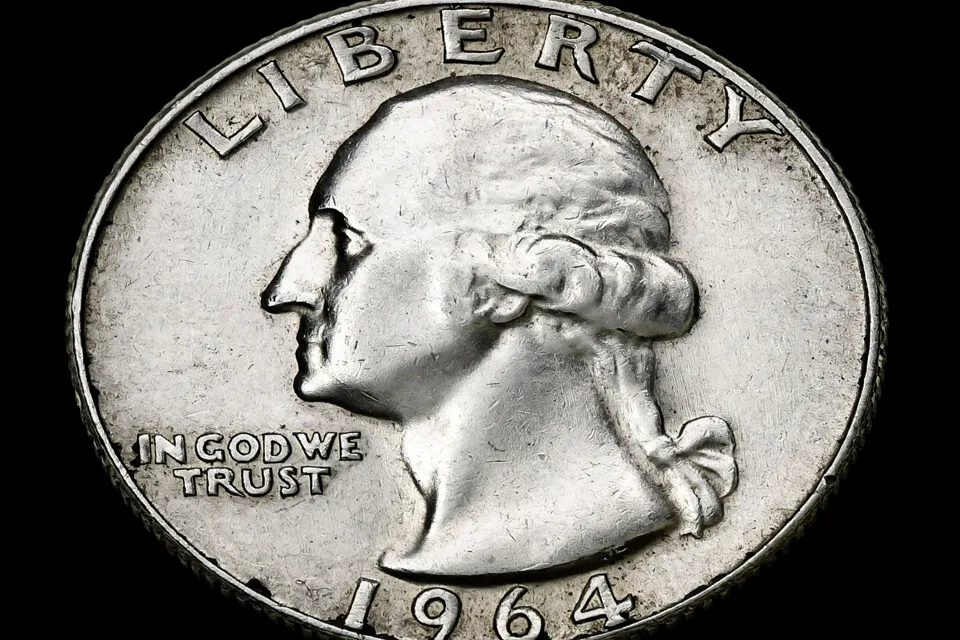
That wear is honest, and collectors of Carson City coinage accept it as part of the coin. What they do not accept is cleaning. A cleaned CC quarter shows bright, washed-out surfaces with fine hairlines under a loupe, and the cleaning costs collector value that cannot be recovered. Original surfaces, even worn ones, are what collectors want.
What our guide shows for the 1870-CC
Our value guide has not yet researched grade-by-grade figures for this date, so the table below shows “—” for every grade. The mintage of 8,340 is documented, and it places this coin among the scarcest Seated Liberty quarters in any condition. Grade figures will be added when they are researched.
| Grade | Estimated value |
|---|---|
| Good (G-4) | — |
| Fine (F-12) | — |
| Extremely Fine (XF-40) | — |
| About Uncirculated (AU-50) | — |
| Mint State 60 (MS-60) | — |
| Mint State 65 (MS-65) | — |
Guide values reviewed November 5, 2026 — figures update live from our Worker.
The floor is documented too. The 1870-CC is 90% silver, and its metal alone sets a floor under every genuine example. Our guide has not yet established the figure for this date, so the specs section below shows it as “—” rather than a guess. The collector premium above that floor is where the first-year scarcity lives, and for this date it is large in every grade.
The silver floor
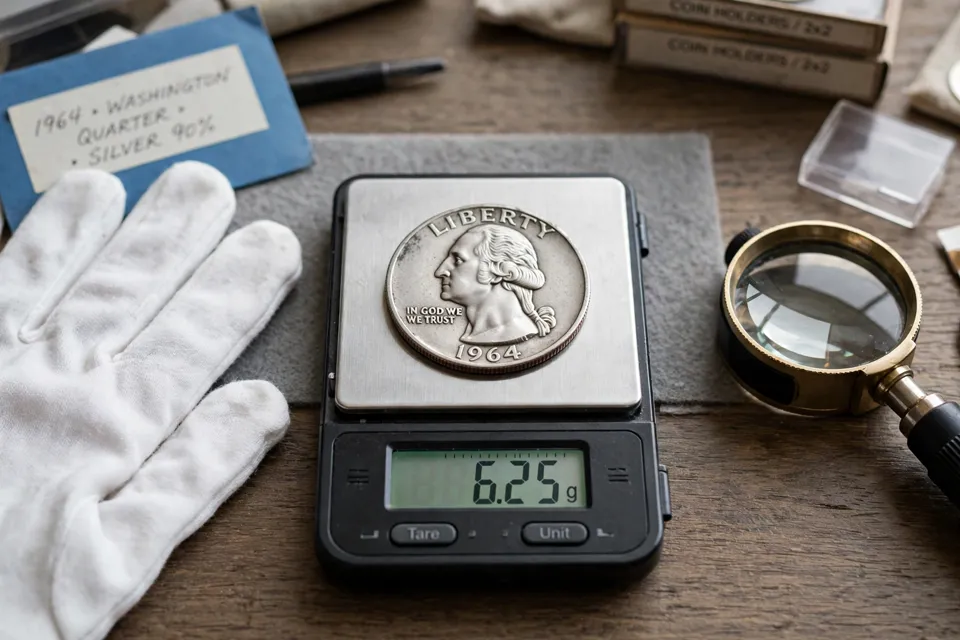
Seated Liberty quarters of 1870 weigh 6.22 grams and measure 24.3 millimetres across, with a reeded edge and about 0.18 troy ounces of pure silver. The weight would rise to 6.25 grams in 1873, but the 1870-CC is a 6.22-gram coin. Weigh a suspect example: a genuine coin reads 6.22 grams, and a coin far from that figure deserves a professional look.
Silver gives the coin its floor, and the floor is real. Our guide has not yet established the metal-floor figure for this date, so the specs section shows “—” rather than a guessed number. But the floor is the least interesting thing about the 1870-CC. The coin’s standing comes from its mintage and its mint, and both are documented in the number 8,340.
A coin to certify
For a first-year Carson City coin, certification is the standard. It settles authenticity, confirms the grade, and gives the coin a record that travels with it. A raw 1870-CC with a clear date and mint mark is worth the cost of a professional opinion, and a certified example is the form in which this coin most often changes hands among serious collectors.
Handle it by the edges, keep it in an acid-free holder, and do not clean it. Photograph both sides before sending it anywhere, and keep a note of where it came from. A first-year coin with a clear history is a stronger coin.
Latest reported results for this coin
Checking for newly reported results…
Your questions, answered
How many 1870-CC Seated Liberty quarters were struck?
Carson City struck 8,340 Seated Liberty quarters in 1870, its first year of operation. The small mintage and hard circulation in Nevada make survivors scarce in every grade.
Where is the mint mark on an 1870-CC quarter?
The CC is on the reverse, below the eagle. It separates the scarce Carson City issue from the common Philadelphia 1870 quarter.
Is the 1870-CC Seated Liberty quarter silver?
Yes. It is 90% silver, weighing 6.22 grams with about 0.18 troy ounces of pure silver. The metal floor for this date is shown as a dash in the specs section above until our guide establishes a figure.
Why are Carson City quarters so scarce?
The mint's output was small, its coins circulated hard in a mining economy, and almost none were saved by collectors at the time. Wear, loss, and later melting thinned the survivors further.
Should an 1870-CC quarter be certified?
Yes. Certification settles authenticity, guards against altered mint marks, and is the accepted standard for a first-year Carson City key date.
Check your 1870-CC
Run the date and mint mark through the free Coin Value Checker for an instant estimate, or get a Grade-or-Not verdict on certification. The wider quarter guide is here: Rare Quarters in Your Change Worth $207,400+. The other scarce Carson City Seated quarter is the 1873-CC No Arrows Quarter, and the 1842-O Seated Liberty Quarter shows the earlier branch-mint story.
A first-year coin from a frontier mint is history you can hold — 8,340 struck, a hard life in Nevada, and a mint mark that still stops collectors in their tracks.
This guide is for education — learn the coin first, and get a professional opinion before buying or selling.