1880-CC Morgan Dollar Value by Grade, $174 to $1,098
Coin Encyclopedia · 9 min read · Published November 7, 2026
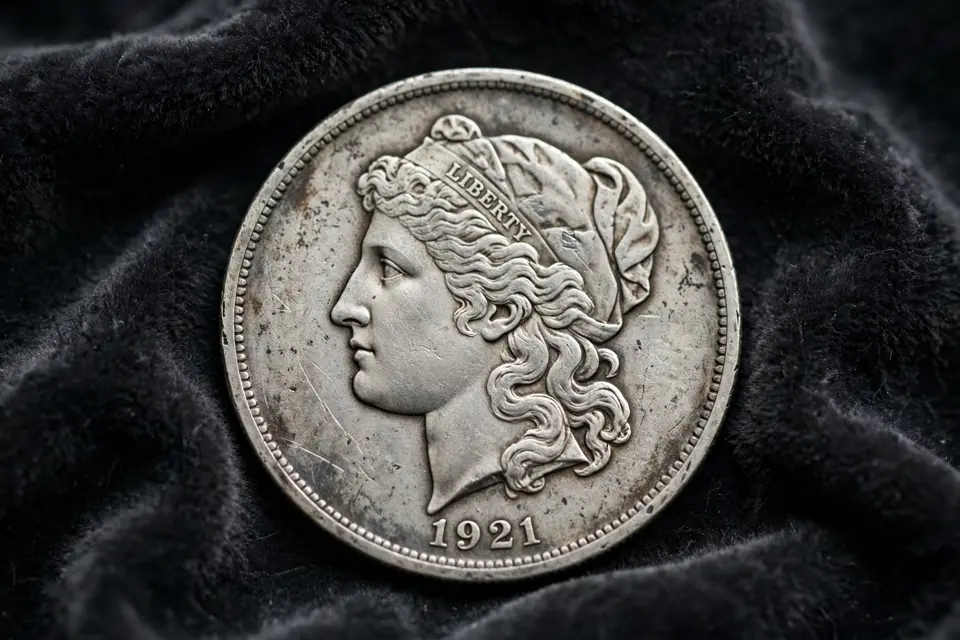
Five hundred ninety-one thousand. That is the whole mintage of the 1880-CC Morgan dollar, and it is the number that has defined this coin for more than a century. Carson City struck fewer Morgans in 1880 than in any year before it except 1879, and the coins it did strike went straight into the hard circulation of the Nevada mining country. A worn 1880-CC is a Western workhorse; an uncirculated one is a survivor of a storage story that lasted almost a hundred years. Both are the same coin, and the market treats them very differently.
Our November 2026 review carries researched figures for this date at five of the six grades, from $174 to $192 at G-4 up to $1,000 to $1,098 at MS-65. Only the AU-50 row is a dash. That coverage makes the 1880-CC one of the more fully documented Carson City dates in this guide, and the table below is the honest place to start.
What an 1880-CC is worth by grade
The curve climbs steadily rather than jumping: G-4 runs $174 to $192, F-12 runs $152 to $221, XF-40 runs $354 to $366, MS-60 runs $610 to $641, and MS-65 runs $1,000 to $1,098. Notice that the F-12 range overlaps the G-4 range at the bottom — a reminder that these are researched ranges from real market snapshots, not a smooth formula, and that a heavily worn coin with honest surfaces can sit beside a slightly better coin in the same bracket.
| Grade | Estimated collector value |
|---|---|
| G-4 | $174–$192 |
| F-12 | $152–$221 |
| XF-40 | $354–$366 |
| AU-50 | — |
| MS-60 | $610–$641 |
| MS-65 | $1,000–$1,098 |
A dash (—) means our November 2026 review holds no researched figure for that grade yet — it is a gap in our data, not a zero. Figures are collector estimates, reviewed November 5, 2026.
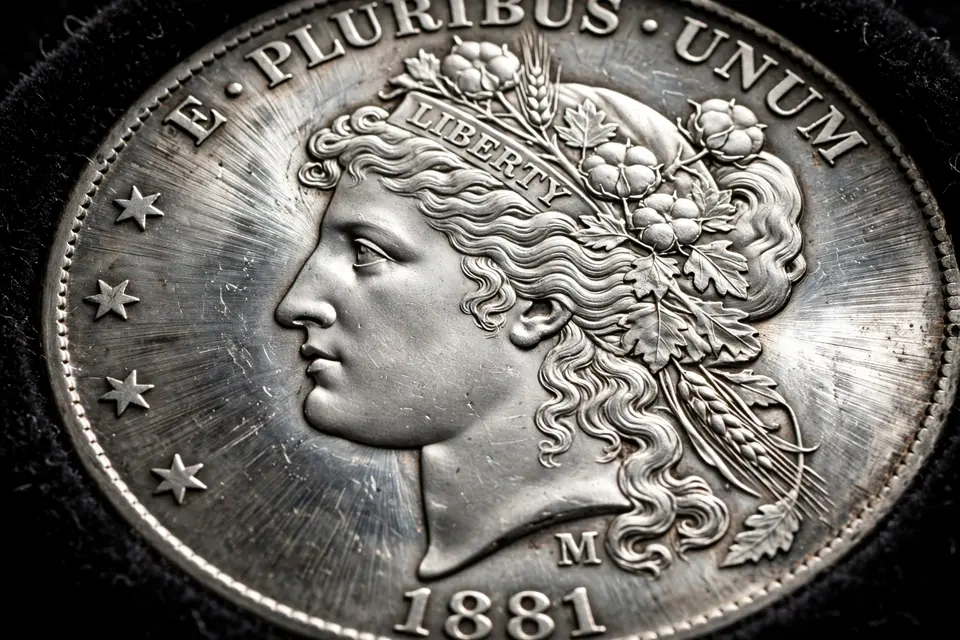
Read the table the way a grader would: from the bottom up. The lowest rows are the floor, and every step toward mint state lifts the figure — sometimes gently, sometimes by an order of magnitude. For this date, 5 of the six grades carry a researched figure. At G-4 the range runs $174 to $192, and at the top end, MS-65 runs $1,000 to $1,098. The AU-50 row is still a dash in our guide — no researched figure yet, and none invented to fill the space. The missing AU-50 row is a dash in our guide — no researched figure yet, and none invented.
Carson City in 1880: fewer coins, harder miles
Carson City is the mint mark collectors dream about, and the story explains why. The mint was built beside the Comstock Lode in Nevada and struck Morgans from the first year of the series until its closing in 1893. Western circulation wore most of its coins down, which is why uncirculated CC dollars are so much scarcer than their mintages suggest. The famous government releases of the 1970s put thousands of bag-stored CC dollars into collectors' hands at once, many still in their original government holders, and those holders remain a familiar sight at any coin show today.
The 1880-CC sits in the middle of that story. The Comstock's richest years were passing, the mint's output was shrinking, and the dollars it struck were spent hard in mining towns where a silver dollar was working money, not a keepsake. That is why the worn grades are the common ones, and why an uncirculated 1880-CC with full lustre still turns heads at a show.
Grading an 1880-CC: the cheek tells first
Grading a Morgan starts in three places: Liberty's cheek, the hair above her ear, and the eagle's breast feathers on the reverse. On a mint-state coin those areas are fully struck and covered in cartwheel lustre that rolls across the surface when you tilt the coin under a light. The first wear shows as a flat, dull patch on the cheek and on the high points of the hair curls; the breast feathers go soft next. A coin with full lustre and no wear is mint state, and from there the grade is a question of marks, strike, and eye appeal.
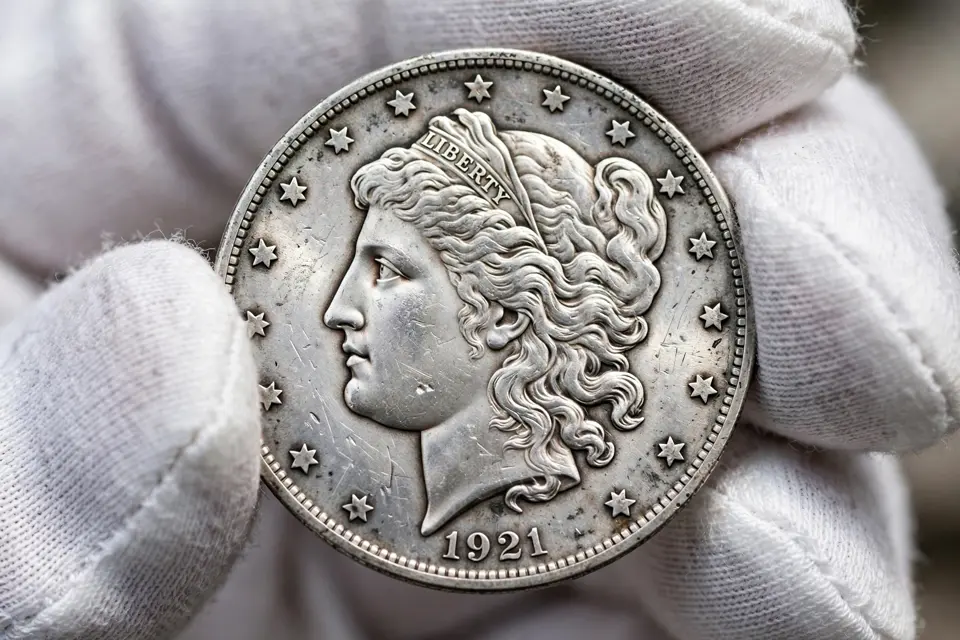
One caution belongs to this date in particular. Carson City's dies were often tired by 1880, and a softly struck 1880-CC can look worn when it is not. The difference is in the lustre: a weak strike still shows lustre in the fields, while wear leaves flat, grey patches on the cheek and hair. Learn to separate the two and you will grade this date far more fairly than most.
Specs and the silver floor
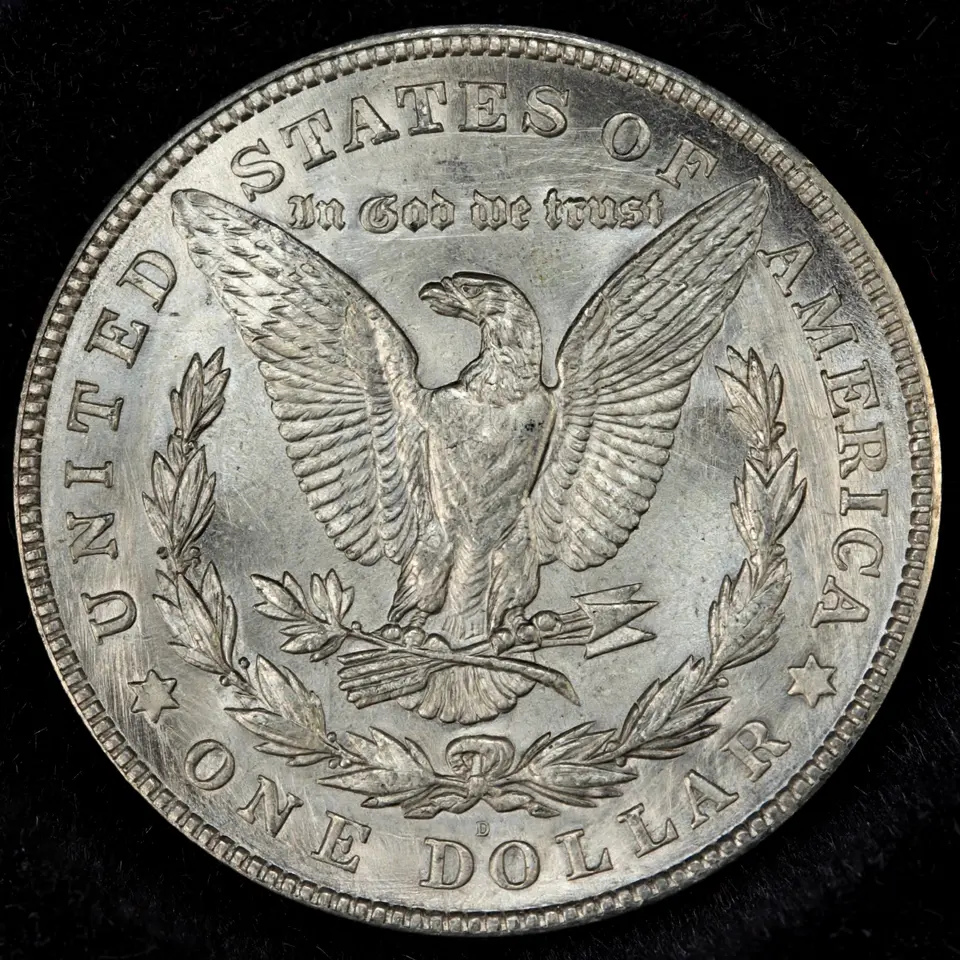
The specifications never change across the Morgan series, which is part of why the series is so easy to learn and so hard to master. A genuine Morgan weighs 26.73 grams, measures 38.1 millimetres, and carries 0.7734 troy ounces of pure silver at 90% fineness, with a reeded edge. The metal alone puts a floor of $40.27 under every genuine example. George T. Morgan's Liberty faces left in a Phrygian cap; the reverse eagle spreads its wings inside a wreath, with the mint mark below the wreath when the coin was not struck at Philadelphia.
Metal floor updates live from our Worker — last updated November 7, 2026.
That floor is the least interesting number on this page, and that is the point. At 591,000 struck, an 1880-CC is worth its mint mark and its grade far more than its metal, at every level of preservation.
Is your 1880-CC genuine?
Counterfeits are a real hazard with every coin in this guide, and the checks are the same ones collectors have used for decades. Weigh it first — 26.73 grams, no excuses — and measure the diameter at 38.1 millimetres. Hold a magnet to it: silver does not stick, and a coin that does is not what it claims to be. Under a loupe, genuine striking leaves crisp, even lettering and clean fields; a cast copy betrays itself with soft details, tiny pits, and a slightly greasy surface. When the stakes are high, certification settles it.
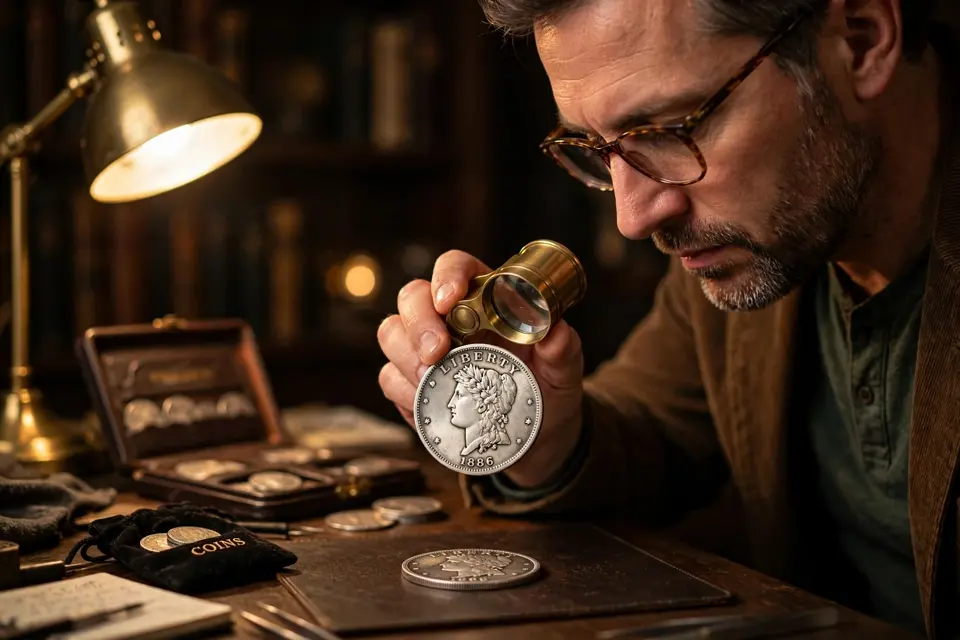
Low-mintage CC dollars attract counterfeits, and the 1880-CC is no exception. Run the weight, diameter, and magnet checks first, then study the CC itself: a genuine mint mark is struck cleanly below the wreath at the same depth as the rest of the design, never added afterwards. Anything that looks punched in, tooled, or out of place deserves a professional opinion before any money changes hands.
Latest reported results for this coin
Checking for newly reported results…
1880-CC Morgan dollar: what collectors ask most
How much is an 1880-CC Morgan dollar worth?
Researched figures run $174 to $192 at G-4, $152 to $221 at F-12, $354 to $366 at XF-40, $610 to $641 at MS-60, and $1,000 to $1,098 at MS-65. The AU-50 row is a dash in our guide — no researched figure yet. Worn examples sit above the live metal floor in the specs section, thanks to the CC mint mark.
What is the mintage of the 1880-CC Morgan dollar?
Carson City struck 591,000 Morgan dollars in 1880. It was the second-smallest CC Morgan mintage of the early years, behind only the 756,000 of 1879 — and most of those coins circulated hard in the West.
How do I know my 1880 Morgan is from Carson City?
Turn the coin over and look below the wreath on the reverse, just above the word DOLLAR. A small CC there means Carson City. No mint mark means Philadelphia, and an S means San Francisco. The CC is struck cleanly into the coin, at the same depth as the surrounding design.
Is the 1880-CC Morgan dollar rare?
In worn condition it is scarce rather than rare — 591,000 were struck and circulated examples reach the market regularly. The rarity sits at the top: sharply struck, lustrous, uncirculated examples are genuinely scarce, and the market pays for that survival.
Why does the F-12 range overlap the G-4 range?
Because these are researched ranges from real market snapshots, not a smooth formula. A heavily worn coin with honest, original surfaces can sit in the same bracket as a slightly better coin, and the ranges reflect that overlap rather than hiding it.
Should I get my 1880-CC Morgan graded?
Consider it when the coin looks uncirculated with full lustre, because the jump from MS-60 to MS-65 is large. Certification also settles whether the CC mint mark is genuine, which matters for every low-mintage Carson City date.
Check your 1880-CC Morgan
Run the date and mint mark through the free Coin Value Checker for an instant estimate, or get a Grade-or-Not verdict on whether your coin is worth certifying. The full guide is here: 1921 Morgan Dollar Value: $40 to $240,000+. The next Carson City date is the 1881-CC Morgan dollar, struck in even smaller numbers.
A low mintage is only the start of the story — the grade, the lustre, and the mint mark finish it. Keep studying, keep checking, and enjoy the hunt. Shared for education only.