Six Figures for a Gem: The 1884-S Morgan Dollar
Coin Encyclopedia · 9 min read · Published November 7, 2026
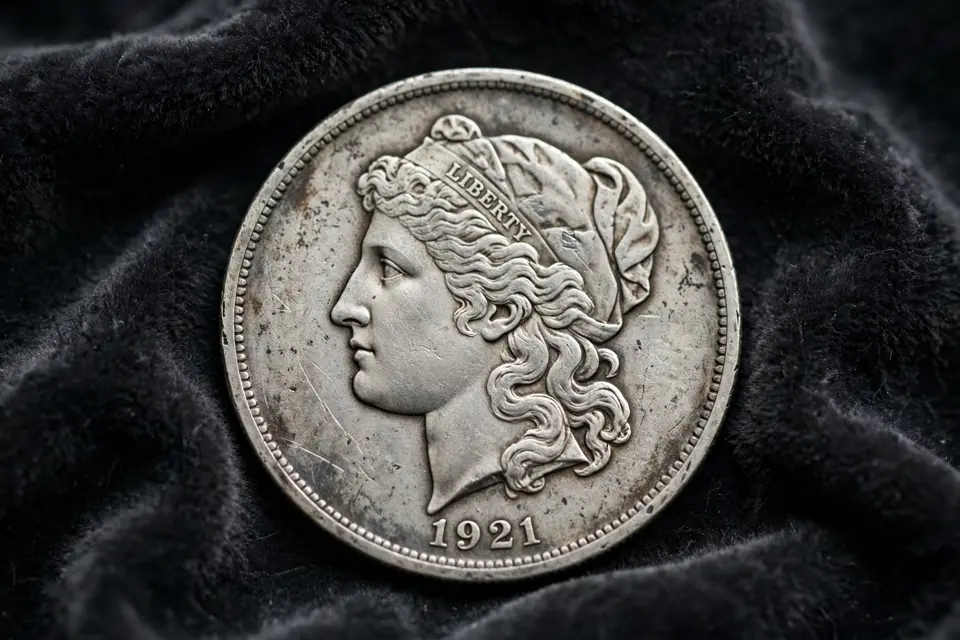
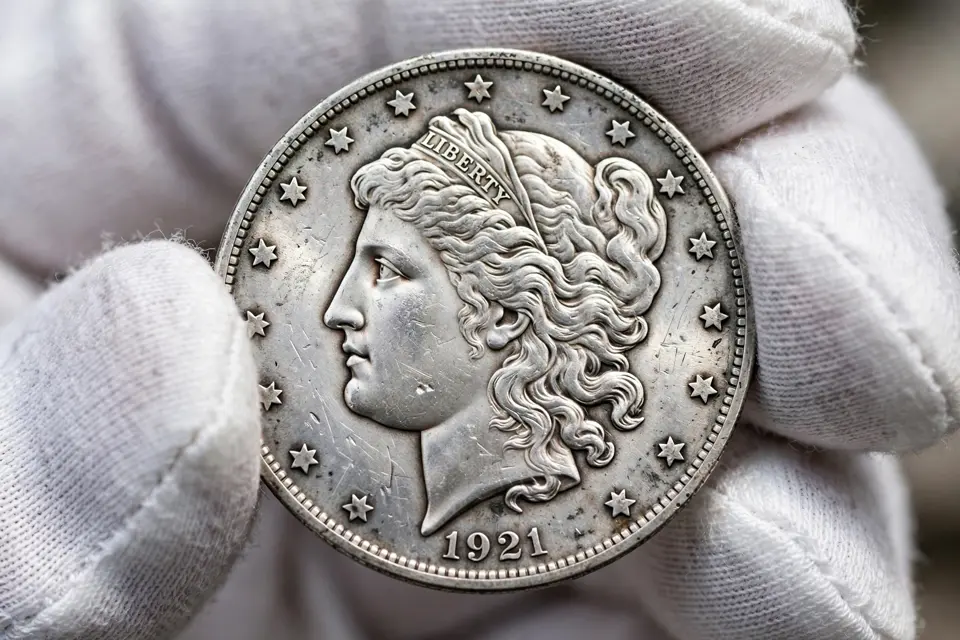
The 1884-S Morgan dollar is the date that breaks every beginner's rule about mintage. San Francisco struck 3,200,000 of them — not a small number by any measure — and worn examples are affordable: G-4 runs $54 to $84, XF-40 runs $109 to $149, AU-50 runs $317 to $390. Then the table stops being polite. MS-60 is a dash in our guide, and MS-65 runs $120,000 to $204,000. A worn 1884-S and a gem 1884-S are, for all practical purposes, two different coins that happen to share a date.
The reason is the strike. The 1884-S is famous among Morgan collectors as one of the most weakly struck dates in the series: flat hair over Liberty's ear, a soft eagle's breast, and muted detail even on coins that never circulated. A genuinely sharp, fully struck 1884-S with full lustre is one of the rarest sights in Morgan collecting, and the market has valued it that way for generations.
What an 1884-S is worth by grade
Four grades carry researched figures: G-4 at $54 to $84, XF-40 at $109 to $149, AU-50 at $317 to $390, and MS-65 at $120,000 to $204,000. The F-12 and MS-60 rows are dashes. The gap between AU-50 and MS-65 — from a few hundred to six figures — is the widest single jump in this whole batch of guides, and it is decided by strike and lustre, not by wear alone.
| Grade | Estimated collector value |
|---|---|
| G-4 | $54–$84 |
| F-12 | — |
| XF-40 | $109–$149 |
| AU-50 | $317–$390 |
| MS-60 | — |
| MS-65 | $120,000–$204,000 |
A dash (—) means our November 2026 review holds no researched figure for that grade yet — it is a gap in our data, not a zero. Figures are collector estimates, reviewed November 5, 2026.
Read the table the way a grader would: from the bottom up. The lowest rows are the floor, and every step toward mint state lifts the figure — sometimes gently, sometimes by an order of magnitude. For this date, 4 of the six grades carry a researched figure. At G-4 the range runs $54 to $84, and at the top end, MS-65 runs $120,000 to $204,000. The F-12, MS-60 rows are still a dash in our guide — no researched figure yet, and none invented to fill the space.
The weak strike that made a legend
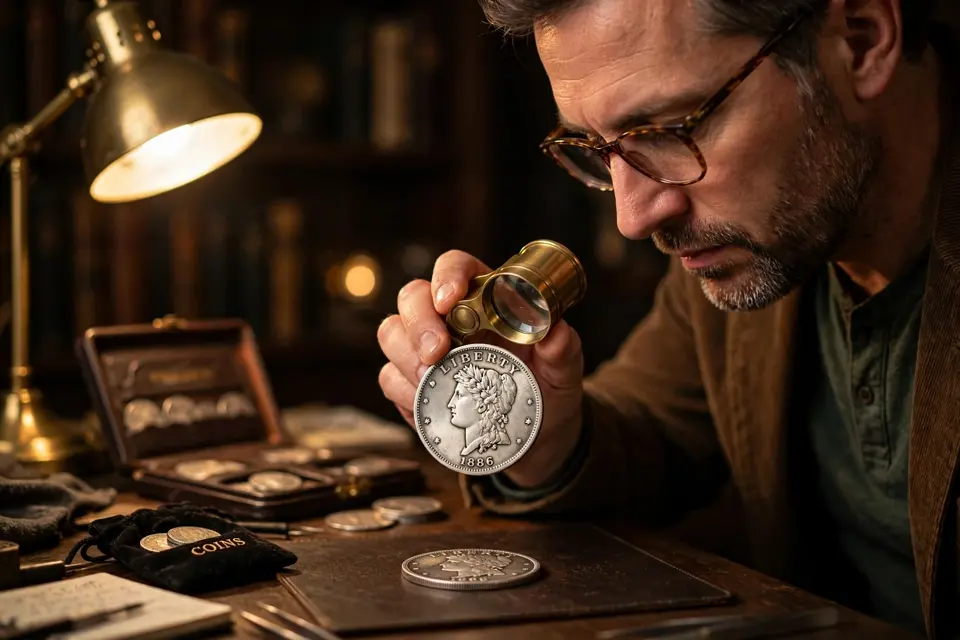
San Francisco's dollars have a reputation for quality, and it is earned: the mint's strikes were usually sharp, its planchets clean, and its lustre deep and frosty. S-mint Morgans circulated widely across the West, so most survivors show honest wear, but the Treasury vaults held back large numbers that only reached collectors in the releases of the 1960s. An S-mint dollar in mint state with full lustre is one of the most satisfying coins in the whole series to hold.
The 1884-S is the exception that proves that reputation. Something went wrong with the striking that year — worn dies, poor planchet preparation, or simply a bad run — and the result is a date where even uncirculated coins usually look soft. Collectors who learn to separate a weak strike from actual wear do far better with this date than those who grade by detail alone, because the two look alike at a glance and mean very different things.
Grading an 1884-S: strike first, wear second
Grading a Morgan starts in three places: Liberty's cheek, the hair above her ear, and the eagle's breast feathers on the reverse. On a mint-state coin those areas are fully struck and covered in cartwheel lustre that rolls across the surface when you tilt the coin under a light. The first wear shows as a flat, dull patch on the cheek and on the high points of the hair curls; the breast feathers go soft next. A coin with full lustre and no wear is mint state, and from there the grade is a question of marks, strike, and eye appeal.
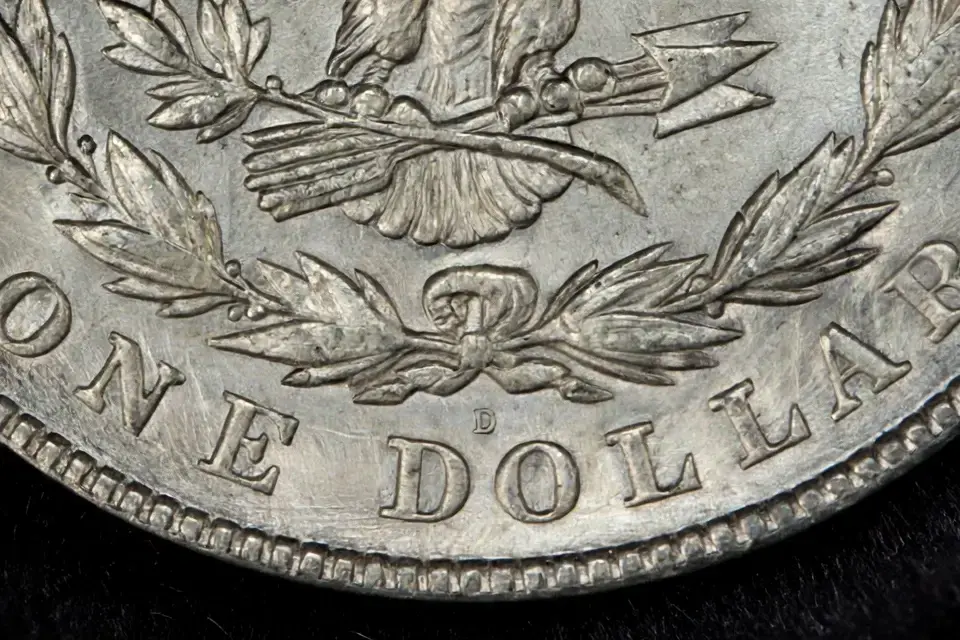
Start with the hair above Liberty's ear and the eagle's breast: on most 1884-S dollars both are flat, even on coins with full lustre. Do not call that wear. Wear shows as flat, grey patches with broken lustre; a weak strike keeps its lustre in the fields and simply never had the detail to begin with. Then check the cheek, which is where real wear lands first, and the fields, which should still roll with cartwheel lustre on a mint-state coin.
Specs and the silver floor
Every Morgan dollar shares the same bones: 26.73 grams, 38.1 millimetres across, a reeded edge, and 90% silver with 10% copper, which works out to 0.7734 troy ounces of pure silver in each coin. That metal is the floor under every genuine Morgan, however worn: $40.27. George T. Morgan designed both sides: Liberty in a Phrygian cap on the obverse, a heraldic eagle in a wreath on the reverse, and the mint mark, when there is one, tucked below the wreath on the reverse.
Metal floor updates live from our Worker — last updated November 7, 2026.
The metal floor is almost irrelevant to this date. A worn 1884-S trades a little above its silver; a gem trades on strike, lustre, and rarity alone, and the two markets barely speak to each other.
Is your 1884-S genuine?
Before you celebrate a find, run the three cheap tests. A genuine dollar weighs 26.73 grams and spans 38.1 millimetres — most fakes fail on weight alone. A magnet should not grab it, because silver is not magnetic. And a loupe should show sharp, confident lettering and stars; mushy, rounded details and a pitted surface are the fingerprints of a cast copy. None of these tests replaces professional authentication for a coin worth real money, but together they catch the great majority of fakes.
The gem figures make this date a target, and the weak strike makes it a hard one to judge — a combination that rewards caution. Run the weight, diameter, and magnet checks first, then study the surfaces with a loupe. For any coin claimed as mint state, certification is not optional, it is the whole point: an independent grade is the only thing that separates a six-figure coin from a three-figure one with the same date.
Latest reported results for this coin
Checking for newly reported results…
Your 1884-S Morgan dollar questions, answered
How much is an 1884-S Morgan dollar worth?
Researched figures run $54 to $84 at G-4, $109 to $149 at XF-40, $317 to $390 at AU-50, and $120,000 to $204,000 at MS-65. The F-12 and MS-60 rows are dashes in our guide — no researched figure yet. Worn examples sit near the live metal floor in the specs section.
Why is the 1884-S Morgan dollar so valuable in MS-65?
Because it is one of the most weakly struck dates in the Morgan series. Most 1884-S dollars left the mint with flat hair detail and a soft eagle's breast, so a genuinely sharp, fully struck example with full lustre is extraordinarily rare — and the market pays six figures for that rarity.
What is the mintage of the 1884-S Morgan dollar?
San Francisco struck 3,200,000 Morgan dollars in 1884. The mintage is ordinary; the rarity is entirely about strike and survival in gem condition, not about how many were made.
How can I tell a weak strike from wear on an 1884-S?
Look at the lustre. A weak strike keeps its lustre in the fields and simply never had the detail — the hair and eagle look soft but the surfaces still shine. Wear leaves flat, grey patches with broken lustre on the high points, starting with Liberty's cheek.
Is the 1884-S Morgan dollar the rarest Morgan?
Not by mintage — 3,200,000 were struck. It is one of the great condition rarities of the series: among the hardest Morgans to find in true gem condition, which is why its MS-65 figure sits in six figures while worn examples are affordable.
Should I get my 1884-S Morgan graded?
Yes — more so than for most dates. The gap between AU-50 and MS-65 is so large that an independent grade is the only thing that separates a three-figure coin from a six-figure one, and certification also settles authenticity for a date this heavily faked at the top.
Check your 1884-S Morgan
Run the date and mint mark through the free Coin Value Checker for an instant estimate, or get a Grade-or-Not verdict on whether your coin is worth certifying. The full guide is here: 1921 Morgan Dollar Value: $40 to $240,000+. Compare it with the 1883-S Morgan dollar, the previous San Francisco date with the same split personality.
Strike, lustre, and survival — those three decide this date, and no mintage number can overrule them. Learn them, and the figures make sense. Shared for education only.