King of Carson City: The 1889-CC Morgan Dollar
Coin Encyclopedia · 9 min read · Published November 7, 2026
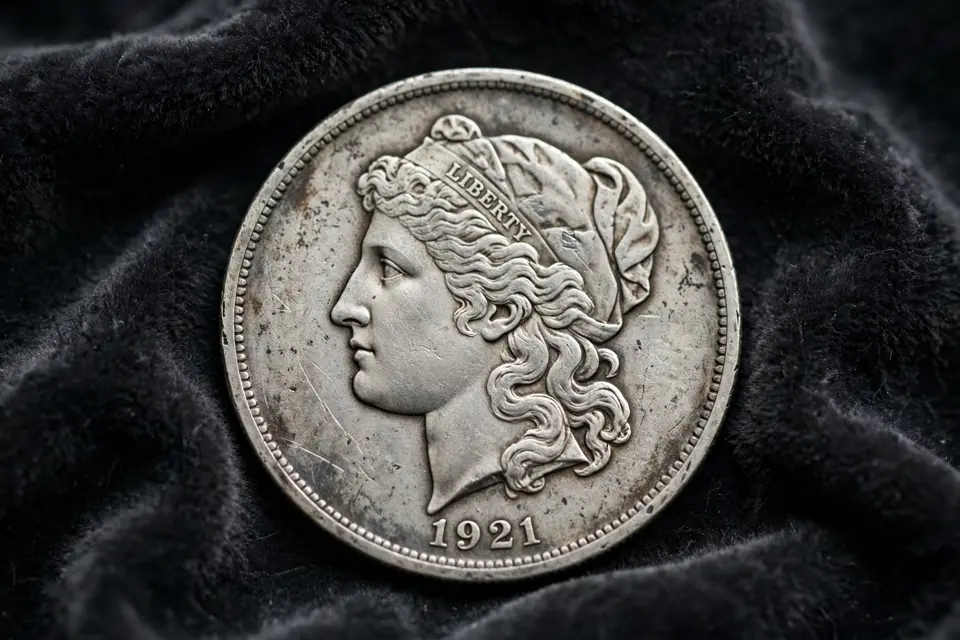
Three hundred fifty thousand. The 1889-CC Morgan dollar was struck in numbers that look modest beside Philadelphia's millions, and it has been the king of Carson City ever since. No other CC Morgan combines a low mintage with such brutal survival: almost every 1889-CC went into hard Western circulation, and almost none came back in collectible condition. The result is a coin whose worn grades alone command four figures — G-4 runs $692 to $732, F-12 runs $1,253 to $1,342, XF-40 runs $3,184 to $4,880, and AU-50 runs $12,200 to $15,860. At the top, MS-65 runs $150,000 to $660,000. No other coin in this batch climbs that high, that fast.
What makes the 1889-CC different from the other low-mintage CC dates is that there was no great Treasury release to save it. The bags that rescued the 1885-CC and the 1881-CC held few 1889-CC dollars, so the uncirculated population stayed tiny while demand only grew. That is why this date sits alone at the top of the Carson City market, and why it is the one CC date every serious Morgan collector knows by heart.
What an 1889-CC is worth by grade
Five grades carry researched figures, and every one of them is a serious number: G-4 at $692 to $732, F-12 at $1,253 to $1,342, XF-40 at $3,184 to $4,880, AU-50 at $12,200 to $15,860, and MS-65 at $150,000 to $660,000. Only MS-60 is a dash. The curve doubles and triples at every step — the steepest climb of any date in this guide, and the clearest proof that condition and rarity together decide a coin's figure.
| Grade | Estimated collector value |
|---|---|
| G-4 | $692–$732 |
| F-12 | $1,253–$1,342 |
| XF-40 | $3,184–$4,880 |
| AU-50 | $12,200–$15,860 |
| MS-60 | — |
| MS-65 | $150,000–$660,000 |
A dash (—) means our November 2026 review holds no researched figure for that grade yet — it is a gap in our data, not a zero. Figures are collector estimates, reviewed November 5, 2026.
Read the table the way a grader would: from the bottom up. The lowest rows are the floor, and every step toward mint state lifts the figure — sometimes gently, sometimes by an order of magnitude. For this date, 5 of the six grades carry a researched figure. At G-4 the range runs $692 to $732, and at the top end, MS-65 runs $150,000 to $660,000. The MS-60 row is still a dash in our guide — no researched figure yet, and none invented to fill the space. The MS-60 row is a dash in our guide — no researched figure yet, and none invented.
Carson City in 1889: the mintage that became a legend
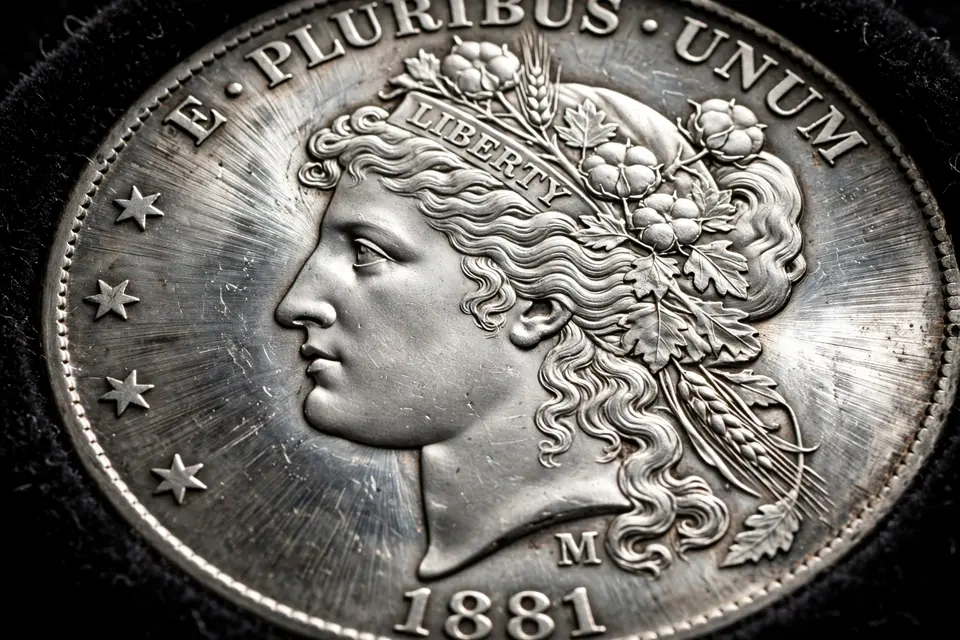
Carson City is the mint mark collectors dream about, and the story explains why. The mint was built beside the Comstock Lode in Nevada and struck Morgans from the first year of the series until its closing in 1893. Western circulation wore most of its coins down, which is why uncirculated CC dollars are so much scarcer than their mintages suggest. The famous government releases of the 1970s put thousands of bag-stored CC dollars into collectors' hands at once, many still in their original government holders, and those holders remain a familiar sight at any coin show today.
By 1889 the Comstock's best years were long behind it, and the mint's output was a shadow of its early run. The 350,000 dollars it struck that year circulated hard in mining towns where a silver dollar was working money, and the uncirculated survivors are so few that the market treats each one as a major event. That scarcity is the whole story of this date.
Grading an 1889-CC: every point counts
Grading a Morgan starts in three places: Liberty's cheek, the hair above her ear, and the eagle's breast feathers on the reverse. On a mint-state coin those areas are fully struck and covered in cartwheel lustre that rolls across the surface when you tilt the coin under a light. The first wear shows as a flat, dull patch on the cheek and on the high points of the hair curls; the breast feathers go soft next. A coin with full lustre and no wear is mint state, and from there the grade is a question of marks, strike, and eye appeal.
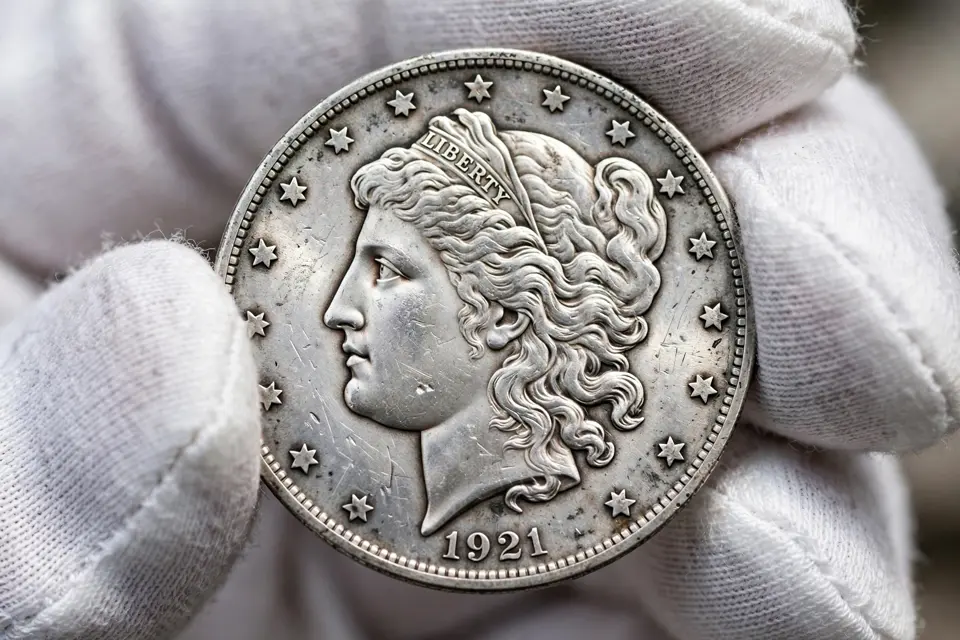
On this date, a single grade point can mean thousands, so the grading has to be exact. Start with Liberty's cheek, then the hair above the ear, then the eagle's breast — those are the high points, and wear lands there first. A coin with full lustre and no wear is mint state, and from there the grade is a question of marks, strike, and eye appeal. Do not guess on this date: a professional opinion is worth more than a guess at any grade.
Specs and the silver floor
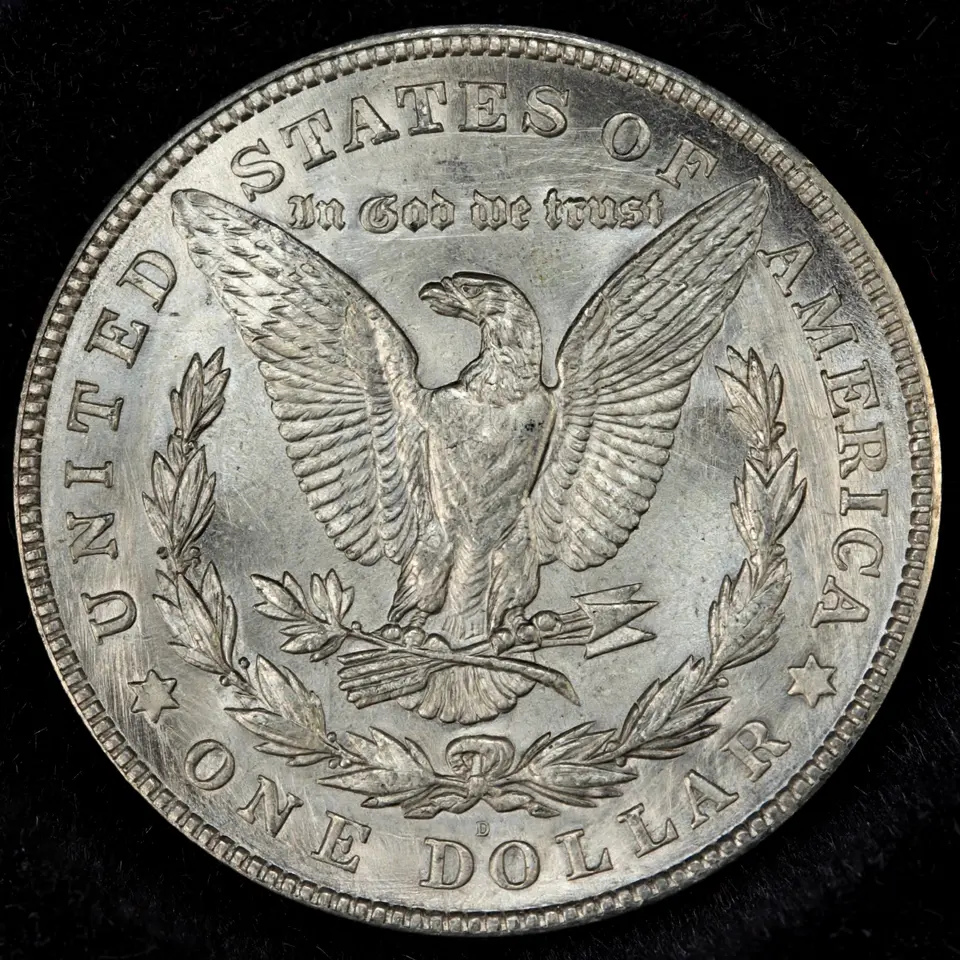
The specifications never change across the Morgan series, which is part of why the series is so easy to learn and so hard to master. A genuine Morgan weighs 26.73 grams, measures 38.1 millimetres, and carries 0.7734 troy ounces of pure silver at 90% fineness, with a reeded edge. The metal alone puts a floor of $40.27 under every genuine example. George T. Morgan's Liberty faces left in a Phrygian cap; the reverse eagle spreads its wings inside a wreath, with the mint mark below the wreath when the coin was not struck at Philadelphia.
Metal floor updates live from our Worker — last updated November 7, 2026.
The metal floor is meaningless for this coin. An 1889-CC is worth its mint mark, its mintage, and its grade at every level — the silver underneath is the smallest part of the story.
Spotting a fake 1889-CC
Counterfeits are a real hazard with every coin in this guide, and the checks are the same ones collectors have used for decades. Weigh it first — 26.73 grams, no excuses — and measure the diameter at 38.1 millimetres. Hold a magnet to it: silver does not stick, and a coin that does is not what it claims to be. Under a loupe, genuine striking leaves crisp, even lettering and clean fields; a cast copy betrays itself with soft details, tiny pits, and a slightly greasy surface. When the stakes are high, certification settles it.
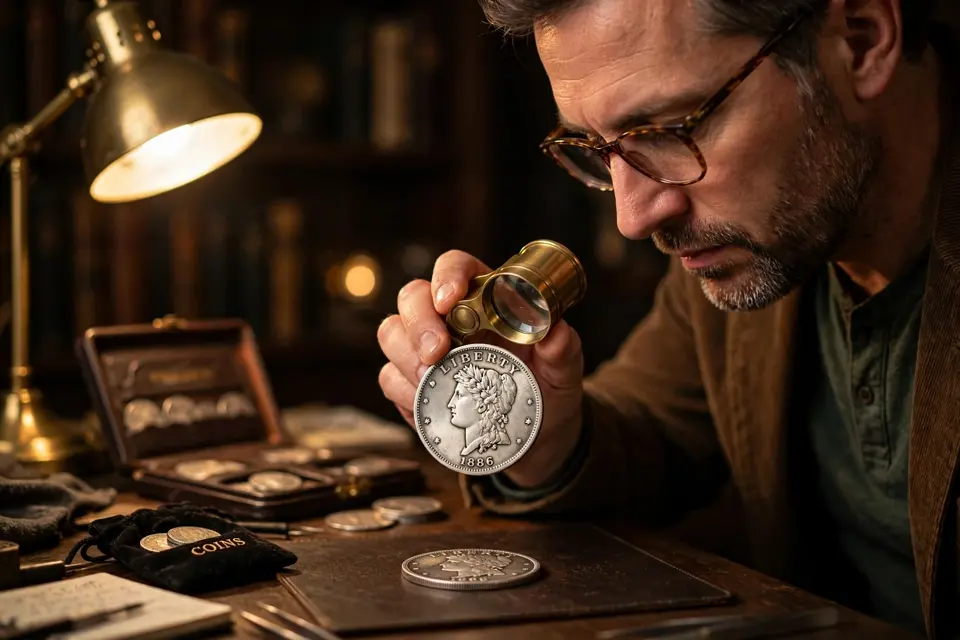
The 1889-CC is the most faked Morgan dollar in the series, and the fakes are often good. Weigh it first — 26.73 grams, no excuses — and measure the diameter at 38.1 millimetres. Hold a magnet to it: silver does not stick, and a coin that does is not what it claims to be. Under a loupe, genuine striking leaves crisp, even lettering and clean fields; a cast copy betrays itself with soft details, tiny pits, and a slightly greasy surface. For a coin at this figure, certification is not optional — it is the only way to be sure.
Latest reported results for this coin
Checking for newly reported results…
The 1889-CC Morgan dollar, answered
How much is an 1889-CC Morgan dollar worth?
Researched figures run $692 to $732 at G-4, $1,253 to $1,342 at F-12, $3,184 to $4,880 at XF-40, $12,200 to $15,860 at AU-50, and $150,000 to $660,000 at MS-65. The MS-60 row is a dash in our guide — no researched figure yet. Even the most worn example starts near $700.
What is the mintage of the 1889-CC Morgan dollar?
Carson City struck 350,000 Morgan dollars in 1889. Most went into hard Western circulation and never came back in collectible condition, which is why this date is the king of Carson City despite a mintage larger than the 1885-CC.
Why is the 1889-CC Morgan dollar so valuable?
Because almost none survived in collectible condition. The mintage was low, the circulation was brutal, and unlike other CC dates there was no great Treasury release to rescue uncirculated examples. Low mintage plus terrible survival equals the steepest grade curve in this guide.
Is the 1889-CC the rarest Carson City Morgan?
By mintage, no — the 1885-CC was struck in fewer numbers. By survival and market figure, the 1889-CC is the king: its worn grades alone command four figures, and its gem figures reach six figures, higher than any other CC date.
How do I know my 1889 Morgan is from Carson City?
Turn the coin over and look below the wreath on the reverse, just above the word DOLLAR. A small CC there means Carson City. No mint mark means Philadelphia, and an S means San Francisco. The CC is struck cleanly into the coin, at the same depth as the surrounding design.
Should I get my 1889-CC Morgan graded?
Yes — without exception. This is the most faked Morgan dollar in the series, and the figures are high enough at every grade that certification is the only way to be sure of authenticity, variety, and grade. No 1889-CC should change hands uncertified.
Check your 1889-CC Morgan
Run the date and mint mark through the free Coin Value Checker for an instant estimate, or get a Grade-or-Not verdict on whether your coin is worth certifying. The full guide is here: 1921 Morgan Dollar Value: $40 to $240,000+. The other great CC key is the 1885-CC Morgan dollar, the smallest CC mintage of all.
The king of Carson City earns its title in every grade — learn the mint mark, learn the grade, and respect the coin. Shared for education only.