Every Grade Is Scarce on the 1892-S Morgan
Coin Encyclopedia · 9 min read · Published November 7, 2026
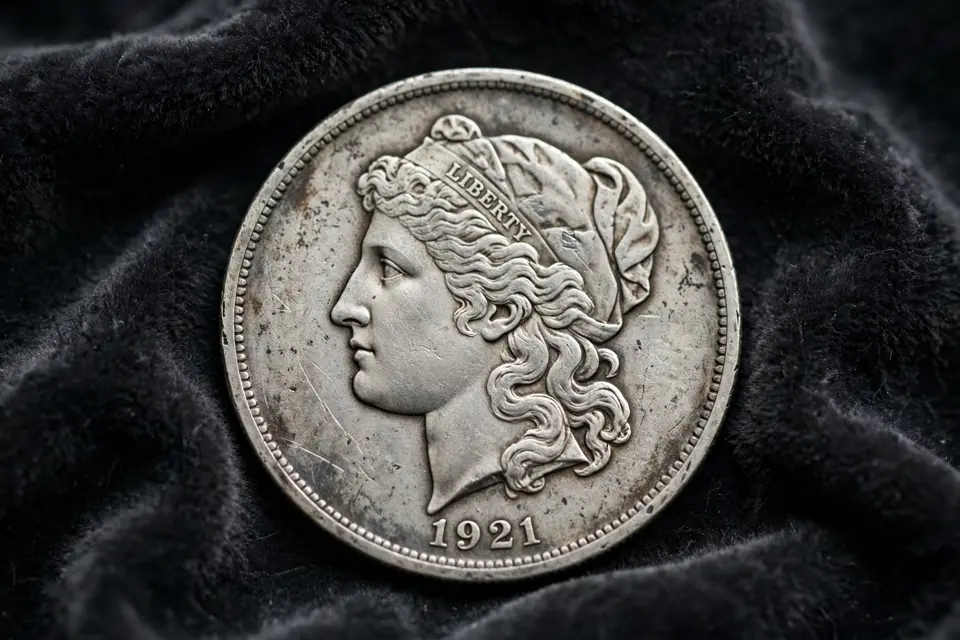
One million two hundred thousand. The 1892-S Morgan dollar was not struck in tiny numbers, yet it is scarce at every grade in our guide — G-4 runs $63 to $120, F-12 runs $129 to $149, XF-40 runs $500 to $824, AU-50 runs $2,074 to $3,416, MS-60 runs $48,000 to $60,000, and MS-65 runs $252,000 to $268,400. That is the fullest coverage of any San Francisco date in this guide, and every row tells the same story: this date is hard to find, and hard to find in any condition.
The reason is circulation. San Francisco's 1892 dollars went straight into Western commerce and stayed there, changing hands for decades. Few were set aside, fewer still survived with their lustre, and the mint-state population is so small that the market treats an MS-60 example as a major coin. The 1892-S is the date that teaches collectors the difference between mintage and survival.
What an 1892-S is worth by grade
The curve climbs at every step, and the steps get steeper as the grade rises: from $63 to $120 at G-4, to $500 to $824 at XF-40, to $2,074 to $3,416 at AU-50, to $48,000 to $60,000 at MS-60, and finally $252,000 to $268,400 at MS-65. The jump from AU-50 to MS-60 — roughly twentyfold — is one of the sharpest in the Morgan series, and it is decided by wear alone: a trace of wear on the cheek is the difference between a four-figure coin and a five-figure one.
| Grade | Estimated collector value |
|---|---|
| G-4 | $63–$120 |
| F-12 | $129–$149 |
| XF-40 | $500–$824 |
| AU-50 | $2,074–$3,416 |
| MS-60 | $48,000–$60,000 |
| MS-65 | $252,000–$268,400 |
A dash (—) means our November 2026 review holds no researched figure for that grade yet — it is a gap in our data, not a zero. Figures are collector estimates, reviewed November 5, 2026.
Two numbers matter most in that table: the lowest figure, which is roughly what any worn example is worth, and the highest, which shows what condition can do. Between them sit 6 researched grades for this date. At G-4 the range runs $63 to $120, and at the top end, MS-65 runs $252,000 to $268,400.
San Francisco in 1892: a mintage that vanished
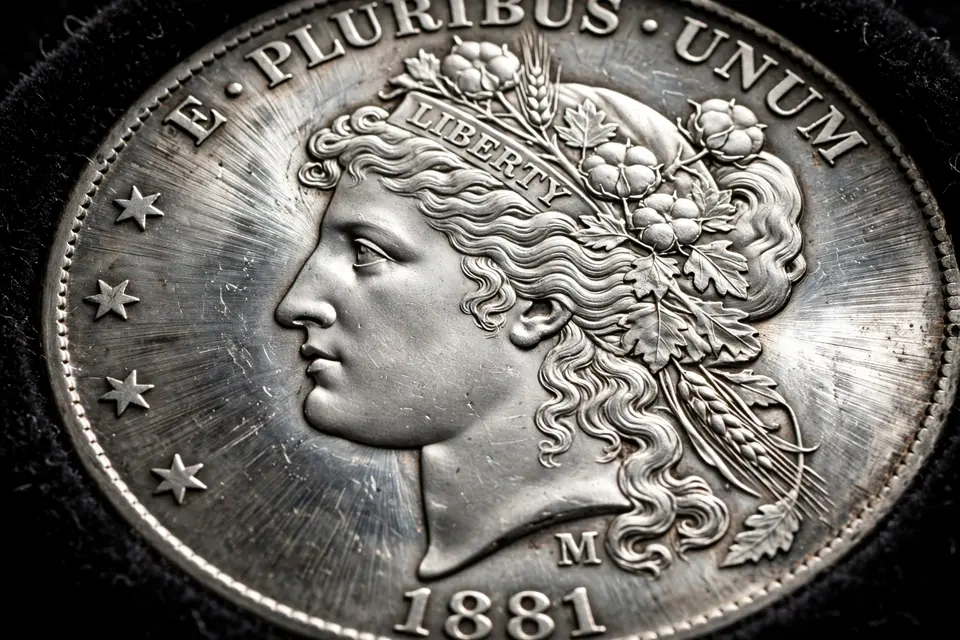
The San Francisco Mint struck Morgans for the whole life of the series, and its coins are known for strong strikes and clean, frosty surfaces — the mint's presses and the quality of its dies gave its dollars a look collectors still recognise at a glance. San Francisco dollars circulated heavily in the West, so worn examples are common, but the mint also stored large quantities in Treasury vaults, and the great Treasury releases of the 1960s put many uncirculated S-mint dollars into circulation among collectors for the first time.
For the 1892-S, that reputation for quality makes the scarcity more striking. The mint's strikes were usually sharp, so a well-struck 1892-S is not unusual — but the coins circulated so heavily that sharp, lustrous survivors are. The Treasury vaults held back some S-mint dollars, but not enough of this date to change its story.
Grading an 1892-S: the cheek decides
To grade a Morgan, look at Liberty's cheek first, then the curls of hair above the ear, then the eagle's breast on the reverse. Those are the high points, so they are where wear lands first: a mint-state coin keeps them sharp and lustrous, while a circulated coin shows them flattened and grey. Bag marks — the small nicks and ticks coins pick up knocking against each other in mint bags — decide most of the difference between MS60 and MS65. Strong strikes with clean fields are the coins that climb.
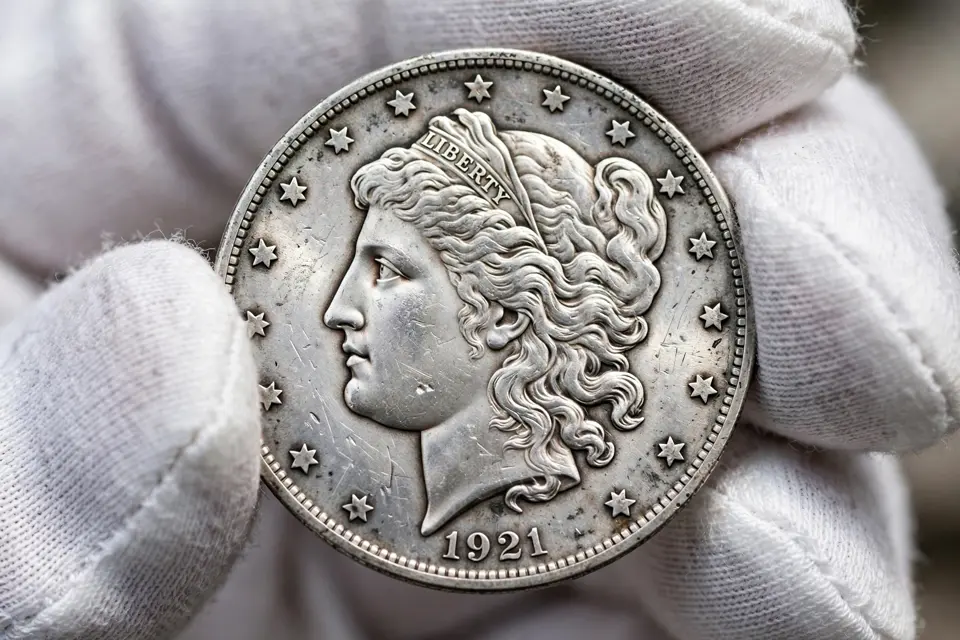
On this date, the cheek is the whole grade. A trace of wear there drops a coin from mint state to about uncirculated, and that drop costs tens of thousands. Hold the coin under a single light and tilt it slowly: the cartwheel should sweep across the fields without stopping, and the cheek should show no flat, grey patch. If it does, the coin is circulated, however nice it looks otherwise.
Specs and the silver floor
Every Morgan dollar shares the same bones: 26.73 grams, 38.1 millimetres across, a reeded edge, and 90% silver with 10% copper, which works out to 0.7734 troy ounces of pure silver in each coin. That metal is the floor under every genuine Morgan, however worn: $40.27. George T. Morgan designed both sides: Liberty in a Phrygian cap on the obverse, a heraldic eagle in a wreath on the reverse, and the mint mark, when there is one, tucked below the wreath on the reverse.
Metal floor updates live from our Worker — last updated November 7, 2026.
The metal floor is the least interesting number on this page. An 1892-S is worth its mint mark and its grade at every level — the silver underneath is the smallest part of the story, even at G-4.
Is your 1892-S genuine?
The first test costs nothing: weigh the coin. A genuine silver dollar weighs 26.73 grams and measures 38.1 millimetres, and fakes are usually light, or the wrong diameter, or both. Silver is not magnetic, so a coin that sticks to a magnet is not silver. Then look at the lettering with a loupe — genuine letters are sharp and even, while cast copies show mushy edges, pitted fields, and soft stars. A scale, a calliper, and a magnet settle most questions in a minute; anything still in doubt goes to a professional grading service.
The mint-state figures make this date a target, so a coin claimed as uncirculated deserves the full check — weight, diameter, magnet, and loupe — and certification before any serious money changes hands. A worn 1892-S is rarely worth faking, which is one small comfort for the collector starting at the bottom of this date's curve.
Latest reported results for this coin
Checking for newly reported results…
1892-S Morgan dollar: what collectors ask most
How much is an 1892-S Morgan dollar worth?
Researched figures run $63 to $120 at G-4, $129 to $149 at F-12, $500 to $824 at XF-40, $2,074 to $3,416 at AU-50, $48,000 to $60,000 at MS-60, and $252,000 to $268,400 at MS-65. Every grade carries a researched figure — the fullest coverage of any San Francisco date in this guide.
What is the mintage of the 1892-S Morgan dollar?
San Francisco struck 1,200,000 Morgan dollars in 1892. The mintage is ordinary; the scarcity is entirely about circulation and survival, not about how many were made.
Why is the 1892-S scarce at every grade?
Because its dollars went straight into Western commerce and stayed there for decades. Few were set aside, fewer still survived with their lustre, and the mint-state population is so small that the market treats an MS-60 example as a major coin.
How do I tell an 1892-S from an 1892-CC Morgan?
Look at the mint mark below the wreath on the reverse. An S means San Francisco, a CC means Carson City, and no mark means Philadelphia. Carson City struck 1,352,000 dollars in 1892, so the CC is a genuine date too — but the S is the scarcer of the two in high grade.
Is the 1892-S Morgan dollar a key date?
Yes. It is one of the recognised keys of the Morgan series, scarce at every grade and a condition rarity at the top — the jump from AU-50 to MS-60 alone is roughly twentyfold.
Should I get my 1892-S Morgan graded?
Yes — for any example that looks uncirculated, without question. The gap between AU-50 and MS-60 is so large that an independent grade is the only thing that separates a four-figure coin from a five-figure one, and certification also settles authenticity.
Check your 1892-S Morgan
Run the date and mint mark through the free Coin Value Checker for an instant estimate, or get a Grade-or-Not verdict on whether your coin is worth certifying. The full guide is here: 1921 Morgan Dollar Value: $40 to $240,000+. The next San Francisco date is the 1893-S Morgan dollar, the rarest Morgan of the whole series.
Scarce at every grade is a rare thing to say about a Morgan — this date earns it. Learn the mint mark, learn the grade, and enjoy the hunt. Shared for education only.