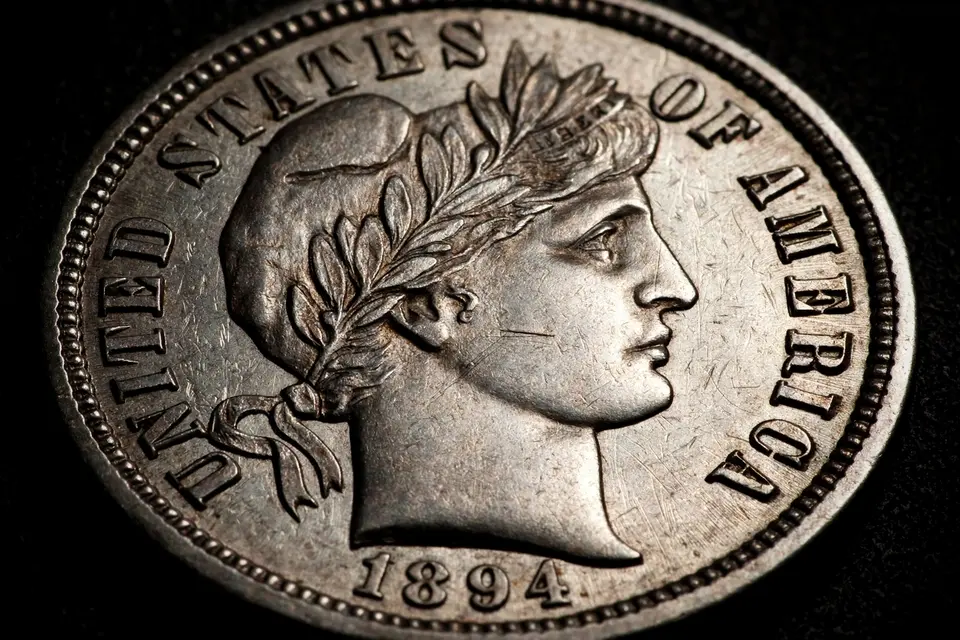
1895-O Barber Dime: New Orleans’ Rarest Date
Coin Encyclopedia · 7 min read · Published November 7, 2026
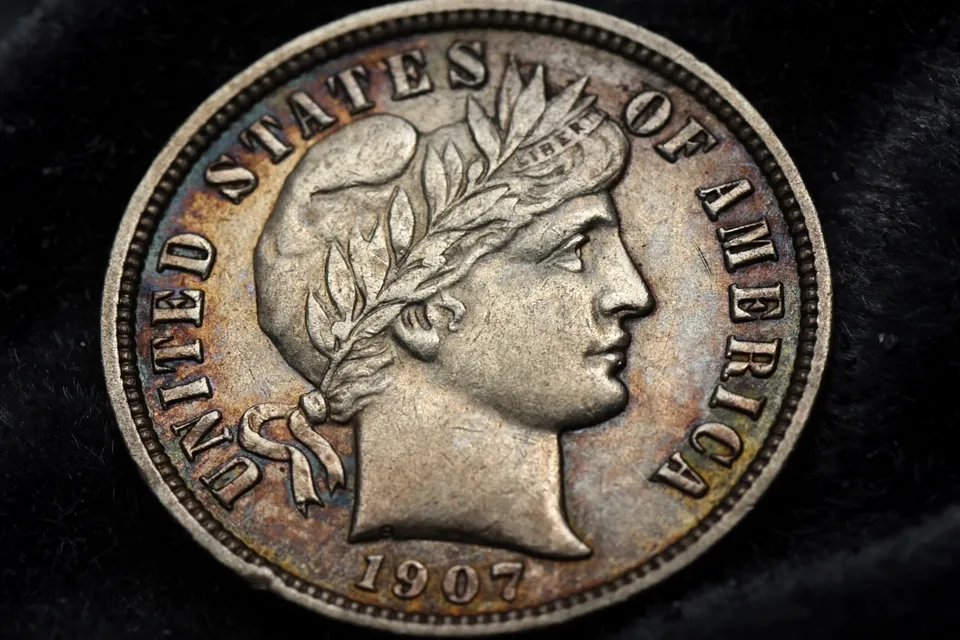
If the 1894-S is the Barber dime you dream about, the 1895-O is the one you can actually hunt. New Orleans struck just 440,000 of them in 1895 — the lowest regular-issue mintage in the whole Barber dime series — and the survivors are scarce in every grade and genuinely rare in gem condition. Our guide holds no researched figure for any grade of this date yet, so the table below shows dashes — no figure invented to fill the space.
That combination — a mintage under half a million, a mint that closed in 1909, and a small silver coin that circulated hard in the South — is why the 1895-O is the practical series key. This page works through the mintage, the grading shortcut every Barber collector uses, and the checks that keep you from paying key-date money for a common coin.
New Orleans and the lowest mintage
The New Orleans Mint struck Barber dimes from the series’ first year, 1892, until it closed in 1909. Its output was always smaller than Philadelphia’s, and 1895 was its smallest Barber dime year of all: 440,000 coins. For comparison, Philadelphia struck millions of Barber dimes in most years, and even the 1901-S — another famous key — managed 593,022. The 1895-O sits alone at the bottom of the mintage table, and the market has never forgotten it.
New Orleans coins also circulated harder than most. The South’s economy ran on small silver, and a dime struck in 1895 stayed in pockets, tills, and pay envelopes for decades. That is why worn 1895-O dimes, while expensive, do appear — but crisp, original, uncirculated examples almost never do. The mintage made it rare; the circulation made it rarer.
The LIBERTY band test
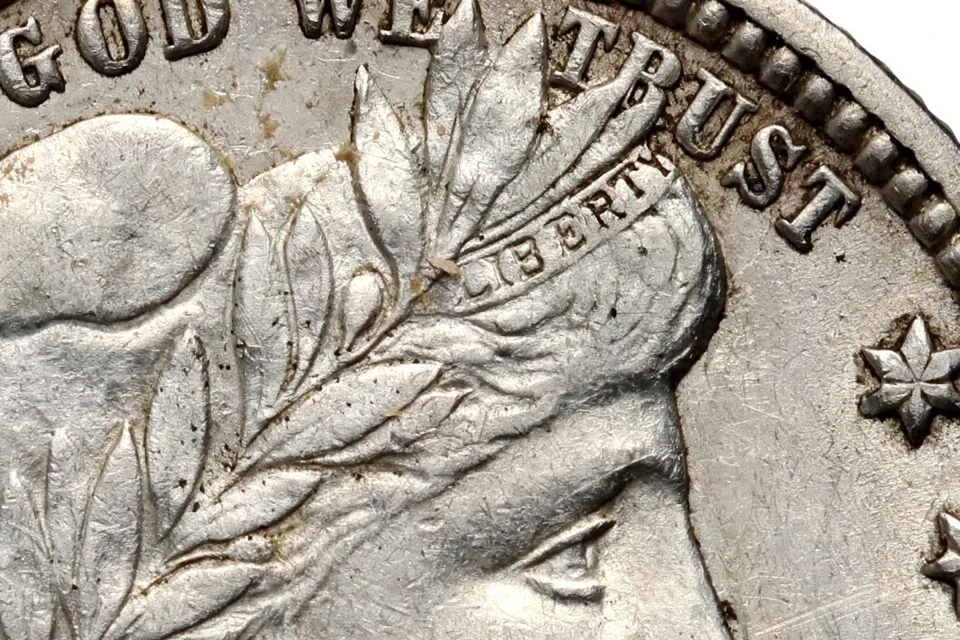
Barber dimes grade by the headband, and collectors have used the same shortcut for generations. Read the word LIBERTY on Liberty’s cap. If all seven letters are full and sharp, the coin is at least Extremely Fine. If three or more letters are readable but soft, it grades Fine to Very Fine. If LIBERTY is mostly worn away but the portrait outline is clear, it grades Good to Very Good.
On the 1895-O that test is worth real money. The jump from a worn example to an Extremely Fine one is almost entirely a jump in headband detail. Mint State coins keep full cartwheel lustre when tilted under a single light, with no flat or dull spots on the hair above the eye or on the cheek. Original surfaces and natural toning carry the premium — never clean a Barber dime, because cleaning strips the surface and destroys collector value instantly.
What an 1895-O Barber dime is worth by grade
The table below comes from our Barber dime guide. No grade of this date is researched yet, so every row shows “—”, not a guess — and on a coin this scarce, the unresearched grades are the ones where a certified opinion matters most.
| Grade | Estimated value |
|---|---|
| Good (G-4) | — |
| Fine (F-12) | — |
| Extremely Fine (XF-40) | — |
| About Uncirculated (AU-50) | — |
| Mint State 60 (MS-60) | — |
| Mint State 65 (MS-65) | — |
Guide values reviewed November 5, 2026 — figures update live from our Worker.
Every row of this table is a dash: our guide holds no researched figure for the 1895-O yet, so nothing is guessed — and at the top end each coin is valued on its own merits.
Read the table as a warning as much as a guide. A worn coin and a Mint State coin can look similar in a photograph, and the difference lives in lustre, strike, and surface originality that only a loupe — or a grading holder — can settle.
Why high grade is nearly impossible
Three forces worked against the 1895-O surviving in high grade. First, the mintage: 440,000 is small to begin with. Second, the circulation: New Orleans dimes worked for a living, and few were ever set aside by collectors in 1895 — Barber dimes were new, unremarkable pocket change, not keepsakes. Third, the South’s climate and the coin’s small size: silver dimes stored in humid conditions tone, spot, and wear faster than the same coin kept in a dry Northern drawer.
The result is a survival curve that falls off a cliff. Worn examples trade regularly. Extremely Fine examples are scarce. Mint State examples are events, and gem examples are rarer still. When a coin like that appears, it does not trade on a chart; it trades on the day, in the room.
What to check before you trust an 1895-O
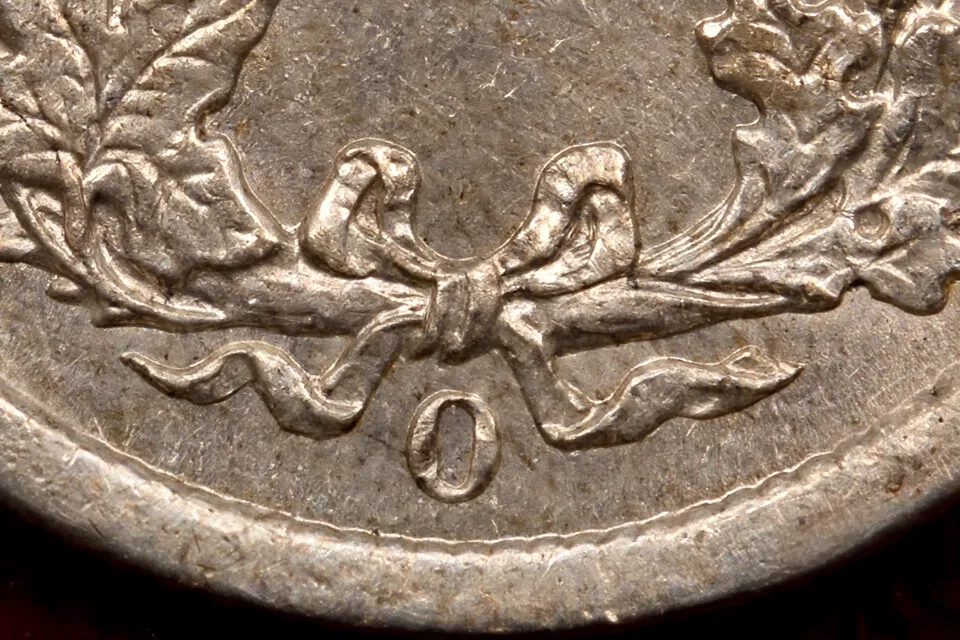
Start with the mint mark. On a Barber dime it sits on the reverse, directly below the bow that ties the wreath — a small O for New Orleans. No letter means Philadelphia, and an 1895 Philadelphia dime is a common coin worth a few dollars, so the O is the whole difference. Use a 5x to 10x loupe: the mint mark is small, and an added O is the oldest trick in the Barber series.
Then weigh it. A genuine Barber dime weighs exactly 2.5 grams and shows a solid silver-grey edge with no copper stripe. Then read the LIBERTY band to set your grade expectations before any money moves. Any 1895-O whose value clears the grading fee belongs in a PCGS or NGC holder — certification is where the premium is paid, and it is the only defence against an altered mint mark.
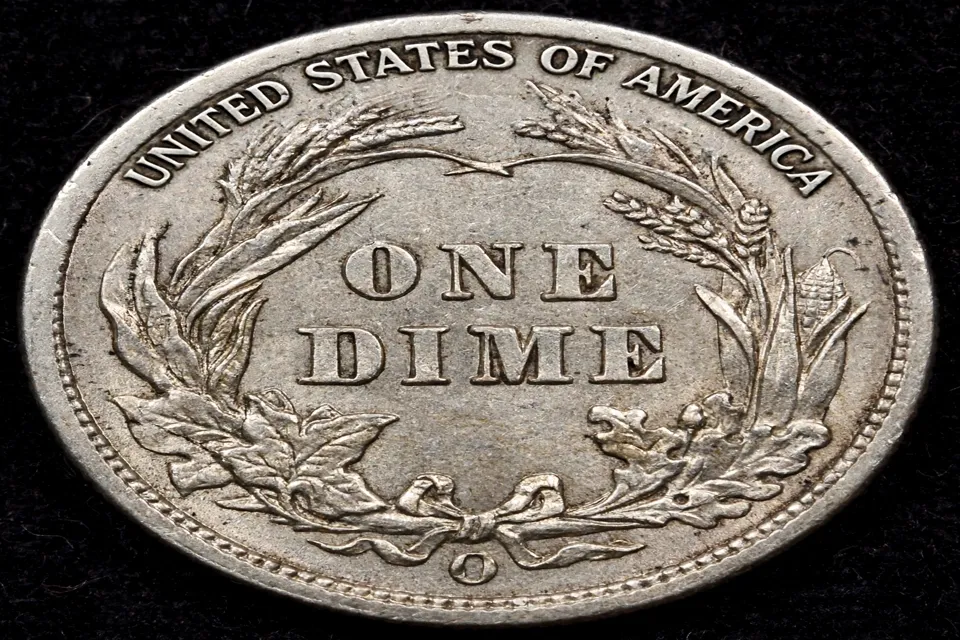
Silver floor and specs
Under the rarity, the 1895-O is still a silver dime. Every Barber dime is 90% silver and 10% copper, weighs 2.5 grams, measures 17.9 millimetres across, and carries 0.07234 troy ounces of pure silver — about $3.77 at the November 2026 silver level near $52.07 an ounce. That floor is the least interesting thing about this coin, but it is the reason even a heavily worn example never falls to face value.
Metal floor updates live from our Worker — last updated November 7, 2026.
The series ran from 1892 to 1916, designed by Chief Engraver Charles E. Barber, before Adolph A. Weinman’s Winged Liberty Head — the Mercury dime — replaced it. The 1895-O is the date that defines the series for collectors: the lowest mintage, the hardest gem, and the coin every Barber set is measured against.
Latest reported results for this coin
Checking for newly reported results…
Your 1895-O Barber dime questions, answered
How much is an 1895-O Barber dime worth?
Our Barber dime guide holds no researched figure for the 1895-O yet, so the grade table shows dashes — no figure invented to fill the space. Gem examples are valued on their own merits, with a certified opinion.
Why is the 1895-O the key date of the Barber dime series?
New Orleans struck only 440,000 in 1895 — the lowest regular-issue mintage in the series. Heavy Southern circulation left few survivors, and almost none in Mint State.
Where is the mint mark on a Barber dime?
On the reverse, directly below the bow that ties the wreath. O means New Orleans, S means San Francisco, D means Denver, and no letter means Philadelphia.
How do I grade a Barber dime?
Read the word LIBERTY on Liberty’s headband. All seven letters full and sharp means at least Extremely Fine; three or more readable but soft means Fine to Very Fine; mostly worn away means Good to Very Good.
Should I get my 1895-O certified?
Yes, if its worth clears the grading fee. Certification settles the mint mark question, locks in the grade, and is where the premium is paid — especially above Extremely Fine.
Check your 1895-O
Run the date and mint mark through the free Coin Value Checker for an instant estimate, or get a Grade-or-Not verdict on whether your coin is worth certifying. The full series guide is here: Barber Dime Values by Date and Grade.
Shared for learning: this page exists so a collector holding a worn New Orleans dime can tell, in a minute with a loupe, whether it is the series key or a common date.
This guide is for education — learn the coin first, and get a professional opinion before buying or selling.