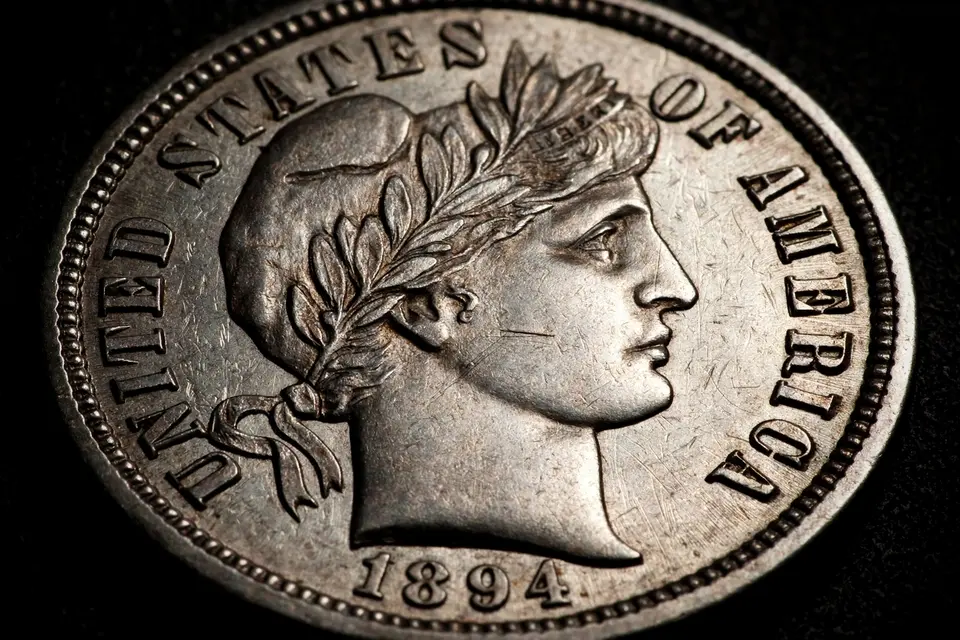
1901-S Barber Dime: The San Francisco Sleeper
Coin Encyclopedia · 7 min read · Published November 7, 2026
The 1901-S Barber dime is the key date that does not look like one. San Francisco struck 593,022 of them in 1901 — a low number, but not a shocking one — and a worn example is the kind of coin that lets a collector pass it by. Then the grade curve takes over: wear is common, original lustre is not, and genuine rarity lives in gem condition. It is the sleeper of the classic Barber key-date set, and it rewards the collector who checks mint marks before spending.
This page treats the 1901-S as a hunting coin rather than a trophy coin. The mintage, the mint-mark check, the grading shortcut, and the reason San Francisco’s output wore out so fast are all here — because the 1901-S is the Barber key most likely to turn up in an inherited collection, mislabelled as common.
A key date hiding in plain sight
The classic Barber dime key set has five members — the 1895-O, the 1896-S, the 1901-S, the 1903-S, and the 1913-S — and the 1901-S is the one collectors most often underestimate. Its mintage of 593,022 is the second-highest of the five, and its worn examples look affordable next to the 1895-O, the series key. That modest start is exactly the trap: the coin looks affordable, so it gets handled, traded, and spent without a second thought.
What the worn figure hides is the survival curve. San Francisco dimes of this era circulated across the West, where small silver worked hard and stayed in use for decades. By the time collectors began saving Barber dimes systematically, the crisp 1901-S examples were mostly gone. The coin is common enough worn to stay visible, and scarce enough in high grade to stay expensive.
What a 1901-S Barber dime is worth by grade
The table below comes from our Barber dime guide. No grade of this date is researched yet, so every row shows “—”, not a guess.
| Grade | Estimated value |
|---|---|
| Good (G-4) | — |
| Fine (F-12) | — |
| Extremely Fine (XF-40) | — |
| About Uncirculated (AU-50) | — |
| Mint State 60 (MS-60) | — |
| Mint State 65 (MS-65) | — |
Guide values reviewed November 5, 2026 — figures update live from our Worker.
The whole story of this date is the jump from worn to Mint State: wear is common, original lustre is not.
Compare the shape of that curve with the 1895-O, the series key. The 1901-S is the better hunting coin precisely because it looks affordable — which is why it is the one most often underestimated. A worn example is a find; an Extremely Fine example is a triumph.
San Francisco in 1901
The San Francisco Mint in 1901 was a working mint, not a showpiece. It struck coinage for a West that still ran on silver and gold, and its dimes went straight into circulation in California, Oregon, Nevada, and beyond. There was no collector market for a new San Francisco dime in 1901, no mint sets, no rolls put aside. The coins were made to be spent, and they were.
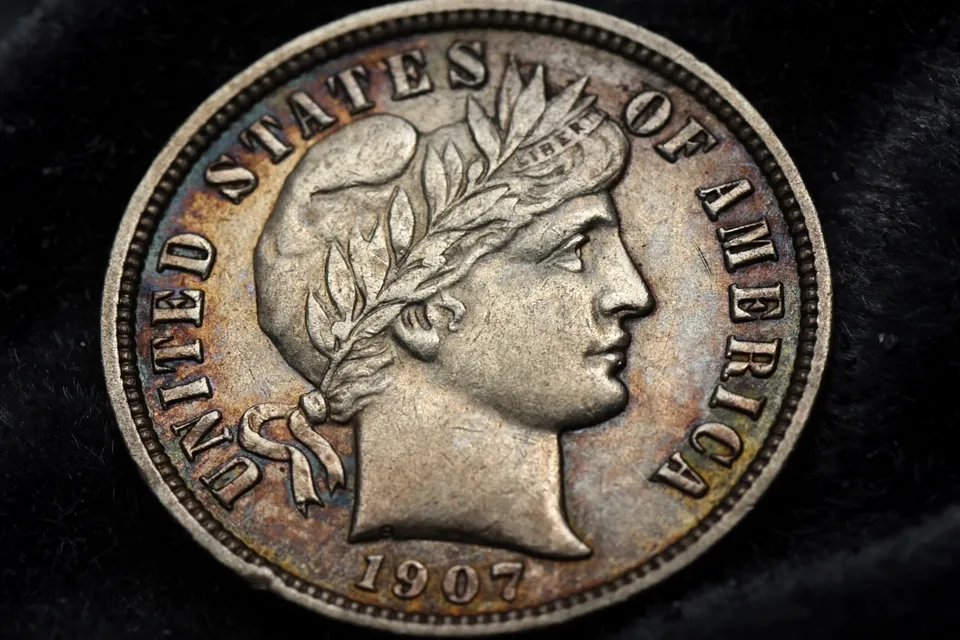
That working-mint history shows on the survivors. The 1901-S is usually found with honest wear — softened high points on Liberty’s cheek and hair, a wreath that has lost its sharp edges. A coin that escaped that fate, with full lustre and a sharp strike, is the exception that proves how hard these coins worked. When you hold one, the wear is the history.
The mint mark check
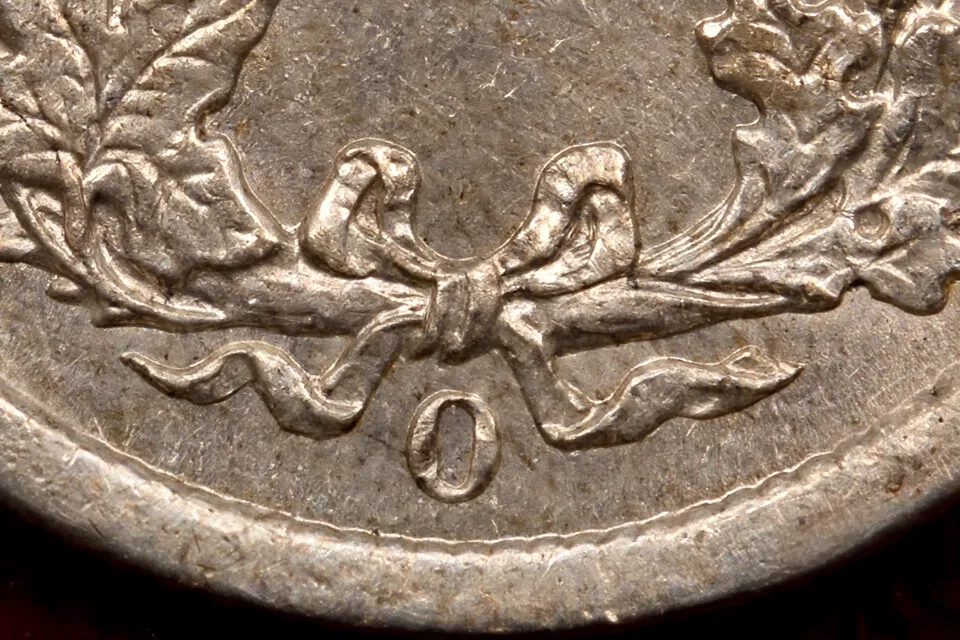
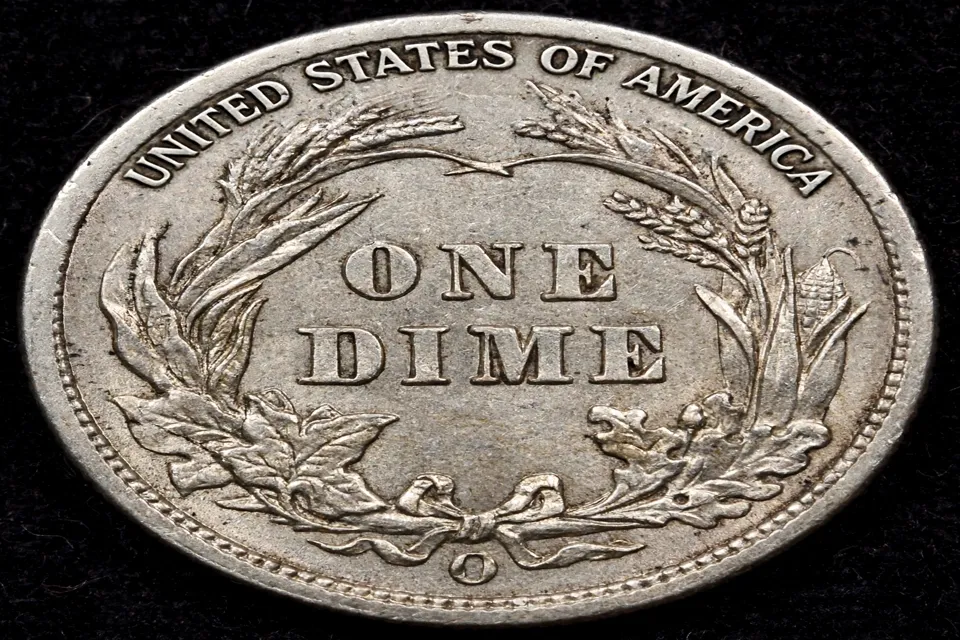
On a Barber dime the mint mark sits on the reverse, directly below the bow that ties the wreath. S means San Francisco; no letter means Philadelphia. A 1901 Philadelphia dime is a common coin worth a few dollars in silver, so the S is the entire difference between a common Philadelphia dime and a key date. Use a 5x to 10x loupe — the mark is small, and a worn reverse can hide it.
Check the mark’s position and depth against a known genuine example before trusting it. An added S is the oldest trick in the series, and it is usually betrayed by tool marks in the metal around the letter or by a letter that sits too high, too shallow, or at the wrong angle. A genuine S is crisp, correctly placed, and struck at the same depth as the rest of the design.
Grading by the headband
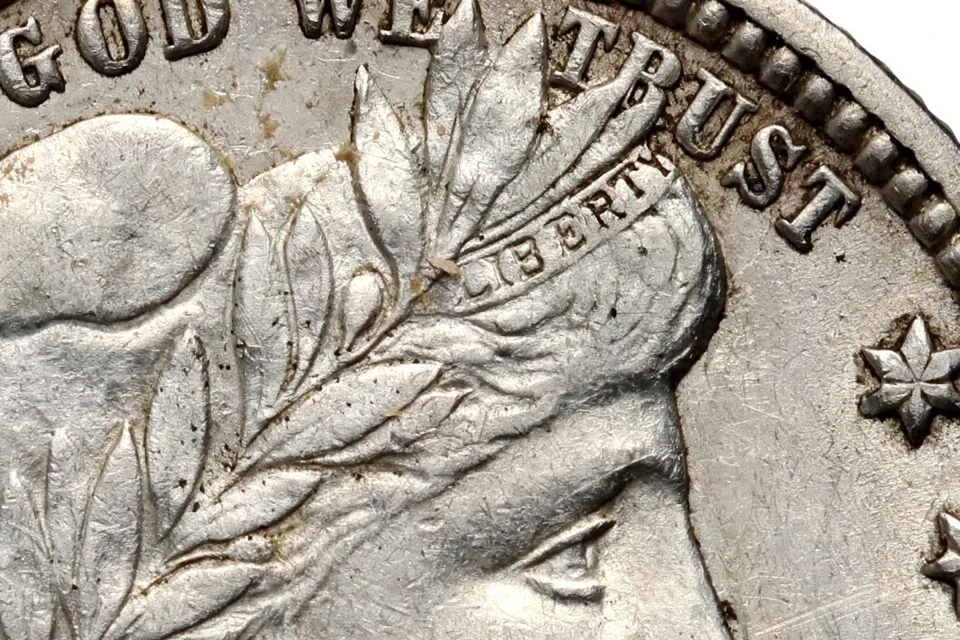
Barber dimes grade by the word LIBERTY on Liberty’s headband. All seven letters full and sharp means at least Extremely Fine; three or more readable but soft means Fine to Very Fine; mostly worn away means Good to Very Good. Mint State coins add full cartwheel lustre under a single light, with no flat spots on the hair above the eye or on the cheek.
On the 1901-S, that test decides whether you hold a common coin or a key date. Take your time with it, and never clean the coin to make the letters easier to read — cleaning strips original surfaces and destroys collector value instantly. A dirty, original 1901-S is worth more than a shiny, cleaned one at the same grade.
Silver floor and specs
Under the key-date premium, the 1901-S is a standard Barber dime: 90% silver and 10% copper, 2.5 grams, 17.9 millimetres across, with 0.07234 troy ounces of pure silver — about $3.77 at the November 2026 silver level near $52.07 an ounce. The series ran from 1892 to 1916 to the design of Chief Engraver Charles E. Barber, before the Mercury dime replaced it.
Metal floor updates live from our Worker — last updated November 7, 2026.
That silver floor is the safety net under every 1901-S. Even a heavily worn example never falls to face value, and a genuine example in any grade is worth more than the ten cents stamped on it. The rest of its worth is the mintage, the mint mark, and the grade — in that order.
Latest reported results for this coin
Checking for newly reported results…
Your 1901-S Barber dime questions, answered
How much is a 1901-S Barber dime worth?
Our Barber dime guide holds no researched figure for the 1901-S yet, so the grade table shows dashes — no figure invented to fill the space. Gem examples are genuinely rare and valued on their own merits.
Why is the 1901-S a key date?
San Francisco struck only 593,022 in 1901, and heavy Western circulation left few survivors in high grade. It completes the classic five-coin Barber key-date set with the 1895-O, 1896-S, 1903-S, and 1913-S.
Where is the mint mark on a Barber dime?
On the reverse, directly below the bow that ties the wreath. S means San Francisco, O means New Orleans, D means Denver, and no letter means Philadelphia.
How do I grade a 1901-S Barber dime?
Read the word LIBERTY on Liberty’s headband. All seven letters sharp means at least Extremely Fine; three or more readable but soft means Fine to Very Fine; mostly worn away means Good to Very Good.
Is the 1901-S often faked?
Added mint marks are the main risk: a common 1901 Philadelphia dime with an added S. Check the mark’s position and depth under a loupe, weigh the coin at 2.5 grams, and certify anything valuable.
Check your 1901-S
Run the date and mint mark through the free Coin Value Checker for an instant estimate, or get a Grade-or-Not verdict on whether your coin is worth certifying. The full series guide is here: Barber Dime Values by Date and Grade.
Written for the hunt: the 1901-S is the Barber key most likely to be sitting mislabelled in a collection, and this guide exists so the next one found gets recognised before it is spent.
This guide is for education — learn the coin first, and get a professional opinion before buying or selling.