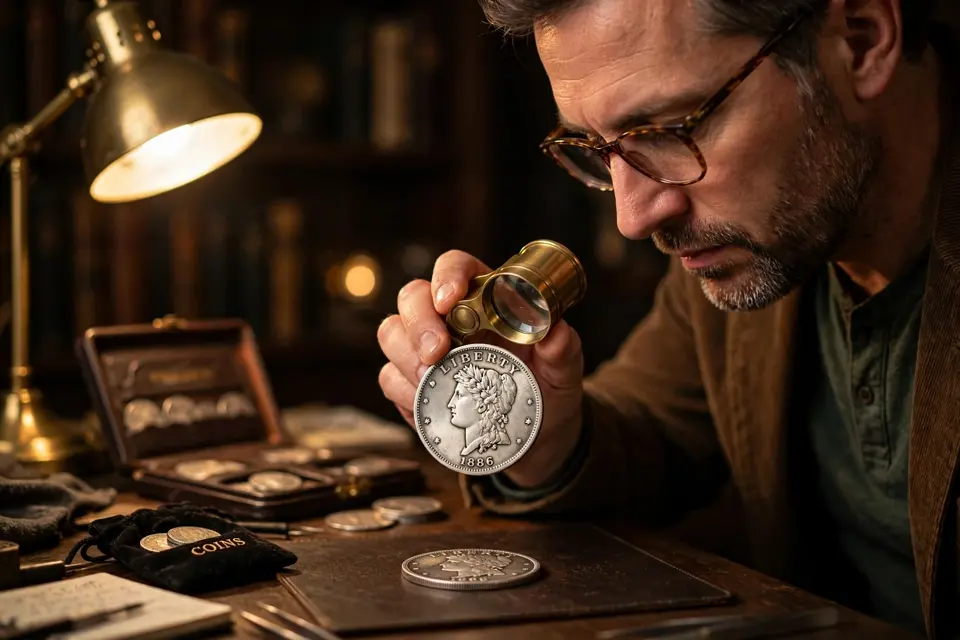
San Francisco's Low Date: The 1895-S Morgan
Coin Encyclopedia · 9 min read · Published November 7, 2026
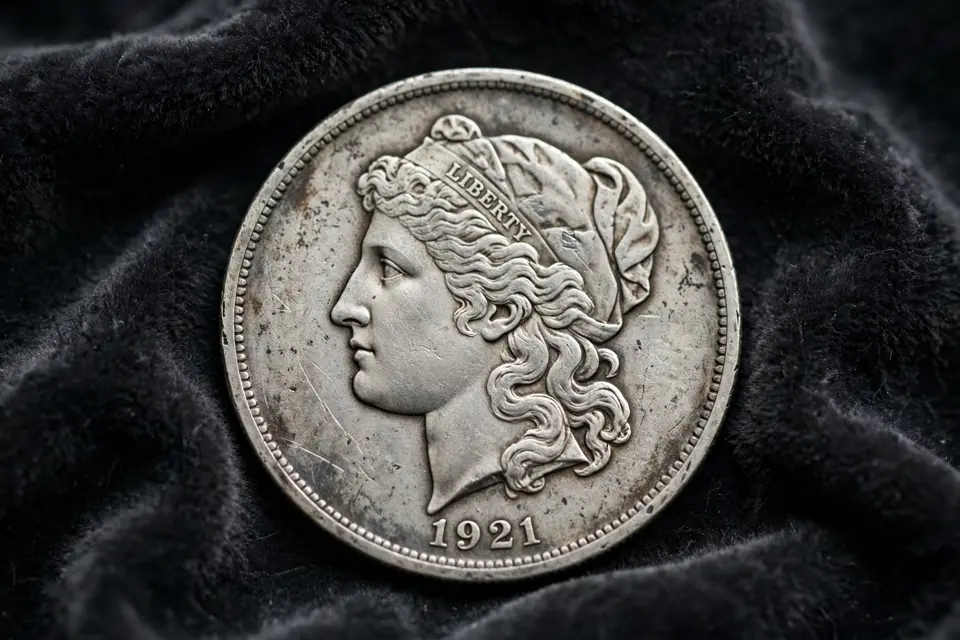
Four hundred thousand. The 1895-S Morgan dollar is the scarcer of the two circulation issues from the most famous year in Morgan history — the year Philadelphia struck proofs only — and it carries that distinction in every grade our guide has researched: G-4 runs $348 to $488, F-12 runs $512 to $586, XF-40 runs $1,464 to $1,708, and AU-50 runs $2,440 to $4,880. The MS-60 and MS-65 rows are dashes. San Francisco struck fewer 1895 dollars than New Orleans, and its coins circulated just as hard.
For the collector, the 1895-S is the harder half of a famous pair. The 1895-O is the more available circulation issue from that year; the 1895-S is the one that takes patience to find, and the one that rewards the collector who learns to grade San Francisco's sharp strikes fairly.
What an 1895-S is worth by grade
The curve climbs steadily: G-4 at $348 to $488, F-12 at $512 to $586, XF-40 at $1,464 to $1,708, and AU-50 at $2,440 to $4,880. The jump from F-12 to XF-40 — roughly threefold — is the steepest step, and it is decided by detail: an XF coin keeps most of its hair and feather detail, while a Fine coin has lost much of it to circulation. The two mint-state rows are dashes in our guide — no researched figure yet, and none invented.
| Grade | Estimated collector value |
|---|---|
| G-4 | $348–$488 |
| F-12 | $512–$586 |
| XF-40 | $1,464–$1,708 |
| AU-50 | $2,440–$4,880 |
| MS-60 | — |
| MS-65 | — |
A dash (—) means our November 2026 review holds no researched figure for that grade yet — it is a gap in our data, not a zero. Figures are collector estimates, reviewed November 5, 2026.
The curve is the story here. Worn examples cluster near the silver floor, and the figures only start to separate once the coin keeps its lustre and its strike. This date has researched figures at 4 of six grades. At G-4 the range runs $348 to $488, and at the top end, AU-50 runs $2,440 to $4,880. The MS-60, MS-65 rows are still a dash in our guide — no researched figure yet, and none invented to fill the space. The MS-60 and MS-65 rows are dashes in our guide — no researched figure yet, and none invented.
1895: the year Philadelphia struck proofs only
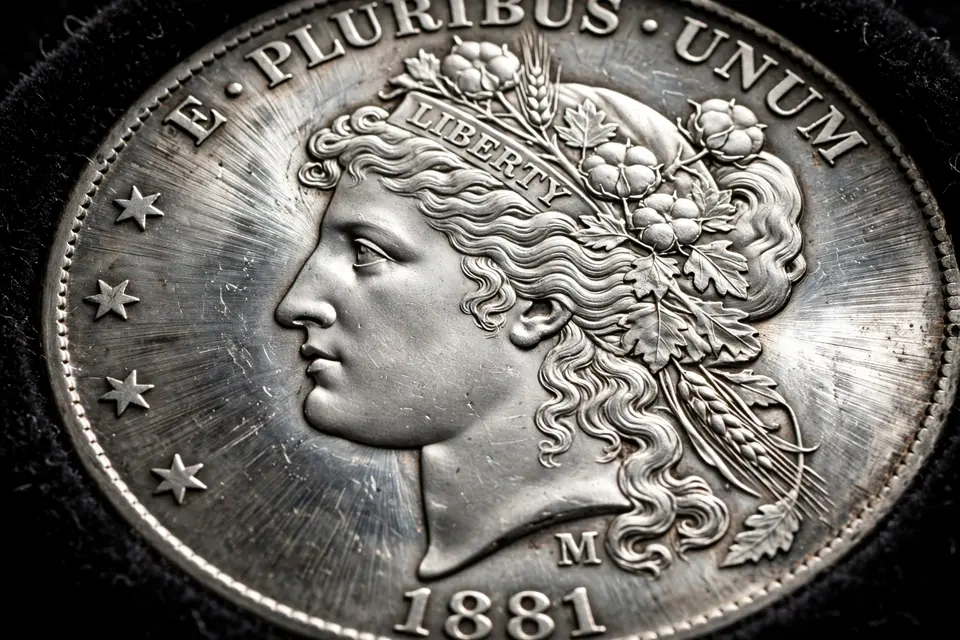
Philadelphia struck no business-strike Morgan dollars in 1895 — only proofs, 880 of them — which is why the year is the most famous in the series. New Orleans and San Francisco kept striking for circulation, and their 1895 dollars are the ones collectors can actually own from that year. San Francisco struck 400,000 — fewer than New Orleans' 450,000 — which makes the 1895-S the scarcer of the two circulation issues, and the harder one to find in collectible condition.
San Francisco's dollars, and why this date is different
The San Francisco Mint struck Morgans for the whole life of the series, and its coins are known for strong strikes and clean, frosty surfaces — the mint's presses and the quality of its dies gave its dollars a look collectors still recognise at a glance. San Francisco dollars circulated heavily in the West, so worn examples are common, but the mint also stored large quantities in Treasury vaults, and the great Treasury releases of the 1960s put many uncirculated S-mint dollars into circulation among collectors for the first time.
For the 1895-S, that reputation for quality is the whole point. The mint's strikes were usually sharp, its planchets clean, and its lustre deep and frosty — so a well-struck 1895-S is not unusual. What is unusual is finding one that escaped circulation with its lustre intact, because the coins of that year were working money in a hard time.
Grading an 1895-S: lustre is the tell
Grading a Morgan starts in three places: Liberty's cheek, the hair above her ear, and the eagle's breast feathers on the reverse. On a mint-state coin those areas are fully struck and covered in cartwheel lustre that rolls across the surface when you tilt the coin under a light. The first wear shows as a flat, dull patch on the cheek and on the high points of the hair curls; the breast feathers go soft next. A coin with full lustre and no wear is mint state, and from there the grade is a question of marks, strike, and eye appeal.
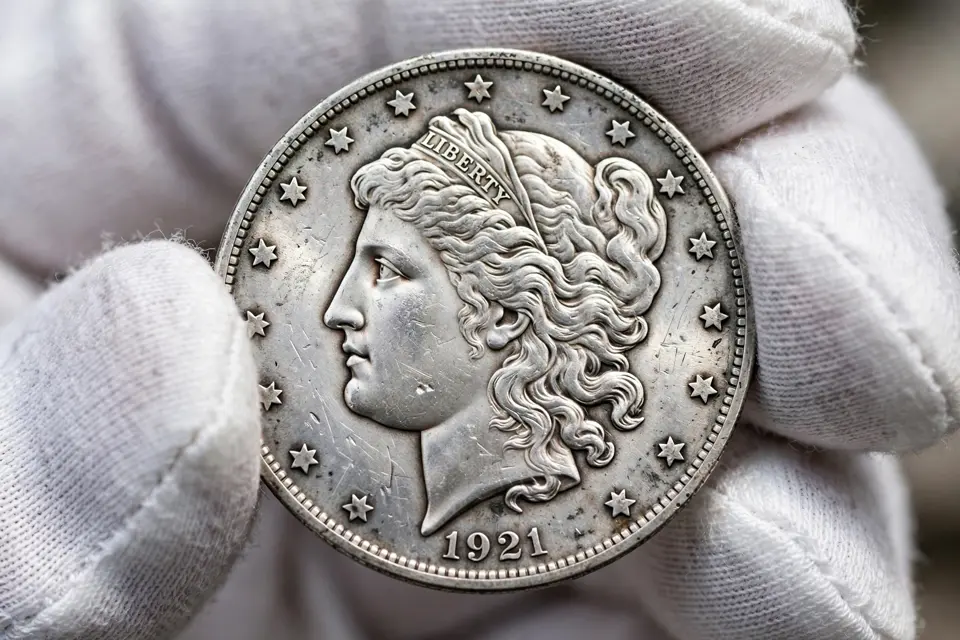
On this date, lustre separates the grades more than wear does. An AU-50 coin has a trace of wear on the cheek but keeps most of its shine; an MS-60 coin has no wear at all but may be heavily marked or dull; an MS-65 coin has full, rolling lustre and only the lightest ticks. Hold the coin under a single light and tilt it slowly — the cartwheel should sweep across the fields without stopping.
Specs and the silver floor
Every Morgan dollar shares the same bones: 26.73 grams, 38.1 millimetres across, a reeded edge, and 90% silver with 10% copper, which works out to 0.7734 troy ounces of pure silver in each coin. That metal is the floor under every genuine Morgan, however worn: $40.27. George T. Morgan designed both sides: Liberty in a Phrygian cap on the obverse, a heraldic eagle in a wreath on the reverse, and the mint mark, when there is one, tucked below the wreath on the reverse.
Metal floor updates live from our Worker — last updated November 7, 2026.
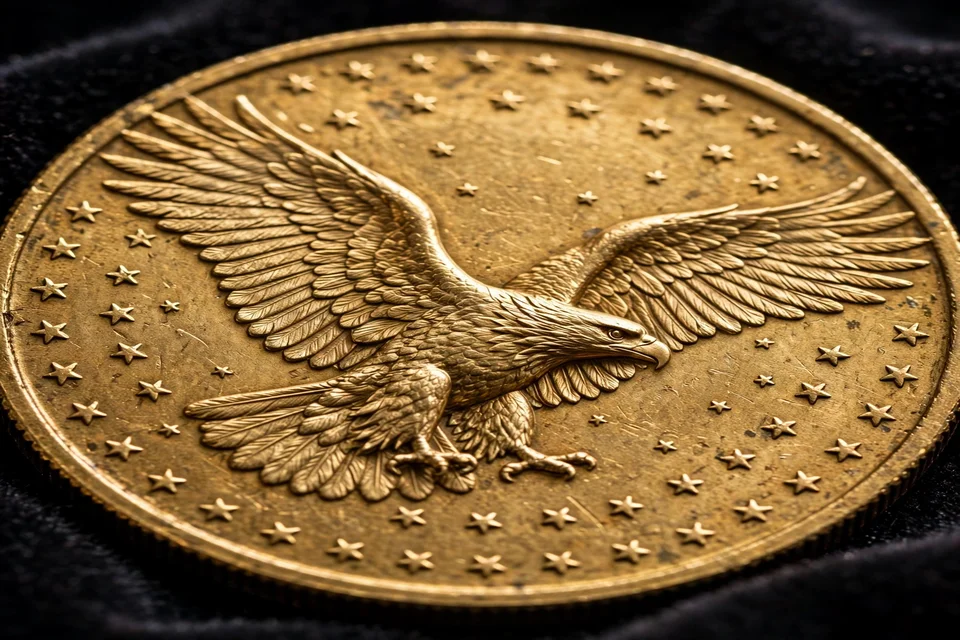
The silver floor is the least interesting number on this page. At 400,000 struck, in the most famous year of the series, the 1895-S is worth its mint mark, its mintage, and its grade — not its metal.
Is your 1895-S genuine?
Counterfeits are a real hazard with every coin in this guide, and the checks are the same ones collectors have used for decades. Weigh it first — 26.73 grams, no excuses — and measure the diameter at 38.1 millimetres. Hold a magnet to it: silver does not stick, and a coin that does is not what it claims to be. Under a loupe, genuine striking leaves crisp, even lettering and clean fields; a cast copy betrays itself with soft details, tiny pits, and a slightly greasy surface. When the stakes are high, certification settles it.
The famous year makes this date a target, so a coin claimed as uncirculated deserves the full check — weight, diameter, magnet, and loupe — and certification before any serious money changes hands. Under a loupe, study the S itself: a genuine mint mark is struck cleanly below the wreath at the same depth as the rest of the design, never added afterwards.
Latest reported results for this coin
Checking for newly reported results…
1895-S Morgan dollar: the questions collectors ask
How much is an 1895-S Morgan dollar worth?
Researched figures run $348 to $488 at G-4, $512 to $586 at F-12, $1,464 to $1,708 at XF-40, and $2,440 to $4,880 at AU-50. The MS-60 and MS-65 rows are dashes in our guide — no researched figure yet. Worn examples sit well above the live metal floor in the specs section.
What is the mintage of the 1895-S Morgan dollar?
San Francisco struck 400,000 Morgan dollars in 1895 — fewer than New Orleans' 450,000, which makes the 1895-S the scarcer of the two circulation issues from the famous proof-only year.
Why is 1895 the most famous year for Morgan dollars?
Because Philadelphia struck no business-strike Morgan dollars in 1895 — only proofs, 880 of them. New Orleans and San Francisco kept striking for circulation, so their 1895 dollars are the ones collectors can actually own from that year.
How do I tell an 1895-S from an 1895-O Morgan?
Look at the mint mark below the wreath on the reverse. An S means San Francisco, an O means New Orleans, and no mint mark on an 1895 dollar means a proof from Philadelphia — a very different coin.
Is the 1895-S Morgan dollar a key date?
It is a recognised better date among San Francisco Morgans, thanks to the low mintage and the famous proof-only year. It is the scarcer half of the 1895 circulation pair, and a date collectors chase at every grade.
Should I get my 1895-S Morgan graded?
Consider it when the coin looks uncirculated with full lustre, because the mint-state rows carry no researched figure in our guide yet — an independent grade is the most useful thing you can have for a date like this. Certification also settles whether the S mint mark is genuine.
Check your 1895-S Morgan
Run the date and mint mark through the free Coin Value Checker for an instant estimate, or get a Grade-or-Not verdict on whether your coin is worth certifying. The full guide is here: 1921 Morgan Dollar Value: $40 to $240,000+. The other 1895 circulation issue is the 1895-O Morgan dollar, struck in slightly larger numbers at New Orleans.
The scarcer half of the most famous year in Morgan history — learn the mint mark, learn the grade, and keep the story close. Shared for education only.