1896-S Barber Quarter: 188,039 Struck, Still Scarce
Coin Encyclopedia · 8 min read · Published November 7, 2026
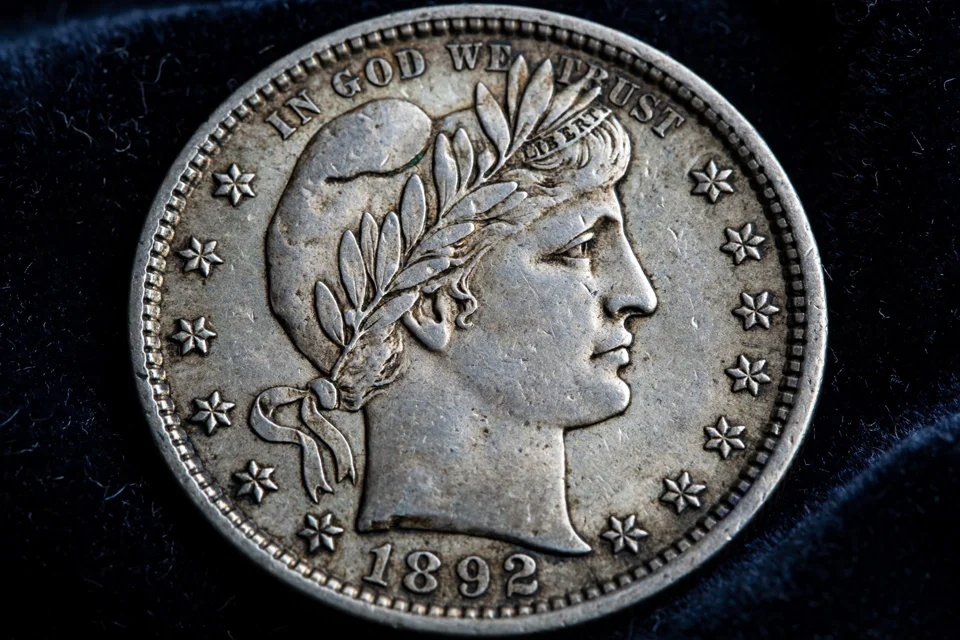
One hundred eighty-eight thousand and thirty-nine. That is the whole story of the 1896-S Barber quarter, and it fits in a single number. San Francisco struck fewer of these than of almost any other Barber quarter, and more than a century of circulation, melting, and pocket wear has thinned the survivors to a trickle. A worn example with a readable date and a clear S still commands real attention from collectors, because the coin is scarce in every grade, not only at the top.
Charles E. Barber’s Liberty head design ran from 1892 to 1916, and the San Francisco issues of the 1890s are the backbone of the set. The 1896-S sits near the top of every want list for the series, and this page walks through it the way a collector would: mintage first, then the mint mark, then the metal underneath, then what to look for in hand.
A mintage that never had a chance
Philadelphia struck Barber quarters by the millions in the 1890s, and most dates from the decade are common enough to find in worn condition without much trouble. San Francisco was different. Its output was small, its coins travelled hard through the West, and few were ever set aside. The 1896-S mintage of 188,039 puts it among the lowest in the entire Barber quarter series, and the survival rate makes the number look generous: most of those coins were spent, worn smooth, and eventually melted when silver rose.
That is the first thing to understand about this date. Scarcity here is not a matter of one perfect coin in a museum case. It is a matter of ordinary, circulated coins being hard to find at all. A collector building a Barber quarter set by date and mint mark will spend longer hunting the 1896-S than almost any other coin in the album, and the hunt does not get easier in higher grades.
Where the S sits
The mint mark on a Barber quarter is on the reverse, below the eagle, just above the R in QUARTER. On the 1896-S it is a small S, and it is the whole difference between a scarce coin and a common one. A Philadelphia 1896 quarter is an ordinary date. Add the S and the coin becomes a key date. That single letter is why every 1896 Barber quarter deserves a look at the reverse before it goes back into a jar.
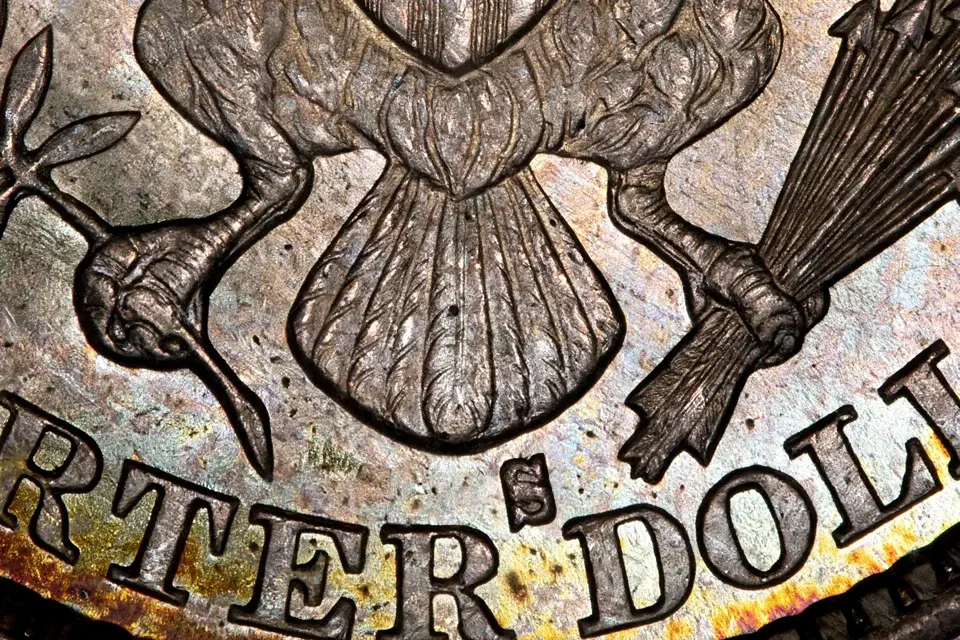
Check the letter under a loupe. A genuine S is crisp, correctly positioned, and struck at the same depth as the rest of the design. A letter that looks added, shallow, or out of place is a warning sign, and the right move is a professional opinion rather than a guess. Key-date Barber quarters attract altered mint marks, and the 1896-S is no exception.
What our guide shows for the 1896-S
Our value guide has not yet researched grade-by-grade figures for this date, so the table below shows “—” where a figure has not been established. That is deliberate: an invented number would be worse than a blank. What the mintage tells us is that every grade of this coin is scarce, and worn examples with full dates trade at strong collector premiums over common-date Barber quarters.
| Grade | Estimated value |
|---|---|
| Good (G-4) | — |
| Fine (F-12) | — |
| Extremely Fine (XF-40) | — |
| About Uncirculated (AU-50) | — |
| Mint State 60 (MS-60) | — |
| Mint State 65 (MS-65) | — |
Guide values reviewed November 5, 2026 — figures update live from our Worker.
When a figure is published for this date, it will appear here. Until then, the honest way to frame the coin is by its mintage and by comparison: common-date Barber quarters in worn condition are worth a modest premium over their silver, while the 1896-S stands apart from them entirely. The gap is the scarcity, and the scarcity is documented.
San Francisco in 1896
The San Francisco Mint in 1896 was a working mint, not a showpiece. It struck what the West needed and shipped it out, and its quarters went into tills, cash registers, and pay envelopes across California and the surrounding states. There was no collector market waiting to save them. The coins that survived did so by accident: tucked into a drawer, forgotten in a desk, or carried as a pocket piece for decades.
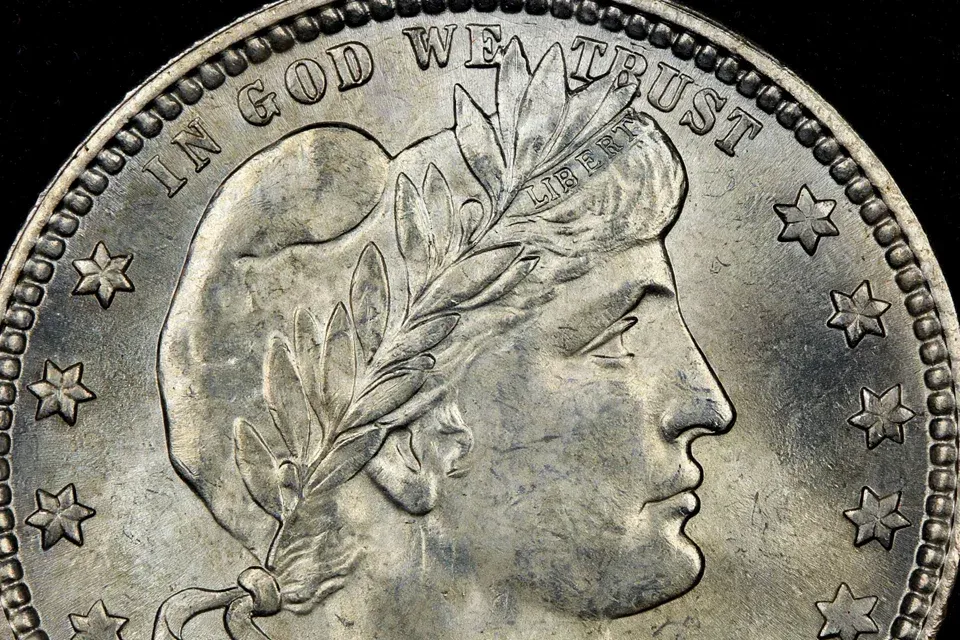
That history is visible on the coins themselves. A typical 1896-S shows honest, even wear, with Liberty’s hair and the eagle’s feathers softened by years of handling. Coins with original surfaces and no cleaning are the ones collectors value most, because so many survivors were polished or dipped at some point. Hold the coin at an angle under a single light: original surfaces show a soft, even glow, while a cleaned coin flashes harshly and shows fine hairlines.
The silver underneath
Every Barber quarter is 90% silver, struck on a 6.25-gram planchet, 24.3 millimetres across, with a reeded edge. The pure silver in each coin is about 0.18 troy ounces, and that metal alone is worth $9.42. Silver moves daily, so the floor moves with it, but the floor is real: no genuine Barber quarter is worth less than its metal.
Metal floor updates live from our Worker — last updated November 7, 2026.
Weigh a suspect coin. A genuine Barber quarter weighs 6.25 grams. A coin that is noticeably light, or whose edge reeding looks soft and uneven, deserves a closer look. The weight test will not catch every counterfeit, but it catches the careless ones, and it costs nothing.
What to look for in hand
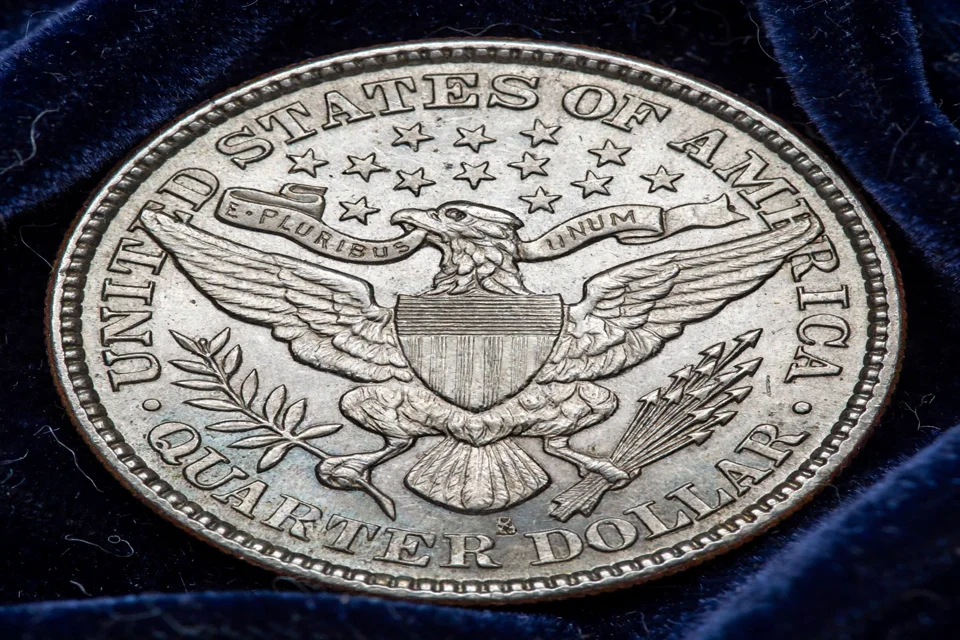
Start with the date: 1896, fully readable. Then the reverse: the S below the eagle. Then the surfaces: original, uncleaned, with no signs of polishing. Then the wear: even, honest, with the design still clear. A coin that passes all four checks is worth a professional opinion, and a certified example is the standard for this date.
Do not clean the coin. Cleaning strips away original surfaces and lowers collector value, and the damage cannot be undone. Store it in an acid-free flip or holder, handle it by the edges, and keep it away from humidity. A scarce coin deserves scarce-coin handling, even when it is worn.
Latest reported results for this coin
Checking for newly reported results…
Your questions, answered
How many 1896-S Barber quarters were struck?
San Francisco struck 188,039 Barber quarters in 1896, one of the lowest mintages in the series. Most entered circulation in the West and wore down, so survivors are scarce in every grade.
Where is the mint mark on an 1896-S Barber quarter?
The S is on the reverse, below the eagle and just above the R in QUARTER. It separates the scarce 1896-S from the common Philadelphia 1896 quarter, so check the reverse before anything else.
Is the 1896-S Barber quarter silver?
Yes. Every Barber quarter is 90% silver, weighing 6.25 grams with about 0.18 troy ounces of pure silver. The live metal floor for this coin is in the specs section above, and it moves with the silver market.
Why is the 1896-S so hard to find?
The mintage was small, the coins circulated hard in the West, and few were ever set aside by collectors. Wear, loss, and later melting thinned the survivors further, so even worn examples are scarce.
Should I get an 1896-S Barber quarter certified?
Yes, if the date and mint mark are clear. Certification settles authenticity, protects against altered mint marks, and is the standard for a key-date coin like this one.
Check your 1896-S
Run the date and mint mark through the free Coin Value Checker for an instant estimate, or use the Key Date Checker to see how it ranks among Barber keys. The full series guide is here: What Is a Barber Quarter Worth in 2026?. A related scarce San Francisco date is the 1901-S Barber Quarter, and the 1913-S Barber Quarter is the lowest-mintage date in the series.
This guide exists to help you identify a scarce coin with confidence, not to rush a decision about it — take your time, check the mint mark twice, and let the coin speak for itself.
This guide is for education — learn the coin first, and get a professional opinion before buying or selling.