1913-S Barber Quarter: The Series' Smallest Mintage
Coin Encyclopedia · 8 min read · Published November 7, 2026
Forty thousand. That is the entire mintage of the 1913-S Barber quarter, the lowest of any business-strike Barber quarter ever made. Philadelphia struck its 1913 quarters by the millions. San Francisco struck forty thousand, sent them out, and moved on. More than a century later, collectors still chase the survivors, and most of them have never seen one in hand.
The 1913-S is the last San Francisco Barber quarter of real scarcity, struck three years before the design was retired. It is a small number with a long shadow, and this page explains why so few survived, how to tell a genuine example from an altered one, and what the coin is made of underneath the rarity.
The last scarce San Francisco Barber
By 1913 the Barber design was nearing the end of its run. The Standing Liberty quarter would replace it in 1916, and the San Francisco Mint’s output that year was modest by any measure. Forty thousand quarters is a small run for a working mint, and the coins went where quarters go: into circulation, into tills, into pockets, and out of the reach of collectors who had not yet learned to save them.
There was no announcement, no special handling, and no reason for anyone in 1913 to think this date would matter. The scarcity was discovered later, as collectors worked through the series and found the 1913-S missing from album after album. By then the coins were gone: worn, lost, or melted in the decades when silver rose and old quarters went to the melting pot.
Why so few survived
Three forces thinned the 1913-S. The first was circulation: a quarter in 1913 was a working coin, and forty thousand working coins do not last long. The second was time: more than a century of handling, storage, and loss. The third was melting: when silver prices rose, old 90% silver quarters were among the first coins to be melted for their metal, and scarce dates were melted alongside common ones because nobody checked them first.
The result is a coin that is rare in every grade. Worn examples with readable dates are the most often seen, and even those are uncommon. Uncirculated examples are genuinely rare, and the finest known are the kind of coins that appear in major collections and stay there for decades.
What our guide shows for the 1913-S
Our value guide has not yet researched grade-by-grade figures for this date, so the table below shows “—” for every grade. That blank is honest: the mintage of 40,000 is documented, the scarcity is documented, and a guessed figure would help nobody. Grade figures will be added here when they are researched.
| Grade | Estimated value |
|---|---|
| Good (G-4) | — |
| Fine (F-12) | — |
| Extremely Fine (XF-40) | — |
| About Uncirculated (AU-50) | — |
| Mint State 60 (MS-60) | — |
| Mint State 65 (MS-65) | — |
Guide values reviewed November 5, 2026 — figures update live from our Worker.
Until then, the framing is simple. The 1913-S is the lowest-mintage business-strike Barber quarter, and it is scarce in every grade. Its silver floor is the same as every Barber quarter — the live figure is in the specs section below — and the collector premium above that floor is the largest in the series for a regular-issue date.
Spotting the real thing
The mint mark is on the reverse, below the eagle, just above the R in QUARTER. On a genuine 1913-S the S is crisp and correctly positioned, struck at the same depth as the rest of the design. The date on the obverse reads 1913. Those two checks are the starting point, and they are not the end of it.
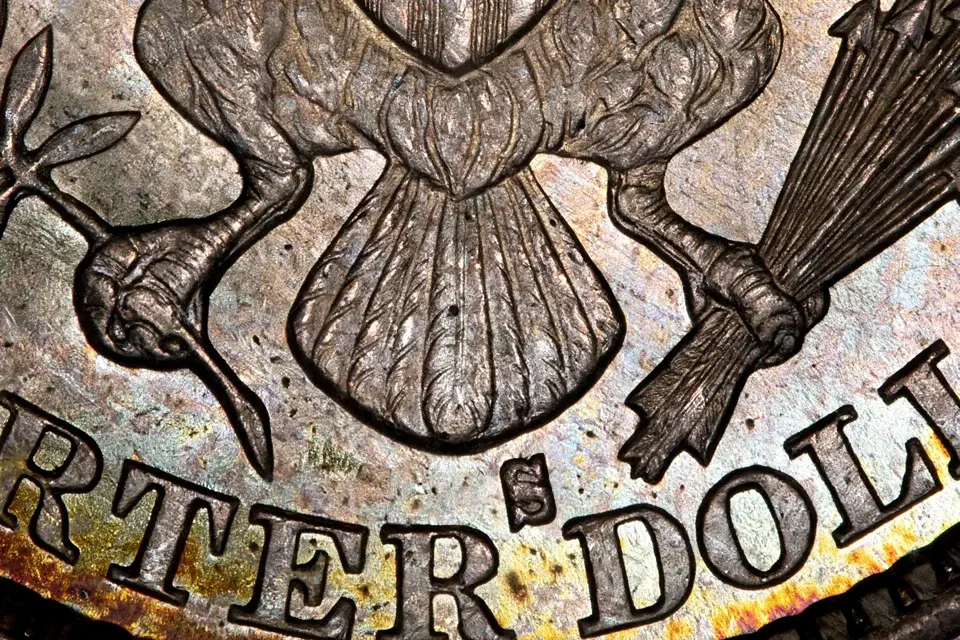
Altered mint marks are the main danger with this date, because the gap between a common 1913 Philadelphia quarter and the 1913-S is enormous. Look closely at the metal around the S for tool marks, and compare the letter’s depth and shape with a known genuine example. A coin that raises any doubt should go to a professional grader before any decision is made about it. Certification is the norm for this date, not the exception.
Design and silver
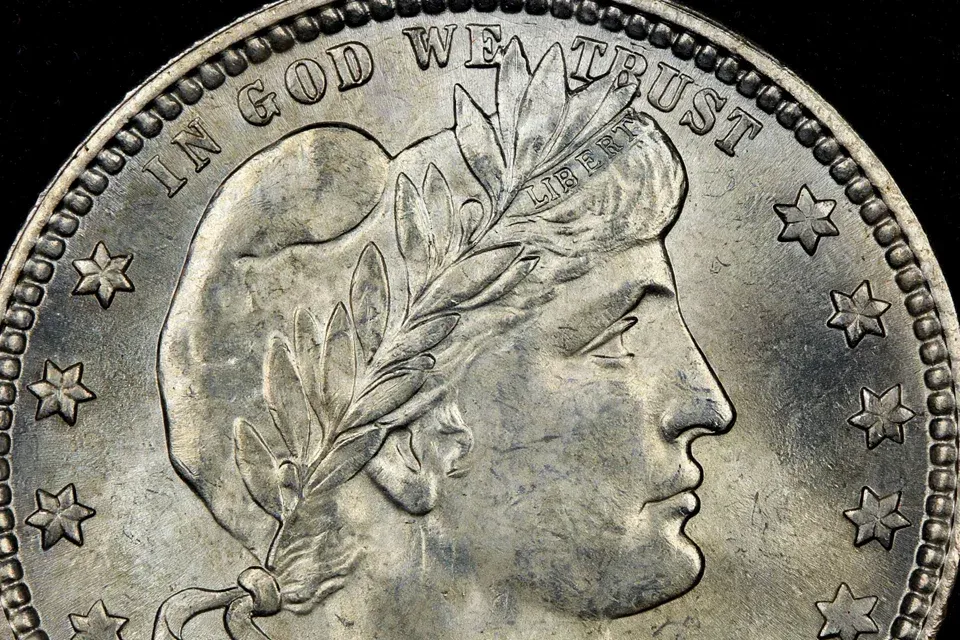
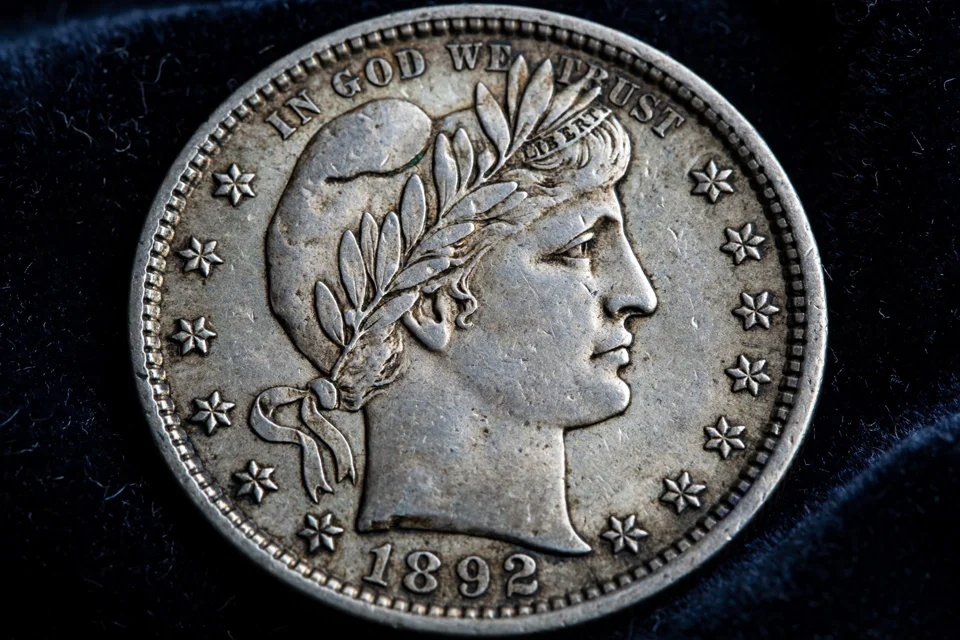
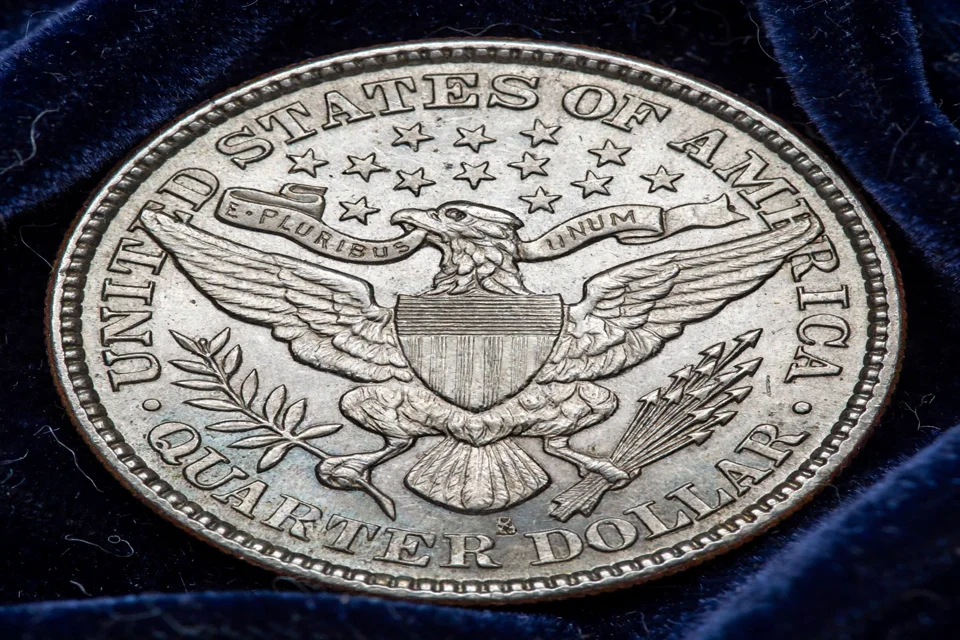
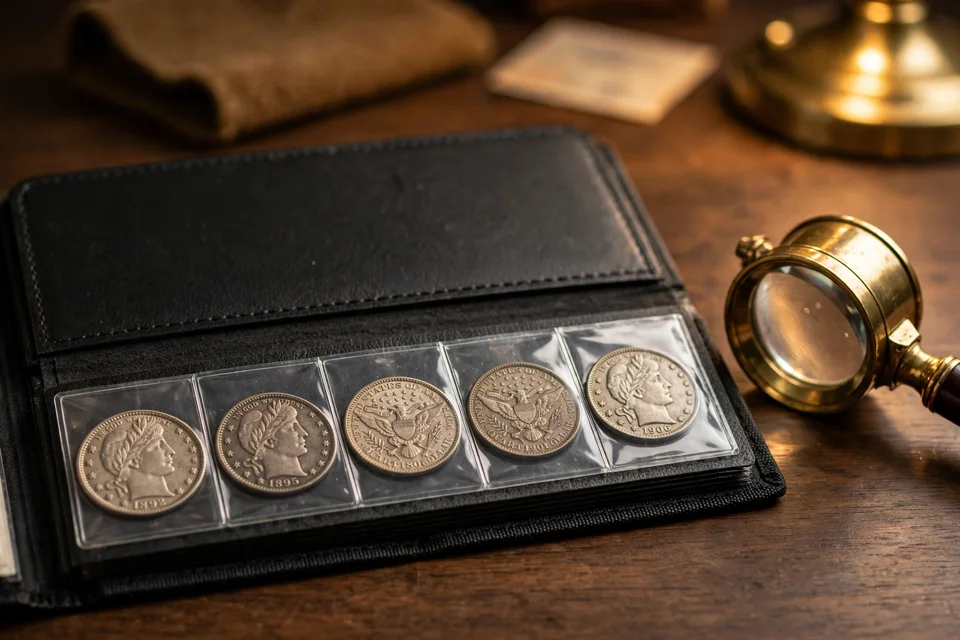
Charles E. Barber’s design shows Liberty in a Phrygian cap on the obverse, with the date below and stars around the rim. The reverse carries a heraldic eagle with outstretched wings, a shield on its breast, arrows and an olive branch in its talons. The coin is 90% silver, 6.25 grams, 24.3 millimetres across, with a reeded edge and about 0.18 troy ounces of pure silver.
That silver gives the coin its floor, and the floor is worth knowing: $9.42.
Metal floor updates live from our Worker — last updated November 7, 2026.
But the floor is the least interesting thing about the 1913-S. The coin’s standing comes from its mintage, and the mintage is the smallest in the series. Everything else about the coin is ordinary. The number is not.
Handling a coin this scarce
Do not clean it. Do not polish it. Do not dip it. Cleaning removes original surfaces and lowers collector value permanently, and on a coin this scarce the loss is real. Handle it by the edges only, store it in an acid-free holder, and keep it dry. If the coin is raw, photograph both sides in good light and keep a note of where it came from.
Then get it certified. A professional opinion on authenticity and grade is the standard for the 1913-S, and it protects the coin, the collector, and everyone who handles it afterwards. A scarce coin deserves that much care.
Latest reported results for this coin
Checking for newly reported results…
Your questions, answered
How many 1913-S Barber quarters were struck?
San Francisco struck 40,000 Barber quarters in 1913, the lowest mintage of any business-strike Barber quarter. Survivors are scarce in every grade.
Is the 1913-S the rarest Barber quarter?
By mintage, yes: 40,000 is the lowest business-strike figure in the series. The 1901-S, at 72,664, is the second lowest.
Where is the mint mark on a 1913-S Barber quarter?
The S is on the reverse, below the eagle and just above the R in QUARTER. Check it under a loupe: a genuine S is crisp and struck at the same depth as the design.
Is the 1913-S Barber quarter silver?
Yes. Every Barber quarter is 90% silver, 6.25 grams, with about 0.18 troy ounces of pure silver. The live metal floor for this coin is in the specs section above, and it moves with the silver market.
Should a 1913-S Barber quarter be certified?
Yes. Certification settles authenticity, guards against altered mint marks, and is the accepted standard for a key-date coin with this small a mintage.
Check your 1913-S
Run the date and mint mark through the free Coin Value Checker for an instant estimate, or use the Key Date Checker to see where it ranks. The full series guide is here: What Is a Barber Quarter Worth in 2026?. The other scarce San Francisco dates are the 1901-S Barber Quarter and the 1896-S Barber Quarter.
Forty thousand coins, more than a century of circulation, and a mint mark the size of a pinhead — the 1913-S teaches collectors to look closely, because the smallest details carry the biggest stories.
This guide is for education — learn the coin first, and get a professional opinion before buying or selling.