High Relief 1907 Saint-Gaudens $20: Art in Gold
Coin Encyclopedia · 10 min read · Published November 7, 2026
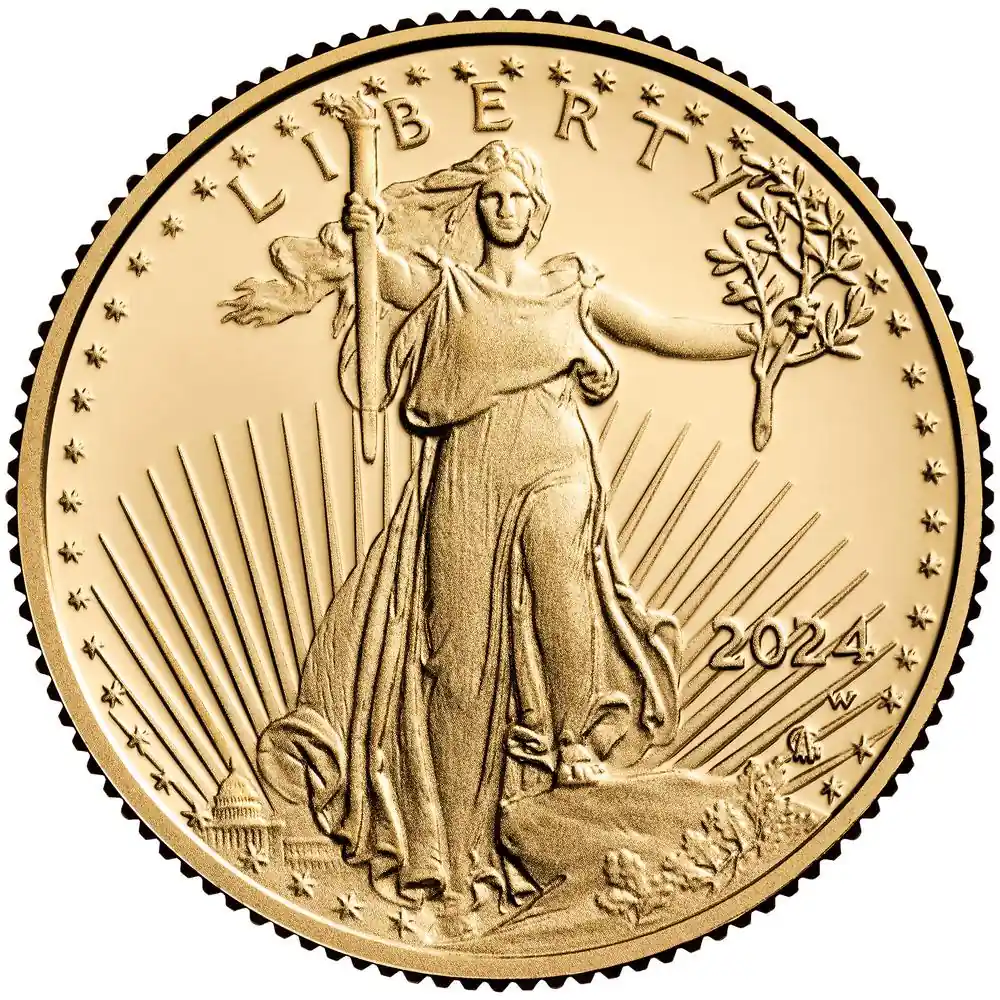
President Theodore Roosevelt called it the most beautiful coin America ever struck, and he was not exaggerating. The 1907 High Relief Saint-Gaudens double eagle is a coin struck like a medal: Liberty striding toward the sun in high relief, the eagle flying into the light on the reverse, the date in Roman numerals, and the edge lettered with stars. Only 11,250 were made, struck on a medal press with several blows, in the year the design was born. If you hold one today, you are holding the coin that remade American money, in the form its artist intended.
This page is about that first year. The 1907 High Relief is the first Saint-Gaudens double eagle, designed by Augustus Saint-Gaudens at Roosevelt's request, struck in high relief only in 1907 before the design was lowered for circulation. Our guide has not yet researched grade-by-grade figures for this date, so the table below is empty. The history is not.
The coin Roosevelt wanted
The story starts with Theodore Roosevelt and his frustration with American coinage. The president thought the nation's coins were ugly — flat, lifeless, and unworthy of a great country — and he asked Augustus Saint-Gaudens, the finest sculptor in America, to remake them. Saint-Gaudens designed the double eagle as a work of art: Liberty striding forward, torch in one hand, olive branch in the other, the Capitol and the sun behind her; an eagle in flight on the reverse, with the sun's rays behind it. The design was struck in high relief, so that Liberty and the eagle stood out from the surface the way a sculpture stands out from its stone.
The problem was the striking. A high-relief coin cannot be struck in a single blow on an ordinary coining press. The 1907 High Relief was struck on a medal press, with several blows, and each coin took far longer to make than an ordinary double eagle. The Mint could not strike them at scale, and the coins did not stack well, because the high relief made them thick in the middle. Saint-Gaudens died in August 1907, before the design was finished, and the Mint lowered the relief in 1908 so the coin could be struck for circulation. The High Relief exists only in 1907, in 11,250 pieces, and it is the only year of the design as its artist intended it.
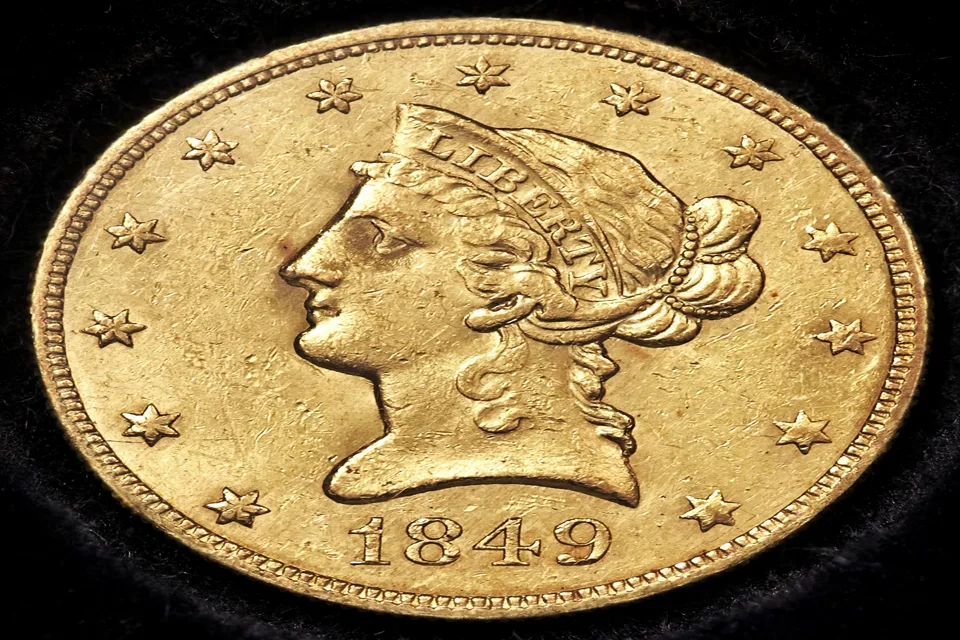
That is why the High Relief is collected the way it is. It is not just a date. It is a design in its original form, struck for a single year, by a president's order, from an artist who died before it was finished. The later double eagles are beautiful. The High Relief is the beauty itself, in the form Saint-Gaudens imagined.
The grade table, still to be researched
The table below is our researched collector estimates from the live guide, reviewed November 5, 2026. Grades our guide has not researched yet are shown as “—”, not guessed. For this date, that is every grade. No grade-by-grade figures are catalogued yet, so the table below is a statement of what we do not yet know, not a set of numbers to lean on.
| Grade | Estimated value |
|---|---|
| Good (G-4) | — |
| Fine (F-12) | — |
| Extremely Fine (XF-40) | — |
| About Uncirculated (AU-50) | — |
| Mint State 60 (MS-60) | — |
| Mint State 65 (MS-65) | — |
An empty table on the most beautiful coin in American history can feel wrong, and it is worth saying why it is there. The grade table is built from researched figures, and the research has not reached this date yet. That does not make the coin common, and it does not make it cheap. It makes it unresearched, and the honest figure for it comes from the coin in hand, graded by a professional, and from the live feed on this page when newly reported results land. No one should quote you a figure for a 1907 High Relief from a guide alone.
MCMVII, and the lettered edge
The High Relief carries its date in Roman numerals — MCMVII for 1907 — on the obverse, below Liberty's feet. That is the quickest way to confirm the coin: a double eagle dated 1907 in Arabic numerals is a later, low-relief issue, struck after the design was lowered. A double eagle dated MCMVII is a High Relief, struck in 1907 on a medal press, in the only year of the high-relief design.
The edge is the second check. The High Relief has a lettered edge reading E PLURIBUS UNUM, with thirteen stars between the words — a detail Saint-Gaudens insisted on, and one that the later double eagles kept. The lettering is sharp and even on a genuine coin, and it runs all the way round the edge without a break. A cast copy has a plain or mushy edge, and the lettering, if it is there at all, is soft and uneven. Hold the coin by its edge, turn it slowly, and read the letters. They are part of the design, and they are part of the authentication.
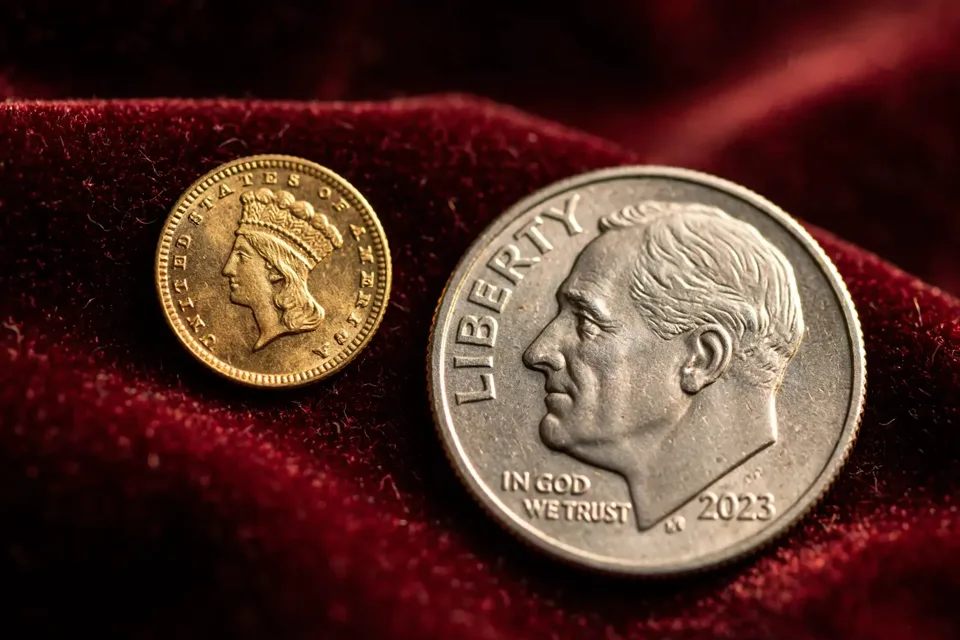
One more detail: the High Relief was struck in two varieties, distinguished by the edge lettering and the wire rim. The earliest strikes have a wire rim, a thin fin of metal around the edge, and the later strikes have a flat rim. Both are genuine, and both are High Relief. The variety is a detail for specialists, and it is not something a beginner needs to settle before getting the coin certified.
Specs and the metal floor
The 1907 High Relief double eagle weighs 33.436 grams and measures 34 millimetres across, struck in 90% gold and 10% copper. It holds 0.9675 troy ounces of pure gold — nearly a full ounce, the largest gold content of any regular United States coin. The specification is the same as every Saint-Gaudens double eagle from 1907 to 1933. If you have handled any $20 gold coin, the High Relief feels identical in the hand in weight, and different in every other way: thicker in the middle, higher in relief, and heavier in the eye.
Metal floor: — The live melt figure on this site is calculated only for the $1 gold dollar, whose specification the Worker carries. Larger gold — $2.50, $5, $10 and $20 — has no live melt specification yet, so this page shows “—” for the metal floor rather than a computed figure. The weight above is the honest check: a genuine coin matches it, and a light coin is not genuine.
Weigh it first. A genuine double eagle is 33.436 grams, and a counterfeit in base metal will be far too light. Then measure it: 34 millimetres, with a lettered edge that is sharp and even all the way round. Then look at the design under a loupe — Saint-Gaudens' Liberty has crisp drapery and a clean torch, the eagle's feathers are sharp, and the Roman numerals are clean and even. A cast copy looks soft, with mushy details and tiny bubbles in the fields. On a coin this famous, those three checks are the beginning, not the end: certification is where the figure is settled.
Why the High Relief still matters
The High Relief matters because it is the design as its artist intended it, and because it is the coin that changed American coinage. Before 1907, the nation's coins were flat and lifeless. After 1907, they were not — the Saint-Gaudens double eagle, the Indian eagle, the Indian half eagle and quarter eagle, all of them carried the new art into circulation, and all of them trace back to Roosevelt's order and Saint-Gaudens' hand. The High Relief is the first of them, struck in the year the change began, in the form the artist wanted.
That is the demand. Saint-Gaudens collectors need it. Double eagle collectors need it. Art collectors need it. And every one of them is chasing the same 11,250 coins, struck on a medal press in a single year, in a design that was lowered before it could be struck at scale. The result is a coin that trades rarely, through established channels, with certification, at figures that reflect its position in history. The grade table above is empty. The history is not, and the history is the reason the coin is what it is.
Latest reported results for this coin
Checking for newly reported results…
Your 1907 High Relief questions, answered
What is a 1907 High Relief Saint-Gaudens double eagle worth?
Our guide has not yet researched grade-by-grade figures for this date, so the grade table below shows — for every grade. As the first Saint-Gaudens double eagle, struck in high relief in 1907, it is one of the most admired coins in American history, and a professional grade is the only reliable way to value one.
What does High Relief mean?
High Relief means the design was struck raised high above the fields, like a medal, rather than flattened for circulation. The 1907 High Relief was struck on a medal press with several blows, so Liberty and the eagle stand out from the surface in a way no later double eagle does.
Why does the date read MCMVII?
The High Relief double eagle carries its date in Roman numerals — MCMVII for 1907 — on the obverse, as Saint-Gaudens designed it. Later double eagles switched to Arabic numerals, 1907, 1908, and so on.
How many 1907 High Relief double eagles were struck?
11,250 were struck at Philadelphia. That is the mintage recorded in our catalog. The coins were struck in high relief only in 1907; the design was lowered for circulation in 1908.
How do I check a 1907 High Relief double eagle?
Weigh it at 33.436 grams and measure 34 millimetres, then look for the Roman numerals MCMVII and the lettered edge reading E PLURIBUS UNUM. On a coin this famous, certification from PCGS or NGC is strongly advised.
Check your 1907 High Relief
A 1907 High Relief is 11,250 coins, struck like medals, in the year the design was born. Weigh it, read the Roman numerals, and let a grader settle the rest. Run the date and mint mark through the free Coin Value Checker for an instant estimate, or get a Grade-or-Not verdict on whether your coin is worth certifying. The full gold guide is here: Gold Dollar Coin Values by Type and Date.
For learning only: this guide is educational, and the figures here are researched estimates, not a promise of what any single coin will bring. A 1907 High Relief should be authenticated and graded by professionals before any decision is made.
This guide is for education — learn the coin first, and get a professional opinion before buying or selling.