1907 Indian Eagle Without the Motto: A $10 First
Coin Encyclopedia · 9 min read · Published November 7, 2026
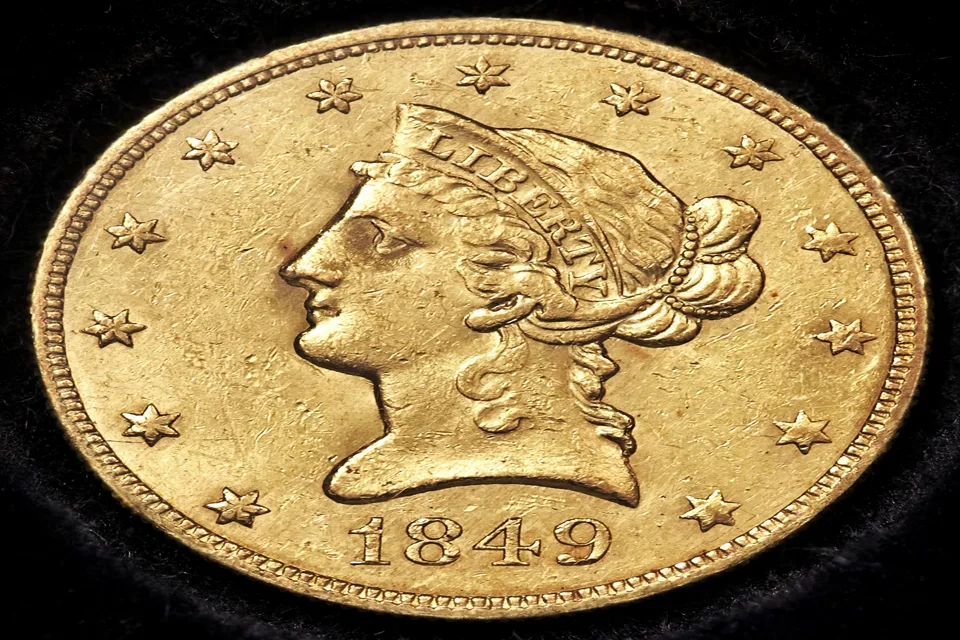
Hold a 1907 Indian eagle up to the light and turn it over. The eagle stands proud on the reverse, wings half-spread, the rising sun behind it — and above it, nothing. No motto. No IN GOD WE TRUST. The field where those words belong is smooth, empty gold, and that empty space is the whole story of this coin. It is the only year of the Indian eagle struck without the motto, the first year of Augustus Saint-Gaudens’ $10 design, and the coin that opened one of the most admired series in American gold.
Everything else about the piece is exactly what a Saint-Gaudens eagle should be: Liberty in a feathered headdress on the front, a standing eagle on the back, and nearly half an ounce of gold in the hand. But collectors do not chase this date for its gold. They chase it because it is a first-year coin with a deliberate omission — a design decision made by a president, reversed by Congress, and frozen in gold for a single year.
The motto that wasn’t there
The story starts with Theodore Roosevelt. When the president asked Saint-Gaudens to remake American coinage, he had strong feelings about the motto IN GOD WE TRUST. Roosevelt thought the words were sacred and did not belong stamped on coins that would be handled, dropped, and spent. Saint-Gaudens agreed, and the first eagles and double eagles of 1907 left the Mint without the motto anywhere on them.
The public did not agree. Newspapers, clergy, and members of Congress protested, and Congress passed a law requiring the motto on all coins that had carried it before. By 1908 the motto was back on the reverse of the eagle, above the bird, where it has stayed ever since. That leaves 1907 as a single-year type: every genuine 1907 Indian eagle is a No Motto eagle, and every eagle dated 1908 or later carries the motto. There is no 1907 With Motto to hunt for, and no 1908 No Motto either — the line is clean, which makes the check simple.
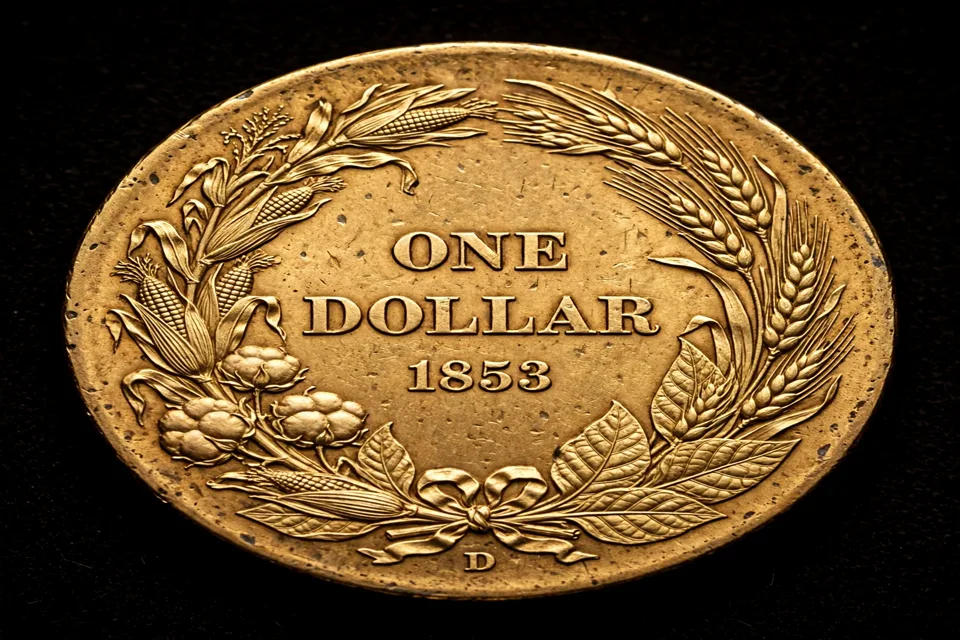
That clean line is also what makes the date so satisfying to collect. You do not need a reference book to confirm it. One look at the reverse tells you everything: blank field above the eagle, 1907 date on the obverse, and you are holding the first-year issue. It is one of the few key diagnostics in gold coinage that a beginner can perform in seconds, with no loupe and no scale.
Saint-Gaudens’ eagle, up close
The obverse shows Liberty wearing a Native American feathered headdress, thirteen stars around the rim, and the date 1907 below. It was a bold choice for its time — a classical Liberty given a distinctly American headdress — and it is why the series is called the Indian eagle. The reverse shows a standing eagle with the words UNITED STATES OF AMERICA and TEN DOLLARS, the sun rising behind the bird. The design is shallower in relief than the famous 1907 High Relief double eagle struck the same year, because the $10 was made for circulation, not for display. It had to stack, bag, and spend.
The coin measures 26.8 millimetres across and weighs 16.718 grams, struck in 90% gold and 10% copper. That composition gives it 0.48375 troy ounces of pure gold, and it is the same specification the Indian eagle carried for its entire run, from this first issue in 1907 to the final 1933 coins that never circulated. If you have handled any later Indian eagle, the 1907 feels identical in the hand — same weight, same diameter, same warm gold colour. Only the reverse tells the difference.
What a 1907 Indian Eagle No Motto is worth by grade
Grade decides the collector value on this coin, as it does on every Saint-Gaudens issue. The figures below are our researched collector estimates from the live guide, reviewed November 5, 2026. Grades our guide has not researched yet are shown as “—”, not guessed — and for this date, that is every grade. No grade-by-grade figures are catalogued yet, so the table below is a statement of what we do not yet know, not a set of numbers to lean on.
| Grade | Estimated value |
|---|---|
| Good (G-4) | — |
| Fine (F-12) | — |
| Extremely Fine (XF-40) | — |
| About Uncirculated (AU-50) | — |
| Mint State 60 (MS-60) | — |
| Mint State 65 (MS-65) | — |
What we can say with confidence is the metal. The coin holds 0.48375 troy ounces of pure gold, and a first-year Saint-Gaudens design in any grade trades well above the metal alone, because collectors pay for the date, the design, and the one-year motto story — not just the gold. The honest way to value a 1907 eagle today is to weigh it, check the reverse, and then get a professional opinion on grade before talking numbers with anyone.
The gold inside the coin
Every genuine United States gold coin carries its metal with it, and the 1907 eagle is no exception. At 90% gold, this coin holds 0.48375 troy ounces of pure gold, and that metal moves with the gold market every single day. A coin that is light by more than a fraction of a gram is suspect, whatever its date says.
Metal floor: — The live melt figure on this site is calculated only for the $1 gold dollar, whose specification the Worker carries. Larger gold — $2.50, $5, $10 and $20 — has no live melt specification yet, so this page shows “—” for the metal floor rather than a computed figure. The weight above is the honest check: a genuine coin matches it, and a light coin is not genuine.
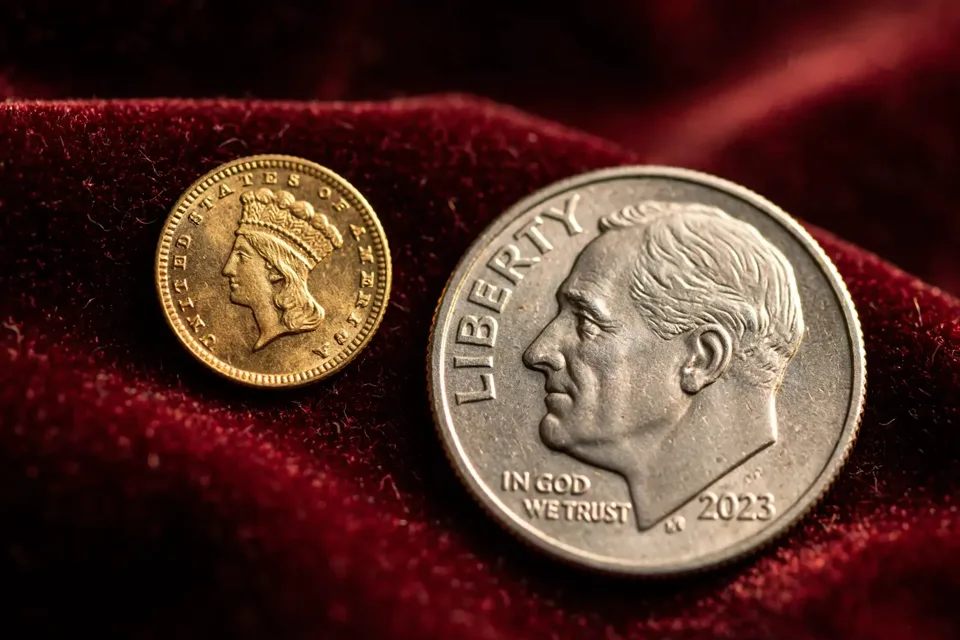
But the metal is not the value. A coin is worth its metal plus its history, and the 1907 eagle has more history than most. It is the first year of a series that ran for twenty-six years. It is the only No Motto year. It is the first Saint-Gaudens design most collectors ever hold. All of that sits on top of the gold, and the premium grows as the grade improves. A worn example is mostly a gold coin with a story. A Mint State example is a showcase piece, and it is valued as one.
Spotting a genuine No Motto eagle
Counterfeits of popular gold dates are common, and the 1907 eagle is popular enough to attract them. Three quick checks catch most fakes. First, weigh it: 16.718 grams, and a coin that is light by more than a fraction of a gram is suspect. Second, measure it: 26.8 millimetres across, with a reeded edge that is sharp and even all the way round. Third, look at the design under a loupe. A genuine Saint-Gaudens eagle has crisp feathers in the headdress, clean lettering, and a sharp date. A cast copy looks soft, with mushy details and tiny bubbles in the fields.
The motto check itself is part of the authentication. A genuine 1907 has a clean, blank field above the eagle — no trace of removed letters, no tooling, no odd texture. If you see ghost letters, scratches, or a field that looks worked, walk away. And as always with gold, a professional opinion from PCGS or NGC settles the question permanently. Certification is where the premium is paid, and on a first-year Saint-Gaudens coin the fee is money well spent.
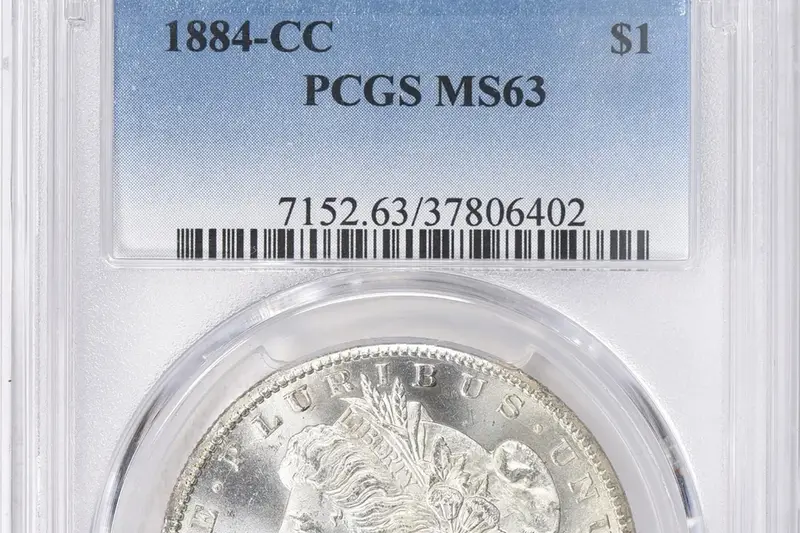
One more practical note: never clean a gold coin. Cleaning strips the original surfaces, leaves hairlines, and destroys the collector premium — on a coin like this, the damage can cost far more than the coin’s gold content. Hold it by the edges, keep it in a proper holder, and let the next owner see exactly what the Mint struck in 1907.
Latest reported results for this coin
Checking for newly reported results…
Your 1907 No Motto eagle questions, answered
How can I tell if my 1907 Indian eagle is a No Motto?
Look at the reverse, just above the eagle. On a No Motto 1907 the field above the eagle is blank — there is no IN GOD WE TRUST. Every 1907 eagle left the Mint this way, so a 1907 with a motto is not genuine.
What is a 1907 Indian Eagle No Motto worth?
Our guide has not yet researched grade-by-grade figures for this date, so no catalogued grade values are shown above. As a first-year Saint-Gaudens ten-dollar gold coin it carries nearly half an ounce of pure gold, and collector demand lifts it well above the metal alone.
Why does the 1907 eagle have no motto?
President Theodore Roosevelt believed the words IN GOD WE TRUST did not belong on coins, and the first Saint-Gaudens eagles followed his view. Public and Congressional pressure reversed the decision, and the motto returned to the reverse in 1908.
Who designed the Indian eagle?
Augustus Saint-Gaudens designed both sides: Liberty in a feathered headdress on the obverse and a standing eagle on the reverse. It is the same hand behind the Saint-Gaudens double eagle, and the $10 was the first of the two to reach circulation.
Is the 1907 Indian eagle real gold?
Yes. It is 90% gold and 10% copper, weighing 16.718 grams with 0.48375 troy ounces of pure gold. The same specification carried through the whole Indian eagle series, which ran from 1907 to 1933.
Check your 1907 eagle
A 1907 eagle is a one-glance coin: blank field above the eagle, and you have the first-year No Motto. Run the date and mint mark through the free Coin Value Checker for an instant estimate, or get a Grade-or-Not verdict on whether your coin is worth certifying. The full gold guide is here: Gold Dollar Coin Values by Type and Date.
For learning only: this guide is educational, and the figures here are researched estimates, not a promise of what any single coin will bring. Check the date, check the motto, and let a professional grade it before you decide anything.
This guide is for education — learn the coin first, and get a professional opinion before buying or selling.