1933 Indian Eagle: The Last $10, Never Released
Coin Encyclopedia · 10 min read · Published November 7, 2026
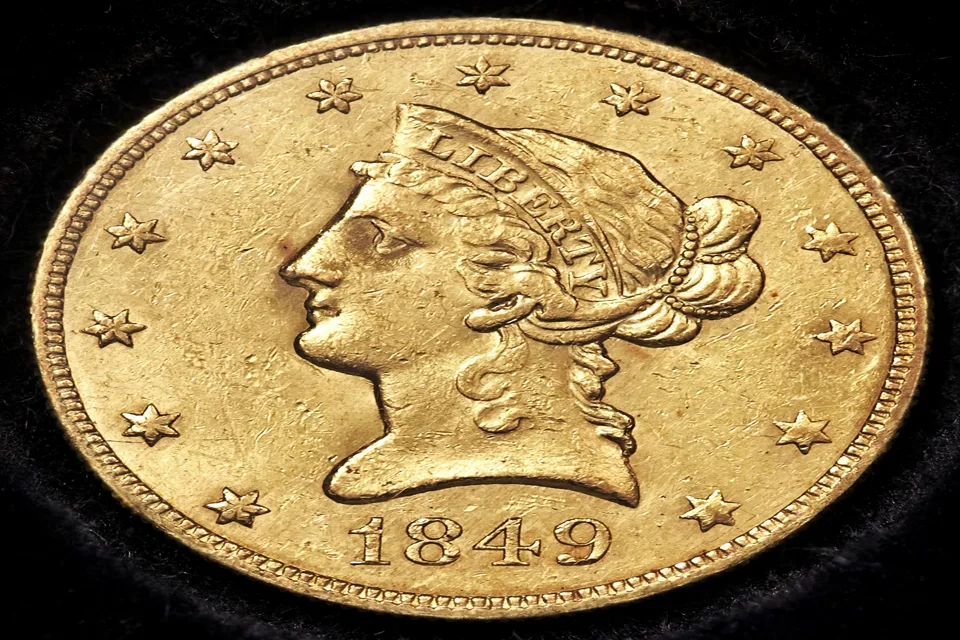
The 1933 Indian Eagle is a coin that was never meant to be owned. The Philadelphia Mint struck 312,500 of them in 1933, the final year of the Indian eagle series — and then the United States stopped using gold coins. The eagles were never released. They sat in vaults while the country turned away from gold, and almost all of them were melted. The few that survived are among the most sought-after twentieth-century gold coins in existence, and in Mint State they are catalogued at $450,000 and above.
This page is about that strange position: a coin with a large mintage and almost no survivors, a final-year issue that never circulated, and a gold piece whose value comes entirely from the year stamped on it and the history that followed. If you think you have one, read the whole page before you do anything else.
1933: the year gold stopped circulating
In April 1933, President Franklin D. Roosevelt signed Executive Order 6102, recalling gold coinage from circulation. Americans were ordered to turn in their gold coins, and the Mint stopped releasing new ones. The 1933 Indian eagles had already been struck — 312,500 of them — but they never left the vault. When the Gold Reserve Act followed in 1934, the government melted its gold coinage stocks, and the 1933 eagles went into the furnaces with them.
That is why the mintage figure is misleading. On paper, 312,500 is a large number — larger than many ordinary dates in the series. In reality, the number that reached collectors is tiny. The survivors are coins that slipped out through official channels, were set aside, or were otherwise preserved before the melt. Every genuine 1933 eagle is, in effect, a coin that escaped destruction, and the market values it that way.
Reading the grade table for a coin that never circulated
Grade decides the collector value on this coin, and the catalogued figures are extraordinary. The table below is our researched collector estimates from the live guide, reviewed November 5, 2026. Grades our guide has not researched yet are shown as “—”, not guessed. Note the wide spread at MS-65: from $360,000 to $1,586,000. That is not a mistake — it reflects how few high-grade examples exist, and how much the market pays for the finest of them.
| Grade | Estimated value |
|---|---|
| Good (G-4) | — |
| Fine (F-12) | — |
| Extremely Fine (XF-40) | — |
| About Uncirculated (AU-50) | — |
| Mint State 60 (MS-60) | $450,000–$450,000 |
| Mint State 65 (MS-65) | $360,000–$1,586,000 |
Read the table carefully. An MS-60 example is catalogued at $450,000, while MS-65 examples span $360,000 to $1,586,000 — a range that shows how much individual quality matters at the top of this market. A single point of grade, a touch of lustre, or a cleaner field can move the figure by hundreds of thousands of dollars. That is why no one should value a 1933 eagle from a table alone. If you hold one, the only number that matters is the one a professional grader assigns after examining the coin in hand.
There is also the metal, though on this coin it is almost an afterthought. Like every Indian eagle, the 1933 holds 0.48375 troy ounces of pure gold. Nobody values a 1933 eagle by its metal. The gold is simply the material; the history is the value.
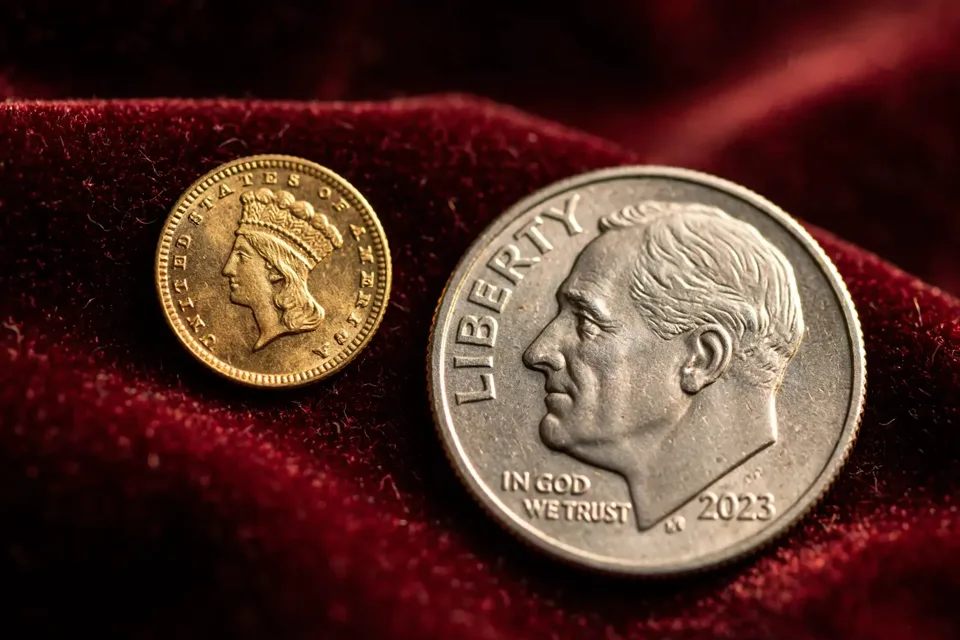
Metal floor: — The live melt figure on this site is calculated only for the $1 gold dollar, whose specification the Worker carries. Larger gold — $2.50, $5, $10 and $20 — has no live melt specification yet, so this page shows “—” for the metal floor rather than a computed figure. The weight above is the honest check: a genuine coin matches it, and a light coin is not genuine.
The design that ended with it
The 1933 eagle carries the same Augustus Saint-Gaudens design as every Indian eagle since 1907: Liberty in a feathered headdress on the obverse, thirteen stars, the date below; a standing eagle on the reverse with the motto IN GOD WE TRUST above it — restored to the design in 1908 after the first-year omission. The coin weighs 16.718 grams, measures 26.8 millimetres, and is 90% gold with 10% copper.
It is worth pausing on that: the design did not change for its final year. There is no special 1933 reverse, no commemorative mark, nothing on the coin that announces it as the last of its kind. The only thing that sets it apart is the date and the story behind it. A collector holding a 1933 eagle is holding the end of a twenty-six-year series, the end of circulating gold eagles, and the end of an era in American money — all stamped on a coin that looks, at first glance, exactly like the one before it.
What to check before you believe it
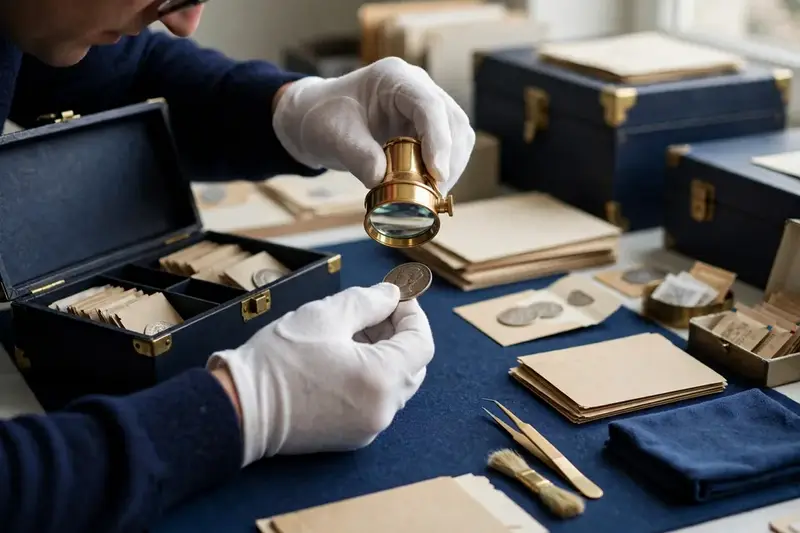
A coin catalogued at $450,000 in Mint State attracts counterfeits, and the 1933 eagle is no exception. The checks are the same as for any Saint-Gaudens gold, but the stakes make them mandatory rather than advisable. Weigh it: 16.718 grams. Measure it: 26.8 millimetres. Check the edge reeding for sharpness and evenness. Study the feathers in Liberty’s headdress and the eagle’s plumage under a loupe — genuine strikes are crisp, while cast copies are soft, with mushy details and tiny surface bubbles.
Then stop, and send it to PCGS or NGC. On a coin of this importance, a professional opinion is not a luxury; it is the only way the market will accept the coin at all. An uncertified 1933 eagle, however genuine it looks, will be treated with suspicion by every serious buyer. Certification is also the only way to establish the grade that decides whether the figure is $450,000 or $1,586,000. Do not clean it, do not handle it by the faces, and do not let anyone talk you into a quick decision. A coin like this deserves a slow, careful process.
One more warning that matters here more than anywhere: if someone offers you a 1933 Indian eagle at a fraction of its catalogued value, it is not a bargain. It is a fake, or a different coin, or a story that will not survive five minutes with a grader. Genuine examples trade through established channels, with certification, at figures that reflect their scarcity.
Why collectors chase a coin that never circulated
There is a paradox at the heart of this coin. It never bought anything. It never sat in a cash register, never crossed a counter, never jingled in a pocket. And yet collectors value it above almost every gold coin that did. The reason is that the 1933 eagle is not really a coin in the ordinary sense — it is a piece of history that happens to be shaped like a coin. It marks the exact moment the United States walked away from gold money, and it carries that moment in its date.
That is also why the final-year status matters so much. The Indian eagle series ran from 1907 to 1933, and the 1933 is its last word. Series collectors need it to complete the set, and completing a set of Saint-Gaudens eagles without the 1933 is impossible. Demand from set builders, plus demand from collectors who simply want the story, meets a supply that was melted down ninety years ago. The result is the table above.
Two records at the top
Two verified auction results anchor the top of this coin’s market in our records. Both are Mint State 65 examples, and both come from Heritage Auctions — the first at $822,500 in April 2015, the second at $408,000 in June 2020. The gap between them is a reminder that two coins in the same grade are never the same coin: eye appeal, originality, and the room on the day all move the figure.
| Coin | Grade | Auction | Amount |
|---|---|---|---|
| 1933 Indian Head Eagle | MS65 CAC | Heritage Auctions, Apr 2015 | $822,500 |
| 1933 Indian Head Eagle | MS65 | Heritage Auctions, Jun 2020 | $408,000 |
Those are the only verified records in our data for this date. Everything below them is the grade table above — and for the 1933 eagle, the grade table is mostly empty, because the lower grades have not been researched. The records are the evidence; the empty cells are the honesty.
Latest reported results for this coin
Checking for newly reported results…
Your 1933 Indian eagle questions, answered
What is a 1933 Indian eagle worth?
Our guide catalogues MS-60 at $450,000 and MS-65 from $360,000 to $1,586,000. Lower grades are not yet researched, so they are shown as —. The wide MS-65 spread reflects how few high-grade examples exist.
Why was the 1933 Indian eagle never released?
It was struck in 1933, the year President Roosevelt recalled gold coinage from circulation under Executive Order 6102. The 312,500 eagles were never issued to the public, and almost all were later melted.
How many 1933 Indian eagles were struck?
312,500 were struck at Philadelphia. That is the mintage recorded in our catalog. Because they were never released, the number struck tells you almost nothing about how many survive.
Is the 1933 Indian eagle rare?
Yes. It is the final year of the Indian eagle series and one of the great rarities of twentieth-century gold. Genuine examples are scarce in any grade, and high-grade examples are extremely scarce.
How do I know my 1933 eagle is genuine?
Weigh it at 16.718 grams, measure 26.8 millimetres, and check the design under a loupe — then get a professional opinion. On a coin of this importance, certification from PCGS or NGC is not optional; it is the only way the market will accept it.
Check your 1933 eagle
A 1933 eagle is a coin that escaped the melting pot. If you think you have one, slow down and get it certified before anything else. Run the date and mint mark through the free Coin Value Checker for an instant estimate, or get a Grade-or-Not verdict on whether your coin is worth certifying. The full gold guide is here: Gold Dollar Coin Values by Type and Date.
For learning only: this guide is educational, and the figures here are researched estimates, not a promise of what any single coin will bring. A 1933 eagle should be authenticated and graded by professionals before any decision is made.
This guide is for education — learn the coin first, and get a professional opinion before buying or selling.