New Orleans' Final $5 Gold: The 1909-O Half Eagle
Coin Encyclopedia · 9 min read · Published November 7, 2026
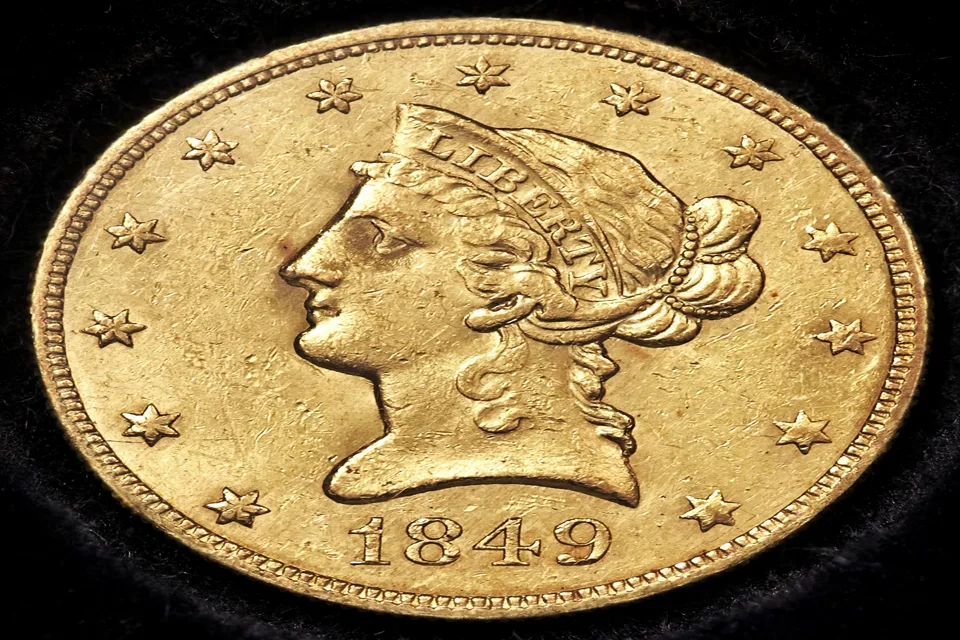
New Orleans closed its mint in 1909, and the 1909-O Indian half eagle is one of the last gold coins it ever struck. Only 34,200 were made. Most went into circulation in the South and wore down there. The few that survived in Mint State are catalogued at $20,000 and above, and the finest known examples reach $517,000 to $750,000. This is a coin whose value comes from three things at once: a tiny mintage, a closed mint, and a design that hides its wear.
If you have a 1909-O half eagle, the first thing to find is the O. It sits on the reverse, low on the left, sunk into the surface like everything else on this coin. Then weigh it, look at the fields, and read the grade table below before you decide what you are holding.
New Orleans’ farewell year
The New Orleans Mint had been striking coins since 1838, through the Civil War, Reconstruction, and the great silver years. By 1909 it was winding down. The Philadelphia, San Francisco, and Denver mints could handle the nation’s coinage, and New Orleans was no longer needed. Its final year of production was 1909, and the half eagle was among the last gold denominations it struck.
That closing gives the 1909-O a double identity. It is a key date of the Indian half eagle series, and it is also a piece of New Orleans history — the last $5 gold coin from a mint that had served the South for seventy-one years. Mint-mark collectors chase it for the O. Series collectors chase it because it is the scarcest early date of the Indian half eagle. And New Orleans collectors chase it because there will never be another one.
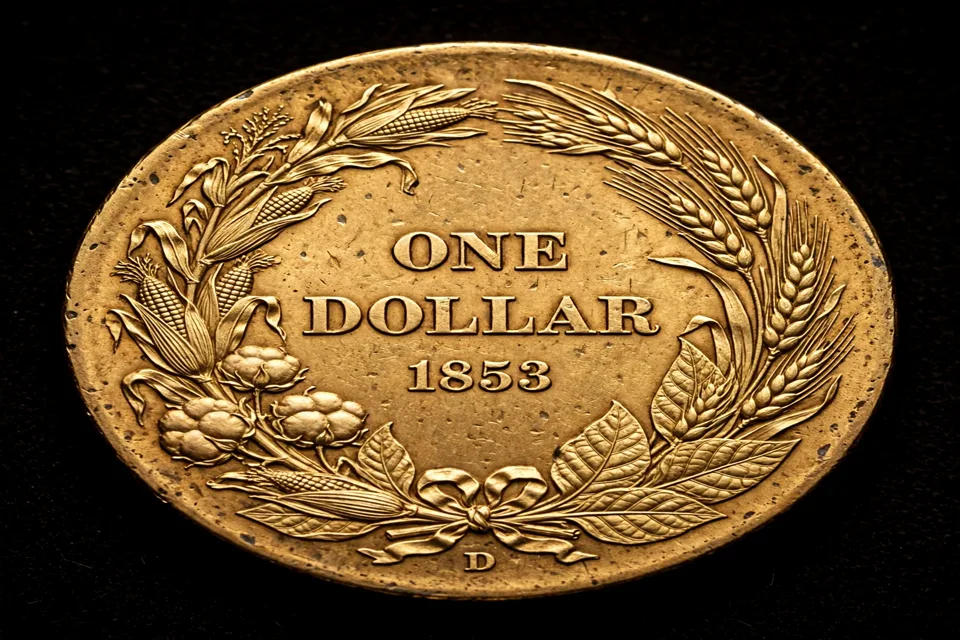
The mintage tells the story in one number: 34,200. That is small for a half eagle even by the standards of a branch mint, and it is tiny next to the hundreds of thousands struck at Philadelphia in the same years. Most of those 34,200 coins circulated hard in the South, where gold coinage stayed in use longer than in the North. The survivors in high grade are few, and the grade table shows what that scarcity does to the figures.
The grade table: a closed mint's premium
The table below is our researched collector estimates from the live guide, reviewed November 5, 2026. Grades our guide has not researched yet are shown as “—”, not guessed. The jump at the top is the story: MS-60 is catalogued at $20,000 to $21,600, while MS-65 reaches $517,000 to $750,000. That is the gap between a nice uncirculated coin and one of the finest known.
| Grade | Estimated value |
|---|---|
| Good (G-4) | — |
| Fine (F-12) | — |
| Extremely Fine (XF-40) | $7,500–$7,750 |
| About Uncirculated (AU-50) | $8,400–$16,212 |
| Mint State 60 (MS-60) | $20,000–$21,600 |
| Mint State 65 (MS-65) | $517,000–$750,000 |
Two things stand out. First, even XF-40 is catalogued at $7,500 to $7,750 — there is no cheap 1909-O, because the mintage was small and the survivors are few. Second, the AU-50 range is wide, $8,400 to $16,212, which tells you how much individual eye appeal matters in the middle grades. A bright, original AU coin is worth far more than a dull one, and the table reflects that spread. As always, the grade that matters is the one a professional assigns, not the one a seller suggests.
The incuse design — and why it fools the eye
Bela Lyon Pratt designed the Indian half eagle with a radical idea: instead of raising the design above the surface, he sank it into the coin. The Indian head on the obverse and the eagle on the reverse are incuse, pressed down into the fields. The effect is a coin that feels smooth to the touch, almost like a medal, and looks unlike any other United States gold coin of its time.
That incuse design makes grading harder. On a normal coin, wear shows first on the high points — the cheek, the feathers, the eagle’s breast. On an incuse coin, there are no high points in the same sense, so wear shows as a softening of the sunk details and a dulling of the fields. Beginners often over-grade Indian half eagles for exactly this reason: a circulated coin can look deceptively sharp. If your 1909-O looks uncirculated, look again at the fields under a good light. A true Mint State example has full, original lustre across the whole surface, with no rub on the design at all.
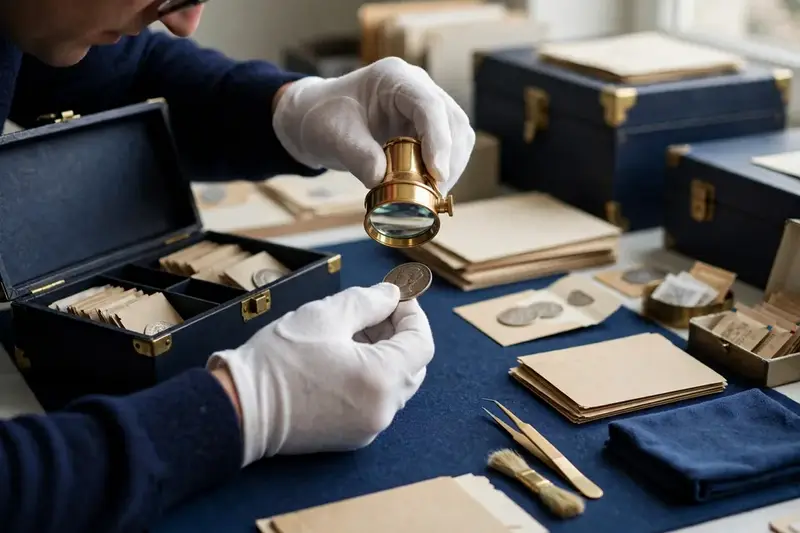
The design also has a practical consequence for authentication. Because the fields are the highest part of the coin, they take the wear — and because the mint mark is incuse, it can look faint on worn examples. The O on a genuine 1909-O sits at the lower left of the reverse, below the eagle’s tail, and it should be in the correct position with the correct shape. An added O is one of the classic fakes on this date, and it is caught by comparing the mint mark’s position and style against a known genuine example.
Weight and gold: the authentication check
The 1909-O half eagle weighs 8.359 grams and measures 21.6 millimetres across, struck in 90% gold and 10% copper. It holds 0.24187 troy ounces of pure gold, and every genuine example is worth far more than the metal alone, because the mintage and the mint’s final year put a large collector premium on top of it.
Metal floor: — The live melt figure on this site is calculated only for the $1 gold dollar, whose specification the Worker carries. Larger gold — $2.50, $5, $10 and $20 — has no live melt specification yet, so this page shows “—” for the metal floor rather than a computed figure. The weight above is the honest check: a genuine coin matches it, and a light coin is not genuine.
The weight still matters, because it is the check that catches the worst fakes. A counterfeit in base metal will be far too light. A gold-plated copy will be close in weight but wrong in feel, with soft details and a dull surface. Weigh the coin first, before anything else. If it is not 8.359 grams, the conversation is over.
What to do if you have one
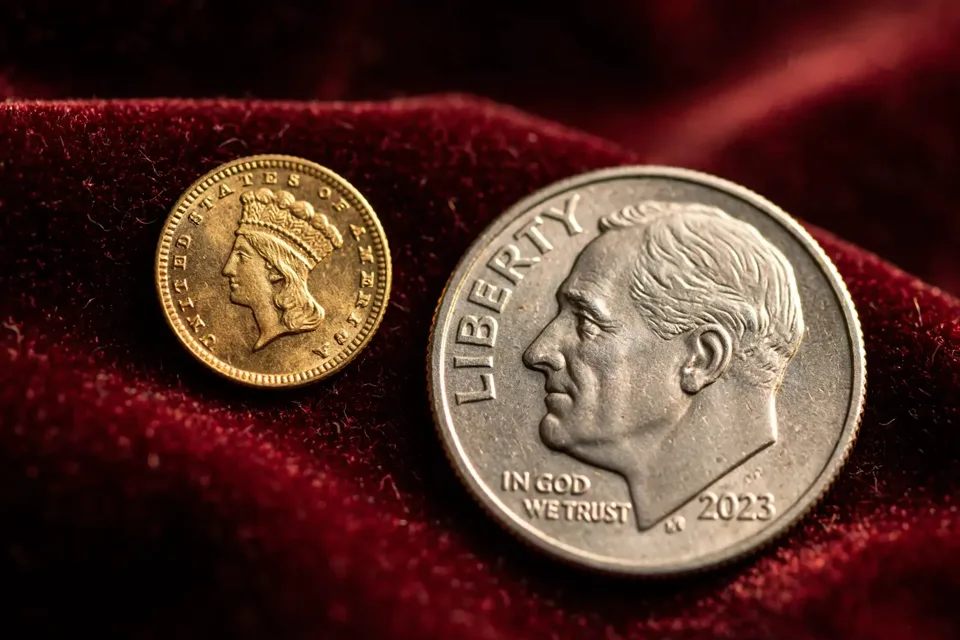
Do not clean it. Do not dip it. Do not polish it. Cleaning destroys the original surfaces that graders look for, and on a coin catalogued at $20,000 in Mint State, the damage from a single cleaning can cost thousands. Hold it by the edges, keep it in a proper holder, and handle it as little as possible.
Then get it certified. The 1909-O is exactly the kind of coin where certification pays for itself many times over: it settles the authenticity question, it establishes the grade that decides the figure, and it makes the coin acceptable to every serious buyer. A raw 1909-O will always be discounted for doubt. A certified one is not. On a coin from a closed mint, in a scarce date, with a design that is easy to misread, the professional opinion is the most valuable thing you can add to it.
Latest reported results for this coin
Checking for newly reported results…
Your 1909-O half eagle questions, answered
What is a 1909-O Indian half eagle worth?
Our guide catalogues XF-40 at $7,500 to $7,750, AU-50 at $8,400 to $16,212, MS-60 at $20,000 to $21,600, and MS-65 at $517,000 to $750,000. Good and Fine grades are not yet researched.
Why is the 1909-O half eagle so scarce?
Only 34,200 were struck at New Orleans in the mint's final year of coinage, and most went straight into circulation in the South. Few were saved, and Mint State examples are extremely scarce.
Where is the mint mark on a 1909-O half eagle?
The O is on the reverse, at the lower left, below the eagle's tail feathers. It is incuse — sunk into the surface, like the rest of the design — so it can look faint on worn examples.
What does incuse mean on the Indian half eagle?
Incuse means the design is sunk into the coin instead of raised above it. Bela Lyon Pratt's Indian head and eagle are pressed into the fields, which makes the coin feel smooth and makes wear hard to read at a glance.
Was 1909 the last year for New Orleans coinage?
Yes. The New Orleans Mint struck its final coins in 1909 and then closed. The 1909-O half eagle is one of the last gold coins ever struck there, which adds to its appeal for mint-mark collectors.
Check your 1909-O
A 1909-O half eagle is the end of a mint and the start of a hunt. Find the O, weigh the coin, and let a grader settle the rest. Run the date and mint mark through the free Coin Value Checker for an instant estimate, or get a Grade-or-Not verdict on whether your coin is worth certifying. The full gold guide is here: Gold Dollar Coin Values by Type and Date.
For learning only: this guide is educational, and the figures here are researched estimates, not a promise of what any single coin will bring. Get a professional opinion before you decide anything about a 1909-O.
This guide is for education — learn the coin first, and get a professional opinion before buying or selling.