1929 Indian Half Eagle: The Series' Last Strike
Coin Encyclopedia · 9 min read · Published November 7, 2026
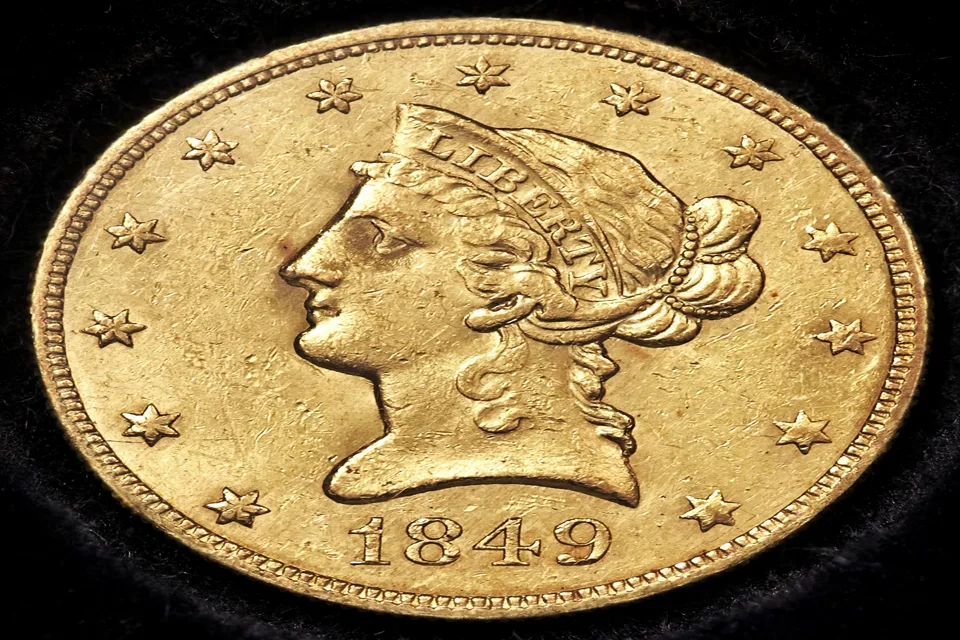
The 1929 Indian half eagle is the last coin of its series, and it is one of the strangest bargains in the grade table. Our guide catalogues XF-40 at $25,079, AU-50 from $21,350 to $32,400, MS-60 from $29,280 to $40,800, and MS-65 from $81,000 to $132,000. Read that again: the circulated grades are catalogued at five figures, and the finest examples reach six. For a coin with a mintage of 662,000, those are extraordinary numbers — and they exist because almost none of those 662,000 coins survived.
This page explains why. The 1929 half eagle was struck on the edge of the end of gold coinage, and the recall of 1933 swept most of the mintage away. What is left is a final-year coin with a small surviving population and a large, determined group of collectors who need it to finish their sets.
What grade decides on the last half eagle
The table below is our researched collector estimates from the live guide, reviewed November 5, 2026. Grades our guide has not researched yet are shown as “—”, not guessed. Two features deserve attention. First, the AU-50 range is wide — $21,350 to $32,400 — because eye appeal matters enormously in the middle grades of an incuse coin. Second, the XF-40 figure of $25,079 sits above the bottom of the AU-50 range, which is a reminder that these are researched ranges from real market data, not a smooth ladder. Grade alone does not decide the figure; quality within the grade does.
| Grade | Estimated value |
|---|---|
| Good (G-4) | — |
| Fine (F-12) | — |
| Extremely Fine (XF-40) | $25,079–$25,079 |
| About Uncirculated (AU-50) | $21,350–$32,400 |
| Mint State 60 (MS-60) | $29,280–$40,800 |
| Mint State 65 (MS-65) | $81,000–$132,000 |
The MS-65 range, $81,000 to $132,000, is where the series’ final-year premium shows most clearly. A 1929 half eagle in gem condition is a showcase coin: the last date, the last strike, the coin that closes a twenty-one-year series. Collectors pay for that position, and the table reflects it. But do not take a number from this table to a dealer and expect it to be accepted at face value. The grade that matters is the one a professional assigns after examining the coin in hand, under proper light, with the incuse surfaces read correctly.
662,000 struck, most of them gone
The mintage is 662,000, struck at Philadelphia in 1929. That sounds like a common coin. It is not. Four years after these coins were struck, the United States recalled its gold coinage, and the government melted its stocks. The 1929 half eagles, being among the newest gold coins in the vaults, were melted in large numbers. The coins that survived were the ones already in private hands — in collections, in safe-deposit boxes, overseas — beyond the reach of the melting pot.
This is the same story as the 1933 eagle, but on a larger scale and with a different ending. The 1929 half eagle did circulate, briefly, before the recall. Some wore down in commerce. Some were saved. But the mintage figure is a poor guide to how many exist today, and the grade table is the proof: a coin with 662,000 struck does not reach $25,079 in XF-40 unless the survivors are few.
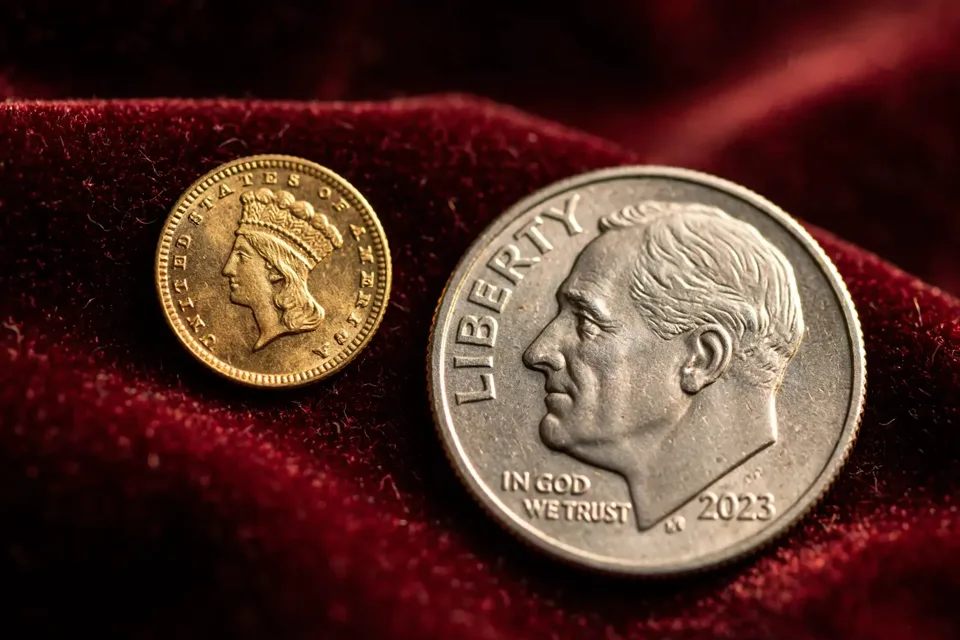
For collectors, the lesson is simple: mintage is not rarity. Rarity is what survives, in what grade, and how many people want it. The 1929 half eagle is the final year of its series, and final years are the dates set builders cannot skip. Demand is fixed and high. Supply was melted ninety years ago. The table above is what happens when those two facts meet.
The incuse trap: reading wear on a sunk design
Bela Lyon Pratt’s Indian half eagle is the only United States gold series with a fully incuse design. The Indian head on the obverse and the eagle on the reverse are sunk into the fields, not raised above them. The coin feels smooth, almost flat, in the hand. It was a deliberate artistic choice, and it was controversial from the start — the Mint worried that the sunk design would wear badly and stack poorly.
For grading, the incuse design is a trap. On a raised design, wear shows on the high points first. On this coin, the high points are the fields themselves, and wear shows as a softening of the sunk details and a loss of lustre across the surface. A circulated 1929 half eagle can look surprisingly sharp to an untrained eye, because the design is protected by being sunk. That is why so many raw Indian half eagles are over-graded by their owners, and why the professional opinion matters more here than on almost any other gold series.
If your 1929 half eagle looks uncirculated, check the fields under a strong light and look for the original mint lustre — a frosty, even glow across the whole surface. Any rub, any dull patch, any break in the lustre means the coin circulated, and the grade table above shows how much that distinction is worth. Do not guess. Get it graded.
The gold inside, and what it means
The 1929 half eagle weighs 8.359 grams, measures 21.6 millimetres, and is struck in 90% gold and 10% copper. It holds 0.24187 troy ounces of pure gold, and on this date the metal is almost irrelevant, because the collector premium in the lowest catalogued grade is many times the metal.
Metal floor: — The live melt figure on this site is calculated only for the $1 gold dollar, whose specification the Worker carries. Larger gold — $2.50, $5, $10 and $20 — has no live melt specification yet, so this page shows “—” for the metal floor rather than a computed figure. The weight above is the honest check: a genuine coin matches it, and a light coin is not genuine.
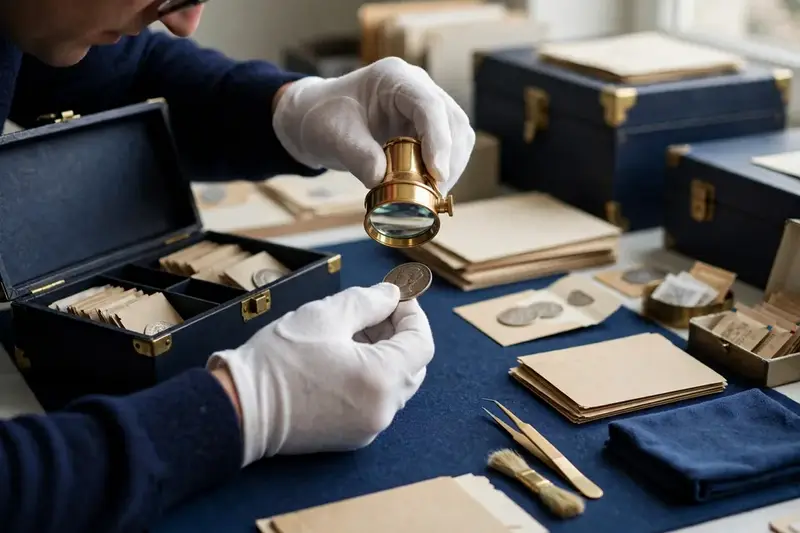
Still, weigh it. A genuine half eagle is 8.359 grams, and a fake in base metal will be far too light. A gold-plated copy will be close in weight but soft in detail, with mushy feathers and a dull, lifeless surface. The scale is the first test, the loupe is the second, and the grading service is the last word. In that order, every time.
Why the last year matters most
Series collectors think in sets, and a set of Indian half eagles runs from 1908 to 1929. The 1929 is the final date, and a set without it is unfinished. That single fact drives more demand than any other feature of the coin. First years get the attention, but last years get the urgency — because there is no later date to substitute, no second chance, no other coin that fills the hole.
The 1929 is also the last half eagle of its design, and the last $5 gold coin struck before the Depression and the gold recall changed American money for good. It closes a chapter. Collectors who hold one are holding the end of an era, in a coin that was struck in large numbers and then almost entirely destroyed. That is a powerful combination, and the grade table is the market’s answer to it.
Latest reported results for this coin
Checking for newly reported results…
Your 1929 half eagle questions, answered
What is a 1929 Indian half eagle worth?
Our guide catalogues XF-40 at $25,079, AU-50 at $21,350 to $32,400, MS-60 at $29,280 to $40,800, and MS-65 at $81,000 to $132,000. Good and Fine grades are not yet researched.
Why is the 1929 half eagle worth so much if 662,000 were struck?
Most of the mintage was melted after the 1933 gold recall, so the number struck says little about how many survive. The 1929 is the final year of the series, which adds demand from set builders chasing the last date.
What is the incuse design?
The Indian head and eagle are sunk into the coin's surface instead of raised above it. Bela Lyon Pratt designed it this way in 1908, and it makes wear harder to judge — a circulated coin can look sharper than it is.
How much gold is in a 1929 Indian half eagle?
It holds 0.24187 troy ounces of pure gold, struck in 90% gold and 10% copper at 8.359 grams. The metal alone is only a small part of what this coin is worth — the collector premium is far larger.
Should I get a 1929 half eagle certified?
Yes. With figures from $25,079 in XF-40 to $132,000 in MS-65, the grade decides everything, and the incuse design makes grading tricky. A professional opinion from PCGS or NGC is the only reliable way to establish it.
Check your 1929 half eagle
The 1929 half eagle is the last strike of its series. Check the fields, weigh it, and get the grade settled by a professional. Run the date and mint mark through the free Coin Value Checker for an instant estimate, or get a Grade-or-Not verdict on whether your coin is worth certifying. The full gold guide is here: Gold Dollar Coin Values by Type and Date.
For learning only: this guide is educational, and the figures here are researched estimates, not a promise of what any single coin will bring. The 1929 half eagle deserves a professional grade before any decision is made.
This guide is for education — learn the coin first, and get a professional opinion before buying or selling.