1911-D Indian Quarter Eagle: Denver's Key $2.50
Coin Encyclopedia · 9 min read · Published November 7, 2026
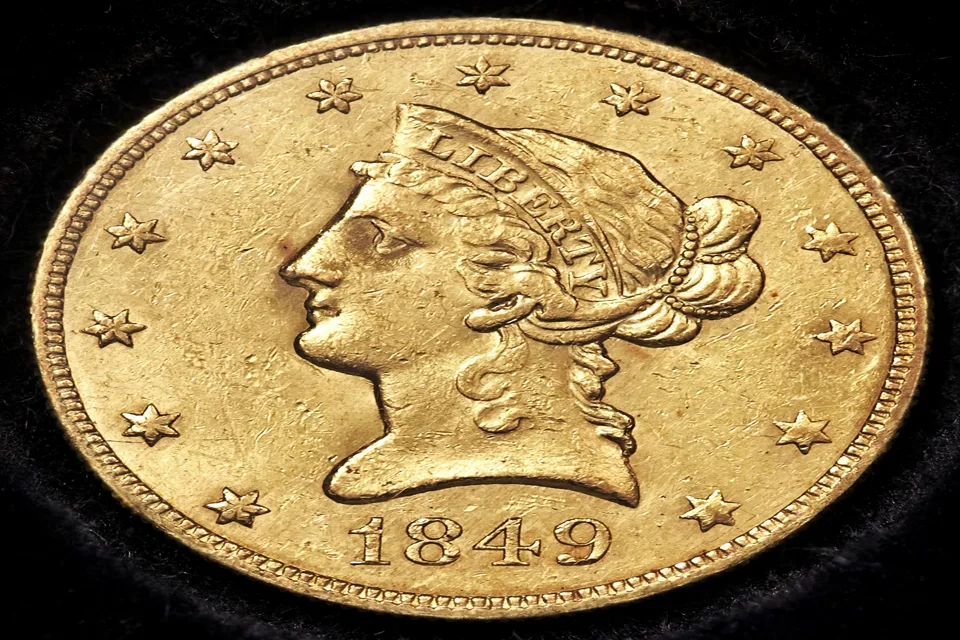
Everything about the 1911-D Indian quarter eagle comes down to one letter. The D on the reverse, low on the left, below the eagle, is the difference between a common $2.50 gold coin and the key date of the entire Indian quarter eagle series. Only 55,680 were struck at Denver in 1911, the smallest mintage of the regular series, and in Mint State 65 the coin is catalogued at $45,140. A quarter eagle is the smallest United States gold coin. This one carries the biggest premium in its series.
That D is also the reason this page starts with a warning. The 1911-D is one of the most faked key dates in gold, because the fake is so simple: take a common Philadelphia quarter eagle, add a D, and an ordinary Philadelphia quarter eagle becomes a $4,000+ coin. Read the mint-mark section before you believe any 1911-D, including your own.
Find the D first
Turn the coin over. The reverse shows Pratt’s eagle standing on a bundle of arrows, with UNITED STATES OF AMERICA and the words TWO AND A HALF DOLLARS around it. At the lower left, below the eagle, is the mint mark — D for Denver, nothing for Philadelphia. On the Indian quarter eagle the mint mark is incuse, sunk into the surface like the rest of the design, so it does not jump out the way a raised mint mark does. Hold the coin under a good light, tilt it, and look at the lower left with a loupe.
A genuine D has the right shape, the right depth, and the right position. It sits in the same place on every genuine 1911-D, because it was punched into the die in the same place. An added D sits slightly off, or too shallow, or at the wrong angle, and the metal around it often shows tool marks or a disturbed surface. Compare against a known genuine example — a photograph from a grading service, or a certified coin — and if anything looks wrong, stop. The D is the coin. If the D is wrong, the coin is wrong.
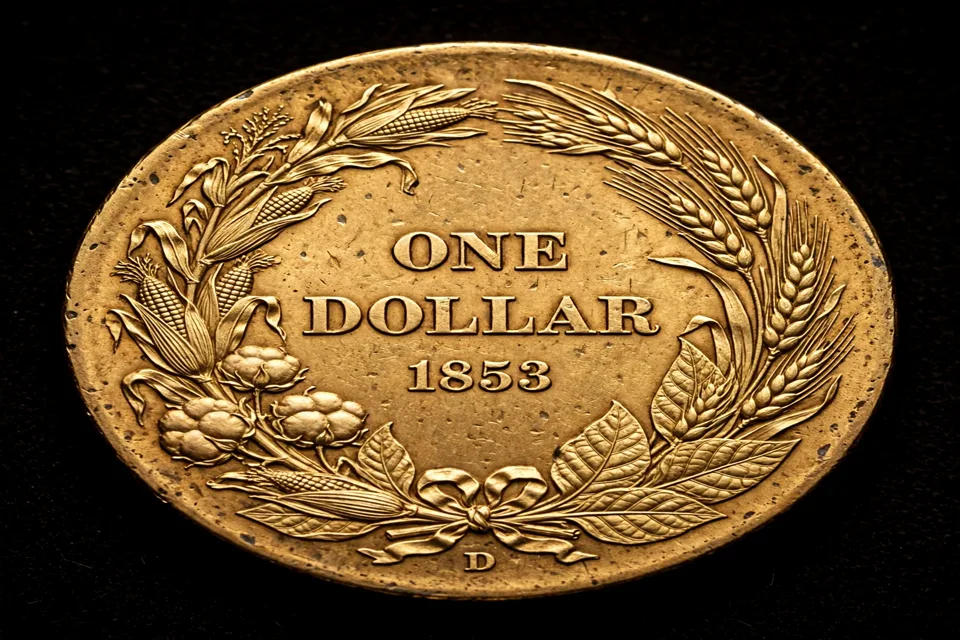
There is a second complication: the weak D. Some genuine 1911-D quarter eagles were struck with a faint, shallow D, because the die was worn or the strike was soft. A weak D is a genuine variety, but it is worth less than a bold, sharp D, and it is easy to confuse with a worn coin or an altered one. If your D is faint, that does not automatically mean the coin is fake — but it does mean you need a professional opinion before you value it. The difference between a weak D and a bold D is real money, and only a grader can settle it.
The grade table, and the gap at the top
The table below is our researched collector estimates from the live guide, reviewed November 5, 2026. Grades our guide has not researched yet are shown as “—”, not guessed. The MS-65 figure is the headline: $45,140 for a gem example of a coin struck in 1911 at Denver. The AU-50 range is wide, $4,148 to $8,540, because eye appeal and the strength of the D matter enormously in the middle grades.
| Grade | Estimated value |
|---|---|
| Good (G-4) | — |
| Fine (F-12) | — |
| Extremely Fine (XF-40) | $4,392–$4,392 |
| About Uncirculated (AU-50) | $4,148–$8,540 |
| Mint State 60 (MS-60) | $5,760–$5,760 |
| Mint State 65 (MS-65) | $45,140–$45,140 |
Notice the MS-60 figure: $5,760. That is a modest step above the AU-50 range, and a long way below MS-65 at $45,140. The market is telling you that a nice uncirculated 1911-D is attainable, but a gem is not. The gap between MS-60 and MS-65 is nearly eightfold, and it exists because gem 1911-D quarter eagles are genuinely scarce — most of the 55,680 went into circulation in the West and stayed there, wearing down year by year.
Even XF-40, at $4,392, is a serious coin. There is no cheap 1911-D in any grade, because the mintage was small and the demand is permanent. Series collectors need it. Key-date collectors need it. Denver collectors need it. And every one of them is chasing the same 55,680 coins.
Why Denver struck so few
The Denver Mint opened in 1906, and in 1911 it was still a young branch mint with limited capacity. The quarter eagle was a small coin with a small face value, and the Mint’s priority was the larger denominations and the silver coinage the West actually used every day. The 1911-D quarter eagle was struck in a single short run — 55,680 coins — and then the presses moved on.
Most of those coins went into circulation in the Mountain West, where they were spent, saved in small hoards, and eventually worn down. Gold coins in the West circulated harder than gold coins in the East, because the West used them. Very few were set aside by collectors at the time, because in 1911 nobody knew the 1911-D would become the key date of its series. The coins that survived in high grade are the ones that were saved by accident — tucked away, forgotten, and found decades later.
The smallest gold coin, and its weight
The Indian quarter eagle is the smallest United States gold coin ever struck for circulation: 4.18 grams, 18 millimetres across, 90% gold and 10% copper, holding 0.12094 troy ounces of pure gold. That weight is the first check against fakes: a coin that is light is not genuine, whatever its D looks like.
Metal floor: — The live melt figure on this site is calculated only for the $1 gold dollar, whose specification the Worker carries. Larger gold — $2.50, $5, $10 and $20 — has no live melt specification yet, so this page shows “—” for the metal floor rather than a computed figure. The weight above is the honest check: a genuine coin matches it, and a light coin is not genuine.
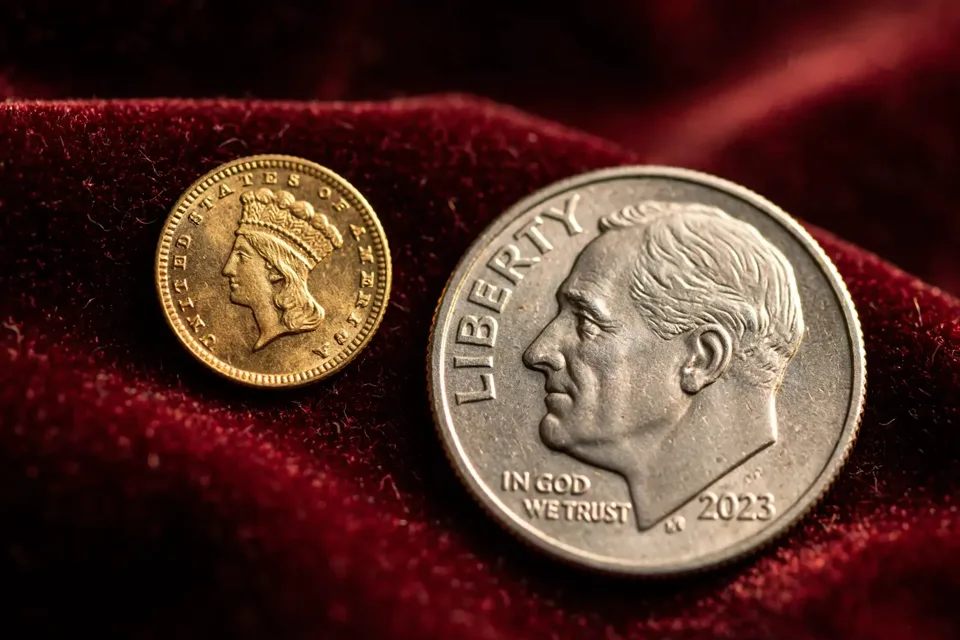
The small size is also what makes the coin so easy to misjudge. The design is Bela Lyon Pratt’s incuse Indian head and eagle, sunk into the surface, and on a coin only 18 millimetres wide the details are tiny. Wear is hard to read, the mint mark is hard to see, and the difference between AU and MS can come down to a whisper of lustre on the fields. If your 1911-D looks uncirculated, look at the fields under a strong light. A true Mint State coin has full, original lustre with no rub at all. Anything less is AU, and the table shows what that distinction is worth.
What to do with a 1911-D
First, do not clean it. Cleaning strips the original surfaces and leaves hairlines, and on a key-date gold coin the damage costs far more than any shine is worth. Hold it by the edges and keep it in a proper holder.
Second, get it certified. The 1911-D is exactly the coin where certification pays for itself: it settles the authenticity of the D, it establishes the grade, and it records whether the D is bold or weak. A certified 1911-D is a coin every buyer can trust. A raw one, however genuine, will always be discounted for doubt — and on a coin catalogued at $45,140 in MS-65, that discount is large.
Third, be patient. A key date does not need to be rushed. Get the grade, understand the D, and then decide. The 1911-D has been the key date of its series for decades, and it will still be the key date tomorrow. There is no reason to hurry, and every reason to get it right.
Latest reported results for this coin
Checking for newly reported results…
Your 1911-D quarter eagle questions, answered
What is a 1911-D Indian quarter eagle worth?
Our guide catalogues XF-40 at $4,392, AU-50 at $4,148 to $8,540, MS-60 at $5,760, and MS-65 at $45,140. Good and Fine grades are not yet researched.
Why is the 1911-D the key date of the series?
Only 55,680 were struck at Denver in 1911, the smallest mintage of the regular Indian quarter eagle series. Most circulated hard, and Mint State examples are scarce — MS-65 is catalogued at $45,140.
What is the weak D on a 1911-D quarter eagle?
Some 1911-D coins were struck with a faint, shallow D mint mark. A weak D is a genuine mint variety, but it is worth less than a bold, sharp D, and it is easy to confuse with a worn or altered coin.
Where is the mint mark on a 1911-D quarter eagle?
The D is on the reverse, at the lower left, below the eagle. Like the rest of Pratt's design it is incuse — sunk into the surface — so check it under a loupe in good light.
How do I know my 1911-D is genuine?
Weigh it at 4.18 grams and measure 18 millimetres, then examine the D under magnification against a known genuine example. Added-D fakes are common on this key date, so certification from PCGS or NGC is strongly advised.
Check your 1911-D
The D is the coin. Find it, weigh the piece, and let a grader confirm the rest before you value a 1911-D. Run the date and mint mark through the free Coin Value Checker for an instant estimate, or get a Grade-or-Not verdict on whether your coin is worth certifying. The full gold guide is here: Gold Dollar Coin Values by Type and Date.
For learning only: this guide is educational, and the figures here are researched estimates, not a promise of what any single coin will bring. A 1911-D should be authenticated and graded by professionals before any decision is made.
This guide is for education — learn the coin first, and get a professional opinion before buying or selling.