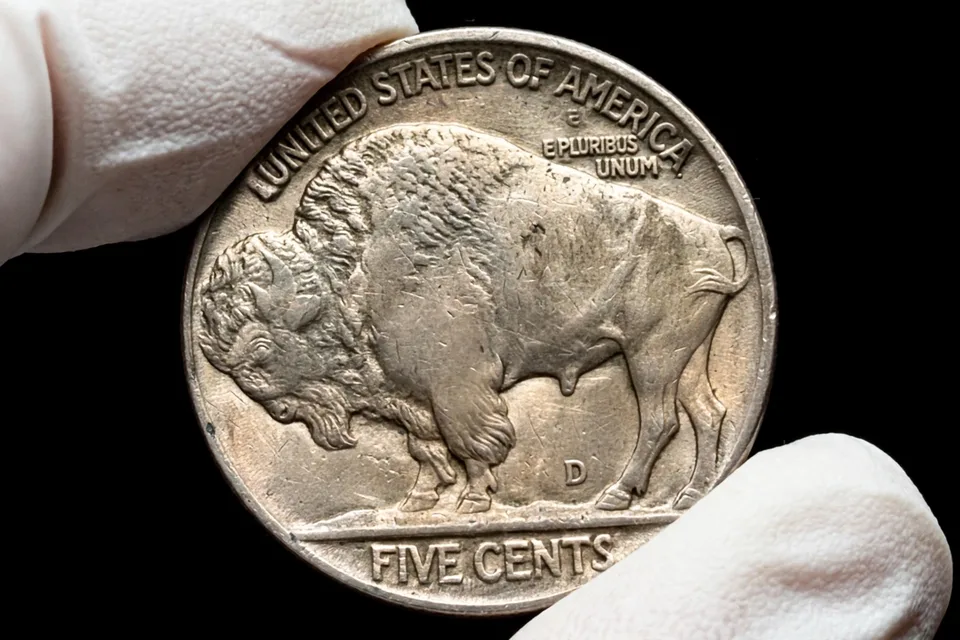
1913-S Buffalo Nickel Type 2: First-Year Fix, 370,000 Struck
Coin Encyclopedia · 8 min read · Published November 7, 2026
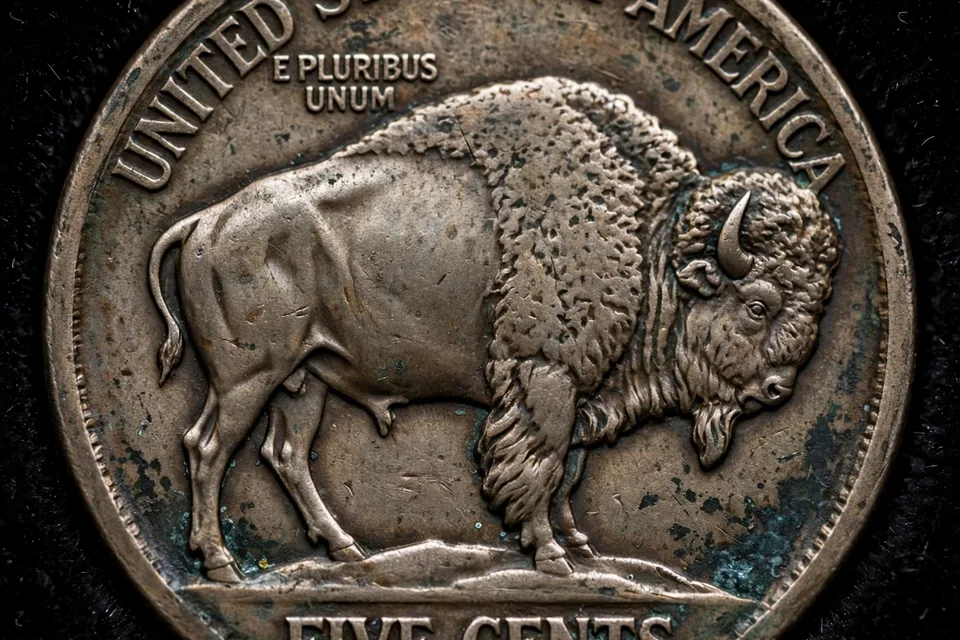
The 1913-S Buffalo nickel Type 2 exists because the first version of the design failed in everyday use. When James Earle Fraser’s Buffalo nickel reached circulation in February 1913, the bison on the reverse stood on a raised mound of earth, and the words FIVE CENTS were stamped right onto that mound. It looked wonderful fresh from the press. In a pocket, it did not last. The raised mound was the highest point of the coin, so it took every knock first, and within months of hard use the denomination itself started to wear away. The Mint heard the complaints, pulled the design back, and re-cut the reverse so the bison stood on a flat, recessed ground line instead. San Francisco struck 370,000 of that corrected version in 1913, and that small first-year run is the coin on this page.
That is the whole story of this date in one sentence: a design fix, made in a hurry, at a branch mint, in a small number. Collectors love it for all four reasons at once. It is a first-year coin, it carries the corrected design, it comes from San Francisco, and barely more than a third of a million were made. None of that makes every worn example a fortune on its own, but it makes the 1913-S Type 2 one of the dates a Buffalo nickel collection is measured against. If you find one in a jar or an inherited album, the first job is not guessing a number. It is proving which type you hold, because a 1913-S Type 1 and a 1913-S Type 2 are different coins with different standing, and the test takes about ten seconds.
The mound that wore away
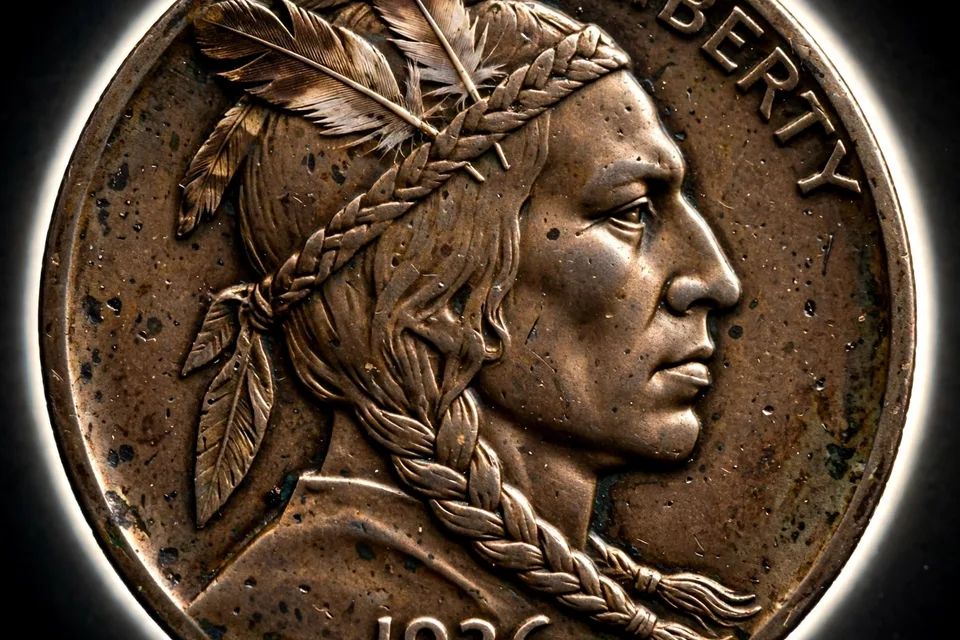
Fraser designed the Buffalo nickel as a piece of sculpture that happened to be money. The obverse carries a composite Native American portrait, drawn from several sitters, and the reverse carries an American bison modelled on Black Diamond, the bull that lived at the Bronx Zoo. On the original reverse, the bison stood on a little hill. It was a beautiful idea and a practical mistake. Coins wear from the highest points down, and the mound was the highest point on the whole coin. A Buffalo nickel that spent a year in a cash register could lose the mound entirely, and with it the words FIVE CENTS. Shopkeepers and banks complained, and the Mint acted the same year, which is rare. Most design problems took years to fix. This one took months.
The corrected reverse, the Type 2, drops the ground to a straight, recessed line and moves FIVE CENTS below it, into the open field where it is protected by the rim. The bison itself did not change. The portrait did not change. Only the ground under the animal’s feet changed, and that one change is the entire difference between the two 1913 varieties. It also explains why the Type 2 is the design every later Buffalo nickel follows: the flat ground line survived for the remaining twenty-five years of the series, through 1938, while the raised mound lasted only a few months in 1913.
How to tell Type 2 from Type 1 in ten seconds
Turn the coin over and look at the bison’s feet. If the animal stands on a little hill and FIVE CENTS is printed across that hill, you hold a Type 1. If the animal stands on a flat line and FIVE CENTS sits in the open space below the line, you hold a Type 2. Do not judge by the date or the portrait, which are identical on both types. Do not judge by wear either: a heavily worn Type 1 can lose its mound to circulation and start to look flat, which is exactly how mistakes happen. On a worn coin, look at where FIVE CENTS sits. On a Type 1 the letters follow the curve of the mound. On a Type 2 they sit in a straight row under the ground line, and the line itself runs unbroken beneath the bison’s hooves.
Once the type is settled, find the mint mark. The S on a 1913-S sits on the reverse, directly under FIVE CENTS, close to the bottom rim. It is a small letter and it fades early, because the lower reverse takes wear. Tilt the coin so the light rakes across the surface from the side and the S will usually show itself. A 1913 Buffalo nickel with no mint mark is a Philadelphia coin, a different and far more common date. The S is what makes this one a San Francisco issue, and the S plus the flat ground line is what makes it the coin on this page.
What our value guide records for this date
Here is the honest position. Our value guide has not yet researched the 1913-S Type 2 grade by grade, so every grade in the table below shows “—”. That dash is not a zero and it is not a guess. It means no researched estimate exists for that grade in our catalog, reviewed November 5, 2026, and we would rather show the gap than invent a figure. The table will be completed as the research lands, and when it does, the numbers will come only from our own catalog, never from another guide’s figures.
| Grade | Estimated value |
|---|---|
| Good (G-4) | — |
| Fine (F-12) | — |
| Extremely Fine (XF-40) | — |
| About Uncirculated (AU-50) | — |
| Mint State 60 (MS-60) | — |
| Mint State 65 (MS-65) | — |
What the catalog does record is the mintage, and on this date the mintage does most of the talking. San Francisco struck 370,000 Type 2 nickels in 1913, against millions at Philadelphia in the same year. First-year coins are also the ones that get spent rather than saved: in 1913 nobody knew the Buffalo nickel would become a classic, so almost the whole run went into circulation and stayed there. That is why even a worn 1913-S Type 2 is a coin worth identifying carefully and handling gently, and why an uncirculated one is a genuinely scarce piece.
370,000 coins and a San Francisco first year
San Francisco was still a young mint for nickel coinage in 1913, and the Buffalo nickel was brand new everywhere. The Philadelphia Mint struck the first Type 1 coins in February, and the other mints followed as dies reached them. By the time the Type 2 reverse was ready, the year was well along, which is part of why the San Francisco Type 2 run is so small: the mint had only months left to strike the corrected design before the calendar turned. The 370,000 figure covers the whole San Francisco Type 2 output for 1913, and it has stood unchanged in the records ever since.
It helps to put that number beside the series around it. The Buffalo nickel ran from 1913 to 1938, and most dates were struck in the tens of millions. A date under a million is unusual in this series, and a date under half a million in the very first year is rarer still. That scarcity is relative, not absolute: 370,000 coins is still a lot of coins, and worn examples do turn up. But the combination of a low mintage, a first-year date, and a design change that collectors can spot at a glance is what keeps this date near the top of Buffalo want lists more than a century later.
Reading the date and the S on a worn coin
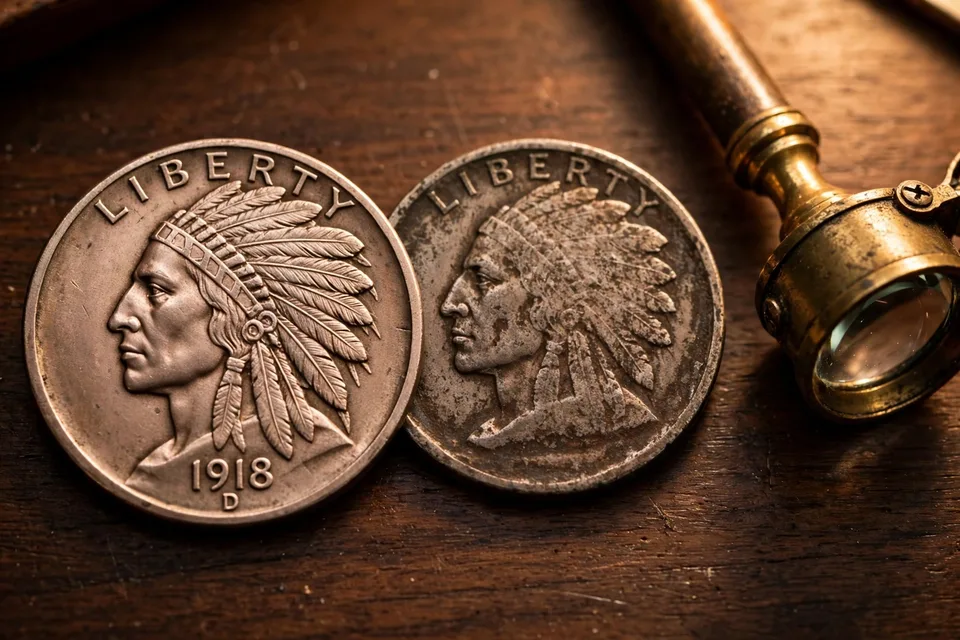
The date on a Buffalo nickel is its weak point. It sits high on the obverse, on the portrait’s shoulder, and it is the first thing to wear away. A 1913-S Type 2 that spent decades in circulation can lose the last digit of the date entirely, and a dateless Buffalo nickel is a much harder coin to place. If your coin still shows 1913 clearly, count yourself lucky and read it soon, because every extra year of handling takes a little more. Photograph both sides before you handle it further, and keep the photos with the coin’s story: where it came from, who held it, and what you found.
For the mint mark, use a loupe rather than your eyes alone. The S is small, and on a worn coin it can look like a smudge or a scratch. Compare it against a known San Francisco Buffalo nickel if you have one, and look for the shape of the letter rather than a single mark. If the S is gone entirely, the coin can still be identified by its type and its wear pattern, but the mint attribution becomes a matter for a professional opinion rather than a guess at the kitchen table.
Handling, storage, and getting a second opinion
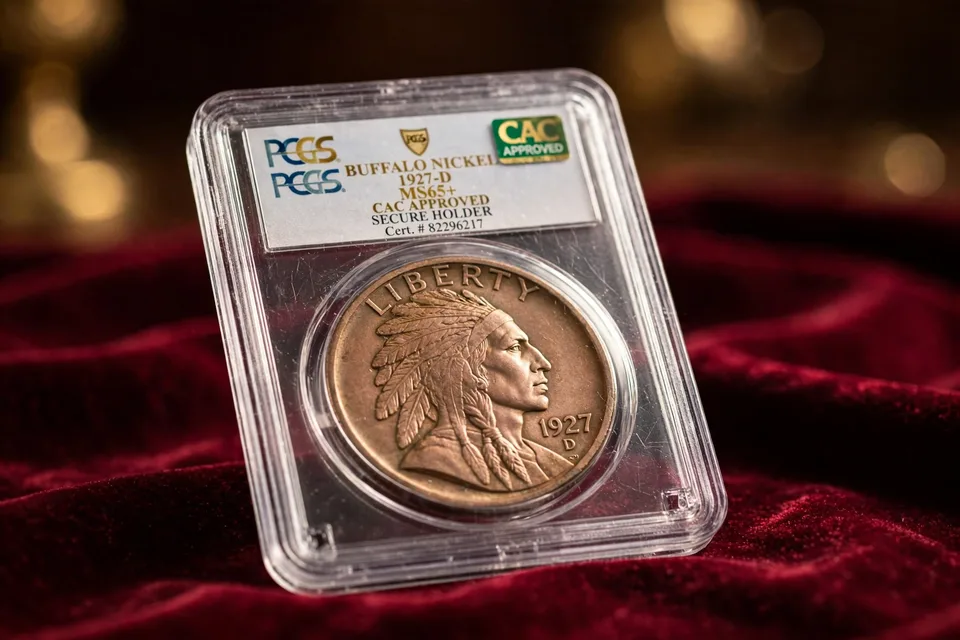
Hold a Buffalo nickel by its edge, never across the faces, and never clean it. Cleaning strips the original surface and leaves hairlines that a grader will spot at once, and on a scarce first-year date that damage is permanent. Keep the coin in an acid-free flip or a proper holder, away from humidity, and do not store it loose with other coins where the date can rub away further. If the coin looks uncirculated, or if the type and mint mark are in any doubt, a professional opinion from PCGS or NGC is worth the fee: certification settles the attribution and the grade in one step, and on a 370,000-mintage first-year coin that certainty matters.
Latest reported results for this coin
Checking for newly reported results…
Your 1913-S Type 2 questions, answered
How do I tell a 1913-S Type 2 Buffalo nickel from a Type 1?
Look at the ground under the bison. On a Type 1 the bison stands on a raised mound and the words FIVE CENTS sit on that mound. On a Type 2 the ground is a flat, recessed line and FIVE CENTS sits below it in the field. The change was made in mid-1913 because the raised mound wore down fast in circulation.
How many 1913-S Type 2 Buffalo nickels were struck?
San Francisco struck 370,000 of the Type 2 in 1913. That is a small first-year figure next to the millions struck at Philadelphia the same year, and it is the main reason collectors chase this date.
Where is the mint mark on a 1913-S Buffalo nickel?
The S sits on the reverse, directly below the words FIVE CENTS near the bottom rim. On a worn example the mint mark can fade before the date does, so check it under a loupe with the light coming from the side.
Does our value guide list estimates for the 1913-S Type 2 yet?
Not yet. Every grade from Good through Mint State 65 currently shows “—” in our guide, which means the date has not been researched grade by grade. The table on this page will be filled in as that research is completed, and the figures will come only from our own reviewed catalog.
Is the 1913-S Type 2 the scarcest first-year Buffalo nickel?
It is the lowest-mintage 1913 Buffalo nickel in our guide’s key-date table, at 370,000, and the table calls it the first-year low-mintage date. That small first-year figure is the main reason collectors chase this date.
Check your 1913-S
Run the date and mint mark through the free Coin Value Checker for an instant estimate, or get a Grade-or-Not verdict on whether your coin is worth certifying. The full series guide is here: Buffalo Nickels to Look For: 50¢ to $511,875+.
This guide is for learning and collecting, not financial advice. Every estimate here comes from our own researched catalog, and the real worth of any single coin depends on its condition, its attribution, and the market on the day you hold it.
This guide is for education — learn the coin first, and get a professional opinion before buying or selling.