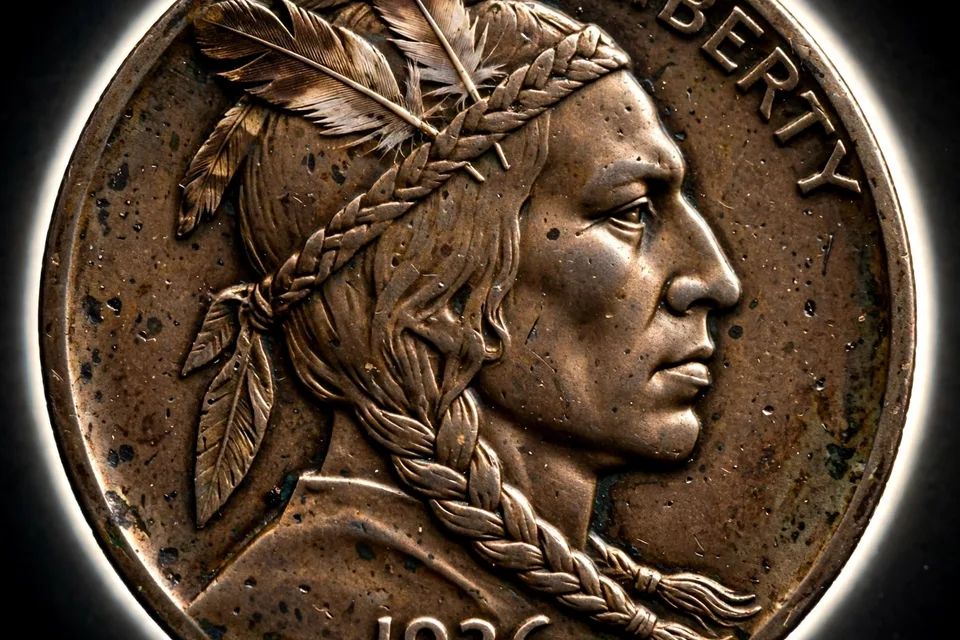
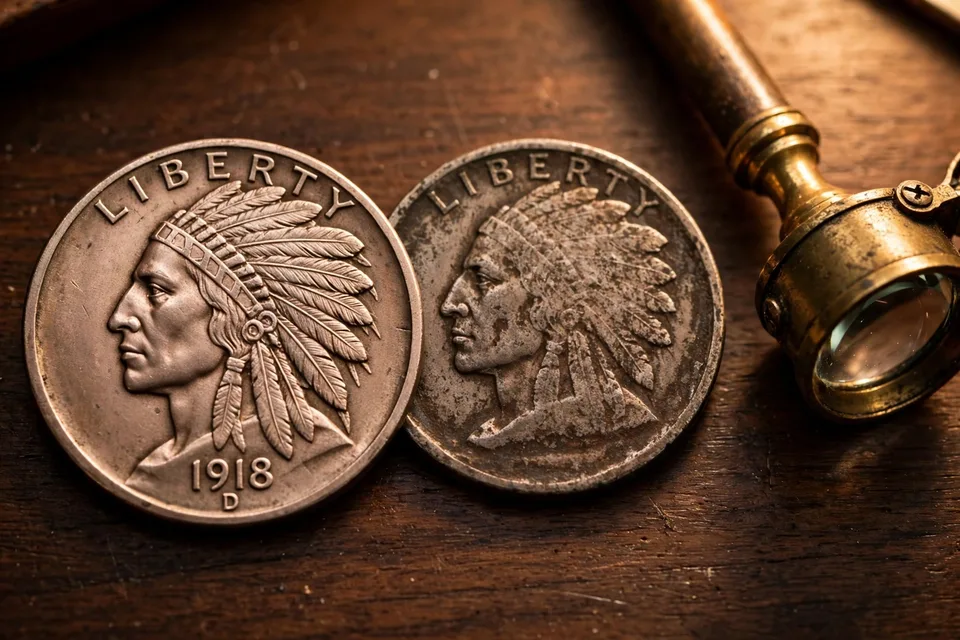
1937-D Three-Legged Buffalo Nickel: Missing Foreleg Error
Coin Encyclopedia · 9 min read · Published November 7, 2026
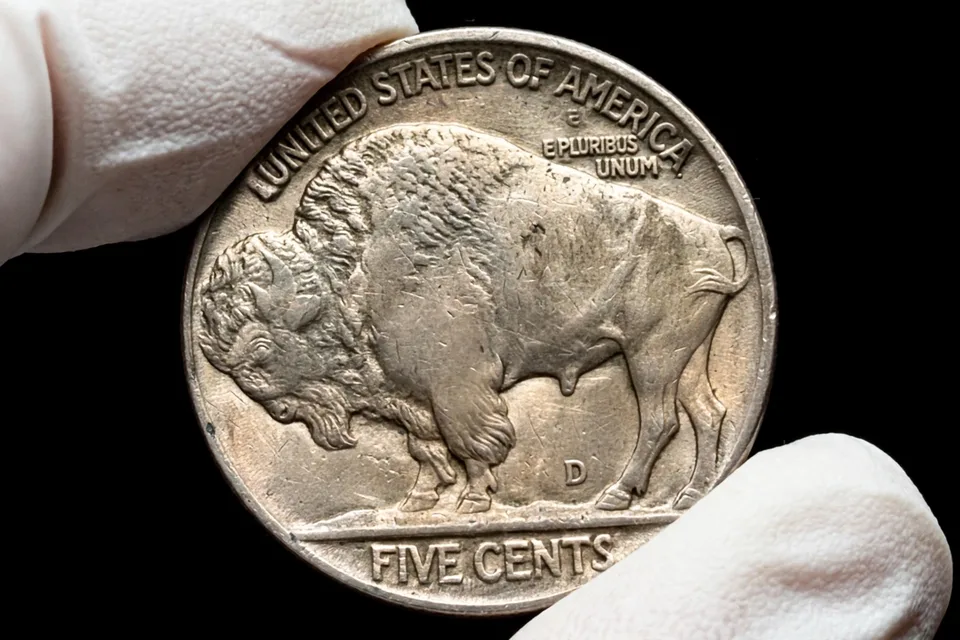
Count the legs. A normal bison has four. This one has three. The 1937-D three-legged Buffalo nickel is America’s most famous mint error, and the test takes about two seconds: turn the coin over, find the bison, and count. The front foreleg is missing, cleanly and completely, while the rest of the coin can be sharp. Our researched guide values run from $430–$559 in Good to $30,000–$35,000 in Mint State 65, and the auction record is $99,875 for a PCGS MS66+ in 2021. No other Buffalo nickel is identified so fast, and no other error in the series is so widely known.
That fame is a double-edged thing. Because everyone knows the three-legged nickel, everyone looks for it, and because everyone looks for it, fakes are everywhere. A genuine three-legged nickel has the leg missing from the die itself, which means the surface where the leg should be is smooth and original, with the same texture as the rest of the coin. A fake has the leg removed afterwards, by engraving or grinding, and the metal tells on it. This page begins with the test and the cause, because both protect you.
How a polishing cloth erased a leg
A Denver die clashed with another die, and a zealous mint worker polished the clash marks away — polishing right off the bison’s front foreleg in the process. That is the whole cause, as our guide records it, and it is worth pausing on, because it explains everything about the variety. A die clash happens when the presses strike with no planchet between the dies, and the two dies mark each other. The marks have to be removed before the die can strike again, and the removal is done by hand, with abrasive. On this die, the worker went too far. The clash marks came off, and so did the foreleg.
Coins struck from that die went into circulation with a three-legged buffalo, and nobody at the Mint noticed or cared: the coins were ordinary five-cent pieces, and the missing leg did not stop them spending. The variety was not a separate mintage. The total 1937-D Buffalo mintage was 17,826,000, and the three-legged coins are a small part of that run, struck from the single over-polished die among many. That is why the variety is scarce and why it was not discovered at once: it hid inside an enormous, ordinary run.
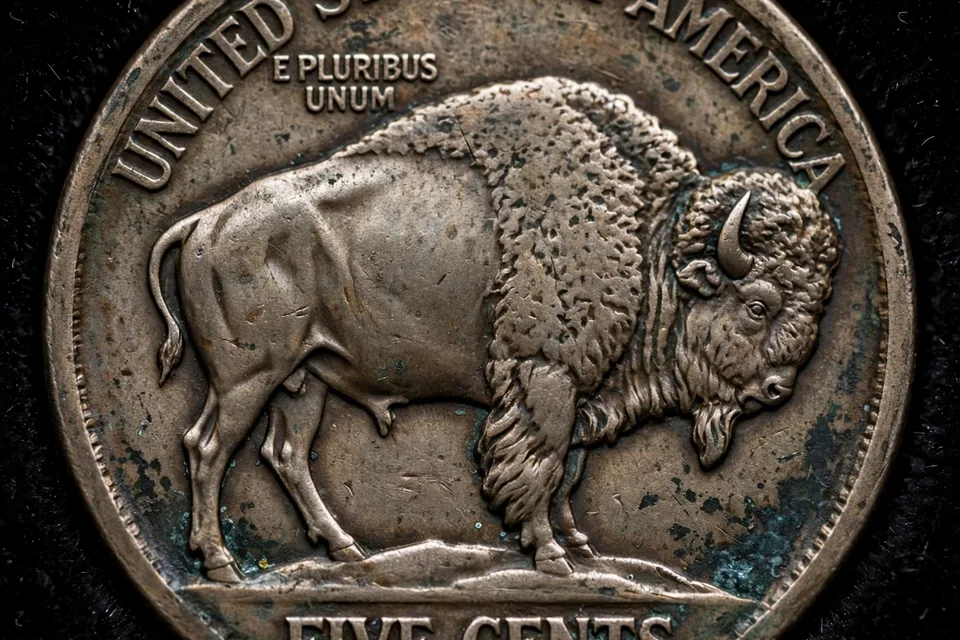
The four-leg test — and the 3½-legs cousin
Turn the coin over and count. Four legs means a normal 1937-D, a common date worth little more than a few dollars in worn condition. Three legs, with the front foreleg cleanly absent, means the variety. The key word is cleanly: on a genuine three-legged nickel the space where the leg should be is smooth, with the field texture undisturbed, because the leg was never on the die. On a worn normal coin the leg can look faint, but it is still there, a ghost of a line. On a fake the leg has been cut away, and the metal shows tool marks, a wrong texture, or a bright, fresh-looking patch.
Do not confuse this variety with its close cousin, the 1936-D 3½-legs. On that coin the foreleg is partly polished away, leaving a stump: half a leg, not none. Our guide records $100+ circulated for the partial-leg variety. It is a different date, a different die, and a different variety, and the two should never be confused when attributing a coin. If your 1937-D shows a stump rather than a clean absence, look again, because you may be holding a worn normal coin rather than the variety.
What a three-legged nickel is worth by grade
This is the only Buffalo nickel in this batch with a fully researched grade table, and it shows why grade matters so much on an error variety. The figures below are our researched collector estimates from the live guide, reviewed November 5, 2026. Every grade is covered, from Good to Mint State 65, because this is the variety collectors ask about most.
| Grade | Estimated value |
|---|---|
| Good (G-4) | $430–$559 |
| Fine (F-12) | $600–$725 |
| Extremely Fine (XF-40) | $895–$1,500 |
| About Uncirculated (AU-50) | $1,100–$2,850 |
| Mint State 60 (MS-60) | $2,250–$3,250 |
| Mint State 65 (MS-65) | $30,000–$35,000 |
Two things to notice in that table. First, even the lowest grade clears $430 — there is no cheap three-legged nickel, and anyone offering one for a few dollars is offering a fake or a normal coin. Second, the jump from Mint State 60 to Mint State 65 is more than tenfold, which is why certification matters so much on this variety: the premium is paid on certified high grade, not on a raw coin that merely looks sharp.
The record: $99,875 for an MS66+ in 2021
One verified result anchors the top of this variety’s market in our guide: the auction record is $99,875 for a PCGS MS66+ in 2021.
| Coin | Grade | Source | Realized |
|---|---|---|---|
| 1937-D three-legged Buffalo nickel | PCGS MS66+ | 2021 | $99,875 |
That record belongs to a single coin in a superlative grade, and it is the ceiling of the variety, not the worth of the coin in your hand. Most surviving three-legged nickels are worn, and a worn example lives in the grade table above, not in this one. The record tells you how far the top reaches when a coin is both the variety and the finest known example of it.
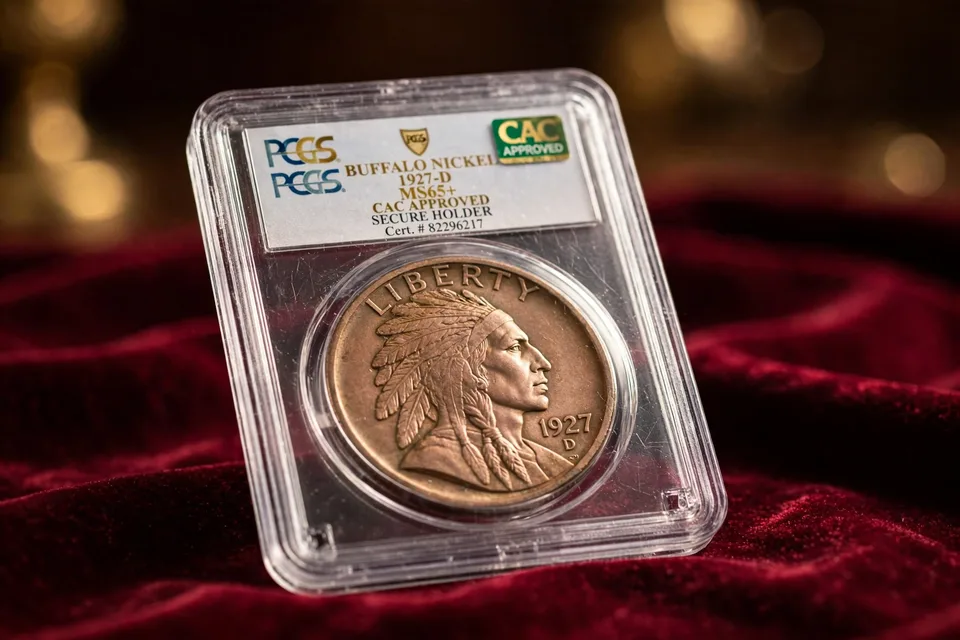
Specs and the metal question
There is no precious metal in this coin. The Buffalo nickel is 75% copper and 25% nickel, weighs 5.0 grams, measures 21.2 millimetres across, and has a plain edge. No silver, no gold — the worth lives entirely in the error and the condition. The metal floor for this coin is —, because there is no metal floor to show: the variety is a die error, not a metal content, and a normal 1937-D is a common coin while a three-legged one is a famous error, with the same metal in both.
Fakes, altered legs, and the authentication rule
Because counterfeits are everywhere on this variety, only accept a three-legged nickel certified. The common fake is a normal 1937-D with the foreleg ground or engraved away, and it can fool the naked eye. Under a loupe, a removed leg shows tool lines, a disturbed surface, and a wrong texture in the field where the leg was. A genuine three-legged nickel shows the field smooth and original, because the leg was never struck. Weigh the coin too: a genuine Buffalo nickel weighs 5 grams and measures 21.2 millimetres, and a cast copy will usually fail one of those tests.
The rule is simple and absolute: never treat an unattributed three-legged nickel as genuine until a professional has confirmed it. Send it to PCGS or NGC, get the attribution in writing, and only then think about what it is worth. The fee is small beside the figures at stake, and the certificate is what turns a curious coin into a confirmed variety.
Latest reported results for this coin
Checking for newly reported results…
Your three-legged nickel questions, answered
How can I tell a genuine 1937-D three-legged Buffalo nickel?
Count the legs. A normal bison has four legs; the three-legged variety has three, because the front foreleg is missing from the die. The missing leg is clean and complete, not worn away: the rest of the coin can be sharp while the foreleg is simply not there. Compare it against a normal 1937-D if you can.
How did the 1937-D lose a leg?
A Denver die clashed with another die, and a mint worker polished the clash marks away, polishing right off the bison’s front foreleg in the process. Coins struck from that die went into circulation with a three-legged buffalo. Our guide calls it America’s most famous mint error.
How much is a 1937-D three-legged Buffalo nickel worth?
Our researched guide values run from $430–$559 in Good, $600–$725 in Fine, $895–$1,500 in Extremely Fine, $1,100–$2,850 in About Uncirculated, $2,250–$3,250 in Mint State 60, and $30,000–$35,000 in Mint State 65. The auction record is $99,875 for a PCGS MS66+ in 2021.
What is the 1936-D 3½-legs variety?
It is the close cousin: a 1936-D in which the foreleg is partly polished away, leaving a stump. Our guide records $100+ circulated for the partial-leg variety. It is a different date and a different variety, and it should never be confused with the full three-legged 1937-D.
Should I get a three-legged Buffalo nickel certified?
Yes — always, before any decision about the coin. Because counterfeits are everywhere on this variety, certification is the only thing that settles the attribution. A certified three-legged nickel is a different coin in the market from an uncertified one.
How many 1937-D three-legged nickels were struck?
The total 1937-D Buffalo mintage was 17,826,000, and the three-legged coins are a small part of that run, struck from the single over-polished die. The variety was not a separate mintage: it came from one die among many.
Check your 1937-D
Run the date and mint mark through the free Coin Value Checker for an instant estimate, or get a Grade-or-Not verdict on whether your coin is worth certifying. The full series guide is here: Buffalo Nickels to Look For: 50¢ to $511,875+.
This guide is for learning and collecting, not financial advice. The $99,875 figure is a verified auction result for one coin in one grade; the worth of any other example depends on its own condition and attribution.
This guide is for education — learn the coin first, and get a professional opinion before buying or selling.